


Is Zarif a Credible Negotiator for Iran?

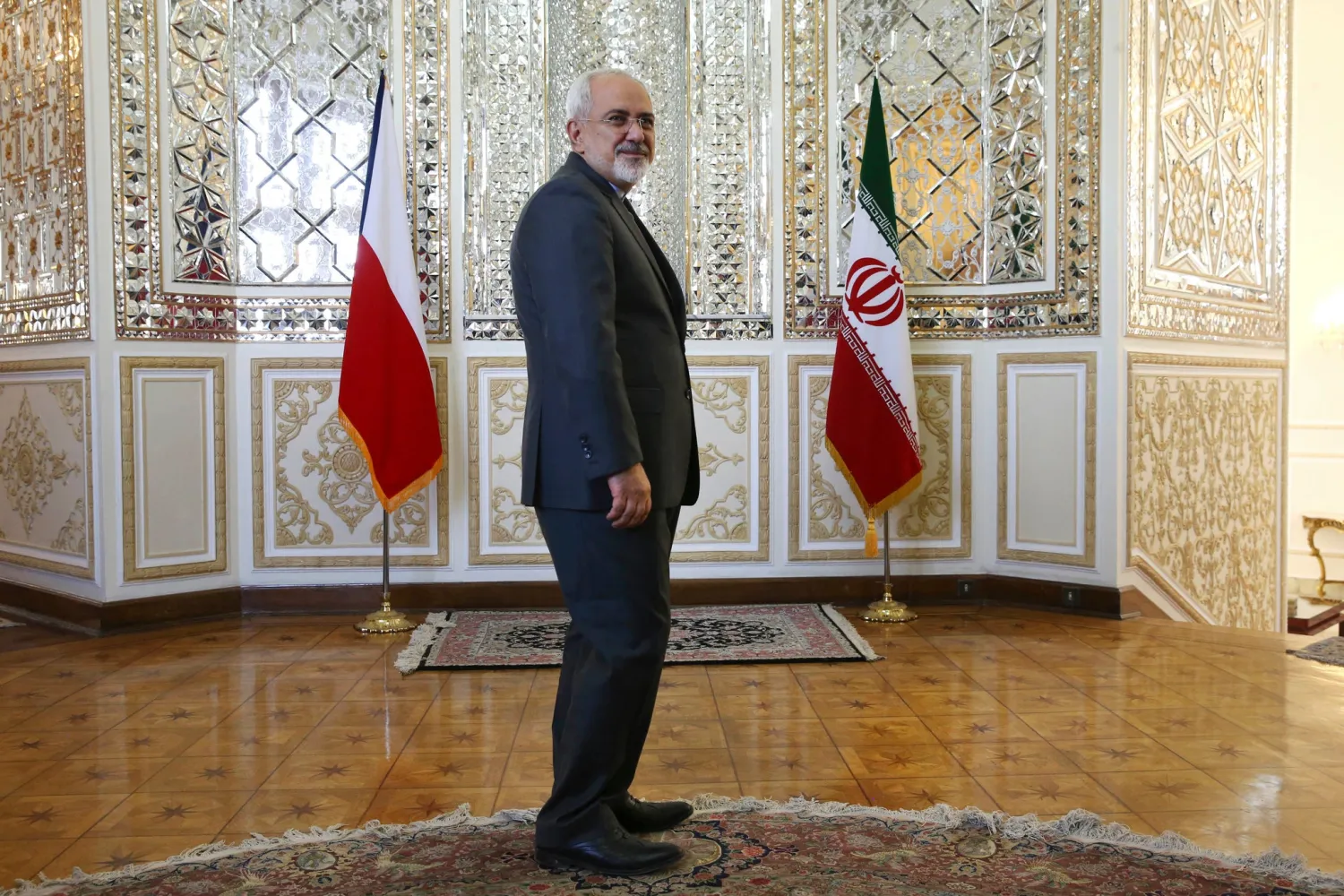
Foreign Minister Mohammad Javad Zarif of Iran, shown in 2015, has come under fire in both Tehran and Washington as the nuclear deal he negotiated is nearing collapse.CreditCreditVahid Salemi/Associated Press
TT

Is Zarif a Credible Negotiator for Iran?

Foreign Minister Mohammad Javad Zarif of Iran, shown in 2015, has come under fire in both Tehran and Washington as the nuclear deal he negotiated is nearing collapse.CreditCreditVahid Salemi/Associated Press

Iranian hard-liners have long mocked their foreign minister, Mohammad Javad Zarif, as the make-believe American, after a character in a comic Iranian movie who puts on an accent, wardrobe and lifestyle to live out a fantasy of American life.

A resident of the United States on and off for nearly 30 years, Mr. Zarif was the Iranian most closely associated with the negotiation of the 2015 deal that limited Iran’s nuclear program in exchange for relief from sweeping economic sanctions. To ordinary Iranians and reformists, that made him a hero. To hard-liners, though, he was a dupe, seduced by the West into a deal that the Americans would never live up to. Now, with the nuclear deal on the brink of collapse, with the Trump administration reimposing crushing sanctions on Iran, and with Tehran threatening to restart elements of its nuclear program, Mr. Zarif is coming under renewed fire not only from hard-liners in Tehran but also from Washington.

White House officials say that President Trump has requested sanctions specifically against the Iranian foreign minister, stirring debate in both countries about the administration’s intentions. Hawks like Secretary of State Mike Pompeo and John R. Bolton, the national security adviser, argue that Mr. Zarif’s American affectations are what make him dangerous. Mr. Zarif and his patron, President Hassan Rouhani, are “polished front men for the ayatollah’s international con artistry,” Mr. Pompeo has said, suggesting that the foreign minister uses his flawless, idiomatic American English as a ruse to mask his allegiance to the hard-line agenda of Iran’s supreme leader, Ayatollah Ali Khamenei.

But critics shoot back that threatening Iran’s top diplomat makes no sense, given Mr. Trump’s repeated insistence that his ultimate goal is to restart negotiations with Iran. Cutting off the intermediary for any such talks, the critics say, may ultimately leave the administration no choice other than confrontation. “It just makes it harder or impossible for the Iranians to choose some kind of diplomacy,” said Jeff Prescott, a former senior director for Iran on the National Security Council under President Barack Obama.

In an extensive email exchange, Mr. Zarif said he felt little personal risk from American sanctions. “Everyone who knows me knows that I or my family do not own any property outside Iran,” he wrote. “I personally do not even have a bank account outside Iran. Iran is my entire life and my sole commitment. So I have no personal problem with possible sanctions.” Washington, Mr. Zarif argued, would only be hurting itself by cutting him off. “The only impact — and possibly the sole objective — of a possible designation would be to limit my ability to communicate. And I doubt that would serve anyone,” he wrote. “Certainly it would limit the possibility of informed decision-making in Washington.”

As for the allegation of “con artistry,” Mr. Zarif said that he never asked the Americans to trust him and he never trusted them either, least of all during the negotiations of the nuclear deal, known formally as the Joint Comprehensive Plan of Action.

“Contrary to public statements by its detractors on all sides, JCPOA was not built on trust,” Mr. Zarif wrote in the email, referring to the agreement. “It was indeed based on explicit recognition of mutual mistrust. That is why it is so long and detailed.”

Mr. Zarif’s status in Tehran has already suffered severely with the waning fortunes of the nuclear deal. After pulling out of the agreement last year, the Trump administration in May tightened its sanctions to penalize anyone in the world who seeks to buy Iranian oil, slashing Iranian exports and plunging the economy into a tailspin. Mr. Khamenei has said without naming Mr. Zarif or Mr. Rouhani that those who persuaded him to negotiate with Washington had made a grave mistake.

Other hard-liners have argued that Mr. Zarif should now resign, face impeachment, or be put on trial for the crime of leading Iran into an agreement that dismantled years of nuclear research and investment for no ultimate benefit.

“Mr. Zarif and his government put all their eggs in the basket of foreign policy and the nuclear deal,” Abdul Reza Davari, a conservative adviser to Mahmoud Ahmadinejad, the former Iranian president, said in a telephone interview from Tehran.

“It has been a spectacular failure, and now they are hanging on life support, hoping a change of administration in the US would save them.” Iranian officials have often said that they have sought only peaceful uses of nuclear power, not a nuclear weapon — a claim widely disputed in the West. But with the 2015 deal now all but dead, many conservatives in Tehran are pushing for Iran to resume its programs for the enrichment of nuclear material “as a sign of strength,” Mr. Davari said.

Some in his hard-line faction remain open to negotiations with Mr. Trump, Mr. Davari said, but no longer through Mr. Zarif. Mr. Zarif briefly resigned in February after conservatives in the Iranian military failed to include him in a visit to Tehran by the president of Syria. Iranian moderates, while defending Mr. Zarif, are also preparing political eulogies. “We have never had a foreign minister like Zarif in the history of Iran,” said Mostafa Tajzadeh, a prominent reformist politician.

“What he achieved with the nuclear deal — gaining the trust of both Americans and Mr. Khamenei — was nothing short of a miracle.” At the top echelons of the Iranian political system, where knowledge of the United States is generally shallow and suspicions run deep, Mr. Zarif stands out for his ease among Americans. He came to the United States at 17 to attend college, and was an undergraduate at San Francisco State University in 1979 when the Islamic revolution broke out in Tehran. (He pitched in by helping lead a group of student revolutionaries who took over the Iranian consulate in San Francisco.)

He remained in the United States, first as a student and then as a diplomat, for much of his adult life. With his command of American English, he comes off to Westerners as urbane and at times even wry. “Seriously?” he quipped this week by Twitter, quoting a White House news release claiming that “even before the deal’s existence, Iran was violating its terms.”

His friends say he prefers American coffee to the typical Iranian tea, and he also enjoys dining out in American restaurants — although he is careful never to allow himself to be photographed in a setting where alcohol is visible, which the hard-liners could use against him at home in Tehran. American supporters of imposing sanctions on Mr. Zarif argue that his effectiveness at passing for one of their countrymen is what makes him so dangerous. It helps him hide the fundamentally anti-American and expansionist character of the government he serves, they say.

“I would call him the whitewasher-in-chief,” said Reuel Marc Gerecht, a fellow at the Foundation for the Defense of Democracies and a former C.I.A. official who studies Iran. “Zarif has gotten away, almost, with murder, because he has been depicted as something he is not — a moderate — when he is totally loyal to the supreme leader and totally loyal to the revolution.” Mr. Gerecht added that the sanctions would send a message to the American public about Mr. Zarif and his patron, Mr. Rouhani.

“It is important to the narrative, to dispatch the notion that Zarif or Rouhani is part of this ‘moderate’ wing that will bring about normalcy,” Mr. Gerecht said. But Mr. Zarif, in an email, said that the issue of the moment was not about him or the Iranian government, but about the nuclear deal, which he said was never intended to “resolve all our differences.”

“It was negotiated by all with open eyes about what as possible and what was not,” he wrote, and it “remains the best POSSIBLE agreement on the nuclear issue.” As for the hard-liners who deride him as “Mamal Amricayi”— the make-believe American — Mr. Zarif said he had never seen the movie. “But I do not mind if people have a good laugh about me,” he added. “That is another way of making myself useful!”

The New York Times


Police Warn Sydney Protesters ahead of Israeli President’s Visit

 01 February 2026, Australia, Sydney: A protester holds a poster during a Free Palestine rally protesting the invitation of Isaac Herzog to Australia at the State Library of Victoria in Melbourne. (Jay Kogler/AAP/dpa)
01 February 2026, Australia, Sydney: A protester holds a poster during a Free Palestine rally protesting the invitation of Isaac Herzog to Australia at the State Library of Victoria in Melbourne. (Jay Kogler/AAP/dpa)
TT

Police Warn Sydney Protesters ahead of Israeli President’s Visit

 01 February 2026, Australia, Sydney: A protester holds a poster during a Free Palestine rally protesting the invitation of Isaac Herzog to Australia at the State Library of Victoria in Melbourne. (Jay Kogler/AAP/dpa)
01 February 2026, Australia, Sydney: A protester holds a poster during a Free Palestine rally protesting the invitation of Isaac Herzog to Australia at the State Library of Victoria in Melbourne. (Jay Kogler/AAP/dpa)

Australian authorities warned protesters to avoid violence in Sydney's streets when Israeli President Isaac Herzog visits on Monday to honor victims of the Bondi Beach mass shooting.

Police say they will deploy in large numbers for the Israeli head of state's visit following the December 14 attack on a Jewish Hanukkah celebration that killed 15 people.

"It's really important that there's no clashes or violence on the streets in Sydney," New South Wales Premier Chris Minns told reporters on Saturday.

"Our clear message is in an unambiguous way that we're hoping that people can remain calm and respectful during that presidential visit."

The state premier promised a "massive policing presence" in Sydney on Monday afternoon.

State police declared the Sydney visit to be a "major event", a designation that allows them to separate different groups to reduce the risk of confrontation.

Herzog has said he will "express solidarity and offer strength" to the Jewish community in Australia during his four-day visit, which starts Monday.

The trip has been welcomed by many Jewish Australians.

"His visit will lift the spirits of a pained community," said Alex Ryvchin, co-chief executive of the Executive Council of Australian Jewry, the community's peak body.

Pro-Palestinian activists have called for protests nationwide, however, including in parts of central Sydney where police have refused to authorize demonstrations under new powers granted after the Bondi Beach attack.

- 'Full immunity' -

Amnesty International Australia has also urged supporters to rally for an end to "genocide" against Palestinians, and urged Herzog be investigated for alleged war crimes.

High-profile Australian human rights lawyer Chris Sidoti -- a member of a UN-established inquiry into rights abuses in Israel and the Palestinian territories -- called this week for Herzog's invitation to be withdrawn, or for his arrest on arrival.

The UN's Independent International Commission of Inquiry found in 2025 that Herzog "incited the commission of genocide" by saying all Palestinians -- "an entire nation" -- were responsible for the Hamas attack on October 7, 2023.

Australia's federal police have ruled out an arrest, with senior officials telling lawmakers this week that they received legal advice Herzog had "full immunity" covering civil and criminal matters, including genocide.

Critics have accused Prime Minister Anthony Albanese's center-left government of moving too slowly to protect Jewish Australians ahead of the Bondi Beach shooting despite a rise in antisemitic attacks since 2023.

Alleged Bondi Beach gunman Sajid Akram, 50, was shot and killed by police during the attack.

An Indian national, he entered Australia on a visa in 1998.

His 24-year-old son Naveed, an Australian-born citizen who remains in prison, has been charged with terrorism and 15 murders.


Cuba to Protect Essential Services as US Moves to Cut Off Oil Supply

 People wait for transportation as Cubans brace for fuel scarcity measures after US tightens oil supply blockade, in Havana, Cuba, February 6, 2026. (Reuters)
People wait for transportation as Cubans brace for fuel scarcity measures after US tightens oil supply blockade, in Havana, Cuba, February 6, 2026. (Reuters)
TT

Cuba to Protect Essential Services as US Moves to Cut Off Oil Supply

 People wait for transportation as Cubans brace for fuel scarcity measures after US tightens oil supply blockade, in Havana, Cuba, February 6, 2026. (Reuters)
People wait for transportation as Cubans brace for fuel scarcity measures after US tightens oil supply blockade, in Havana, Cuba, February 6, 2026. (Reuters)

Cuba detailed a wide-ranging plan on Friday to protect essential services and ration fuel as the communist-run government dug in its heels in defiance of a US effort to cut off oil supply to the Caribbean island.

The rationing measures are the first to be announced since President Donald Trump threatened to slap tariffs on the US-bound products of any country exporting fuel to Cuba and suggested hard times ahead for Cubans already suffering severe shortages of food, fuel ‌and medicine.

Government ‌ministers said the measures would guarantee ‌fuel supply ⁠for key sectors, ‌including agricultural production, education, water supply, healthcare and defense.

Commerce Minister Oscar Perez-Oliva struck a defiant tone as he laid out details of the government plan.

"This is an opportunity and a challenge that we have no doubt we will overcome," Perez-Oliva told a television news program. "We are not going to collapse."

The government will supply fuel to the ⁠tourism and export sectors, including for the production of Cuba's world-famous cigars, to ensure ‌the foreign exchange necessary to fund other basic ‍programs, Perez-Oliva said, adding, "If we ‍don't have income, then we will not overcome this situation."

Domestic ‍and international air travel will not be immediately affected by the fuel rationing, although drivers will see cutbacks at the pump until supply normalizes, he said.

The government said it would protect ports and ensure fuel for domestic transportation in a bid to protect the island nation's import and export sectors.

Perez-Oliva also announced an ambitious ⁠plan to plant 200,000 hectares (500,000 acres) of rice to guarantee "an important part of our demand," but acknowledged fuel shortfalls would push the country to depend more on renewable energy for irrigation needs and animal-power for tilling fields.

Education Minister Naima Ariatne, appearing on the same program, said infant-care centers and primary schools would remain open and in person, but secondary schools and higher education would implement a hybrid system that would require more "flexibility" and vary by institution and region.

"As a priority, we want to leave (open) our primary schools," Ariatne said.

Top officials said ‌health care would also be prioritized, with special emphasis on emergency services, maternity wards and cancer programs.


Trump Signs Order Preparing for Tariffs on Iran’s Trade Partners

A man walks past a mural depicting the US Statue of Liberty with the torch-bearing arm broken, painted on the outer walls of the former US embassy, in Tehran on February 6, 2026. (AFP)
TT

Trump Signs Order Preparing for Tariffs on Iran’s Trade Partners

A man walks past a mural depicting the US Statue of Liberty with the torch-bearing arm broken, painted on the outer walls of the former US embassy, in Tehran on February 6, 2026. (AFP)

US President Donald Trump on Friday signed an executive order threatening tariffs on Iran's trade partners, after he pledged a further round of talks with Tehran next week.

The order, effective from Saturday, called for a fresh "imposition of tariffs" on countries still doing business with Iran.

It comes amid heightened tensions between Washington and Tehran, with an American naval group led by an aircraft carrier in Middle Eastern waters and indirect talks held on Tehran's nuclear program in Oman on Friday.

The levies "may be imposed on goods imported into the United States that are products of any country that directly or indirectly purchases, imports, or otherwise acquires any goods or services from Iran", the order said.

Trump issued a threat of 25 percent tariffs on any country trading with Iran last month.

This order establishes a process for his administration to impose tariffs on goods from those countries.

The rate is to be determined by Secretary of State Marco Rubio, although the order specifies that it could be "for example" 25 percent, the level first mentioned by the US president in mid-January.

Tariffs would affect trade with a number of countries including Russia, Germany, Türkiye and the United Arab Emirates.

More than a quarter of Iran's trade is with China, with $18 billion in imports and $14.5 billion in exports in 2024, according to World Trade Organization data.

The talks on Friday in Muscat, mediated by Oman, were the first between the two foes since the United States joined Israel's war with Iran in June with strikes on nuclear sites.

"We likewise had very good talks on Iran," Trump told reporters on board Air Force One en route to his Mar-a-Lago resort in Florida, adding, "we're going to meet again early next week."

Diplomatic relations between Iran and the US broke down with the 1979 revolution that brought the current government into power after hostages were taken at the US embassy in Tehran for 444 days.

Direct engagement has been rare in the decades since.

Iran remains under an internet blackout amid a harsh government crackdown on economic protests that began in December across the country.

The US-based Human Rights Activists News Agency (HRANA) said Friday it has confirmed 6,505 protesters were killed, as well as 214 members of the security forces and 61 bystanders.
