


Lionesses Inspire Us All but Heroes Alone Cannot Make a Nation More Sporty

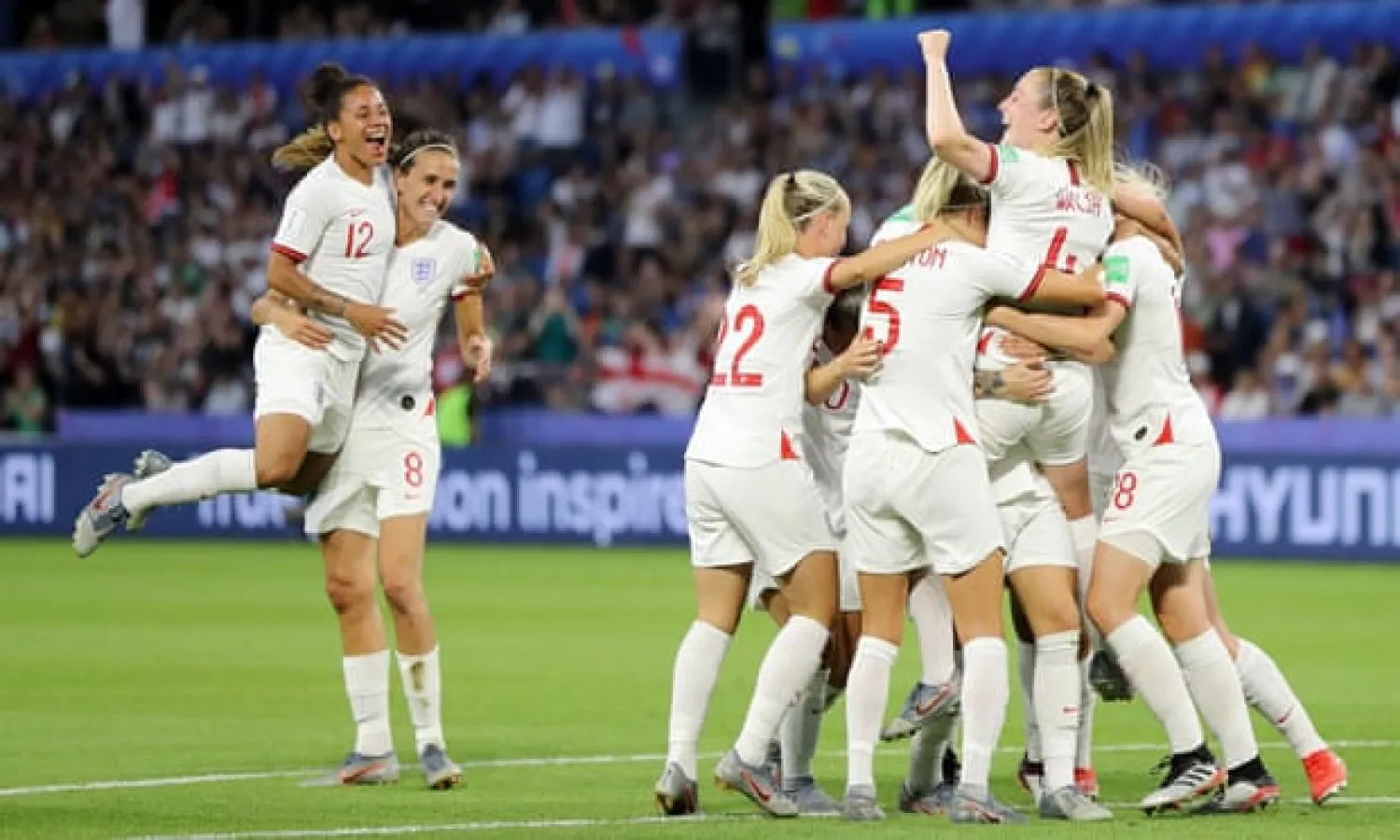
 England won over hearts and minds at the World Cup but there is not much evidence that their success will cause a ‘trickle-down’ effect and boost participation. Photograph: Dave Shopland/BPI/Rex Shutterstock
England won over hearts and minds at the World Cup but there is not much evidence that their success will cause a ‘trickle-down’ effect and boost participation. Photograph: Dave Shopland/BPI/Rex Shutterstock
TT

Lionesses Inspire Us All but Heroes Alone Cannot Make a Nation More Sporty

 England won over hearts and minds at the World Cup but there is not much evidence that their success will cause a ‘trickle-down’ effect and boost participation. Photograph: Dave Shopland/BPI/Rex Shutterstock
England won over hearts and minds at the World Cup but there is not much evidence that their success will cause a ‘trickle-down’ effect and boost participation. Photograph: Dave Shopland/BPI/Rex Shutterstock

The most seductive theory in sport has had one hell of a hearing during the past month. As the Women’s World Cup captured more hearts and minds, so the assumption intensified that England’s run will be a gamechanger, with elite success encouraging large numbers – particularly girls – to play football and get active. It sounds logical enough. Lucy Bronze, Megan Rapinoe, Wendie Renard and Rose Lavelle are fantastic role models, after all. There’s just one problem. There isn’t much evidence for what academics have called the “role‑modelling” or “trickle-down” effect.

Remember when Boris Becker, Steffi Graf and Michael Stich brought an unprecedented number of grand-slam victories for German tennis? There was a decline in membership of the German Tennis Association afterwards. Similarly, in the run up to London 2012 people such as Colin Moynihan, then chair of the British Olympic Association, promised a home Games would “motivate a whole generation of young people as they seek to emulate their Team GB heroes”. The reality has been less rosy. A recent Sport England survey found one in three children do less than 30 minutes of activity a day – such as walking, using a scooter, or playing sport – with the sports minister, Mims Davies, calling it “simply unacceptable”.

We should not be surprised. Long before 2012 researchers looked at Australia’s Olympic results between 1976 and 1996, and identified no correlation between national sporting achievements and “sedentariness” rates in the population. Meanwhile a systematic review of public health initiatives after the 2000 Sydney Olympics suggested there was no evidence that the euphoria of the Games turned into increased activity, despite the silky rhetoric and promises.

Other research has found a slight negative correlation between Olympic success and mass sports participation. As the authors of another study put it: “It is a well‑known assumption that the success of professional athletes increases sport participation in their home country. However, the theoretical support for such a relationship, as well as the empirical evidence, is shallow.”

Read that again. Let it marinate. Across the globe, politicians and public authorities partly justify investment in elite sport based on the effect it has on the ordinary population. But the evidence that such trickle‑down effects in sport work is as elusive as trickle‑down economics was in Ronald Reagan’s America.

Of course some of us are inspired to take up a sport after watching it on TV but studies suggest much of this comes from a “substitution effect”, with already active people switching from one sport to another, or from encouraging lapsed players to dig out their racket or golf clubs again during Wimbledon or the Open. The challenge is getting more people to become more active more of the time.

What about women’s football? Clearly it is growing in popularity, so it can be tricky to disentangle increasing participation with the success of a national team. However a study looking at the after‑effects of Japan’s Women’s World Cup victory in 2011 does just that. The academic Hideaki Ishigami examined all extracurricular activities recorded by 1.5m female Japanese students in the years leading up to and after the tournament – helped by the fact the Nippon Junior High School Physical Culture Association, a national governing body, compiles registration data for 99% of schools in Japan by type of sport.

As Ishigami noted, more girls played football in Japan after 2011. But there was a blunt kicker: his research also found it was “no greater than expected by chance” once growing participation levels before the 2011 tournament were taken into account. As he put it: “We found no quantitative evidence supporting the role-modelling effect. This implies the increase in their participation following the 2011 World Cup would have been observed regardless of whether Japan won.”

As Ishigami notes, gender is clearly a factor. The Daichi Life Insurance Company has conducted annual surveys with 13-year-olds in Japan since 1989. According to their findings, girls’ dream jobs have consistently included teaching, the medical profession and catering – with sports never ranking in the list, even after the 2011 World Cup. That contrasts markedly with boys of the same age, who always include baseball or football. This difference in genders for sporting role models has been found in other countries, too.

There is a message here for the Football Association and the government. Women’s football in Britain is clearly going the right way – given a record FA Cup final attendance, a new £10m Barclays sponsorship for the WSL, and a thrilling World Cup. But as we learned when England finished third in Canada in 2015 this is not enough. The Lionesses have again inspired the nation but now the harder work begins.

The game needs to better fertilise its grassroots – the FA’s new national strategy for girls aged five to 11 is a start – and get more consistent exposure. Stories that neither the FA nor Premier League considers itself capable of expanding the appeal of the WSL don’t bode well, given average crowds were under 1,000 last season, but just imagine the effect of a women’s match shown every Sunday on BBC2?

Meanwhile the fundamental point remains: elite success is not enough to get more people active. After Britain won only one Olympic medal at Atlanta 1996 there was a revolution in government funding that catapulted Team GB towards the top of the table. Is there a relentless desire for a similar upheaval when it comes to getting the rest of us moving, too?

The Guardian Sport


ATP to Introduce New Heat Policy from 2026 Season 

Novak Djokovic of Serbia cools himself with water during the men's singles semifinal match with Valentin Vacherot of Monaco, at the Shanghai Masters tennis tournament at Qizhong Forest Sports City Tennis Center, in Shanghai, China, Saturday, Oct. 11, 2025. (AP)
TT

ATP to Introduce New Heat Policy from 2026 Season 

Novak Djokovic of Serbia cools himself with water during the men's singles semifinal match with Valentin Vacherot of Monaco, at the Shanghai Masters tennis tournament at Qizhong Forest Sports City Tennis Center, in Shanghai, China, Saturday, Oct. 11, 2025. (AP)

The ATP Tour said it will introduce a new heat policy that will come into effect from 2026 after a string of retirements due to soaring temperatures and punishing humidity at the Shanghai Masters earlier this season.

The governing body of men's tennis said the rule, based on the internationally recognized Wet Bulb Globe Temperature (WBGT) index used to measure human heat stress in direct sunlight, had "clear thresholds" for cooling measures and suspension of play.

"The new heat rule provides a structured, medically supported approach to managing extreme heat, with the objective of safeguarding player health," the ATP said on Monday.

It added the rule would also improve conditions for fans, officials, ball persons and tournament staff.

If the WBGT reaches 30.1 C (86.18 F) or higher in the first two sets of a best-of-three-set singles match, a 10-minute cooling break after the second set can be requested by either player and will apply to both competitors.

During breaks, players can hydrate, change clothing, shower and receive coaching under the supervision of ATP medical staff, the governing body added. Play will be suspended when the WBGT goes past 32.2 C.

World number two Jannik Sinner's Shanghai title defense ended in agony in October when the Italian struggled to walk due to cramp in his right thigh before he retired in the deciding set of his third-round clash with Tallon Griekspoor.

At the same event, Novak Djokovic vomited during his encounter with Yannick Hanfmann while Holger Rune was heard asking an official during a medical timeout in his meeting with Ugo Humbert if players had to "die on court" amid the heat and humidity.

The need for a formal ATP heat rule had sprung up in August in Cincinnati when Arthur Rinderknech collapsed on court during a match in sweltering conditions, before handing Felix Auger-Aliassime the victory.

Previously, ATP regulations stated that decisions on the suspension of play due to adverse weather conditions - including extreme heat - lie with an onsite ATP supervisor who coordinates with medical teams at the venue as well as local authorities.

The new rule aligns the ATP with the WTA. The four Grand Slams have also formally implemented the rules that allow for extended breaks and match suspensions.

Several professional sports including football, Formula One and cycling have formal policies to deal with extreme weather.


Rodrygo Scrapes Real Madrid Win at Alaves

Real Madrid's Brazilian forward Rodrygo secured the visitors a much-needed victory at Alaves. ANDER GILLENEA / AFP
TT

Rodrygo Scrapes Real Madrid Win at Alaves

Real Madrid's Brazilian forward Rodrygo secured the visitors a much-needed victory at Alaves. ANDER GILLENEA / AFP

Kylian Mbappe and Rodrygo Goes's goals earned Real Madrid a tense 2-1 win at Alaves in La Liga on Sunday to potentially keep coach Xabi Alonso in his job.

Second-placed Madrid trimmed league leaders Barcelona's advantage back to four points and recorded only their third victory in the last nine games across all competitions.

After a home defeat by Manchester City in the Champions League on Wednesday, Spanish media reported that anything but a victory would cost Alonso his position, AFP said.

After Mbappe's superb opener, Carlos Vicente pulled Alaves level in the second half, but Rodrygo secured the visitors a much-needed victory at Mendizorroza stadium.

"It was a hard-fought game, we competed well, got in front and then lost a bit of control," Alonso told reporters.

"Alaves play with a lot of intensity, it's hard to dominate throughout. We came here to win and we got the three points."

The coach said, as he did after the City game, that he has the support of his squad.

"We're all together in this. One game isn't enough to change the dynamic," he said.

"Now before the winter break we have a cup game on Wednesday, and a game at home (in La Liga to come)."

Alonso was able to bring his key player, Mbappe, back into the side after he could only watch the defeat by City from the bench because of a painful knee.

The coach also handed a debut to Victor Valdepenas at left-back, with both Alvaro Carreras and Fran Garcia suspended, and Ferland Mendy one of several players out injured.

Mbappe appeared to be feeling his knee and also hobbling in the first few minutes but, despite that, was the game's most influential player.

The forward had a shot deflected wide and then fired narrowly over as Alaves sat deep and tried to keep the 15-time European champions at bay.

By the time Mbappe opened the scoring in the 25th minute, his discomfort seemed to have cleared up.

Released by Jude Bellingham, Mbappe drove towards goal at full tilt and whipped a shot into the top right corner for his 17th league goal of the campaign.

England international Bellingham then blasted home from close range but his strike was ruled out for handball.

Needing to fight back, Alaves moved on to the front foot and took control of the game before the break, almost pulling level.

Madrid goalkeeper Thibaut Courtois made a fine save with his head, even if he knew little about it, to deny Pablo Ibanez from close range.

Tight battle

Los Blancos were dangerous again soon after the interval, with Alaves goalkeeper Antonio Sivera saving well from Mbappe and then Vinicius Junior.

Real came to rue those misses when Vicente pulled Alaves level after 68 minutes.

The forward got in behind Antonio Rudiger, controlled former Madrid midfielder Antonio Blanco's chipped pass and whipped a shot past Courtois.

Eduardo Coudet's side almost took the lead when Vicente's low cross from the right was nudged wide by Toni Martinez, who was nudged off-balance by Raul Asencio's pressure.

Instead, Madrid pulled back in front, with Vinicius breaking in down the left and crossing for Rodrygo to finish from six yards out.

It was the Brazilian's second goal in two games after going the previous 32 matches without finding the net, and a tense Alonso celebrated wildly, knowing that his future could depend on it.

Vinicius had appeals for a penalty turned down as he fell under a challenge from Nahuel Tenaglia, and Bellingham came close in stoppage time as Madrid tried in vain to ease their nerves by putting the game to bed.

"I thought it was a clear penalty, Vini was going very fast, there was contact... it surprises me that it didn't go to VAR," said Alonso.

Third-place Villarreal's visit to Levante was postponed because of a weather warning in the Valencia region.

Real Oviedo, 19th, sacked coach Luis Carrion after a 4-0 hammering at Sevilla.

On Saturday, champions Barcelona beat Osasuna 2-0 to win a seventh straight La Liga game and ensure that they will lead the table into 2026, regardless of what happens in the final round of fixtures before the winter break.


Bayern Goalkeeper Neuer Set to Miss Last Game of Year with Hamstring Injury 

14 December 2025, Bavaria, Munich: Bayern Munich goalkeeper Manuel Neuer warms up ahead of the German Bundesliga soccer match between Bayern Munich and FSV Mainz 05 at the Allianz Arena. (dpa)
TT

Bayern Goalkeeper Neuer Set to Miss Last Game of Year with Hamstring Injury 

14 December 2025, Bavaria, Munich: Bayern Munich goalkeeper Manuel Neuer warms up ahead of the German Bundesliga soccer match between Bayern Munich and FSV Mainz 05 at the Allianz Arena. (dpa)

Bayern Munich goalkeeper Manuel Neuer could miss his team's last game of the year because of a hamstring tear.

The club said on Monday that the injury to Neuer's right hamstring was confirmed by a medical examination after the 39-year-old club captain played the entirety of Sunday's 2-2 draw with Mainz. That was a rare case of the unbeaten Bundesliga leader Bayern dropping points.

Bayern said Neuer would be unavailable “for the time being,” without giving further information on the severity of the injury.

The visit to Heidenheim in the Bundesliga on Sunday is the club's last before the winter break.

The German champion is next in action on Jan. 11 against Wolfsburg.
