ADNOC and Pertamina Cooperate in Oil, Gas Development Projectshttps://english.aawsat.com/home/article/1828951/adnoc-and-pertamina-cooperate-oil-gas-development-projects
ADNOC and Pertamina Cooperate in Oil, Gas Development Projects
FILE PHOTO: An Emirati man is seen near the logo of ADNOC in Ruwais, United Arab Emirates May 14, 2018. Picture taken May 14, 2018.REUTERS/Christopher Pike
ADNOC and Pertamina Cooperate in Oil, Gas Development Projects
FILE PHOTO: An Emirati man is seen near the logo of ADNOC in Ruwais, United Arab Emirates May 14, 2018. Picture taken May 14, 2018.REUTERS/Christopher Pike
The Abu Dhabi National Oil Company, ADNOC, has signed a Comprehensive Strategic Framework, CSF, with Indonesia’s energy company, PT Pertamina, Persero, to explore opportunities for collaboration across the oil and gas value chain in the United Arab Emirates, Indonesia and globally.
As part of the CSF, ADNOC and Pertamina will evaluate collaboration opportunities across the upstream, midstream and downstream sectors. The scope of projects under consideration includes participation in the UAE’s upstream oil and gas sector, as well as refining and petrochemicals, LNG, LPG, aviation fuel and fuel retail opportunities in Indonesia.
In addition, the two partners will explore other forms of strategic collaboration with respect to opportunities across transportation, trading and storage in the UAE, Indonesia and globally.
The signing of the agreement took place in the presence of Sheikh Mohamed bin Zayed Al Nahyan, Crown Prince of Abu Dhabi and Deputy Supreme Commander of the UAE Armed Force and Joko Widodo, President of Indonesia.
Dr. Sultan Ahmed Al Jaber, UAE Minister of State and ADNOC Group CEO, and Nicke Widyawati, President Director and CEO of Pertamina signed the agreement.
Pertamina is the state-owned energy company of Indonesia. The company operates an integrated business in the energy sector in Indonesia and is expanding its overseas presence. The company produces and distributes energy products such as fuel, lubricants, LPG, LNG, and petrochemicals. Currently, Pertamina owns six oil refineries in Indonesia with a combined production capacity of 1.1 million barrels of oil per day (mmbpd). At the same time, the company is developing renewable energy from many potential resources in the country.
Al Jaber said, "Indonesia has a thriving industrial base and is a rapidly growing market for energy. We see significant opportunity for collaboration between our two companies and the development of projects that meet our joint strategic objectives."
He added, "This collaboration with Pertamina further demonstrates ADNOC’s drive to unlock value from across our entire portfolio and our ambition to expand our international investments to become a truly global energy company."
Nicke Widyawati said, "Pertamina plans to develop an additional 1 mmbpd of refining capacity through the Refinery Development Master Plan (RDMP) and Grass Root Refineries (GRR) projects. Therefore, partnership with ADNOC will be an important milestone for Pertamina to secure energy supplies from overseas. ADNOC’s interest to participate in Indonesia’s oil and gas landscape is monumental to support Pertamina in ensuring the availability and accessibility of energy for Indonesian people."
Working groups from each side will be meeting over the coming months to evaluate and shortlist key areas for strategic collaboration across both companies’ extensive asset and project portfolios. It is expected that specific collaboration options will be agreed for execution by the end of 2019.
This new partnership marks another step in ADNOC’s group-wide transformation and value creation program that addresses the evolving energy and petrochemicals landscape and ensures ADNOC remains a resilient and flexible company able to take full advantage of emerging market opportunities and trends. The Group’s transformation is driven by an expanded approach to strategic partnerships and co-investments as well as the more proactive management of ADNOC’s portfolio of businesses, assets and capital.
As for Pertamina, the collaboration supports its ambition to embark into the global energy arena and acts as a stepping stone to achieve greater competitiveness to compete with international energy players.
UN to Asharq Al-Awsat ahead of COP31: Climate Change and Energy Security Are Two Integrated Pathshttps://english.aawsat.com/business/5339197-un-asharq-al-awsat-ahead-cop31-climate-change-and-energy-security-are-two
UN to Asharq Al-Awsat ahead of COP31: Climate Change and Energy Security Are Two Integrated Paths
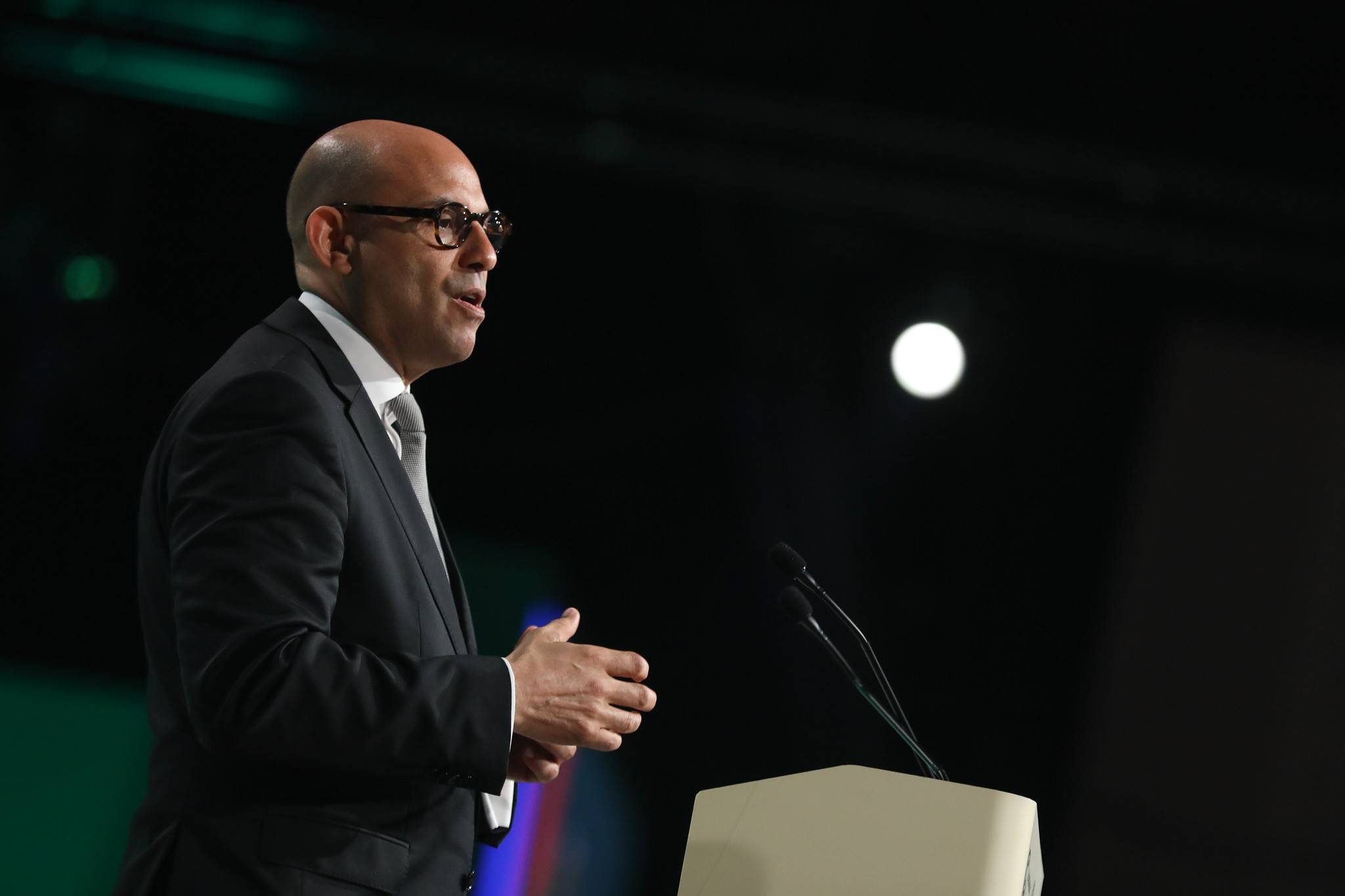
United Nations Climate Change Executive Secretary Simon Stiell. (UN)
On the eve of the opening of the 31st United Nations Climate Change Conference (COP31) on Monday in the Turkish city of Antalya, attention is focused on the ability of governments to bridge the pledge gap and transition toward executing concrete steps to confront climate change. This comes at a time when the challenges of reducing emissions intersect with energy market disruptions, rising electricity demand, and the accelerating expansion of artificial intelligence and data centers.
In an exclusive interview with Asharq Al-Awsat, UN Climate Change Executive Secretary Simon Stiell urged the swift fulfillment of international climate pledges, particularly financing for developing countries and the realization of the $1.3 trillion annual Baku-to-Belem roadmap.
Stiell noted that energy security and climate action are complementary rather than conflicting, while commending the Saudi Green and Middle East Green initiatives for advancing regional cooperation.
The COP31 conference is being held over a period of more than two weeks in Antalya, amid record-breaking temperatures, worsening climate change impacts, and rising energy insecurity, according to the United Nations website. The UN stated that the summit presents a critical opportunity for countries to accelerate the pace of climate action and strengthen cooperation. The host country places electricity at the forefront of its priorities, promoting its own boom in the renewable energy sector alongside its "Zero Waste" program as a means to curb methane emissions.
Stiell addressed the relationship between energy security and climate action amid ongoing disruptions in energy markets, the implications of expanding artificial intelligence and data centers on electricity and water consumption, and the opportunities to utilize these technologies to improve the efficiency of energy systems. He also reviewed the gap between climate pledges and actual implementation, alongside the priorities for the 31st session of the Conference of the Parties in Türkiye.
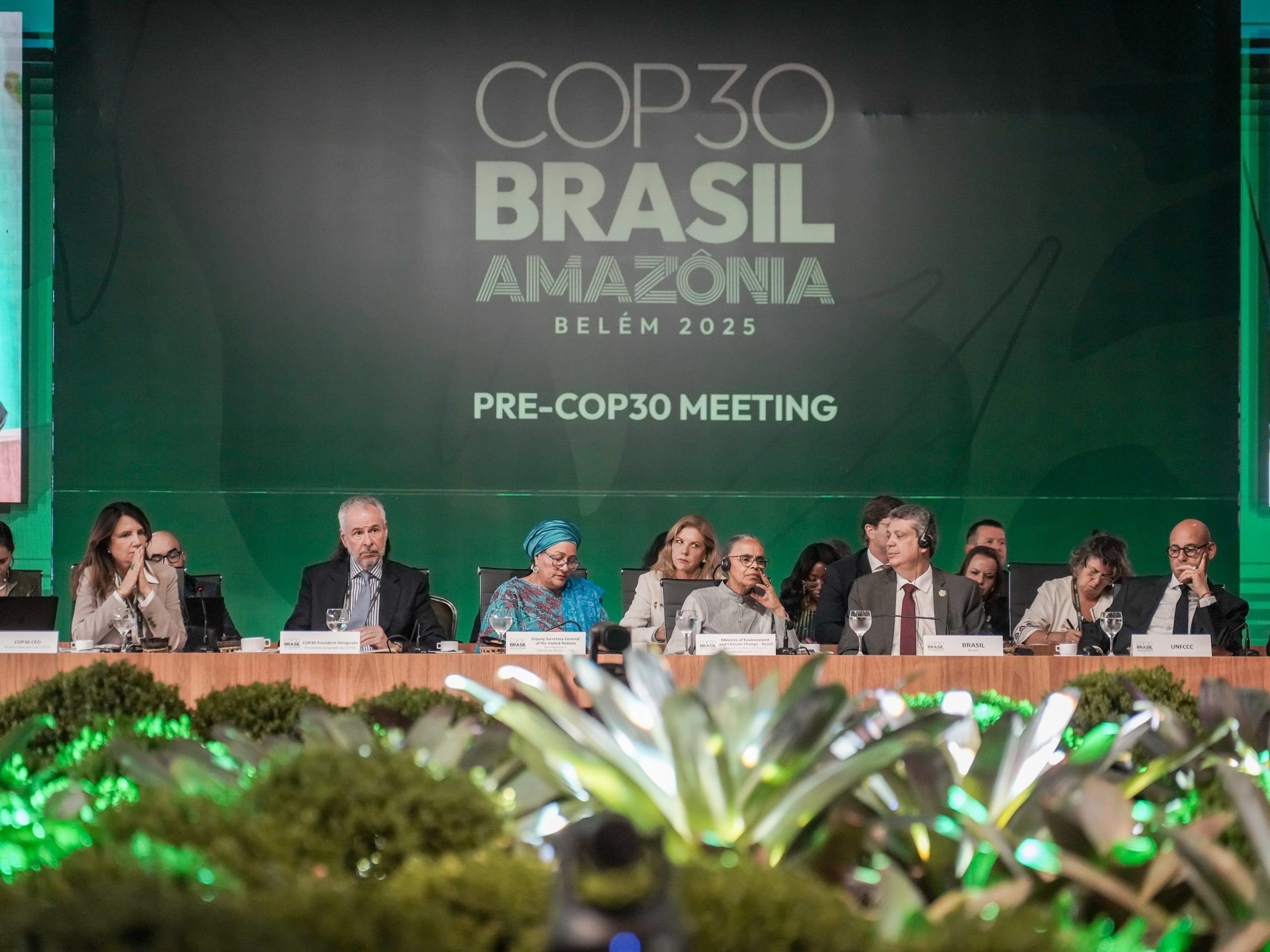
Officials at COP30 in Brazil. (UN)
High capital costs impede climate financing for developing nations
Stiell described climate finance as a fundamental element to expand the scope and accelerate the pace of climate action, both by reducing greenhouse gas emissions and strengthening the resilience of countries and communities to the worsening impacts of climate change.
Fulfilling all climate finance pledges is "absolutely crucial," particularly to support developing countries that are most vulnerable to the impacts of climate change, despite having contributed the least to causing the crisis, he told Asharq Al-Awsat.
He explained that the challenges facing these countries pertain to the accessibility, nature, and quality of financing, noting that the high cost of capital stands at the forefront of these hurdles, particularly for low-income and highly indebted countries already grappling with compounding debt crises.
While a shortage of projects is not the primary obstacle for some developing countries, others face a challenge rooted in their limited capacity to prepare and develop initiatives, resulting in a scarcity of bankable projects capable of attracting funding and investment, Stiell explained.
Stiell stressed that climate finance is not an act of charity or mere aid, but rather a necessity for achieving climate justice, and at the same time a strategic investment to ensure the resilience of global economies and societies, thereby supporting economic stability and growth with low inflation rates.
He called for strengthening joint action and cooperation among all climate-finance stakeholders and policymakers, including governments holding shares in multilateral development banks, which can leverage their influence to ensure more concessional financing reaches countries most vulnerable to climate risks.
International cooperation can play a pivotal role in deploying public finance to mitigate risks, support project development, and catalyze larger flows of private capital, he stressed.
In this context, he stated that it is essential for the Baku-to-Belem roadmap, which aims to mobilize $1.3 trillion annually in climate finance, to become a tangible reality, building on the agreement reached during COP29 in Azerbaijan regarding the New Collective Quantified Goal on climate finance, and in coordination with the COP30 presidency in Brazil.
The roadmap charts a path to scale up climate finance to $1.3 trillion per year for developing nations, while ensuring it is directed toward the countries and communities that need it most, Stiell said.
The priority today is to transition from the stage of pledges to providing actual and accessible financing, and to translate it into practical investments and projects that support the implementation of climate commitments in developing countries, he stated.
UN Climate Change Executive Secretary Simon Stiell. (UN)
Energy security and climate action: Two complementary paths
Amid geopolitical tensions and recurring disruptions in energy markets, Stiell said that energy security and climate action should be treated as complementary paths that must be addressed together.
He explained that governments must ensure reliable and affordable energy supplies, while reducing emissions and preparing for long-term shifts in energy demand patterns.
Recent disruptions in energy markets underscore the critical need to build resilient infrastructure, diversify energy sources and supply routes, and strengthen international cooperation, continued Stiell.
He added that expanding investments in renewable energy, improving energy efficiency, and developing electricity grids and energy storage systems can contribute to strengthening energy systems that are reliable and capable of meeting demand.
He said that the solution lies in integrating the immediate needs of energy security with long-term strategic planning, explaining that reliable clean energy supplies, emissions reductions, economic development, and international cooperation should reinforce one another rather than be viewed as competing objectives.
Stiell noted that investment in green energy is experiencing an accelerating global boom, with its value surpassing two trillion US dollars over the past year and continuing to rise. Green energy has become a primary driver of economic growth, enhanced competitiveness, job creation, improved living standards, and the achievement of stability.
This is one of the primary reasons driving nearly all G20 economies, including Saudi Arabia, to expand their investments in renewable energy to capitalize on these significant economic and social gains, he said.
Artificial intelligence: A double-edged sword
Regarding the rapid surge in electricity demand resulting from the expanding use of artificial intelligence and data centers, Stiell described AI as a "double-edged sword." He explained that data centers consume massive amounts of electricity and water, making it essential to ensure they rely on clean energy sources and are managed according to sustainability standards.
At the same time, AI possesses enormous potential that can be deployed positively to accelerate the pace of transition, contributing to making energy systems more efficient, flexible, and reliable, while also reducing their costs, he remarked.
He added that the challenge lies in mitigating the negative impacts and risks associated with artificial intelligence, enhancing its positive potential, and ensuring its responsible deployment.
He underlined the importance of ensuring all countries benefit from this potential through capacity building, particularly in the most vulnerable developing nations, and fostering the exchange of knowledge and expertise to help accelerate the implementation of these technologies.
Stiell noted that governments and industrial sectors could achieve substantial gains through joint action, with governments establishing clear policies, regulatory frameworks, appropriate safeguards, and long-term investment plans, while technology companies work to improve the efficiency of data centers and increase their reliance on clean energy sources.
Planning and investment strategies must account for uncertainty, given the varying estimates regarding the scale of future electricity demand driven by the expanding use of artificial intelligence, he went on to say.
Investing in electricity grids, energy storage systems, and the development of more efficient electrical architectures will yield sustainable, long-term benefits, regardless of future demand levels, he added.
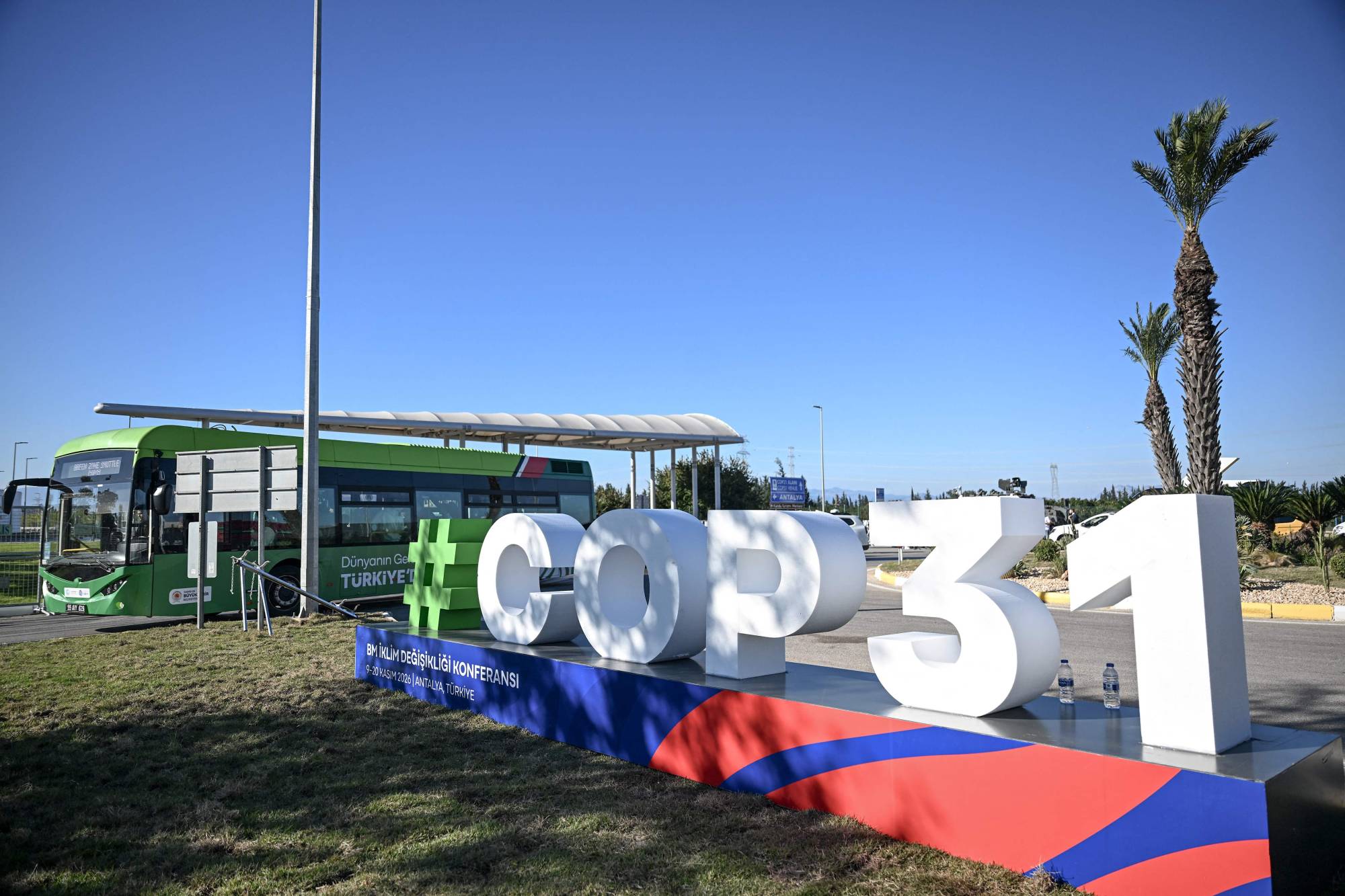
A "#COP31" sign is displayed by a road near the entrance of the Antalya Expo Center, venue of the 2026 United Nations Climate Change Conference (COP31), in Antalya on November 7, 2026. (AFP)
Global climate progress remains below required level
In his assessment of global progress toward the Paris Agreement, Stiell stated that humanity has made significant strides against climate change, though current efforts remain insufficient. He noted that without structured United Nations climate cooperation and national initiatives, global temperatures would be on track to rise by more than 4 degrees Celsius, or potentially higher under worst-case scenarios.
He added that current projections indicate global warming could reach around 2.6 degrees Celsius. While this level remains catastrophically high and threatens devastating consequences for economies and populations worldwide, it also reflects the scale of progress humanity has managed to achieve.
The goals of the Paris Agreement remain a fundamental necessity, but achieving them requires accelerating and expanding the scope of climate action through a just global transition that ensures no country or community is left behind, stressed Stiell.
He noted that the world has witnessed progress in technological development, increased investment in clean energy, and the strengthening of national climate plans, but the real challenge lies in accelerating the pace of implementation and turning goals and pledges into tangible results on the ground.
No single session of the UN Climate Change Conference can resolve the global climate crisis on its own, yet recent COP sessions have taken significant steps forward, and the 31st session in Türkiye must continue this path and build upon what has been achieved, he urged.
COP31 focuses on implementation and accelerating electrification
Regarding the priorities of the 31st session of the Conference of the Parties in Türkiye, Stiell explained that the focus will center heavily on boosting and accelerating implementation, both within the framework of formal negotiations and through the action agenda, noting that numerous vital issues require agreements.
He said that climate action must deliver practical benefits to a larger number of people, economies, and ecosystems.
He explained that the formal negotiations within the framework of the UN Framework Convention on Climate Change and the Paris Agreement provide a platform for all countries to present solutions and advance several key files, including a just transition, climate finance, adaptation, mitigation, and climate change response measures.
As for the work agenda, which enables countries to cooperate with businesses, cities, regions, and stakeholders across various sectors, the COP31 presidency has announced its priorities to drive progress in specific, practical areas, such as accelerating the transition to electricity use and modernizing power grids.
Stiell noted that climate change adaptation and building resilience must receive greater attention, explaining that communities need better protection against extreme heatwaves, floods, droughts, and other climate impacts.
Climate action must translate into practical, tangible benefits that reach a larger number of people, economies, and ecosystems around the world, he urged.
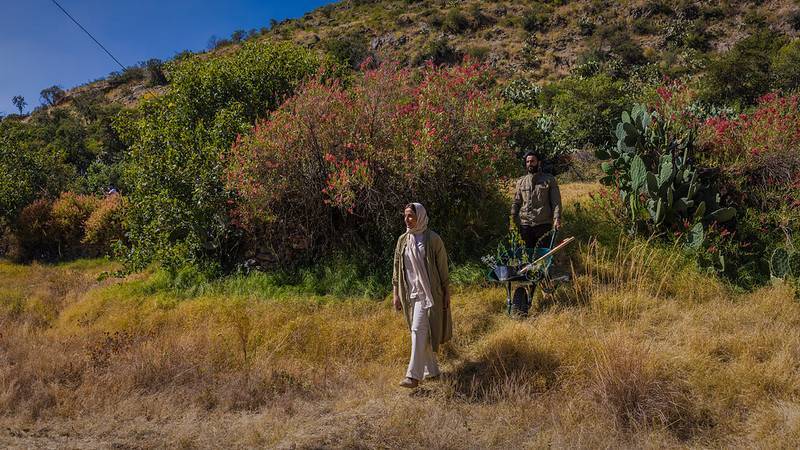
Afforestation efforts in the Saudi Arabia. (Saudi Green Initiative)
Clean energy revolution opens opportunities to build stronger economies
In his message prior to the meeting in Turkey, Stiell said the clean energy revolution offers extraordinary opportunities to build stronger economies, enhance energy security, and improve living standards. The conference provides a vital chance to forge new partnerships, reinforce shared priorities, and advance the Sustainable Development Goals.
He called on nations, business leaders, and investors to arrive in Türkiye with a solution-oriented vision, a genuine readiness to work together, and a commitment to reaching the necessary negotiating compromises to secure agreements and drive progress on practical issues, such as the transition to electrification.
These steps are capable of making a real difference and achieving tangible benefits for more people across the world, he stressed.
Climate action: A pillar of Saudi economic transformation
Regarding Saudi Arabia, Stiell praised the steps taken by the Kingdom to integrate climate action into its economic transformation path under Vision 2030.
He pointed to the progress it is making in reducing methane emissions resulting from oil and gas production operations, explaining that this field represents an important opportunity for the Kingdom to strengthen its leadership role at the international level and inspire other countries to take similar steps.
He underlined the importance of continuously integrating renewable energy projects into electricity grids and upgrading the infrastructure of the power sector.
He said that accelerating the pace of climate action in the Kingdom, in these areas and others, would deliver greater benefits to the Saudi economy and its population, as well as to the entire region.
Regarding the upcoming phase, Stiell noted that the priority in the next stage lies in translating national projects and goals into actual, measurable results, by integrating more renewable energy projects into electricity grids, upgrading the infrastructure of the power sector, improving energy efficiency, and continuing to reduce methane emissions.
Achieving this progress remains conditional on the level of commitment to implementation, enhancing transparency in reporting results, and ensuring the sustainability of investments, he added.
Saudi initiatives to boost regional action
Highlighting the Saudi Green and Middle East Green initiatives, Stiell said they are a significant step toward strengthening climate action by combining efforts to reduce emissions, restore land, and protect the environment.
Regional cooperation offers countries the opportunity to exchange expertise and knowledge, build technical capacities, and coordinate investments, he remarked, noting that forging effective regional partnerships can contribute to achieving broader climate and environmental goals while considering the specific ecological characteristics and conditions of the Middle East.
However, he pointed out that the true value of these initiatives depends on the continuity of their implementation and the tangible, long-term results they achieve.
In this context, he stressed that evaluating the success of afforestation projects should not be limited to the number of trees planted, but must also encompass their survival and growth rates, the total area of land successfully restored and rehabilitated, the extent of biodiversity protection, and the efficiency and sustainability of water resource management.
Afforestation efforts in the Saudi Arabia. (Saudi Green Initiative)
Coordination between climate, land, and biodiversity is a necessity
On the importance of coordinating climate, land, and biodiversity agendas and the role the Kingdom can play in this domain, Stiell said Saudi Arabia could play a significant role by leveraging its expertise in combating desertification and land restoration to support regional cooperation.
He explained that the Saudi Green and Middle East Green initiatives provide two important platforms for exchanging knowledge and expertise, strengthening cooperation, and executing environmental projects with a tangible impact.
The primary objective is to transition from treating environmental initiatives as separate tracks to adopting an integrated approach for joint action, achieving tangible results in terms of protecting climate, land, and biodiversity, as well as improving the lives of communities, he said.
Coordinating efforts to confront climate change, restore land, and protect biodiversity is a fundamental necessity, given the close interconnectedness between these issues and challenges, he said.
Climate change exacerbates pressure on ecosystems, while land degradation diminishes the capacity of these systems to store carbon and sustain the livelihoods of communities, he warned.
Message to Saudi Arabia
In a message to Saudi Arabia, Stiell expressed his appreciation for the Kingdom's continuous efforts to confront climate change at a time when climate impacts are intensifying and affecting all countries worldwide, as well as for the significant progress it is making in advancing the energy sector's transition in a just and orderly manner.
He welcomed the Kingdom's continued partnership and active engagement in international climate action efforts, looking forward to further cooperation with it to translate climate commitments into tangible and measurable results that will help in building a more resilient, prosperous, and just world, and a safer and more sustainable future.
Gold Rises over 1% as Softer Oil Prices Ease Inflation Worrieshttps://english.aawsat.com/business/5339190-gold-rises-over-1-softer-oil-prices-ease-inflation-worries
Gold Rises over 1% as Softer Oil Prices Ease Inflation Worries
The People's Bank of China's gold holdings increased by 830,000 ounces in October (Reuters)
Gold rose more than 1% on Monday as softer oil prices eased inflation concerns, while investors awaited key US inflation data and fresh signals from the Federal Reserve on its policy outlook.
Spot gold climbed 1.2% to $4,112.90 per ounce by 0630 GMT, while US gold futures for December delivery also rose 1.2% to $4,122.00. Bullion gained about 5% last week, Reuters reported.
Oil prices fell after US President Donald Trump said he was highly unlikely to order further attacks on Iran as talks to end the conflict continued, easing concerns about potential supply disruptions.
Lower oil prices can ease inflationary pressures and reduce expectations that interest rates will stay higher for longer, lowering the opportunity cost of holding non-yielding bullion.
"Trump's more conciliatory tone toward Iran is helping keep a lid on oil prices, which in turn eases some of the inflation pressure that had been weighing on the metal along with a modest pullback in the dollar," said Tim Waterer, chief market analyst at KCM Trade.
The dollar softened, making greenback-priced bullion more affordable for buyers overseas.
Meanwhile, US job growth accelerated in October and the unemployment rate fell to 4.1%, reinforcing expectations that the labor market remains resilient and keeping the Fed on track for a December interest-rate increase.
Traders currently see a 79% chance that the Fed will raise rates in December, up from 71% prior to the payrolls data, according to CME's FedWatch tool.
Market participants now await the US Consumer Price Index data due on Tuesday and the Producer Price Index on Friday to further gauge the Fed's monetary policy stance.
"Any hot readings would likely firm the dollar and lift the odds of a December rate hike, which would quickly put gold back on the defensive," Waterer said.
Among other metals, spot silver climbed 1.4% to $52.57 per ounce, platinum gained 0.7% to $1,546.83 and palladium rose 1.4% to $1,037.58.
Members of the GCC Transport and Communications Ministers Committee pose for an official photo in Manama (GCC).
Gulf Cooperation Council (GCC) countries signed an agreement in Manama on Sunday to advance a 2,117-kilometer railway linking all six member states by 2030, as shipping disruptions in the Strait of Hormuz underscore the need to diversify trade and supply routes.
The agreement establishes a common framework for building and operating the network and integrating national transport systems, amid regional tensions that have disrupted cargo movements, raised shipping and insurance costs, and highlighted the importance of alternative routes.
The Gulf railway is intended to strengthen regional logistics rather than replace maritime transport, which remains essential to Gulf and international trade.
The signing ceremony was held under the patronage and in the presence of Bahrain’s Crown Prince and Prime Minister Prince Salman bin Hamad Al Khalifa, with GCC transport ministers and Secretary-General Jasem Mohamed Albudaiwi attending.
The planned network will connect Kuwait, Saudi Arabia, Bahrain, Qatar, the United Arab Emirates and Oman, with full operations targeted for December 2030.
The agreement sets out member states’ obligations, coordination mechanisms, technical and operational standards, and safety requirements to ensure compatibility with national railway systems.
Bahrain’s Minister of Transportation and Telecommunications, Dr. Sheikh Abdulla bin Ahmed Al Khalifa, told Asharq Al-Awsat that each country would finance and implement the section within its territory.
He explained that GCC states had not signed prior agreements with international partners to finance or execute the project, although global companies could provide expertise and technical and technological services according to national requirements.
Project 55.9% Complete
Albudaiwi announced that the Gulf railway project had reached 55.9% completion, describing the agreement as a framework governing member states’ commitment, implementation procedures and the timetable for bringing the network into service.
While full operations are scheduled for December 2030, cross-border connections between neighboring countries could open individually once the necessary infrastructure and operational requirements are met.
This would allow completed sections to enter service progressively rather than waiting for the entire 2,117-kilometer network to be finished.
Projections indicate that the railway will carry approximately 6 million passengers and 200 million tons of freight in 2030, rising to more than 8 million passengers and 271 million tons by 2045.
Passenger trains are expected to reach speeds of 200 kilometers per hour, while freight services will operate at 80 to 120 kilometers per hour.
The network will connect economic and industrial centers, ports and logistics hubs across the Gulf, facilitating trade and the movement of passengers and goods while creating investment and employment opportunities in transport and related services.
National Financing and Potential Partnerships
Earlier estimates put the cost of the project’s core infrastructure at between $15.4 billion and $16 billion.
The Bahraini minister explained that these figures were under review because of rising costs for construction materials, services and building works. No revised estimate for the overall project has been announced.
Although each country will fund its own section, private-sector participation remains possible in certain components, subject to economic and financial feasibility studies.
The minister added that potential partnerships would depend on the requirements of individual sections, with no single financing or implementation model envisaged for the entire network.
Bahrain’s connection to the Gulf railway depends on the proposed King Hamad Causeway, which would link the island kingdom to Saudi Arabia through a railway alongside a road connection.
The project would connect Bahrain’s international passenger terminal with the Saudi railway network, providing a direct link to the wider GCC system.
Bahrain currently relies on the King Fahd Causeway for road transport to Saudi Arabia. Studies and procedures concerning the proposed King Hamad Causeway, including its railway component, remain underway as part of efforts to complete the cross-border connection.
The agreement has taken on added significance following recent disruptions to regional shipping, particularly reduced vessel traffic at Bahrain’s Khalifa bin Salman Port, which has increased reliance on road transport and alternative ports in neighboring countries.
Albudaiwi praised Saudi Arabia, the UAE and Oman for their cooperation during the period of Iranian attacks, citing logistical facilities, coordination and alternative cargo routes that helped maintain supply chains to other GCC countries.
He stressed the need for greater integration among transport systems, more diversified supply routes and stronger preparedness and coordination to manage future crises.
The GCC’s transport and storage sector recorded real growth of 5.7% in 2025, making it one of the fastest-growing non-oil economic activities, he noted.
At the 19th consultative meeting of the GCC Supreme Council in Jeddah on April 28, 2026, Gulf leaders called for a study on strengthening logistics integration among member states as part of broader efforts to develop transport networks and diversify trade and supply routes.
Rail and Maritime Transport to Work Together
Despite the renewed focus on rail connectivity amid shipping disruptions, the project is designed to complement maritime transport rather than compete with it.
Rail services could move goods from ports to industrial centers and domestic markets while providing additional distribution routes between GCC countries. Ships would continue to carry the bulk of international freight over long distances.
Integrating the railway into wider international logistics corridors would require further studies, agreements and coordination among governments and relevant authorities, beyond completing the rail infrastructure within the GCC.
The network is also expected to stimulate intra-Gulf trade, improve connections between production and consumption centers, and attract investment in transportation, logistics and related industries.
Additional employment opportunities are anticipated in construction, operations, maintenance and supporting services.
From a 2009 Proposal to Regional Implementation
The Gulf railway initiative dates to December 2009, when the GCC Supreme Council approved plans for a network connecting member states to facilitate trade, improve mobility for citizens and residents, and strengthen regional economic integration.
In December 2021, the council approved the establishment of the GCC Railways Authority to coordinate national efforts, monitor connectivity and operational requirements, and provide an institutional framework for cooperation.
Implementation has since progressed across member states, with completion exceeding 50% by May 2026.
لم تشترك بعد
انشئ حساباً خاصاً بك لتحصل على أخبار مخصصة لك ولتتمتع بخاصية حفظ المقالات وتتلقى نشراتنا البريدية المتنوعة