
'I Saw My Friends Die in the Street': Mohamed El-Munir's Journey From Libya to LAFC

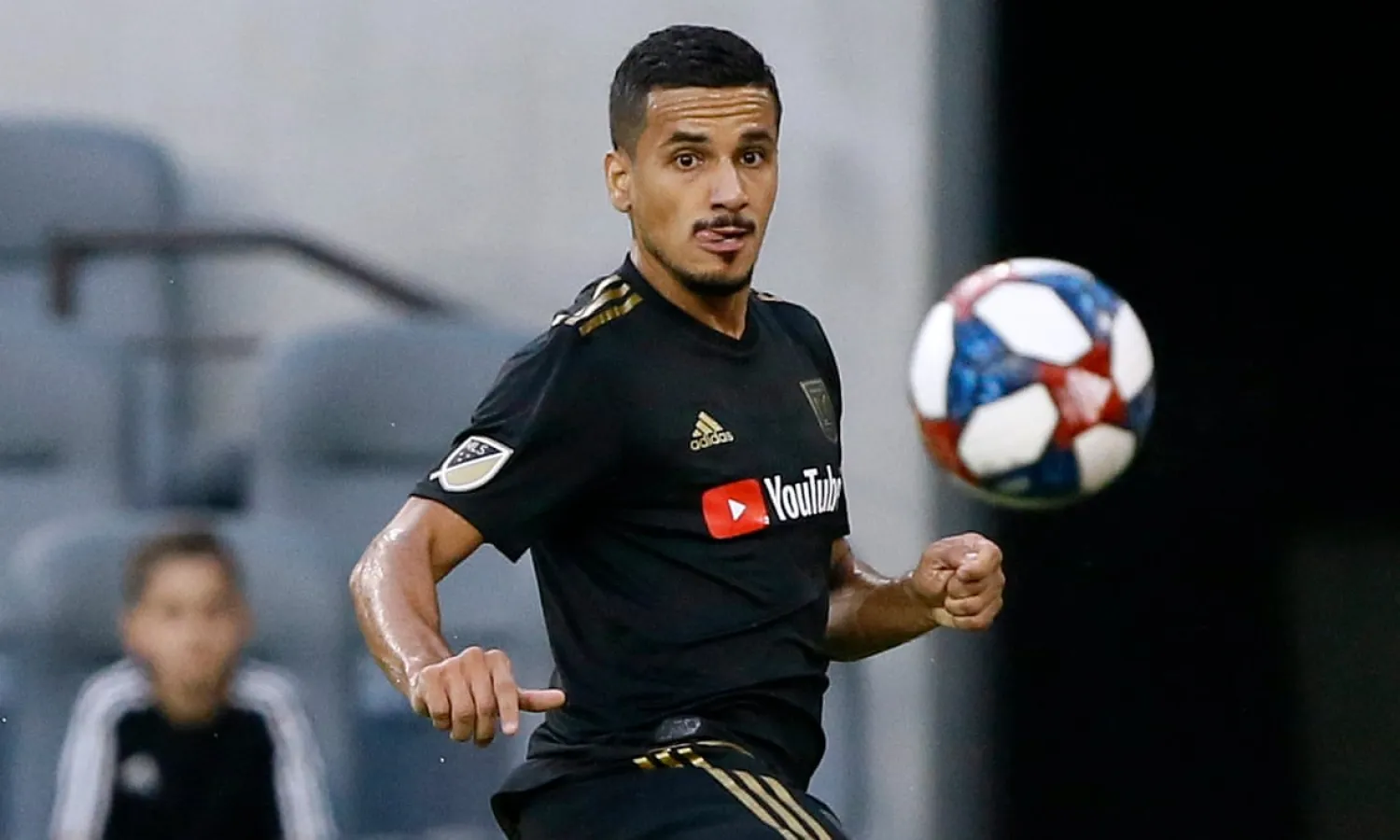
Los Angeles FC defender Mohamed El-Munir, right, centers a pass against Vancouver Whitecaps defender Jake Nerwinski during the first half of a Major League Soccer game in Los Angeles, Saturday, July 6, 2019. (AP Photo/Alex Gallardo) Photograph: Alex Gallardo/AP
TT

'I Saw My Friends Die in the Street': Mohamed El-Munir's Journey From Libya to LAFC

Los Angeles FC defender Mohamed El-Munir, right, centers a pass against Vancouver Whitecaps defender Jake Nerwinski during the first half of a Major League Soccer game in Los Angeles, Saturday, July 6, 2019. (AP Photo/Alex Gallardo) Photograph: Alex Gallardo/AP

When the Libyan revolution started, Mohamed El-Munir was a 19-year old playing for Al-Ittihad Tripoli. “Nobody expected it,” the Los Angeles FC defender tells the Guardian. “It just happened so fast. We just finished the first half of the season, so we were getting ready to play the second half. The problems started and they said, ‘We’re going to stop the league for a week or 10 days until we solve these problems.’”

Chaos quickly ensued. “I had to see many of my friends die in the street,” the 27-year-old says. “If I had to go out, I wouldn’t know if I was going to come back. We didn’t have electricity from 7 o’clock to 12, 1 o’clock. In June or July, it started to be so difficult to find food.”

In the years since, El-Munir has forged a career abroad while striving to support his parents and two brothers in Libya, which he left in 2011. Los Angeles represents the latest stop in an odyssey that has taken El-Munir from Tripoli to Serbia, Belarus, and Florida. In the process, he has confronted loneliness, poverty, and constant anxiety about his family. Even with his wife and two young sons living with him and the financial stability a career in Major League Soccer provides, that anxiety never disappears.

“It’s difficult, to tell you the truth,” El-Munir tells the Guardian. “I have good days, bad days. There’s nine hours’ time difference [between California and Libya] so the only time I can reach my family, if there’s a network, is the hour before I get to training. It’s going to be seven or eight in the morning here.

“If I reach them and they tell me that they are good, I can feel much better because I know that they are safe. But if I can’t get in touch with them, that’s going to be a problem. I’m trying to concentrate but, still, I have it on my mind.”

El-Munir tries to send money home to his family because Libyans often cannot access their bank accounts. “People are standing in line for weeks just to get their own money,” El-Munir says. “They wake up at 2am just to get a number for the line. They come back at 8am to get in line because the bank opens at 9am. This line is not 50 people; this line is like 500, 1,000 people. But the guy who is responsible says, ‘We already changed the numbers’ because he’s going to put someone else ahead who paid him money. They treat old women, sick women, standing in line like slaves.”

Profiteering says takes no prisoners: “My mother needs insulin. The hospitals get insulin but [people] steal it so they can sell it.”

The constant civil disorder has upset soccer in Libya too. The country’s national team, which El-Munir has represented 19 times, have neither played nor trained at home since 2013. Their “home” qualifiers for the World Cup and the African Cup of Nations were played in Egypt or Tunisia. Those nations also provide “home” sites for Libyan clubs in the Confederation of African Football’s Champions League.

Libya’s Premier League has played only two full seasons since the revolution. The LPL suspended play in February 2011, when the violence started, and competition did not resume until September 2013. The league canceled the 2014-15 season, played for five months in 2016, missed 2016-17, then completed 2017-18. The current season, which began in November, was suspended in May.

“People can’t go out from their homes so there’s no training, no games, no nothing,” El-Munir says. “We have good players but because of the problems we have, they play one game every two or three months. Then they play two, three games and they stop again for two, three months. They don’t have the rhythm of the game. There’s no discipline.”

After the revolution Libya’s former under-20 coach, Branko Smiljanic, arranged for El-Munir to transfer to Serbia’s Partizan Belgrade for the following season. The pair left in August 2011 but militia allied with Isis commandeered the main highway along the Mediterranean coast. Consequently, they had to drive seven hours through the Nafusa Mountains to reach Tunisia.

When the pair reached Serbia, Partizan reneged on the agreement, so El-Munir joined FK Jagodina. But he had not played in six months, and would not play for another eight while trying to regain fitness. Since he never played, El-Munir was not paid. “Those six months, every day I was thinking like I wanted to go back home,” he says. “I’m living alone. I’m not doing anything. I don’t have money even to buy water or bread.

“But if I’m going to go back to Libya, what am I going to do? There are no colleges. There is no soccer. There’s nothing. Am I going to go back just to be like the militia to make my family live? Or am I going to be like the people where one day, we have food to eat and one day, we don’t have food to eat? So I had to wait until I got a chance.”

El-Munir got that chance when he became Jagodina’s starting left-back in 2012-13, and made enough of an impression to interest Al-Ittihad in reacquiring him. “It was good money, big money,” he says. “I saw it as a chance to change the life of my family.”

El-Munir rejoined Al-Ittihad in January 2014. But in May, political factions began the ongoing civil war. That July, battle raged for six weeks at Tripoli’s airport. “My family was living 10 minutes from the airport,” he says. “One morning, we had to leave our house. We were hearing the bombing and the shooting. It wasn’t safe but we had to leave. I couldn’t come back to check the house because I got a call saying that many people were [breaking into)]the houses and stealing. I had to wait for a week.”

When El-Munir returned, he found a pillaged home. “They stole everything,” he says. “The house was a mess. When I returned with my family, I decided I was going to leave.”

El-Munir left Al-Ittihad after eight months without receiving his salary. He returned to Jagodina on a free transfer, moved in 2015 to Belarus’ Dynamo Minsk, joined Partizan Belgrade in 2017 and signed with Orlando City in MLS in 2018. After spending last season as Orlando City’s starting left-back, he went to LAFC in a trade in December 2018.

“I asked last year if maybe I could bring my family here with me but it’s not possible because of political reasons,” El-Munir says. “Thank God I’m still finding ways to help them. I hope the situation changes because I don’t know how long I can keep doing this.”

(The Guardian)


Makenzie Replaces Injured Yahya in Iraq’s World Cup Squad

Football - International Friendly - Spain v Iraq - Riazor stadium, A Coruna, Spain - June 4, 2026 Iraq's Ahmed Yahya Mhmood Al Hajjaj in action with Spain's Pedro Porro. (Reuters)
TT

Makenzie Replaces Injured Yahya in Iraq’s World Cup Squad

Football - International Friendly - Spain v Iraq - Riazor stadium, A Coruna, Spain - June 4, 2026 Iraq's Ahmed Yahya Mhmood Al Hajjaj in action with Spain's Pedro Porro. (Reuters)

Iraq ‌have called up Ahmed Hassan Makenzie to their 2026 World Cup squad to replace Ahmed Yahya, who has been ruled out of the tournament with a hamstring injury, the national ‌team announced ‌on Saturday.

"Based on ‌the ⁠medical report, head ⁠coach Graham Arnold has decided to call up Ahmed Makenzie and register him in the final squad for ⁠the 2026 World Cup ‌finals ‌in place of Ahmed Yahya," ‌the national team said ‌in a statement on X.

The decision came as the Iraqi delegation arrived in ‌Chicago in the early hours of the ⁠morning ⁠to prepare for the tournament.

The tournament marks Iraq's first appearance at the World Cup since their sole participation 40 years ago. They are set to compete in Group I alongside France, Senegal and Norway.


Mexico City Chases World Record for Largest Mexican Wave Ahead of World Cup

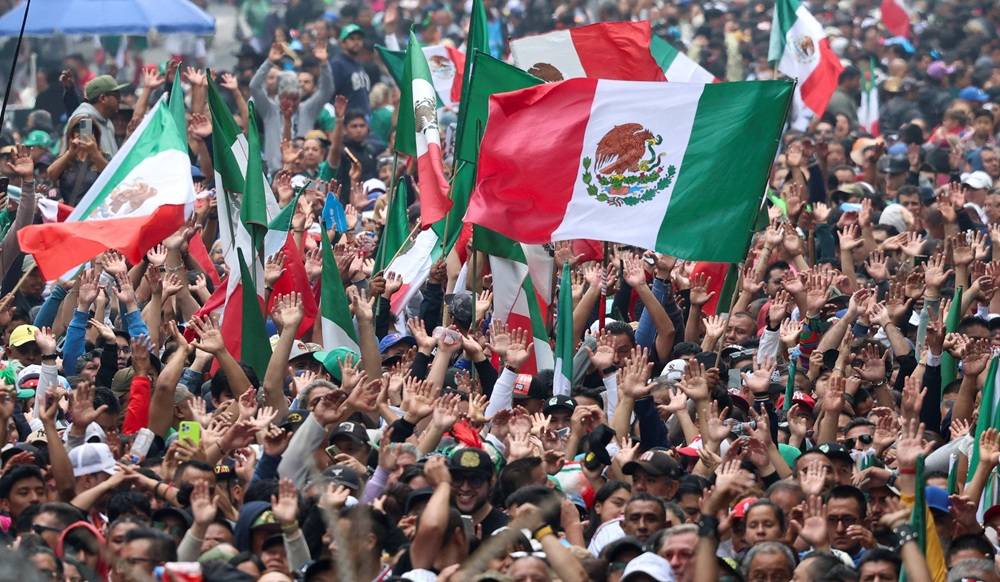
A drone view of people participating in an attempt to break the Guinness World Record for the world’s largest “Mexican wave” along Reforma Avenue as part of activities ahead of the FIFA World Cup 2026, in Mexico City, Mexico, June 6, 2026. (Reuters)
TT

Mexico City Chases World Record for Largest Mexican Wave Ahead of World Cup

A drone view of people participating in an attempt to break the Guinness World Record for the world’s largest “Mexican wave” along Reforma Avenue as part of activities ahead of the FIFA World Cup 2026, in Mexico City, Mexico, June 6, 2026. (Reuters)

Thousands of ‌people flooded one of the world's great urban boulevards on Saturday, attempting to set a world record for the Mexican wave — naturally, in the country that gave the beloved stadium ritual its name.

The event commemorates the 40th anniversary of the wave's debut during the 1986 World Cup held in Mexico, though its true origins are disputed, with American crowds also claiming early versions of it.

Mexico is now preparing to host the tournament, with kick-off on June 11, for a third time; it will become the first country to ‌host or ‌co-host the men's World Cup three times, following ‌1970 ⁠and 1986.

On Saturday ⁠morning, Mexicans and tourists had lined up on the Paseo de la Reforma, the artery that runs through the heart of the capital.

Hundreds wore the bright green jersey of the Mexican national team, waving flags and chanting "Mexico, Mexico!" as they threw up their arms in sequence, sending a rolling swell of motion through the crowd.

Guinness ⁠World Records already recognizes several categories of Mexican ‌waves.

People participate in an attempt to break the Guinness World Record for the world’s largest “Mexican wave” along Reforma Avenue as part of activities ahead of the FIFA World Cup 2026, in Mexico City, Mexico, June 6, 2026. (Reuters)

The largest by participants involved ‌157,574 people in the United States in August 2008; the longest wave ‌line consisted of 8,453 people in Portugal in 2007; and the ‌longest timed wave was 17 minutes and 14 seconds, recorded in Japan in 2015.

A spokeswoman for the Mexico City government said the objective had been to set a world record for the largest Mexican wave ‌outside a stadium.

"It's not about breaking a record, it's about setting one — this is something unprecedented," ⁠she said. "That's why ⁠Guinness took the evidence away to assess all the elements. There are many things they analyze."

Teresa Lopez, who had traveled to join the event, said she came for both the record and the team. "We came to participate in the biggest wave in the world and to support our national team," she said. "We are Mexican and we are very proud of our country."

Visitors from abroad were also swept up in the spirit. Tourist Vivia Shivers, who had come to the capital ahead of the tournament, said the occasion felt meaningful. "It's a special location, it's a contribution to a World Cup, and participating feels wonderful," she said.


Argentina Stroll to Pre-World Cup Win over Honduras

Argentina's forward #22 Lautaro Martinez (R) and Argentina's defender #25 Facundo Medina celebrate with Argentina's forward #17 Giuliano Simeone after he scored a goal during the international friendly football match between Argentina and Honduras at Kyle Field in College Station, Texas on June 6, 2026. (AFP)
TT

Argentina Stroll to Pre-World Cup Win over Honduras

Argentina's forward #22 Lautaro Martinez (R) and Argentina's defender #25 Facundo Medina celebrate with Argentina's forward #17 Giuliano Simeone after he scored a goal during the international friendly football match between Argentina and Honduras at Kyle Field in College Station, Texas on June 6, 2026. (AFP)

Argentina eased to a 2-0 victory against a lackluster Honduras in the reigning champions' penultimate World Cup warm-up game in Texas on Saturday.

Lautaro Martinez and Giuliano Simeone scored the goals in a game dominated by Argentina in College Station.

Lionel Messi was on the bench but not used by coach Lionel Scaloni as he nurses the superstar back to fitness for the World Cup group games after he suffered a hamstring injury on May 24.

A lethargic game burst into life on 37 minutes when Nicolas Tagliafico was fouled in the penalty area by Cristopher Melendez and Inter Milan forward Martinez drove home the spot kick low to his left to make it 1-0 on 37 minutes.

The lively Martinez was the creator when Argentina doubled their lead on 54 minutes as his intelligent backheel set up Atletico Madrid's Simeone to fire past Honduras goalkeeper Edrick Menjivar.

In other highlights, Giovani Lo Celso hit the crossbar with a superb curling shot from outside the area in the first half and Tomas Aranda's second-half attempt was well saved by the Honduras 'keeper.

Honduras barely crossed the halfway line in the second half as Argentina exerted their dominance.

Scaloni said that despite playing some of his younger squad members, his team showed they have a solid identity as the defense of their crown approaches.

"Maybe it could have been done better, but as for the team's hallmark, its identity, I think it remains intact, and that's the most important thing. That's what we're looking for, in the end, not to break that identity," he said.

Argentina face Iceland in their final friendly match in Auburn, Alabama on Tuesday before the three-time winners begin their World Cup group games against Algeria on June 16 in Kansas City.

Scaloni has indicated that Messi could play a small part in one of the friendlies, meaning an appearance against Iceland is likely.