


Shared Afghanistan Interests Create Opening for US-Iran Back Channel

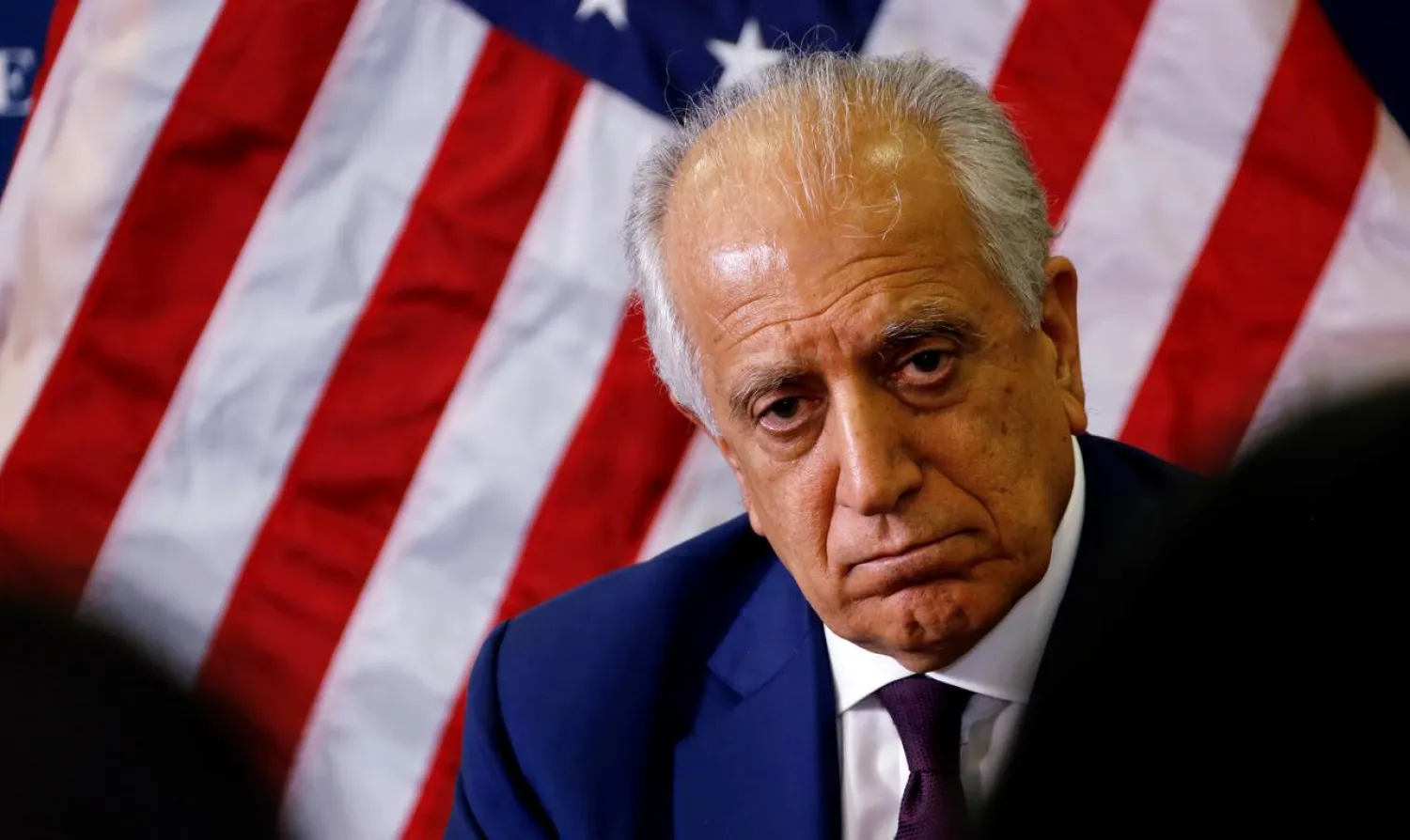
FILE PHOTO: US special envoy for peace in Afghanistan, Zalmay Khalilzad, talks with local reporters at the US embassy in Kabul, Afghanistan November 18, 2018. US embassy/Handout via Reuters
TT

Shared Afghanistan Interests Create Opening for US-Iran Back Channel

FILE PHOTO: US special envoy for peace in Afghanistan, Zalmay Khalilzad, talks with local reporters at the US embassy in Kabul, Afghanistan November 18, 2018. US embassy/Handout via Reuters

Western intermediaries are trying to persuade arch foes Iran and the United States to cooperate on bolstering security in Afghanistan as US President Donald Trump seeks to extract America from its longest war, according to three source familiar with the efforts.

The intermediaries, the sources say, secretly have been relaying messages between Washington and Tehran for months in hopes of getting the sides talking at a time of heightened hostility on a range of issues.

“Afghanistan is one area where there is common ground,” one source with knowledge of the correspondence told Reuters, speaking on condition of anonymity.

The United States and Iran share an interest in ensuring that a departure of the more than 20,000 US-led foreign troops does not plunge Afghanistan into a civil war that restores the Taliban’s rule, and does not allow al-Qaeda or other extremist groups to expand there.

Moreover, with US sanctions hammering its economy, Tehran wants to avoid Afghans fleeing to neighboring Iran if there was a surge in bloodletting, regional experts said.

There are no signs, however, that either Tehran or Washington are ready to put aside disputes over Iran’s nuclear program and US and Iranian activities and alliances in the Mideast to cooperate on Afghanistan.

One message seen by Reuters and conveyed to Washington outlined Iran’s concerns with the Trump administration’s negotiations with the Taliban on a US troop withdrawal and intra-Afghan talks on a political settlement.

Afghan-born veteran US diplomat Zalmay Khalilzad has erred in taking “over-zealous shortcuts by talking directly to the Taliban,” a senior Iranian official said in the message.

This approach has given “political supremacy” to the Taliban as they are gaining militarily, the message said. Taliban leaders, it continued, have told their Iranian interlocutors they will not “accept anything less than a Taliban-dominated government.”

Direct contact between Iran and the United States would be a stark contrast to the tensions that took them to the brink of military confrontation after Iran downed an unmanned US drone in the Gulf in June and Trump then halted a retaliatory air strike on Iran’s coast.

While Iran is open to talks, it wants at the very least a suspension of US sanctions designed to slash its oil exports to zero, Tehran’s main source of income, according to two sources familiar with the US and Iranian positions.

Iranian officials believe that a new peace process should be devised in which the Afghan government - which has been excluded from the US-Taliban talks - played a “dominant” role, the message said.

Several back-channel efforts, the sources said, are driven by a hope that cooperation on Afghanistan could lead to negotiations to lower the tensions ignited when Trump pulled the United States out of the 2015 international agreement designed to prevent Iran from developing a nuclear weapon in exchange for sanctions relief.

But one source familiar with the US and Iranian positions said as far as Iran was concerned, if Washington acknowledged common interests in Afghanistan “and is willing to talk to Iran on the basis of equality about those common interests, then Iran will talk to the United States.” Now all Iran is getting from the United States is that they have no common interests, the source added.

US Secretary of State Mike Pompeo and national security adviser John Bolton oppose any sanctions relief for Iran and were opposed to any talks on Afghanistan, believing Tehran will give in to US demands, one of the sources said, who asked not to be identified.

One former Afghan official pointed out that since the 2001 US-led invasion to oust the Taliban government, Iran has built ties to the Taliban that it could use to help shape a peace settlement and a US troop withdrawal.

Tehran maintains high-level Taliban contacts and is a haven for some insurgent families. It has supplied limited quantities of weapons to the insurgents to keep pressure on US forces near its border, according to Western officials.

Pompeo has accused Iran of being a “co-conspirator” of the Taliban. But some regional experts counter that Tehran is hedging its bets in case the militants return to power. It also sees the Taliban as a counter force to ISIS’ Afghan affiliate.

Tehran also wields influence in Kabul, having backed Afghan governments for nearly two decades.

Whether Iran can play a meaningful role in any peace effort, or that Washington would allow it to do so, is an open question, said Ryan Crocker, a former US ambassador to Kabul.

“I’m pretty skeptical that they (the intermediaries) will get any traction ... because of the policy this administration has developed on Iran. I’m afraid that ship has sailed.”



Top Trump Iran Negotiator Says Visits US Aircraft Carrier in Middle East

US Special Envoy Steve Witkoff delivers a press conference upon the signing of the declaration on deploying post-ceasefire force in Ukraine, during the so-called "Coalition of the Willing" summit, at the Elysee Palace in Paris, France, January 6, 2026. (Reuters)
TT

Top Trump Iran Negotiator Says Visits US Aircraft Carrier in Middle East

US Special Envoy Steve Witkoff delivers a press conference upon the signing of the declaration on deploying post-ceasefire force in Ukraine, during the so-called "Coalition of the Willing" summit, at the Elysee Palace in Paris, France, January 6, 2026. (Reuters)

US President Donald Trump's lead Iran negotiator Steve Witkoff on Saturday said he visited the USS Abraham Lincoln aircraft carrier currently in the Arabian Sea, with Washington and Tehran due to hold further talks soon.

"Today, Adm. Brad Cooper, Commander of US Naval Forces Central Command, Jared Kushner, and I met with the brave sailors and Marines aboard the USS Abraham Lincoln, her strike group, and Carrier Air Wing 9 who are keeping us safe and upholding President Trump's message of peace through strength," said Witkoff in a social media post.

Iranian Foreign Minister Abbas Araghchi said on Saturday he hoped talks with the United States would resume soon, while reiterating Tehran's red lines and warning against any American attack.


Israel’s Netanyahu Expected to Meet Trump in US on Wednesday and Discuss Iran

Israeli Prime Minister Benjamin Netanyahu delivers a speech during a special session to mark the 77th anniversary of the Knesset's establishment and the 60th anniversary of the dedication of the current building at the Knesset, the Israeli parliament, in Jerusalem, 02 February 2026. (EPA)
TT

Israel’s Netanyahu Expected to Meet Trump in US on Wednesday and Discuss Iran

Israeli Prime Minister Benjamin Netanyahu delivers a speech during a special session to mark the 77th anniversary of the Knesset's establishment and the 60th anniversary of the dedication of the current building at the Knesset, the Israeli parliament, in Jerusalem, 02 February 2026. (EPA)

Israeli Prime Minister Benjamin Netanyahu is expected to meet US President Donald Trump on Wednesday in Washington, where they will discuss negotiations with Iran, Netanyahu's office said on Saturday.

Iranian and US officials held indirect nuclear ‌talks in the ‌Omani capital ‌Muscat ⁠on Friday. ‌Both sides said more talks were expected to be held again soon.

A regional diplomat briefed by Tehran on the talks told Reuters Iran insisted ⁠on its "right to enrich uranium" ‌during the negotiations with ‍the US, ‍and that Tehran's missile capabilities ‍were not raised in the discussions.

Iranian officials have ruled out putting Iran's missiles - one of the largest such arsenals in the region - up ⁠for discussion, and have said Tehran wants recognition of its right to enrich uranium.

"The Prime Minister believes that any negotiations must include limiting ballistic missiles and halting support for the Iranian axis," Netanyahu's office said in a ‌statement.


Italy FM Rules Out Joining Trump’s ‘Board of Peace’

Italy's Minister for Foreign Affairs Antonio Tajani speaks to the press during the EPP Leaders’ meeting, in Zagreb, Croatia, 30 January 2026. (EPA)
TT

Italy FM Rules Out Joining Trump’s ‘Board of Peace’

Italy's Minister for Foreign Affairs Antonio Tajani speaks to the press during the EPP Leaders’ meeting, in Zagreb, Croatia, 30 January 2026. (EPA)

Italy will not take part in US President Donald Trump's "Board of Peace", Italian Foreign Minister Antonio Tajani said Saturday, citing "insurmountable" constitutional issues.

Trump launched his "Board of Peace" at the World Economic Forum in Davos in January and some 19 countries have signed its founding charter.

But Italy's constitution bars the country from joining an organization led by a single foreign leader.

Prime Minister Giorgia Meloni, a Trump ally, last month noted "constitutional problems" with joining, but suggested Trump could perhaps reopen the framework "to meet the needs not only of Italy, but also of other European countries".

Tajani appeared Saturday to rule that out.

"We cannot participate in the Board of Peace because there is a constitutional limit," he told the ANSA news agency.

"This is insurmountable from a legal standpoint," he said, the day after meeting US Secretary of State Marco Rubio and US Vice President JD Vance at the Olympics in Milan.

Although originally meant to oversee Gaza's rebuilding, the board's charter does not limit its role to the Palestinian territory and appears to want to rival the United Nations.