


OPEC Sees Bearish Oil Outlook for Rest of 2019

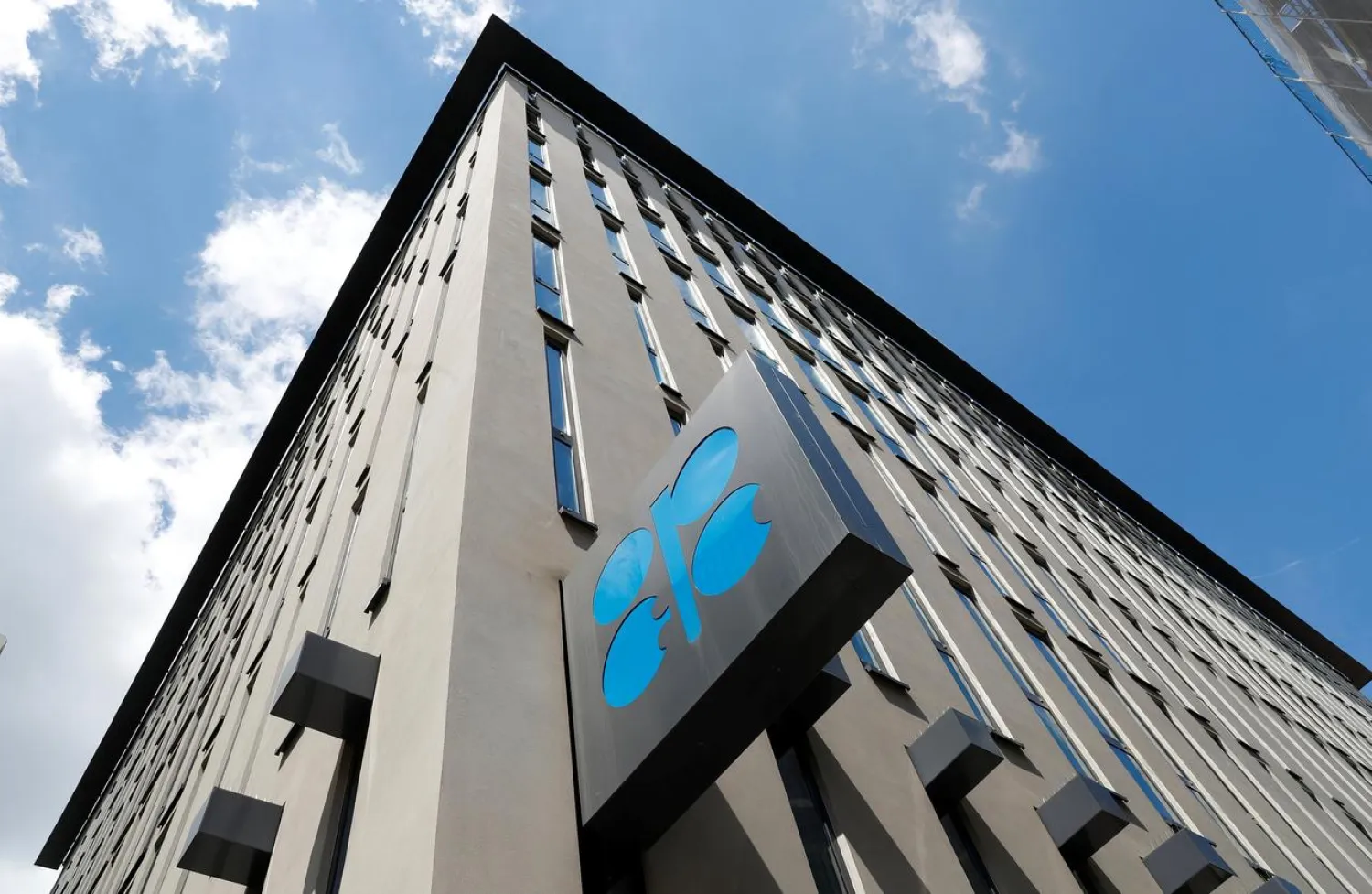
FILE PHOTO: The logo of the Organization of the Petroleoum Exporting Countries (OPEC) at OPEC's headquarters in Vienna, Austria, June 19, 2018. REUTERS/Leonhard Foeger/File Photo
TT

OPEC Sees Bearish Oil Outlook for Rest of 2019

FILE PHOTO: The logo of the Organization of the Petroleoum Exporting Countries (OPEC) at OPEC's headquarters in Vienna, Austria, June 19, 2018. REUTERS/Leonhard Foeger/File Photo

OPEC delivered a downbeat oil market outlook for the rest of 2019 on Friday as economic growth slows and highlighted challenges in 2020 as rivals pump more, building a case to keep up an OPEC-led pact to curb supply.

In a monthly report, the Organization of the Petroleum Exporting Countries cut its forecast for global oil demand growth in 2019 by 40,000 barrels per day (bpd) to 1.10 million bpd and indicated the market will be in slight surplus in 2020.

The bearish outlook due to slowing economies amid the US-China trade dispute and Brexit could press the case for OPEC and allies including Russia to maintain a policy of cutting output to support prices. Already, a Saudi official has hinted at further steps to support the market.

"While the outlook for market fundamentals seems somewhat bearish for the rest of the year, given softening economic growth, ongoing global trade issues and slowing oil demand growth, it remains critical to closely monitor the supply/demand balance and assist market stability in the months ahead," OPEC said in the report.

It is rare for OPEC to give a bearish forward view on the market outlook and oil pared an earlier gain after it was released to trade below $59 a barrel.

Despite the OPEC-led cut, oil has tumbled from April's 2019 peak above $75 pressured by trade concerns and an economic slowdown.

OPEC, Russia and other producers have since Jan. 1 implemented a deal to cut output by 1.2 million bpd. The alliance, known as OPEC+, in July renewed the pact until March 2020 to avoid a build-up of inventories that could hit prices.

OPEC left its forecast for 2020 oil demand growth at 1.14 million bpd, up slightly from this year. But OPEC added that its forecast for 2020 economic growth faced downside risk.

"The risk to global economic growth remains skewed to the downside," the report said. "Especially trade-related developments will need to be thoroughly reviewed in the coming weeks with some likelihood of a further downward revision in September."

OPEC trimmed its global economic growth forecast to 3.1 percent from 3.2 percent and, for now, kept its 2020 forecast at 3.2 percent.

The report also said oil inventories in developed economies rose in June, suggesting a trend that could raise OPEC concern over a possible oil glut.

Rising Inventories

Stocks in June exceeded the five-year average - a yardstick OPEC watches closely - by 67 million barrels.

This is despite the supply cuts of OPEC+ and additional involuntary losses in Iran and Venezuela, two OPEC members which are under US sanctions.

OPEC deepened its cuts in July, the report showed.

According to figures OPEC collects from secondary sources, output from all 14 members fell by 246,000 bpd from June to 29.61 million bpd as Saudi Arabia cut supply further.

OPEC and its partners have been limiting supply since 2017, helping to clear a supply glut that built up in 2014-2016 when producers pumped at will, and revive prices.

The policy has been giving a sustained boost to US shale and other rival supply, and the report suggests the world will need significantly less OPEC crude next year.

The demand for OPEC crude will average 29.41 million bpd next year, OPEC said, down 1.3 million bpd from this year. Still, the 2020 forecast was raised 140,000 bpd from last month's forecast.

The report suggests there will be a 2020 supply surplus of 200,000 bpd if OPEC keeps pumping at July's rate and other things remain equal. Last month's report had implied a larger surplus of over 500,000 bpd.



Egypt Plans $1 Billion Red Sea Marina, Hotel Development

This picture shows a partial view of Egypt's Red Sea city of Sharm el-Sheikh, October 7, 2025. (AFP)
TT

Egypt Plans $1 Billion Red Sea Marina, Hotel Development

This picture shows a partial view of Egypt's Red Sea city of Sharm el-Sheikh, October 7, 2025. (AFP)

Egypt announced plans on Monday for a new $1 billion marina, hotel and housing development on the Red Sea in a bid to boost the region's tourist industry.

Construction on the "Monte Galala Towers and Marina" project would ‌start in ‌the second ‌half ⁠of the ‌year and run for seven years, Ahmed Shalaby, managing director of the main developer, Tatweer Misr, said.

The 10-tower development - a partnership with the ⁠housing ministry and other state bodies ‌including the armed ‍forces' engineering authority - ‍would cost about 50 ‍billion Egyptian pounds ($1.07 billion), he added.

The project, also announced by the cabinet, will cover 470,000 square meters on the Gulf of Suez, about ⁠35 km south of Ain Sokhna, Shalaby said.

Egypt aims to boost total tourist arrivals to around 30 million by 2030, from around 19 million recorded by the tourism ministry in 2025.


Saudi-Polish Investment Forum Explores Prospects for Economic and Investment Cooperation

The forum brought together government officials, business leaders, and investors from both countries with the aim of enhancing economic cooperation - SPA
TT

Saudi-Polish Investment Forum Explores Prospects for Economic and Investment Cooperation

The forum brought together government officials, business leaders, and investors from both countries with the aim of enhancing economic cooperation - SPA

The Saudi-Polish Investment Forum was held today at the headquarters of the Federation of Saudi Chambers in Riyadh, with the participation of Minister of Investment Khalid Al-Falih, Minister of Finance of the Republic of Poland Andrzej Domański, and Vice President of the Federation of Saudi Chambers Emad Al-Fakhri.

The forum brought together government officials, business leaders, and investors from both countries with the aim of enhancing economic cooperation, expanding investment partnerships in priority sectors, and exploring high-quality investment opportunities that support sustainable growth in Saudi Arabia and Poland.

During a dedicated session, the forum reviewed economic and investment prospects in both countries through presentations highlighting promising opportunities, investment enablers, and supportive legislative environments.

Several specialized roundtables addressed strategic themes, including the development of the digital economy, with a focus on information and communication technologies (ICT), financial technologies (fintech), and artificial intelligence-driven innovation, SPA reported.

Discussions also covered the development of agricultural value chains from production to market access through advanced technologies, food processing, and agricultural machinery. In addition, participants examined ways to enhance the construction sector by developing systems and materials, improving execution efficiency, and accelerating delivery timelines. Energy security issues and the role of industrial sectors in supporting economic transformation and sustainability were also discussed.

The forum witnessed the announcement of two major investment agreements. The first aims to establish a framework for joint cooperation in supporting investment, exchanging information and expertise, and organizing joint business events to strengthen institutional partnerships.

The second agreement focuses on supporting reciprocal investments through the development of financing and insurance tools and the stimulation of joint ventures to boost investment flows.

The forum concluded by emphasizing the importance of continued coordination and dialogue between the public and private sectors in both countries to deepen Saudi-Polish economic relations and advance shared interests.


Gold Rises as Dollar Slips, Focus Turns to US Jobs Data

FILE PHOTO: An employee places ingots of 99.99 percent pure gold in a workroom at the Novosibirsk precious metals refining and manufacturing plant in the Siberian city of Novosibirsk, Russia, September 15, 2023. REUTERS/Alexander Manzyuk/File Photo
TT

Gold Rises as Dollar Slips, Focus Turns to US Jobs Data

FILE PHOTO: An employee places ingots of 99.99 percent pure gold in a workroom at the Novosibirsk precious metals refining and manufacturing plant in the Siberian city of Novosibirsk, Russia, September 15, 2023. REUTERS/Alexander Manzyuk/File Photo

Gold prices rose on Monday, buoyed by a softer dollar as investors braced for a week packed with US economic data that could offer more clues on the US Federal Reserve's monetary policy.

Spot gold rose 1.2% to $5,018.56 per ounce by 9:30 a.m. ET (1430 GMT), extending a 4% rally from Friday.

US gold futures for April delivery also gained 1.3% to $5,042.20 per ounce.

The US dollar fell 0.8% to a more than one-week low, making greenback-priced bullion cheaper for overseas buyers.

"The big mover today (in gold prices) is the US dollar," said Bart Melek, global head of commodity strategy at TD Securities, adding that expectations are growing for weak economic data, particularly on the labor front, Reuters reported.

Investors are closely watching this week's release of US nonfarm payrolls, consumer prices and initial jobless claims for fresh signals on monetary policy, with markets already pricing in at least two rate cuts of 25 basis points in 2026.

US nonfarm payrolls are expected to have risen by 70,000 in January, according to a Reuters poll.

Lower interest rates tend to support gold by reducing the opportunity cost of holding the non-yielding asset.

Meanwhile, China's central bank extended its gold buying spree for a 15th month in January, data from the People's Bank of China showed on Saturday.

"The debasement trade continues, with ongoing geopolitical risks driving people into gold," Melek said, adding that China's purchases have had a psychological impact on the market.

Spot silver climbed 2.9% to $80.22 per ounce after a near 10% gain in the previous session. It hit an all-time high of $121.64 on January 29.

Spot platinum was down 0.2% at $2,092.95 per ounce, while palladium was steady at $1,707.25.

"A slowdown in EV sales hasn't really materialized despite all the policy softening, so I do see that platinum and palladium will possibly slow down," after a bullish run in 2025, WisdomTree commodities strategist Nitesh Shah said.