


Pharaonic Embalming Fluid Proves Efficiency in Fighting Bacteria

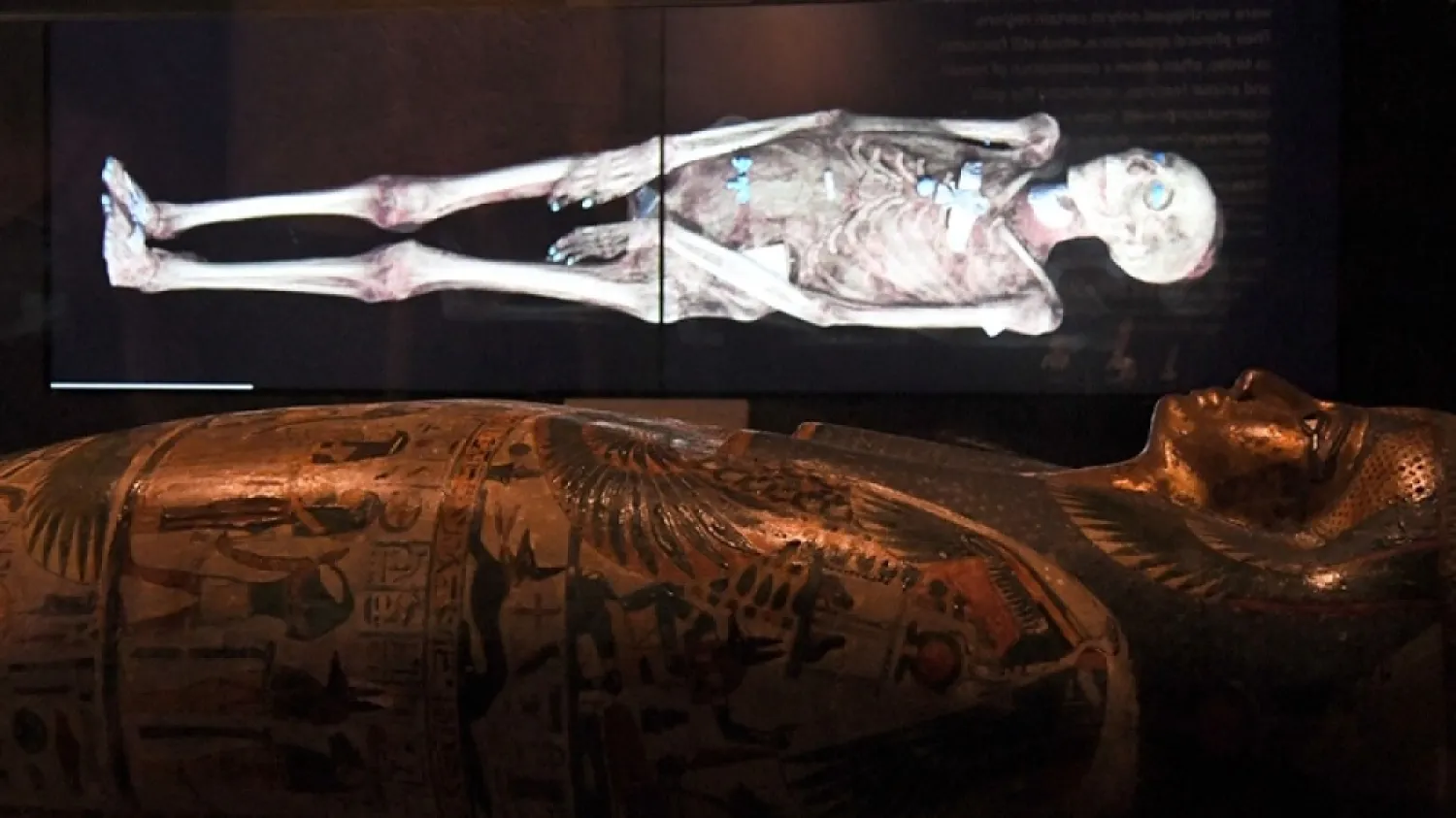
A three-dimensional image of a CT scan of an Egyptian mummy is projected above a sarcophagus. (AFP)
TT

Pharaonic Embalming Fluid Proves Efficiency in Fighting Bacteria

A three-dimensional image of a CT scan of an Egyptian mummy is projected above a sarcophagus. (AFP)

The ancient Egyptians believed in an afterlife where the body of a dead person would be needed by the spirit. In order to preserve the deceased in as lifelike condition, they developed artificial mummification to a high level of sophistication.

For a long time, the mix used in mummification remained a mystery for scientists. But with new techniques, they managed to solve it, and study the mix to uncover the secret potentials behind its antibacterial and anti-fungal properties.

The latest efforts in this field were conducted by researchers at the University of Derby, who tested the efficiency of Pharaonic embalming materials in fighting bacteria in some human corpses. They also carried out another experiment in which they applied the same materials on rabbit carcasses. Then, they compared the results with the effects of an antibiotic called "Chlorophemical".

According to the study published in the Journal of Archaeological Science, it was widely believed that natron was the main desiccation agent in the preparation of Egyptian mummified bodies in the 18th Dynasty, and that its role is limited to this function. However, the new study proved this information is inaccurate.

Natron is a natural mixture of sodium chloride, sodium sulphate, sodium carbonate and sodium bicarbonate found in the Nile Delta, which has significant desiccation properties, but it is currently unclear if natron has further beneficial properties for the embalming process.

In their study, the researchers determined the properties of old embalming fluids comprising of natron, palm wine and pine resin, and applied them on an artificial mummification of a human body at the Medico-legal Center in Sheffield, UK. Then they compared their effectiveness to the activity of a modern day antibiotic, Chloramphenicol.

In addition, the field study using rabbit carcasses investigated whether pine resin has insect repellent properties. Results demonstrated that palm wine and natron had higher antibacterial activity than Chlorophemical against the Gram-positive bacteria, (Staphylococcus aureus), and that natron had higher antibacterial activity than Chloramphenicol against the Gram-negative bacteria, Escherichia coli.

The other field study showed a delay in the colonization of necrophagous insects on the carcasses treated with pine resin. They found no insect mortality on any of the carcasses during the study, indicating that the pine resin was acting as a repellent only and not as an insecticide.

Lead Author Kate Barnes, from the College of Life and Natural Sciences, University of Derby, said: "Although this is a preliminary study, the clear results strongly suggest that the embalming fluids used in mummification procedures during the 18th Dynasty had a number of properties, which could affect the development of associated bacterial and insect communities."




iRead Marathon Records over 6.5 Million Pages Read

Participants agreed that the number of pages read was not merely a numerical milestone - SPA
TT

iRead Marathon Records over 6.5 Million Pages Read

Participants agreed that the number of pages read was not merely a numerical milestone - SPA

The fifth edition of the iRead Marathon achieved a remarkable milestone, surpassing 6.5 million pages read over three consecutive days, in a cultural setting that reaffirmed reading as a collective practice with impact beyond the moment.

Hosted at the Library of the King Abdulaziz Center for World Culture (Ithra) and held in parallel with 52 libraries across 13 Arab countries, including digital libraries participating for the first time, the marathon reflected the transformation of libraries into open, inclusive spaces that transcend physical boundaries and accommodate diverse readers and formats.

Participants agreed that the number of pages read was not merely a numerical milestone, but a reflection of growing engagement and a deepening belief in reading as a daily, shared activity accessible to all, free from elitism or narrow specialization.

Pages were read in multiple languages and formats, united by a common conviction that reading remains a powerful way to build genuine connections and foster knowledge-based bonds across geographically distant yet intellectually aligned communities, SPA reported.

The marathon also underscored its humanitarian and environmental dimension, as every 100 pages read is linked to the planting of one tree, translating this edition’s outcome into a pledge of more than 65,000 trees. This simple equation connects knowledge with sustainability, turning reading into a tangible, real-world contribution.

The involvement of digital libraries marked a notable development, expanding access, strengthening engagement, and reinforcing the library’s ability to adapt to technological change without compromising its cultural role. Integrating print and digital reading added a contemporary dimension to the marathon while preserving its core spirit of gathering around the book.

With the conclusion of the iRead Marathon, the experience proved to be more than a temporary event, becoming a cultural moment that raised fundamental questions about reading’s role in shaping awareness and the capacity of cultural initiatives to create lasting impact. Three days confirmed that reading, when practiced collectively, can serve as a meeting point and the start of a longer cultural journey.


Imam Turki bin Abdullah Royal Reserve Launches Fifth Beekeeping Season

Jazan’s Annual Honey Festival - File Photo/SPA
TT

Imam Turki bin Abdullah Royal Reserve Launches Fifth Beekeeping Season

Jazan’s Annual Honey Festival - File Photo/SPA

The Imam Turki bin Abdullah Royal Nature Reserve Development Authority launched the fifth annual beekeeping season for 2026 as part of its programs to empower the local community and regulate beekeeping activities within the reserve.

The launch aligns with the authority's objectives of biodiversity conservation, the promotion of sustainable environmental practices, and the generation of economic returns for beekeepers, SPA reported.

The authority explained that this year’s beekeeping season comprises three main periods associated with spring flowers, acacia, and Sidr, with the start date of each period serving as the official deadline for submitting participation applications.

The authority encouraged all interested beekeepers to review the season details and attend the scheduled virtual meetings to ensure organized participation in accordance with the approved regulations and the specified dates for each season.


Hail Municipality Named Arab Green City For 2024-2025

The achievement establishes Hail as a leading Arab model for sustainable urban development - SPA
TT

Hail Municipality Named Arab Green City For 2024-2025

The achievement establishes Hail as a leading Arab model for sustainable urban development - SPA

The Hail Region Municipality has secured first place in the Arab Green City award for 2024-2025 at the 15th session of the Arab Towns Organization.

This recognition honors the municipality’s commitment to environmental sustainability, the expansion of green spaces, and the implementation of urban practices that elevate the quality of life, SPA reported.

The award follows a series of strategic environmental initiatives, including large-scale afforestation, the modernization of public parks, and the adoption of eco-friendly solutions to enhance the urban landscape and resource efficiency.

By aligning its projects with the sustainability goals of Saudi Vision 2030, the municipality continues to foster a healthy and safe environment for residents and visitors.

This achievement establishes Hail as a leading Arab model for sustainable urban development.