



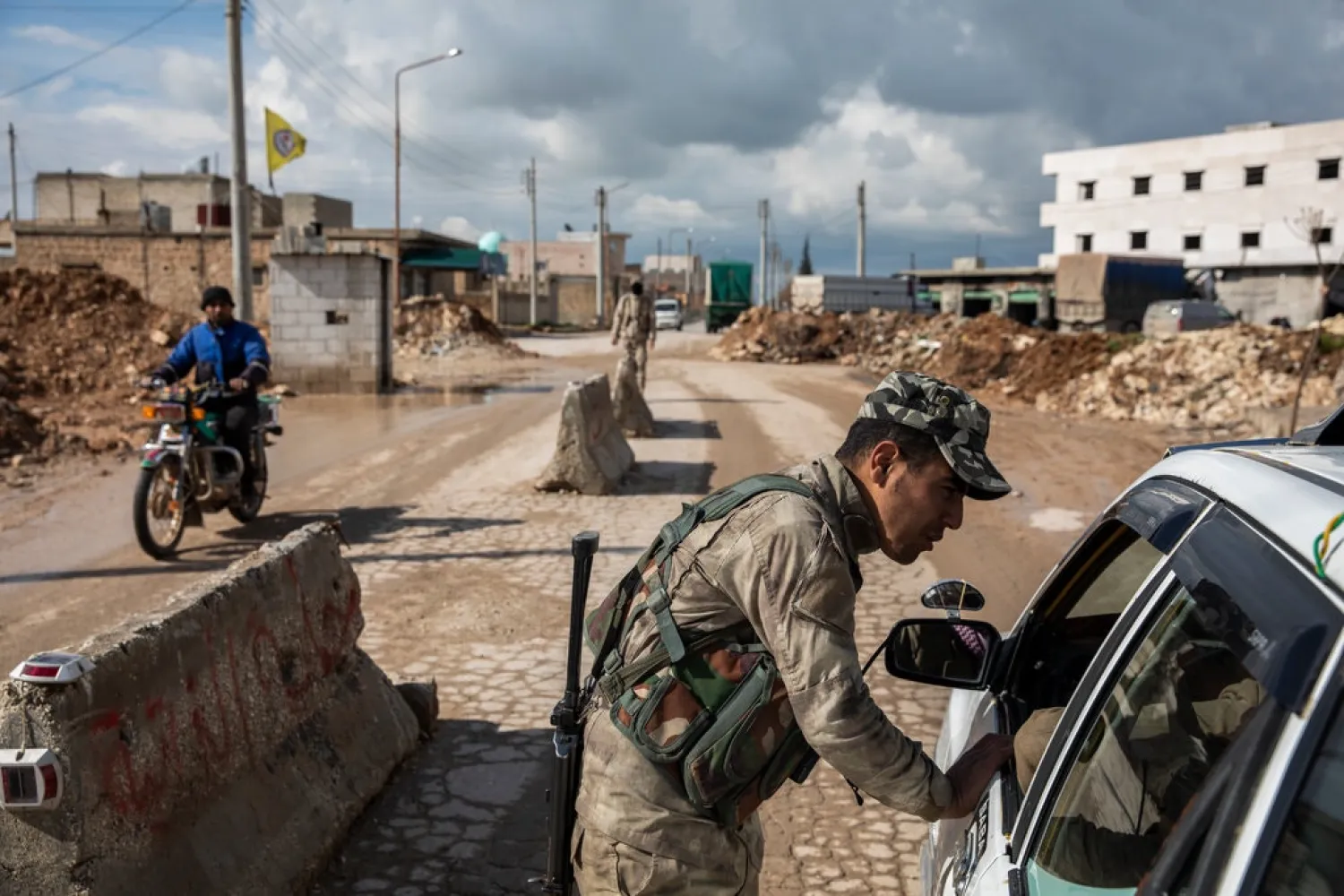

Five months after American-backed forces ousted ISIS from its last shard of territory in Syria, the terrorist group is gathering new strength, conducting guerrilla attacks across Iraq and Syria, retooling its financial networks and targeting new recruits at an allied-run tent camp, American and Iraqi military and intelligence officers said.
Though President Trump hailed a total defeat of ISIS this year, defense officials in the region see things differently, acknowledging that what remains of the terrorist group is here to stay.
A recent inspector general’s report warned that a drawdown this year from 2,000 American forces in Syria to less than half of that, ordered by Mr. Trump, has meant the American military has had to cut back support for Syrian partner forces fighting ISIS. For now, American and international forces can only try to ensure that ISIS remains contained and away from urban areas.
Although there is little concern that ISIS will reclaim its former physical territory, a caliphate that was once the size of Britain and controlled the lives of up to 12 million people, the terrorist group has still mobilized as many as 18,000 remaining fighters in Iraq and Syria. These sleeper cells and strike teams have carried out sniper attacks, ambushes, kidnappings and assassinations against security forces and community leaders.
ISIS can still tap a large war chest of as much as $400 million, which has been hidden in either Iraq and Syria or smuggled into neighboring countries for safekeeping. It is also believed to have invested in businesses, including fish farming, car dealing, and cannabis growing. And ISIS uses extortion to finance clandestine operations: Farmers in northern Iraq who refuse to pay have had their crops burned to the ground.
Over the past several months, ISIS has made inroads into a sprawling tent camp in northeast Syria, and there is no ready plan to deal with the 70,000 people there, including thousands of family members of ISIS fighters. American intelligence officials say the Al Hol camp, managed by Syrian Kurdish allies with little aid or security, is evolving into a hotbed of ISIS ideology and a huge breeding ground for future terrorists. The American-backed Syrian Kurdish force also holds more than 10,000 ISIS fighters, including 2,000 foreigners, in separate makeshift prisons.
At Al Hol, the Syrian Kurds’ “inability to provide more than ‘minimal security’ at the camp has allowed the ‘uncontested conditions to spread of ISIS ideology’ there,” said the inspector general’s report, which was prepared for the Pentagon, the State Department and the United States Agency for International Development. The military’s Central Command told the report’s authors that “ISIS is likely exploiting the lack of security to enlist new members and re-engage members who have left the battlefield.”
These trends, described by Iraqi, American and other Western intelligence and military officials, and documented in a recent series of government and United Nations assessments, portray an ISIS on the rise again, not only in Iraq and Syria, but in branches from West Africa to Sinai. This resurgence poses threats to American interests and allies, as the Trump administration draws down American troops in Syria and shifts its focus in the Middle East to a looming confrontation with Iran.
“However weakened ISIS may now be, they are still a truly global movement, and we are globally vulnerable,” Suzanne Raine, a former head of Britain’s Joint Terrorism Analysis Center, said in an interview this month with West Point’s Combating Terrorism Center. “Nothing should surprise us about what happens next.”
One significant indicator that points to ISIS' resurgence is the amount of ordnance dropped by American aircraft in Iraq and Syria in recent months. In June, American warplanes dropped 135 bombs and missiles, more than double what they had in May, according to Air Force data.
Defense officials in the region say ISIS is now entrenched in mostly rural territory, fighting in small elements of roughly a dozen fighters and taking advantage of the porous border between Iraq and Syria, along with the informal border between Iraqi Kurdistan and the rest of the country, where security forces are spread thin and responsibilities for public safety are sometimes disputed.
For Iraqis in northern and western provinces where ISIS was active in the past, the sense of threat never disappeared, as the attacks slowed but never halted. In just the first six months of this year, there were 139 attacks in those provinces — Nineveh, Salahuddin, Kirkuk, Diyala, and Anbar — and 274 people were killed. The majority of the dead were civilians but also included Iraqi security forces and popular mobilization forces, according to reports by Iraqi security forces and civilians gathered by The New York Times.
A particularly brutal episode of the kind not seen since ISIS was in control of territory in northern Iraq occurred in early August when armed men claiming ISIS allegiance held a public beheading of a policeman in a rural village south of the city of Samarra in Salahuddin Province, about two hours north of Baghdad.
The area has seen repeated attacks over the past two years, and the police who lived in the village had received warnings to leave their job. Most, like Alaa Ameen Mohammad Al-Majmai, the beheaded officer, worked for the security forces because there are few jobs other than farming, which is seasonal, and occasional construction work.
He was kidnapped at night when he and his brother Sajid went to check on their uncle’s land after work, according to accounts from Sajid and other family members. Five armed men — some masked — grabbed the brothers, took them to an empty farmhouse and questioned them until the dawn prayer.
Then they said they would let Sajid go, but instructed him “to tell the people to quit their jobs working for the police force,” he recalled. They beheaded Alaa Ameen, leaving his body on his uncle’s land.
He became the 170th member of the force to be killed by ISIS attackers in the area, said Major Zowba Al-Majmay, the director of an Iraqi emergency battalion for the area south of Samarra.
This month, a United States Marine Raider, Gunnery Sgt. Scott A. Koppenhafer, 35, was killed in northern Iraq during an operation with local forces. Marine Raiders, who are special forces, often fight alongside Kurdish Peshmerga, or the Iraqi Special Operations forces, when deployed to Iraq.
His death marked the first American killed in combat in Iraq this year. In January, four Americans were killed in a suicide bombing in Manbij, Syria.
Reports like these fill several new, sobering assessments of ISIS' resilience and potency. A July report by United Nations analysts on the Security Council Counter-Terrorism Committee said that ISIS leaders, despite their military defeat in Syria and Iraq, are “adapting, consolidating and creating conditions for an eventual resurgence” in those countries.
A new inspector general’s report assessing ISIS activities from April through June concluded the group was “resurging in Syria” and had “solidified its insurgent capabilities in Iraq.”
Despite these reports, Mr. Trump has continued to claim credit for completely defeating ISIS, contradicting repeated warnings from his own intelligence and counterterrorism officials that ISIS remains a lethal force.
“We did a great job,” Mr. Trump said last month. “We have 100 percent of the caliphate, and we’re rapidly pulling out of Syria. We’ll be out of there pretty soon. And let them handle their own problems. Syria can handle their own problems — along with Iran, along with Russia, along with Iraq, along with Turkey. We’re 7,000 miles away.”
With 5,200 troops in Iraq and just under 1,000 in Syria, the American military’s role in both countries has changed little despite the territorial defeat of ISIS in both countries.
After the fall of Baghuz, ISIS' last holdout in Syria near the Iraqi border, what remained of the group’s fighters dispersed throughout the region, starting what American officials now say will be an enduring insurgency.
ISIS is well equipped, the officials said, though its leadership is mostly fractured, leaving most cells without guidance from higher-ranking commanders. Also gone is ISIS' heyday, when the group could mass-produce roadside bombs, munitions, and homemade weapons.
ISIS' change in tactics has forced the Americans and other international troops to change theirs, ensuring they can fight a guerilla-style campaign against insurgents who fight among and disappear into local populations.
The Iraqi Army and its counterterrorism forces have run multiple campaigns against ISIS, focusing primarily on the triangle where Kirkuk, Nineveh and Salahuddin Provinces come together in a rocky and hilly area known as the Makhoul mountains.
Though ISIS fighters are present, the pace of operations in Syria has dropped significantly. Army Special Forces soldiers, alongside conventional troops, often sit on their outposts for long stretches of time and only occasionally go after the low-ranking ISIS fighters hiding in nearby villages, according to one defense official who recently returned from the country.
One of the greatest challenges, the official said, was the constant ferrying of American troops to and from Syria in an effort to keep the overall troop presence at the military’s official deployment of just under 1,000. Sometimes, the official said, troops are brought into the country for specific missions and then sent out.
“Coupled with a US drawdown, it’s setting the conditions for ISIS to retake pockets of territory while coercing local populations,” said Colin P. Clarke, a senior fellow at the Soufan Center, a research organization for global security issues and an author of a new study by the RAND Corporation on ISIS' financing.
(The New York Times)


