


Israel Eases Rules on Cyber Weapons Exports Despite Criticism

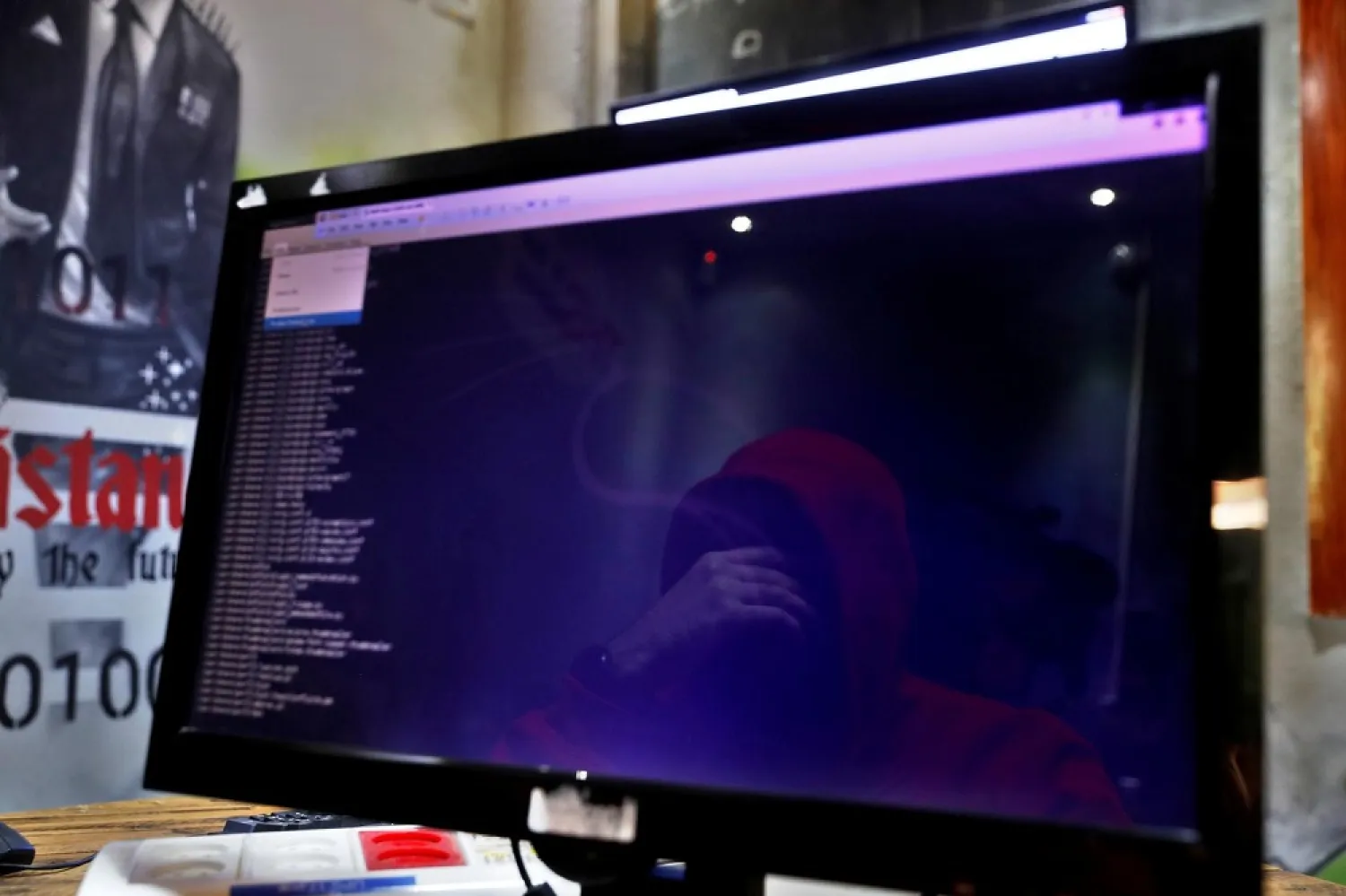
A man is reflected in a monitor as he takes part in a training session at Cybergym, a cyber-warfare training facility backed by the Israel Electric Corporation, in Hadera, Israel July 8, 2019. (Reuters)
TT

Israel Eases Rules on Cyber Weapons Exports Despite Criticism

A man is reflected in a monitor as he takes part in a training session at Cybergym, a cyber-warfare training facility backed by the Israel Electric Corporation, in Hadera, Israel July 8, 2019. (Reuters)

Israel is easing export rules on offensive cyber weapons, despite accusations by human rights and privacy groups that its technologies are used by some governments to spy on political foes and crush dissent.

A rule change by the defense ministry means companies can now obtain exemptions on marketing licenses for the sale of some products to specific countries, a source close to the cyber sector told Reuters.

Israel, like other big defense exporters, closely guards details of its weapons sales and its export rules are not widely known, but the defense ministry confirmed the change had gone into force about a year ago in response to Reuters' questions.

Industry specialists say the change makes a speedier approval process possible for the sale of cyber weapons, or spyware, which are used to break into electronic devices and monitor online communications.

Israel's defense ministry said the rule change "was made to facilitate effective service to Israeli industries while maintaining and protecting international standards of export control and supervision".

It said a marketing-license exemption was granted only under "certain conditions related to the security clearance of the product and assessment of the country toward which the product will be marketed" and that companies were still required to hold an export license.

In a sign the government could make more changes, the economy ministry – which is responsible for promoting economic growth and exports – is setting up a division to handle exports of cyber technologies that have offensive and defensive capabilities.

"This is part of a reform that is essentially allocating more resources to the economy ministry for this important issue," a ministry spokeswoman said.

Growing commercial market

Advanced cyber weapons were until recently deployed only by the most technically sophisticated government spy agencies, such as those in the United States, Israel, China and Russia.

But now a robust commercial market for powerful hacking tools and services has emerged, with former government cyber experts from the United States, Israel and other countries playing a big role in the trade.

That has brought new scrutiny to how cyber weapons are bought, sold and deployed, and the actions of governments in regulating the trade.

Israeli companies, including NSO Group and Verint, and defense contractor Elbit Systems, are among the world leaders in the growing global market for cyber weapons. The software tools exploit vulnerabilities in cellphones and other tech products to gain access and covertly monitor users.

Some privacy and human rights groups say Israel's controls on the sale of cyber weapons are inadequate. Earlier this year, Amnesty said the government should take a tougher line against export licenses that have "resulted in human rights abuses".

The Israeli government declined to comment on accusations of rights abuses.

Israeli companies say they comply with government export rules and vet customers to ensure the technology is used for legitimate purposes by foreign governments.

Regulate less, grow more

Prime Minister Benjamin Netanyahu told a cyber conference in June there were demands to regulate the sector more as it grows. "But I think we have to take the risk, and it's a considerable risk, of regulating less in order to grow more," he said.

Israel's approval process for exporting cyber weapons is more rigorous than in some other countries such as the United States and Britain, said Daniel Reisner, a partner at law firm Herzog Fox Neeman who represents many Israeli cyber firms. That put Israel's industry "at a huge disadvantage", he said, according to Reuters.

Under the rule change, the approval process can be up to four months quicker and this has been "a huge help", he added. Previously, it could take close to a year for a new company to obtain approval, he said.

Ron Deibert, director of Citizen Lab at the University of Toronto, which focuses on digital espionage and has uncovered alleged spyware abuses in countries including Mexico, said it was "unfortunate" that Israel was loosening its rules.

"Our research shows there is a crisis in civil society because of the abuse of commercial spyware," Deibert told Reuters in an email.

A United Nations report in June called for a global moratorium on the sale of cyber weapons until human rights-compliant safeguards are in place in Israel and other countries.

Globally, a 42-nation weapons export agreement known as the Wassenaar Arrangement covers "intrusion software" and internet surveillance systems. Israel is not a party to the agreement, but says it is compliant.

David Kaye, the United Nations special rapporteur on freedom of expression, criticized Israel's controls as "shrouded in secrecy" and called for all cyber weapon sales to be conditioned on a human rights review.

NSO says all its sales are approved by Israel's government. Reisner, who serves as a member of an ethics committee at NSO, said the company had voluntarily turned down $200 million worth of business between 2016 and 2018.

Software from Elbit has been linked by Citizen Lab to an espionage campaign targeting Ethiopian dissidents. Elbit declined to comment.



Russia: Man Suspected of Shooting Top General Detained in Dubai

An investigator works outside a residential building where the assassination attempt on Russian Lieutenant General Vladimir Alexeyev took place in Moscow, Russia February 6, 2026. REUTERS/Anastasia Barashkova
TT

Russia: Man Suspected of Shooting Top General Detained in Dubai

An investigator works outside a residential building where the assassination attempt on Russian Lieutenant General Vladimir Alexeyev took place in Moscow, Russia February 6, 2026. REUTERS/Anastasia Barashkova

Russia's Federal Security Service (FSB) said on Sunday that the man suspected of shooting top Russian military intelligence officer Vladimir Alexeyev in Moscow has been detained in Dubai and handed over to Russia.

Lieutenant General Vladimir Alexeyev, deputy head of the GRU, ⁠Russia's military intelligence arm, was shot several times in an apartment block in Moscow on Friday, investigators said. He underwent surgery after the shooting, Russian media ⁠said.

The FSB said a Russian citizen named Lyubomir Korba was detained in Dubai on suspicion of carrying out the shooting.

Russian Foreign Minister Sergei Lavrov accused Ukraine of being behind the assassination attempt, which he said was designed to sabotage peace talks. ⁠Ukraine said it had nothing to do with the shooting.

Alexeyev's boss, Admiral Igor Kostyukov, the head of the GRU, has been leading Russia's delegation in negotiations with Ukraine in Abu Dhabi on security-related aspects of a potential peace deal.


Factory Explosion Kills 8 in Northern China

Employees work on an electric vehicle (EV) production line at the Volkswagen Anhui factory in Hefei, Anhui province, China, February 4, 2026. REUTERS/Florence Lo
TT

Factory Explosion Kills 8 in Northern China

Employees work on an electric vehicle (EV) production line at the Volkswagen Anhui factory in Hefei, Anhui province, China, February 4, 2026. REUTERS/Florence Lo

An explosion at a biotech factory in northern China has killed eight people, Chinese state media reported Sunday, increasing the total number of fatalities by one.

State news agency Xinhua had previously reported that seven people died and one person was missing after the Saturday morning explosion at the Jiapeng biotech company in Shanxi province, citing local authorities.

Later, Xinhua said eight were dead, adding that the firm's legal representative had been taken into custody.

The company is located in Shanyin County, about 400 kilometers west of Beijing, AFP reported.

Xinhua said clean-up operations were ongoing, noting that reporters observed dark yellow smoke emanating from the site of the explosion.

Authorities have established a team to investigate the cause of the blast, the report added.

Industrial accidents are common in China due to lax safety standards.
In late January, an explosion at a steel factory in the neighboring province of Inner Mongolia left at least nine people dead.


Iran Warns Will Not Give Up Enrichment Despite US War Threat

Traffic moves through a street in Tehran on February 7, 2026. (Photo by ATTA KENARE / AFP)
TT

Iran Warns Will Not Give Up Enrichment Despite US War Threat

Traffic moves through a street in Tehran on February 7, 2026. (Photo by ATTA KENARE / AFP)

Iran will never surrender the right to enrich uranium, even if war "is imposed on us,” its foreign minister said Sunday, defying pressure from Washington.

"Iran has paid a very heavy price for its peaceful nuclear program and for uranium enrichment," Abbas Araghchi told a forum in Tehran.

"Why do we insist so much on enrichment and refuse to give it up even if a war is imposed on us? Because no one has the right to dictate our behavior," he said, two days after he met US envoy Steve Witkoff in Oman.

The foreign minister also declared that his country was not intimidated by the US naval deployment in the Gulf.

"Their military deployment in the region does not scare us," Araghchi said.