


IAEA: Iran Further Breaching Nuclear Deal

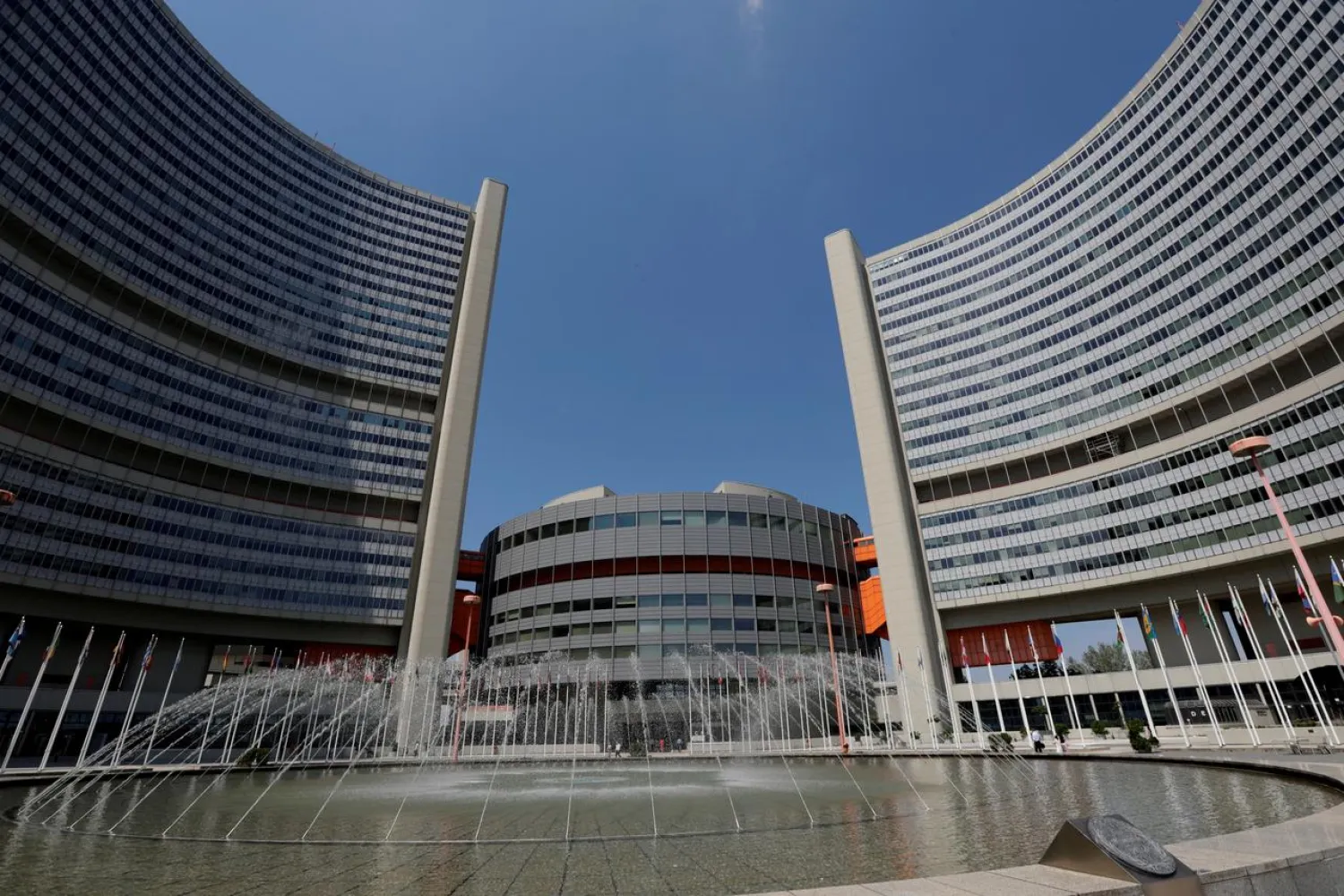
The International Atomic Energy Agency headquarters pictured in Vienna, Austria June 20, 2019. (Reuters)
TT

IAEA: Iran Further Breaching Nuclear Deal

The International Atomic Energy Agency headquarters pictured in Vienna, Austria June 20, 2019. (Reuters)

The UN atomic watchdog said Friday that Iran was continuing to breach the limitations set by the 2015 nuclear deal with major powers and increasing its stock of enriched uranium and refining it to a greater purity than allowed.

In a confidential quarterly report distributed to member states and seen by The Associated Press, the International Atomic Energy Agency said Iran said Iran continues to enrich uranium up to 4.5%, above the 3.67% allowed.

The violations were announced by Iran, and confirmed by the IAEA last month, and are meant to put pressure on the signatories to the deal, known as the Joint Comprehensive Plan of Action (JCPOA), to provide more economic incentives.

Enriched uranium at the 3.67% level is enough for peaceful pursuits but is far below weapons-grade levels of 90%. At the 4.5% level, it is enough to help power Iran's Bushehr reactor, the country's only nuclear power plant.

The nuclear deal is meant to keep Tehran from building atomic weapons in exchange for economic relief. It has been complicated by the unilateral withdrawal of the United States from the deal last year and Washington's increased sanctions, which have been taking a toll on the Iranian economy.

That has left the other signatories — Germany, Britain, France, Russia and China — struggling to come up with enough incentives to keep Iran in the deal.

So far, the major powers in the deal have expressed concern about Tehran's violations and urged the country to return to the limitations set in the agreement but haven't taken further action.

Britain, France and Germany have set up a complex barter-type system dubbed INSTEX that aims to protect companies doing business with Iran from American sanctions. The first transactions through this system are being "processed," but have not yet been completed, EU foreign policy chief Federica Mogherini said Friday.

Under the weight of those sanctions, the value of Iran's currency has plummeted by about 60% in the last year. Inflation is up 37% and the cost of food and medicine has soared 40% to 60%, according to EU figures.

The Europeans hope that the possibility, however slight, of a high-level meeting between US President Donald Trump and Iranian President Hassan Rouhani might help keep Iran in the deal.

"If this new momentum is real, this can build on the work that we have been doing all these years and will continue to do in these days and months and weeks to preserve the JCPOA," Mogherini said before the IAEA report. "The two things are not alternatives. The two things might be complementary."

In Friday's report, the IAEA said that Iran has continued to permit its inspectors to monitor its nuclear facilities and has also remained under the limit of 130 tons (143.3 US tons) set on its stockpile of heavy water, with 125.5 tons (138.34 US tons) stockpiled.

It said Iran's stock of low-enriched uranium hit 241.6 kilograms (532.64 pounds) as of August 19. The JCPOA cap is 202.8 (447.1 pounds) kilograms of enriched uranium.

The stockpile is made up of 216.5 kilograms (477.3 pounds) of uranium enriched up to 3.67%, and 25.1 kilograms (55.34 pounds) of uranium enriched up to 4.5%, the IAEA reported.

In its previous quarterly report, it noted that Iran had installed "up to 33" more advanced IR-6 centrifuges, used to enrich uranium and that 10 had been tested.

Under terms of the nuclear deal, Iran is allowed to test no more than 30 of the IR-6s once the deal has been in place for eight and a half years. The deal is murky about limits before that point, which will arrive in 2023.

In the current report it repeated that Iran had installed "up to 33" of the IR-6 centrifuges, but said 11 have now been tested, and that "technical discussions in relation to the IR-6 centrifuges are ongoing."

Iran has threatened to take further steps by September 6, such as enriching to 20% or restarting mothballed centrifuges, machines that enrich uranium.

The report also hinted at less than ideal cooperation from Iran, saying: “Ongoing interactions between the Agency and Iran ... require full and timely cooperation by Iran. The Agency continues to pursue this objective with Iran.”



Adviser to Iran's Supreme Leader to Visit Oman on Tuesday

FILED - 06 February 2009, Bavaria, Munich: Ali Larijani, then chairman of the Iranian parliament, speaks at the 45th Munich Security Conference in Munich. Photo: Andreas Gebert/dpa
TT

Adviser to Iran's Supreme Leader to Visit Oman on Tuesday

FILED - 06 February 2009, Bavaria, Munich: Ali Larijani, then chairman of the Iranian parliament, speaks at the 45th Munich Security Conference in Munich. Photo: Andreas Gebert/dpa

Ali Larijani, an adviser to Iran's Supreme Leader Ali Khamenei, will visit Oman accompanied by a delegation on Tuesday, the ‌semi-official Tasnim news ‌agency reported ‌on ⁠Monday.

American and ‌Iranian diplomats held indirect talks in Oman last week, aimed at reviving diplomacy amid a US ⁠naval buildup near Iran and ‌Tehran's vows ‍of a ‍harsh response if ‍attacked.

"During this trip, (Larijani) will meet with high-ranking officials of the Sultanate of Oman and discuss the latest regional ⁠and international developments and bilateral cooperation at various levels," Tasnim said.

The date and venue of the next round of talks are yet to be announced.


Russia’s Lavrov Sees No ‘Bright Future’ for Economic Ties with US

06 February 2026, Russia, Moscow: Russian Foreign Minister Sergei Lavrov gives a press conference following a meeting with Organization for Security and Cooperation in Europe (OSCE) Chairperson-in-Office Ignazio Cassis, head of Switzerland's Federal Department of Foreign Affairs, Federal Councilor of the Swiss Confederation, and OSCE Secretary General Feridun Sinirlioglu at the Russian Foreign Ministry's Reception House. (Sofya Sandurskaya/TASS via ZUMA Press/dpa)
TT

Russia’s Lavrov Sees No ‘Bright Future’ for Economic Ties with US

06 February 2026, Russia, Moscow: Russian Foreign Minister Sergei Lavrov gives a press conference following a meeting with Organization for Security and Cooperation in Europe (OSCE) Chairperson-in-Office Ignazio Cassis, head of Switzerland's Federal Department of Foreign Affairs, Federal Councilor of the Swiss Confederation, and OSCE Secretary General Feridun Sinirlioglu at the Russian Foreign Ministry's Reception House. (Sofya Sandurskaya/TASS via ZUMA Press/dpa)

Russia remains open for cooperation with the United States but is not hopeful about economic ties despite Washington's ongoing efforts to end the Ukraine war, Russian Foreign Minister Sergei Lavrov said in an interview published on Monday.

Speaking to Russia-based media outlet TV BRICS, ‌Lavrov cited what ‌he called the ‌United ⁠States' declared ‌aim of "economic dominance".

"We also don't see any bright future in the economic sphere," Lavrov said.

Russian officials, including envoy Kirill Dmitriev, have previously spoken of the prospects for a major restoration ⁠of economic relations with the United States as ‌part of any eventual Ukraine ‍peace settlement.

But although ‍President Donald Trump has also ‍spoken of reviving economic cooperation with Moscow and has hosted his Russian counterpart Vladimir Putin on US soil since returning to the White House, he has imposed further onerous sanctions on Russia's vital ⁠energy sector.

Lavrov also cited Trump's hostility to the BRICS bloc, which includes Russia, China, India, Brazil and other major developing economies.

"The Americans themselves create artificial obstacles along this path (towards BRICS integration)," he said.

"We are simply forced to seek additional, protected ways to develop our financial, economic, logistical and ‌other projects with the BRICS countries."


Prince William, Kate 'Deeply Concerned' by Latest Epstein Revelations

Britain's Prince William (R), Prince of Wales and Catherine (C), Princess of Wales arrive to meet with the Archbishop of Canterbury Sarah Mullally at Lambeth Palace in London on February 5, 2026. (Photo by Aaron Chown / POOL / AFP)
TT

Prince William, Kate 'Deeply Concerned' by Latest Epstein Revelations

Britain's Prince William (R), Prince of Wales and Catherine (C), Princess of Wales arrive to meet with the Archbishop of Canterbury Sarah Mullally at Lambeth Palace in London on February 5, 2026. (Photo by Aaron Chown / POOL / AFP)

Britain's Prince William and his wife Catherine have been "deeply concerned" by the latest revelations linking William's uncle Prince Andrew to late US sex offender Jeffrey Epstein, Kensington Palace said Monday.

"I can confirm that the Prince and Princess of Wales have been deeply concerned by the continued revelations," the palace said in a statement.

The statement -- first public comments from the heir to the throne and his wife on the scandal since the latest release of Epstein files more than a week ago -- added that "their thoughts remain focused on the victims" of Epstein, who died in prison awaiting trial on sex trafficking charges in 2019.

King Charles III’s 65-year-old brother is now known simply as Andrew Mountbatten-Windsor.

The king last week forced Mountbatten-Windsor to leave his longtime home at Royal Lodge near Windsor Castle, accelerating a move that was first announced in October but wasn’t expected to be completed until later this year.

Mountbatten-Windsor is now living on the king’s Sandringham estate in eastern England. He will live temporarily at Wood Farm Cottage while his permanent home on the estate undergoes repairs.