


Saudi Arabian Military Industries Executive Team Completed

Saudi Arabian Military Industries Executive Team Completed
TT

Saudi Arabian Military Industries Executive Team Completed

Saudi Arabian Military Industries Executive Team Completed

Saudi Arabian Military Industries’ (SAMI) executive tam has been completed, Dr. Andreas Schwer, CEO of SAMI announced on Tuesday.

Schwer said the team comprises distinguished national leaders and international experts specialized in the military industries, as well as the financial, administrative, industrial, and strategic sectors.

The members of the executive management team have been recruited to support the company’s journey and the development of a strong local base for military manufacturing and defense in the Kingdom of Saudi Arabia.

Each will play a key role in steering SAMI’s efforts to embrace international trends and developments, transferring state-of-the-art technology to the Kingdom and setting-up local production to fulfill domestic and export market demands, he explained.

SAMI’s executive team consists of 13 experts and pioneers in various fields of military industries. During the course of 2019, it has been complemented with the addition of four senior experts.

These experts are Chief Financial Officer Mater al-Anazi, Chief Strategy Officer Walid Abukhaled, General Director Naval Systems Jose Esteban Garcia Vilasanchez and EVP Aeronautics Bruno Delile.

Anazi is a seasoned expert with extensive experience in the finance and accounting sectors. He has previously served as Chief Financial Officer at ACWA Power International and has also excelled in senior financial and accounting posts with organizations such as SAGIA, Maaden, and SABIC.

Abukhaled has had a distinguished career in the military industries for almost three decades. Prior to joining SAMI, he served as CEO for Middle East at Northrop Grumman and has held numerous roles at General Electric (GE) and BAE Systems.

While Vilasanchez is an industry veteran in the maritime and defense sectors and has joined SAMI from Navantia, where he most recently served as Chairman and CEO as part of his 28-year tenure with the organization.

Delile is a well-established leader in the aeronautics domain and has served many years as an executive manager in various organizations, including Air France- KLM and Zodiac Aerospace.

The executive management team also includes Chief Technology Officer Dr. Mohammad al-Kahtani, EVP of Weapons & Missiles Dr. Timothy Carter, EVP of Land Systems Johan Steyn, EVP of Defense Electronics Jan Wessels, General Council Brandt Pasco, VP of Corporate Communications and Services Department Wael al-Sarhan, VP of Human Resources Mohammed Bushnag, VP of Quality and Internal Audit Khalid al-Madi and VP of Information Technology Hani al-Hazmi.

Schwer noted that the completion of the company’s executive team sets the course for the company’s next phase of growth, with the new appointees looking forward to harnessing their abilities and extensive industry experience to support SAMI in achieving its goals.

“The objectives of the Saudi Vision 2030 provided a strong source of motivation for these esteemed industry leaders to join the company and serve as key enablers of the program by being part of the emerging defense ecosystem in Saudi Arabia,” he stated.

He also pointed out that the team will work within SAMI’s integrated industrial enterprise to develop and support the military industries in the Kingdom and play a key role in increasing the domestic share of military equipment expenditure to 50 percent by 2030.

GCC Secretary-General Condemns Iranian Attacks on Bahrain, Kuwait, and Jordan

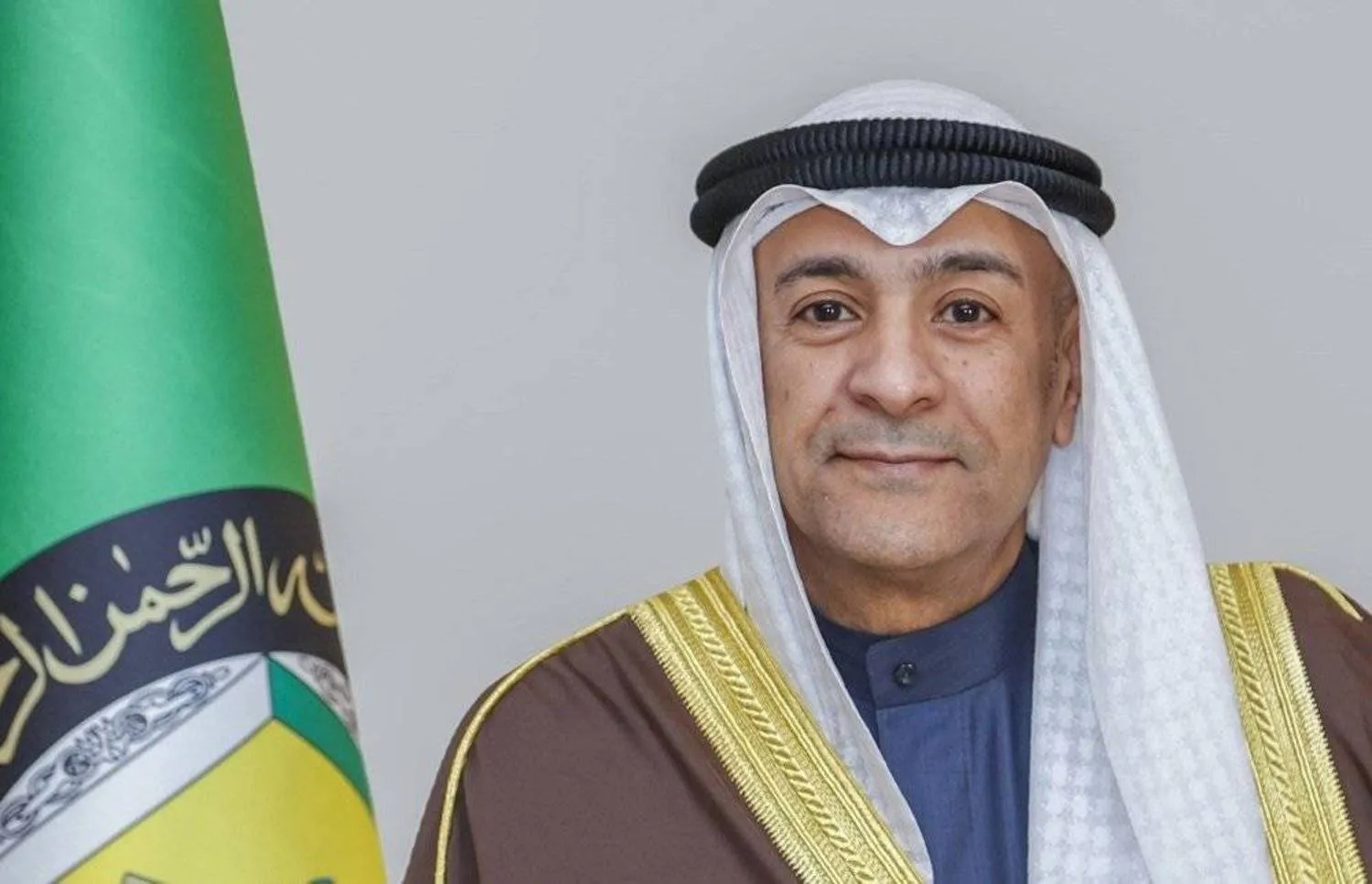
Secretary-General of the Gulf Cooperation Council (GCC) Jasem Albudaiwi. SPA
TT

GCC Secretary-General Condemns Iranian Attacks on Bahrain, Kuwait, and Jordan

Secretary-General of the Gulf Cooperation Council (GCC) Jasem Albudaiwi. SPA

Gulf Cooperation Council (GCC) Secretary-General Jasem Albudaiwi expressed his strongest condemnation of the repeated hostile Iranian attacks targeting the Kingdom of Bahrain, the State of Kuwait, and the Hashemite Kingdom of Jordan.

Albudaiwi stated that Iran's continued targeting of civilian facilities and vital infrastructure undermines international and regional efforts aimed at promoting security and peace and resolving ongoing crises, SPA reported.

He also reaffirmed the GCC’s full support for all measures taken by Bahrain, Kuwait, and Jordan to strengthen their security and protect their territorial integrity.


Saudi Arabia Condemns Iranian Attacks, Calls for Diplomatic Engagement

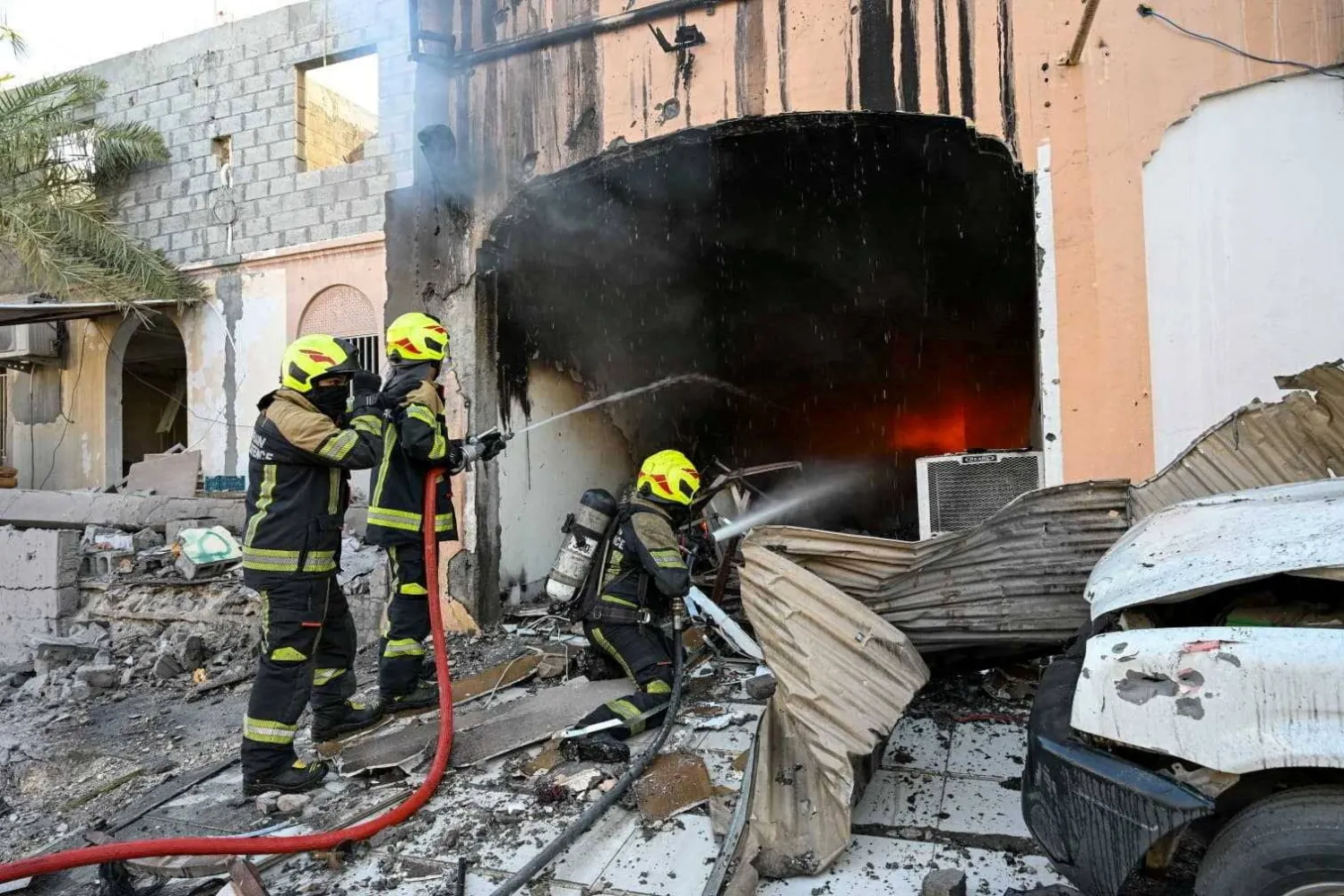
Firefighters work to extinguish fire in the aftermath of Iranian drone attacks, according to Bahrain's Interior Ministry, at a location given as Bahrain, in this handout image released on June 11, 2026. Ministry of Interior of the Kingdom of Bahrain/Handout via REUTERS
TT

Saudi Arabia Condemns Iranian Attacks, Calls for Diplomatic Engagement

Firefighters work to extinguish fire in the aftermath of Iranian drone attacks, according to Bahrain's Interior Ministry, at a location given as Bahrain, in this handout image released on June 11, 2026. Ministry of Interior of the Kingdom of Bahrain/Handout via REUTERS

Saudi Arabia strongly condemned on Thursday the repeated Iranian attacks on Jordan, Bahrain and Kuwait, and the continued violations of their sovereignty which “escalate tensions in the region.”

A Foreign Ministry statement called for “de-escalation, the avoidance of any further escalation, and the exercise of wisdom by returning to diplomatic engagement and continuing the constructive negotiations” sponsored by Pakistan, along with the efforts exerted by Qatar.

Such a move “spares the region and its people the consequences of the return of war and contributes to the restoration of security and stability in the region and the world,” the statement added.


Saudi Arabia Stresses Centrality of Palestinian Cause for Arab World

The Saudi flag. Asharq Al-Awsat
TT

Saudi Arabia Stresses Centrality of Palestinian Cause for Arab World

The Saudi flag. Asharq Al-Awsat

Permanent Representative of Saudi Arabia to the United Nations Dr. Abdulaziz Alwasil affirmed the centrality of the Palestinian cause for the Arab world, saying achieving a just, comprehensive, and lasting peace in the Middle East requires ending the Israeli occupation and enabling the Palestinian people to exercise their inalienable right to self-determination.

In a statement delivered on behalf of the Arab Group during a high-level Security Council meeting on the Middle East, Alwasil also referred to recent Iranian attacks targeting several Gulf states and Jordan, describing them as violations of the principles of good neighborliness, international law, and the United Nations Charter.

He stressed the need to respect state sovereignty and avoid actions that threaten regional security and stability.

He further condemned the continued Israeli aggression against Lebanon, reaffirming rejection of any violation of Lebanon’s sovereignty or targeting of its army, and stressing the importance of complying with international resolutions and respecting states’ sovereignty and territorial integrity.

Alwasil also denounced repeated Israeli incursions and attacks on Syrian territory, stressing the Arab Group’s rejection of such violations, which undermine Syria’s sovereignty and threaten regional security and stability.

He emphasized the importance of political solutions, dialogue, and mediation as the most effective means of addressing regional crises and resolving conflicts peacefully, thereby contributing to security, stability, and development for the peoples of the Middle East.