


Morocco Journalist's Trial for Alleged Abortion Postponed After Protest

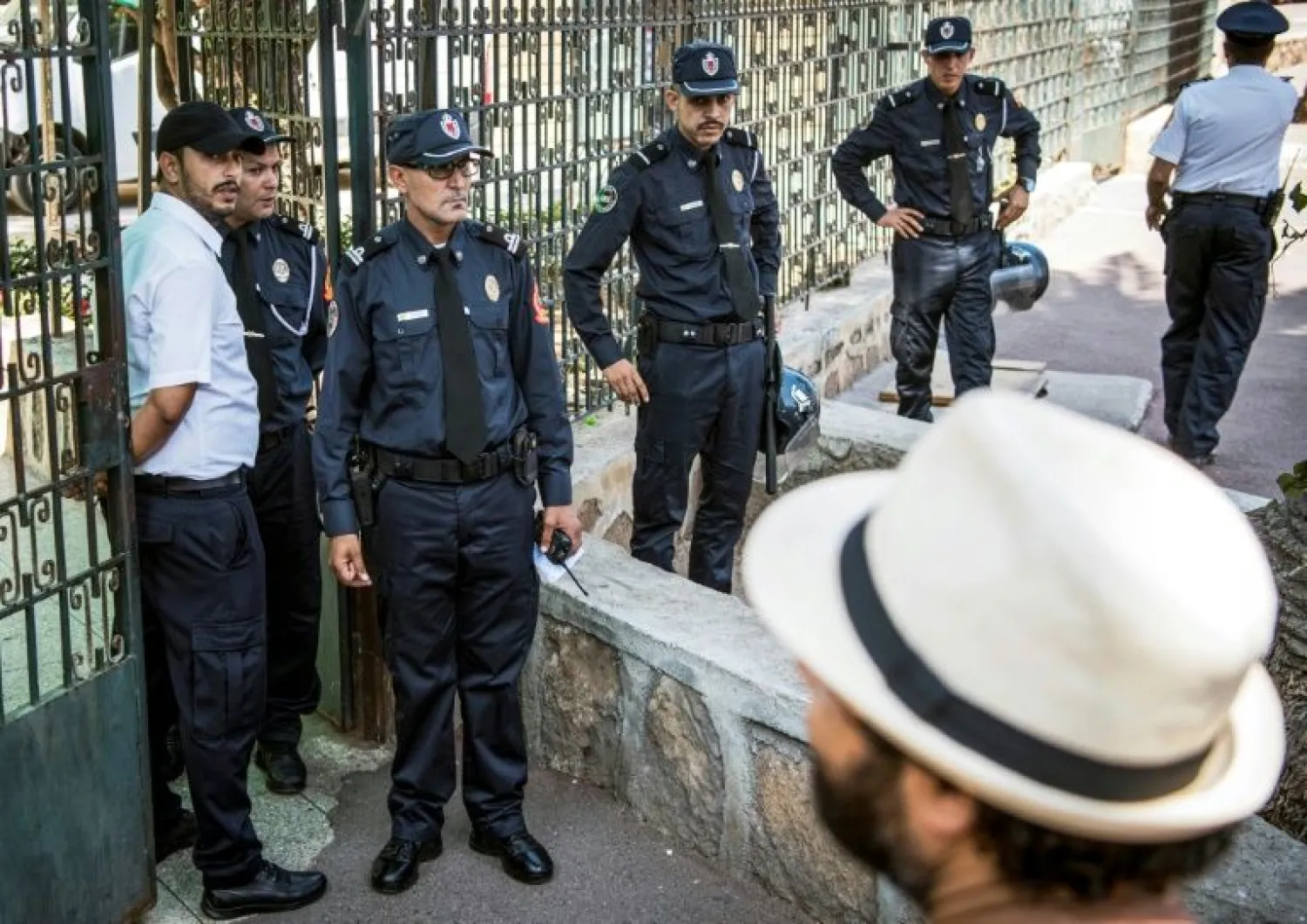
Moroccan security forces stand guard outside a Rabat courthouse where the trial of Hajar Raissouni on September 9, 2019 for alleged abortion | AFP
TT

Morocco Journalist's Trial for Alleged Abortion Postponed After Protest

Moroccan security forces stand guard outside a Rabat courthouse where the trial of Hajar Raissouni on September 9, 2019 for alleged abortion | AFP

The trial of a Moroccan journalist accused of having a late-term abortion and sexual relations outside marriage was postponed on Monday after hundreds of people protested outside a court in the capital Rabat.

The case brought against Hajar Raissouni, who writes for the Arabic-language newspaper Akhbar Al-Yaoum, has triggered a furious debate in the media and online about civil liberties and freedom of the press in the north African country.

The 28-year-old, whose paper has a history of run-ins with the authorities, risks up to two years in prison if found guilty under the penal code which bars sex before marriage and abortion, except if the mother's life is in danger.

Her trial had been scheduled to open on Monday but after several hours of deliberation, the Rabat court ruled it would be postponed until September 16.

It also said the journalist would be detained until that date, against the repeated requests of her defense team.

The protesters outside the court shouted "Freedom for Hajar" and "Our society is in danger" while brandishing placards reading "My body, my freedom" and "No, to the criminalisation of sex between consenting adults".

Raissouni was arrested on August 31 as she left a clinic in Rabat, where her lawyer Saad Sahli said she had been undergoing treatment for internal bleeding.

But the prosecution insisted she had been seen by a medic last week and showed signs of pregnancy and of having undergone a "late voluntary abortion".

In a statement, it stressed her detention had "nothing to do with her profession as a journalist".

Raissouni, who is religiously but not yet legally married, had been due to wed her Sudanese partner this week. He was also arrested at the same time, along with the doctor, a nurse, and a secretary. The court ruled that they too would also be held until the next hearing.

Human Rights Watch (HRW) and Amnesty International have joined social media users in calling for Raissouni's release.

"Instead of intimidating Hajar Raissouni by prosecuting her on unjust charges, the authorities should immediately and unconditionally release her," Amnesty's regional director Heba Morayef said last week.

Ahmed Benchemsi, regional communications director at HRW, echoed Morayef's call for all charges to be dropped.

The case had "a whiff of political manipulation since the defendant is a reporter" from one of Morocco's few remaining critical newspapers, he said.

Touafik Bouachrine, the owner of Raissouni's newspaper, was sentenced in November to 12 years in prison on charges of rape and other offenses.

He denies all charges and his lawyers say his trial was politically motivated.

"Abortion-related arrests usually involve the practitioner but almost never the patients," HRW said, quoting Chafik Chraibi, president of the Association to Combat Clandestine Abortions.

Journalists and human rights defenders denounced the trial.

"What is happening to Hajar Raissouni... has nothing to do with the penal code," said journalist Omar Radi.

"We must stand up against this political power that uses all sorts of means to silence people," he added.

Karim Tazi, a businessman taking part in the protest outside the courthouse, denounced what he described as a "selective way of implementing laws" in Morocco.

"The decision to abort is a personal one," added Samira Muheya, vice president of the Federation of the Leagues of the Rights of Women.

Morocco's National Council of Human Rights said it planned to submit to authorities soon recommendations aimed at amending the penal code.



EU Condemns Israel's West Bank Control Measures

The Israeli settlement of Har Homa, seen from the West Bank city of Bethlehem, Tuesday, Dec. 17, 2024. (AP)
TT

EU Condemns Israel's West Bank Control Measures

The Israeli settlement of Har Homa, seen from the West Bank city of Bethlehem, Tuesday, Dec. 17, 2024. (AP)

The European Union on Monday condemned new Israeli measures to tighten control of the West Bank and pave the way for more settlements in the occupied Palestinian territory, AFP reported.

"The European Union condemns recent decisions by Israel's security cabinet to expand Israeli control in the West Bank. This move is another step in the wrong direction," EU spokesman Anouar El Anouni told journalists.


Atrocities in Sudan's El-Fasher Were 'Preventable Human Rights Catastrophe'

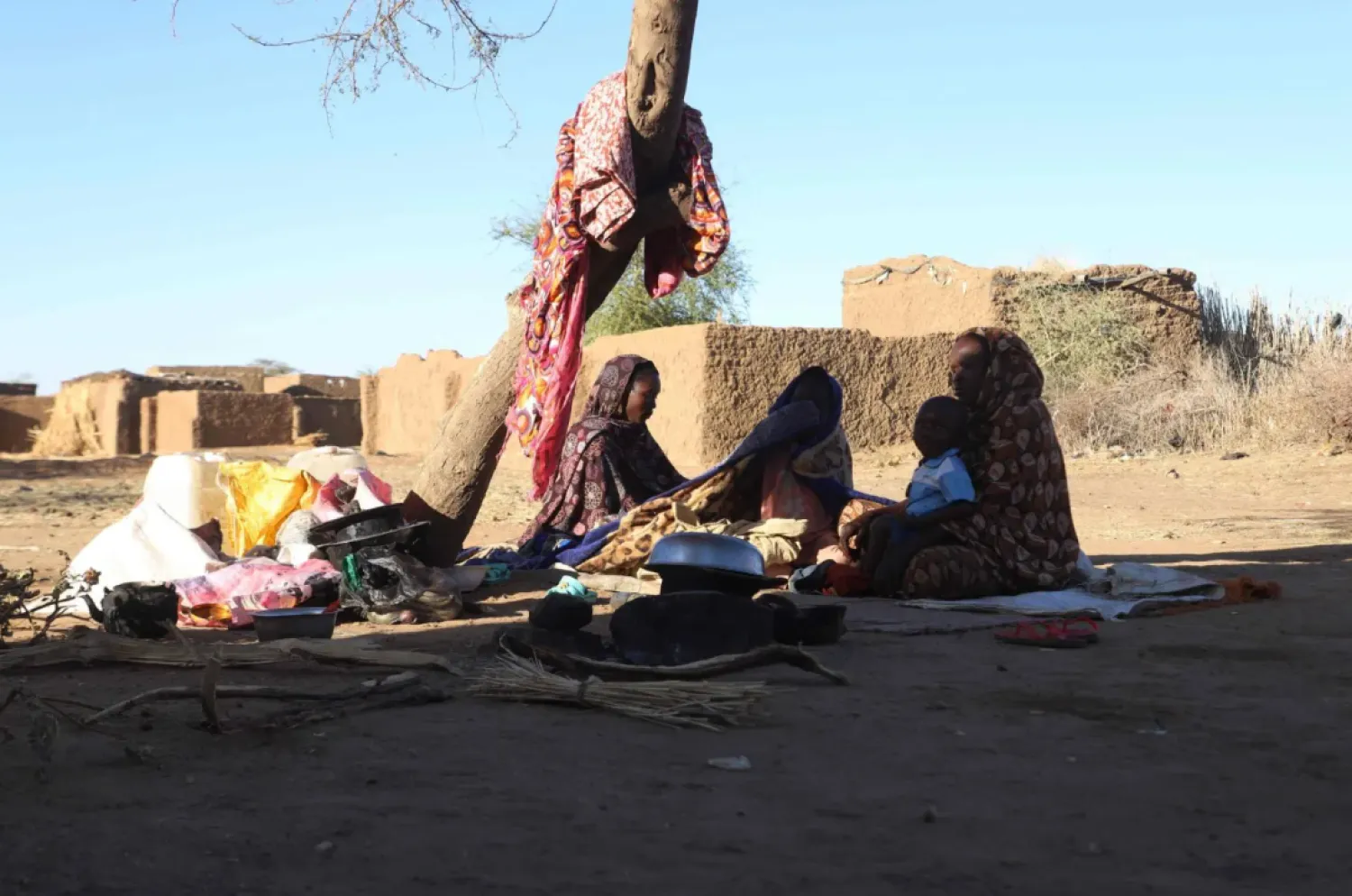
Sudanese displaced people who left El Fasher after its fall, sit in the shade in Tawila at the Rwanda camp reception point on December 17, 2025. (Photo by AFP)
TT

Atrocities in Sudan's El-Fasher Were 'Preventable Human Rights Catastrophe'

Sudanese displaced people who left El Fasher after its fall, sit in the shade in Tawila at the Rwanda camp reception point on December 17, 2025. (Photo by AFP)

The atrocities unleashed on El-Fasher in Sudan's Darfur region last October were a "preventable human rights catastrophe", the United Nations said Monday, warning they now risked being repeated in the neighbouring Kordofan region.


"My office sounded the alarm about the risk of mass atrocities in the besieged city of El-Fasher for more than a year ... but our warnings were ignored," UN rights chief Volker Turk told the Human Rights Council in Geneva.


He added that he was now "extremely concerned that these violations and abuses may be repeated in the Kordofan region".


Arab League Condemns Israel's Decisions to Alter Legal, Administrative Status of West Bank

A general view shows the opening session of the meeting of Arab foreign ministers at the Arab League Headquarters (Reuters)
TT

Arab League Condemns Israel's Decisions to Alter Legal, Administrative Status of West Bank

A general view shows the opening session of the meeting of Arab foreign ministers at the Arab League Headquarters (Reuters)

The General Secretariat of the Arab League strongly condemned decisions by Israeli occupation authorities to impose fundamental changes on the legal and administrative status of the occupied Palestinian territories, particularly in the West Bank, describing them as a dangerous escalation and a flagrant violation of international law, international legitimacy resolutions, and signed agreements, SPA reported.

In a statement, the Arab League said the measures include facilitating the confiscation of private Palestinian property and transferring planning and licensing authorities in the city of Hebron and the area surrounding the Ibrahimi Mosque to occupation authorities.

It warned of the serious repercussions of these actions on the rights of the Palestinian people and on Islamic and Christian holy sites.

The statement reaffirmed the Arab League’s firm support for the legitimate rights of the Palestinian people, foremost among them the establishment of their independent state on the June 4, 1967 borders, with East Jerusalem as its capital.