


Legal Action by Players Should Be the Next Step for Online Abuse

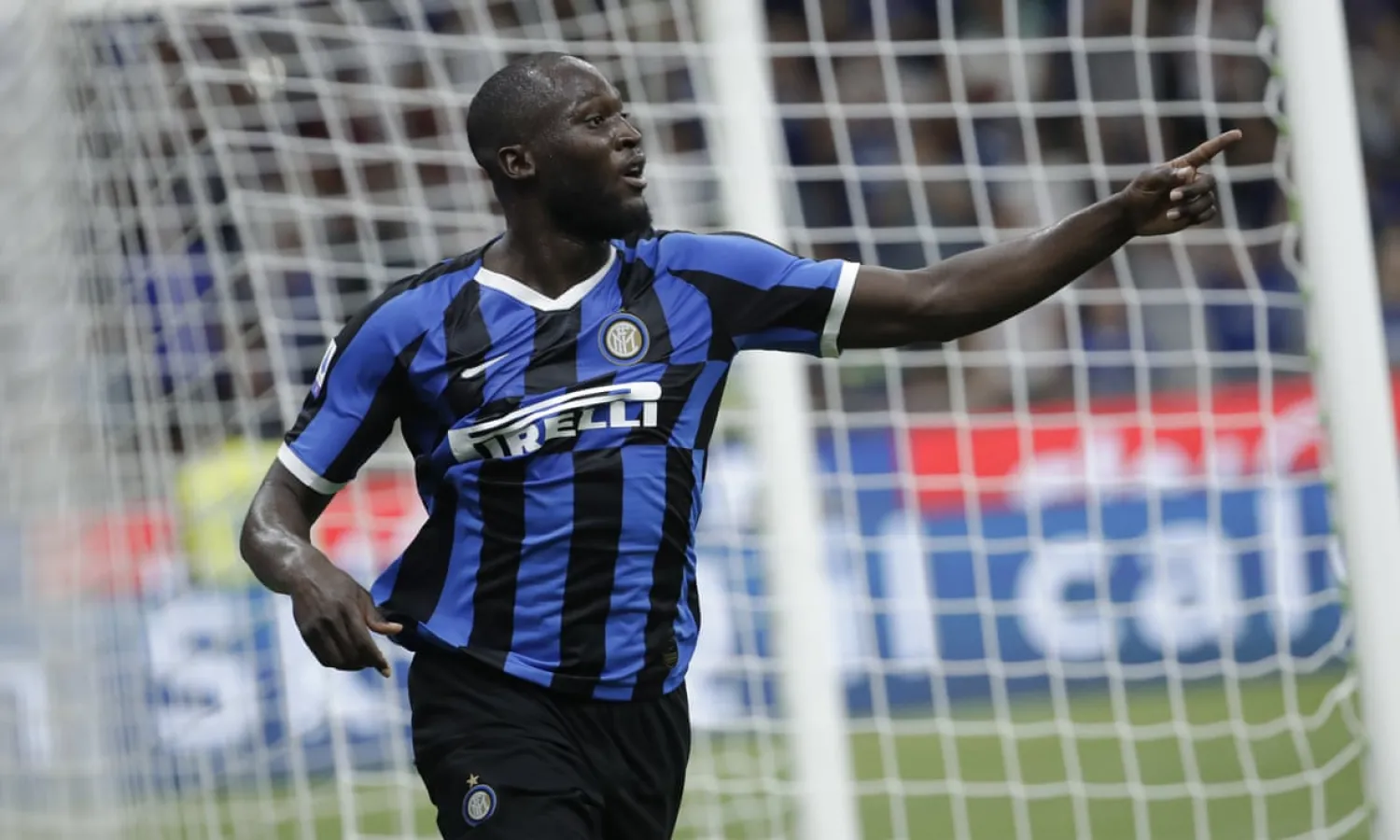
Romelu Lukaku was subject to racist abuse inside the ground during Internazionale’s recent game at Cagliari. Photograph: Luca Bruno/AP
TT

Legal Action by Players Should Be the Next Step for Online Abuse

Romelu Lukaku was subject to racist abuse inside the ground during Internazionale’s recent game at Cagliari. Photograph: Luca Bruno/AP

At the end of last week the bookmaker Paddy Power published a tweet which contrasted the £10,000 fine given by the Football Association to Millwall in August for their fans’ racist chanting with the £50,000 fine imposed on Huddersfield Town for wearing an oversized sponsor’s logo on their kit in a pre-season friendly. I retweeted it, suggesting that Millwall’s minuscule fine would make no impact on the behavior of fans at a club already synonymous with racism.

What followed was a barrage of personal abuse from Millwall fans, some insisting I was unfair to suggest they all behaved as unpleasantly as the club’s stereotype would suggest, and others absolutely reinforcing that stereotype. My tweets are now protected to avoid further abuse, which means people can’t see or reply to my tweets unless I have approved their request to follow me; within hours I had about 100 follow requests from people identifying as Millwall fans, who expected me to give them the approval they needed to send me their abuse. For these people it was not enough to write abusive comments about me, they wanted to make sure I saw the abuse – and they expected me to volunteer for it.

At the end of last month I published a book, They Don’t Teach This, the product of a year of effort not just by me but by my ghostwriter and publishers. Within 48 hours of my tweet Amazon had received and duly published dozens of one-star reviews by people who had neither bought nor read the book, reviews that were mostly not themselves racist but whose authors were clearly motivated by tribalism, bitterness and hatred.

I have worked too hard on my book just to sit back and accept that these people, who can’t take the truth about their own club or who themselves embody it, can destroy its chances of success by spewing their hate while hiding behind the cloak of anonymity. Some of what has been written about myself and my book is defamatory; it is intended to put people off buying my book, and I intend to make sure they understand the consequences of such hatred.

I don’t want to earn a reputation for litigiousness, but sometimes the law is the only solution. In 2017, having exhausted every avenue possible within the FA’s internal structures without finding anyone who would take my case seriously, I took them to an employment tribunal. They had no choice but to take me seriously then. Whistleblowing procedures were put in place, UK Sport acted, and the FA was forced into a very public and humiliating apology. Everything shifted once I took a legal route. It wasn’t a fun thing to live through, but sometimes it is what needs to happen.

It is time to take action over online abuse. Black footballers occasionally retweet examples of the racism directed at them on social media, but Twitter and Facebook aren’t doing enough to stop it. If anything Twitter actually needs it: fury and controversy are what draws people to the site. But we can find out who these people are. All it takes is a court order to release their names, and they’re in trouble. There are laws in place to stop this stuff, and people who don’t understand the moral argument against racism have to understand that there will be legal consequences.

Perhaps the most effective solution would be for black, female and BAME-background athletes to take collective action. If the Professional Footballers’ Association is committed to protecting players’ interests, they should also be looking at this issue. Perhaps they could assemble a legal team specifically to take on the likes of Twitter and force them to identify the individuals who racially abuse their members so they can be pursued by police or the courts. Footballers need to step up and make sure that even if the FA or Twitter aren’t going to do anything, we are.

Millwall’s trivial fine shows that the FA still isn’t taking the issue seriously enough, and clubs are very obviously failing to police themselves. In Italy, Cagliari recently insisted they intend to “identify, isolate and ban” those fans who abused Internazionale’s Romelu Lukaku, but this is a club where black visiting players have been consistently abused for years. Maybe they will go on to punish one or two people, but when you hear racist chanting it’s not because a couple of people are doing it. No club ever bans 100 people or more, not when these are the very people who are there every week, the hardcore fans on whom the club depends. They want the ultras to come, whatever they do once they are there. But close their stadium or sections of it, show them they will lose money and, in time, sponsors if they don’t act on racism, and it will happen soon enough. When Uefa wants to act on financial fair play or on match-fixing, it does it and does it well. It needs to apply the same kinds of solutions to this problem.

Deterrents can change culture. Just look at Chelsea, where a transfer ban has transformed the club into one where a young English manager is appointed to help young English players such as Mason Mount and Tammy Abraham, who wouldn’t have had a sniff otherwise, find a path to the first team. The club have been forced to reassess how they work; they have brought in Petr Cech, Frank Lampard, Jody Morris, and Claude Makelele, a group of people who used to play for the club, and completely changed how they go about their business. That’s what rules do in the game.

In the case of racism, the culture of fans thinking it’s OK to abuse players at games or online can and must be changed. If people, when they hear fans around them racially abusing players, understand as a result some or all of the ground will be closed the following week and none of them will be able to watch their team, they will self-police.

It is up to national associations to regulate behavior at grounds, but online it is not clear whose job it is. It’s time to bring players together and start talking about our options. People are being abused like dogs on the street, and it needs to stop. There isn’t really a culture in Britain of leaping into legal action, but that must be our next step. Once players understand their rights and act to protect them, they’ll discover how much power they actually hold. And maybe then, at last, people will start to listen and change.

(The Guardian)


‘Don’t Jump in Them’: Olympic Athletes’ Medals Break During Celebrations

Gold medalists team USA celebrate during the medal ceremony after the Team Event Free Skating of the Figure Skating competitions at the Milano Cortina 2026 Winter Olympic Games, in Milan, Italy, 08 February 2026. (EPA)
TT

‘Don’t Jump in Them’: Olympic Athletes’ Medals Break During Celebrations

Gold medalists team USA celebrate during the medal ceremony after the Team Event Free Skating of the Figure Skating competitions at the Milano Cortina 2026 Winter Olympic Games, in Milan, Italy, 08 February 2026. (EPA)

Handle with care. That's the message from gold medalist Breezy Johnson at the Milan Cortina Winter Olympics after she and other athletes found their medals broke within hours.

Olympic organizers are investigating with "maximum attention" after a spate of medals have fallen off their ribbons during celebrations on the opening weekend of the Games.

"Don’t jump in them. I was jumping in excitement, and it broke," women's downhill ski gold medalist Johnson said after her win Sunday. "I’m sure somebody will fix it. It’s not crazy broken, but a little broken."

TV footage broadcast in Germany captured the moment biathlete Justus Strelow realized the mixed relay bronze he'd won Sunday had fallen off the ribbon around his neck and clattered to the floor as he danced along to a song with teammates.

His German teammates cheered as Strelow tried without success to reattach the medal before realizing a smaller piece, seemingly the clasp, had broken off and was still on the floor.

US figure skater Alysa Liu posted a clip on social media of her team event gold medal, detached from its official ribbon.

"My medal don’t need the ribbon," Liu wrote early Monday.

Andrea Francisi, the chief games operations officer for the Milan Cortina organizing committee, said it was working on a solution.

"We are aware of the situation, we have seen the images. Obviously we are trying to understand in detail if there is a problem," Francisi said Monday.

"But obviously we are paying maximum attention to this matter, as the medal is the dream of the athletes, so we want that obviously in the moment they are given it that everything is absolutely perfect, because we really consider it to be the most important moment. So we are working on it."

It isn't the first time the quality of Olympic medals has come under scrutiny.

Following the 2024 Summer Olympics in Paris, some medals had to be replaced after athletes complained they were starting to tarnish or corrode, giving them a mottled look likened to crocodile skin.


African Players in Europe: Ouattara Fires Another Winner for Bees

Football - Premier League - Newcastle United v Brentford - St James' Park, Newcastle, Britain - February 7, 2026 Brentford's Dango Ouattara celebrates scoring their third goal with Brentford's Rico Henry. (Reuters)
TT

African Players in Europe: Ouattara Fires Another Winner for Bees

Football - Premier League - Newcastle United v Brentford - St James' Park, Newcastle, Britain - February 7, 2026 Brentford's Dango Ouattara celebrates scoring their third goal with Brentford's Rico Henry. (Reuters)

Burkina Faso striker Dango Ouattara was the Brentford match-winner for the second straight weekend when they triumphed 3-2 at Newcastle United.

The 23-year-old struck in the 85th minute of a seesaw Premier League struggle in northeast England. The Bees trailed and led before securing three points to go seventh in the table.

Last weekend, Ouattara dented the title hopes of third-placed Aston Villa by scoring the only goal at Villa Park.

AFP Sport highlights African headline-makers in the major European leagues:

ENGLAND

DANGO OUATTARA (Brentford)

With the match at Newcastle locked at 2-2, the Burkinabe sealed victory for the visitors at St James' Park by driving a left-footed shot past Magpies goalkeeper Nick Pope to give the Bees a first win on Tyneside since 1934. Ouattara also provided the cross that led to Vitaly Janelt's headed equalizer after Brentford had fallen 1-0 behind.

BRYAN MBEUMO (Manchester Utd)

The Cameroon forward helped the Red Devils extend their perfect record under caretaker manager Michael Carrick to four games by scoring the opening goal in a 2-0 win over Tottenham after Spurs had been reduced to 10 men by captain Cristian Romero's red card.

ISMAILA SARR (Crystal Palace)

The Eagles ended their 12-match winless run with a 1-0 victory at bitter rivals Brighton thanks to Senegal international Sarr's 61st-minute goal when played in by substitute Evann Guessand, the Ivory Coast forward making an immediate impact on his Palace debut after joining on loan from Aston Villa during the January transfer window.

ITALY

LAMECK BANDA (Lecce)

Banda scored direct from a 90th-minute free-kick outside the area to give lowly Leece a precious 2-1 Serie A victory at home against mid-table Udinese. It was the third league goal this season for the 25-year-old Zambia winger. Leece lie 17th, one place and three points above the relegation zone.

GERMANY

SERHOU GUIRASSY (Borussia Dortmund)

Guirassy produced a moment of quality just when Dortmund needed it against Wolfsburg. Felix Nmecha's silky exchange with Fabio Silva allowed the Guinean to sweep in an 87th-minute winner for his ninth Bundesliga goal of the season. The 29-year-old has scored or assisted in four of his last five games.

RANSFORD KOENIGSDOERFFER (Hamburg)

A first-half thunderbolt from Ghana striker Koenigsdoerffer put Hamburg on track for a 2-0 victory at Heidenheim. It was their first away win of the season. Nigerian winger Philip Otele, making his Hamburg debut, split the defense with a clever pass to Koenigsdoerffer, who hit a shot low and hard to open the scoring in first-half stoppage time.

FRANCE

ISSA SOUMARE (Le Havre)

An opportunist goal by Soumare on 54 minutes gave Le Havre a 2-1 home win over Strasbourg in Ligue 1. The Senegalese received the ball just inside the area and stroked it into the far corner of the net as he fell.


Olympic Town Warms up as Climate Change Puts Winter Games on Thin Ice

 Milano Cortina 2026 Olympics - Alpine Skiing - Men's Team Combined Downhill - Stelvio Ski Centre, Bormio, Italy - February 09, 2026. Alexis Monney of Switzerland in action during the Men's Team Combined Downhill. (Reuters)
Milano Cortina 2026 Olympics - Alpine Skiing - Men's Team Combined Downhill - Stelvio Ski Centre, Bormio, Italy - February 09, 2026. Alexis Monney of Switzerland in action during the Men's Team Combined Downhill. (Reuters)
TT

Olympic Town Warms up as Climate Change Puts Winter Games on Thin Ice

 Milano Cortina 2026 Olympics - Alpine Skiing - Men's Team Combined Downhill - Stelvio Ski Centre, Bormio, Italy - February 09, 2026. Alexis Monney of Switzerland in action during the Men's Team Combined Downhill. (Reuters)
Milano Cortina 2026 Olympics - Alpine Skiing - Men's Team Combined Downhill - Stelvio Ski Centre, Bormio, Italy - February 09, 2026. Alexis Monney of Switzerland in action during the Men's Team Combined Downhill. (Reuters)

Olympic fans came to Cortina with heavy winter coats and gloves. Those coats were unzipped Sunday and gloves pocketed as snow melted from rooftops — signs of a warming world.

“I definitely thought we’d be wearing all the layers,” said Jay Tucker, who came from Virginia to cheer on Team USA and bought hand warmers and heated socks in preparation. “I don’t even have gloves on.”

The timing of winter, the amount of snowfall and temperatures are all less reliable and less predictable because Earth is warming at a record rate, said Shel Winkley, a Climate Central meteorologist. This poses a growing and significant challenge for organizers of winter sports; The International Olympic Committee said last week it could move up the start date for future Winter Games to January from February because of rising temperatures.

While the beginning of the 2026 Olympic Winter Games in Cortina truly had a wintry feel, as the town was blanketed in heavy snow, the temperature reached about 40 degrees Fahrenheit (4.5 degrees Celsius) Sunday afternoon. It felt hotter in the sun.

This type of February “warmth” for Cortina is made at least three times more likely due to climate change, Winkley said. In the 70 years since Cortina first held the Winter Games, February temperatures there have climbed 6.4 degrees Fahrenheit (3.6 degrees Celsius), he added.

For the Milan Cortina Games, there's an added layer of complexity. It’s the most spread-out Winter Games in history, so Olympic venues are in localities with very different weather conditions. Bormio and Livigno, for example, are less than an hour apart by car, but they are separated by a high mountain pass that can divide the two places climatically.

The organizing committee is working closely with four regional and provincial public weather agencies. It has positioned weather sensors at strategic points for the competitions, including close to the ski jumping ramps, along the Alpine skiing tracks and at the biathlon shooting range.

Where automatic stations cannot collect everything of interest, the committee has observers — “scientists of the snow”— from the agencies ready to collect data, according to Matteo Pasotti, a weather specialist for the organizing committee.

The hope? Clear skies, light winds and low temperatures on race days to ensure good visibility and preserve the snow layer.

The reality: “It’s actually pretty warm out. We expected it to be a lot colder,” said Karli Poliziani, an American who lives in Milan. Poliziani was in Cortina with her father, who considered going out Sunday in just a sweatshirt.

And forecasts indicate that more days with above-average temperatures lie ahead for the Olympic competitions, Pasotti said.

Weather plays a critical role in the smooth running and safety of winter sports competitions, according to Filippo Bazzanella, head of sport services and planning for the organizing committee. High temperatures can impact the snow layer on Alpine skiing courses and visibility is essential. Humidity and high temperatures can affect the quality of the ice at indoor arenas and sliding centers, too.

Visibility and wind are the two factors most likely to cause changes to the competition schedule, Bazzanella added. Wind can be a safety issue or a fairness one, such as in the biathlon where slight variations can disrupt the athletes' precise shooting.

American alpine skier Jackie Wiles said many races this year have been challenging because of the weather.

“I feel like we’re pretty good about keeping our heads in the game because a lot of people are going to get taken out by that immediately,” she said at a team press conference last week. “Having that mindset of: it’s going to be what it’s going to be, and we still have to go out there and fight like hell regardless.”
