


Saudi Aramco Restores Oil Output Earlier than Expected

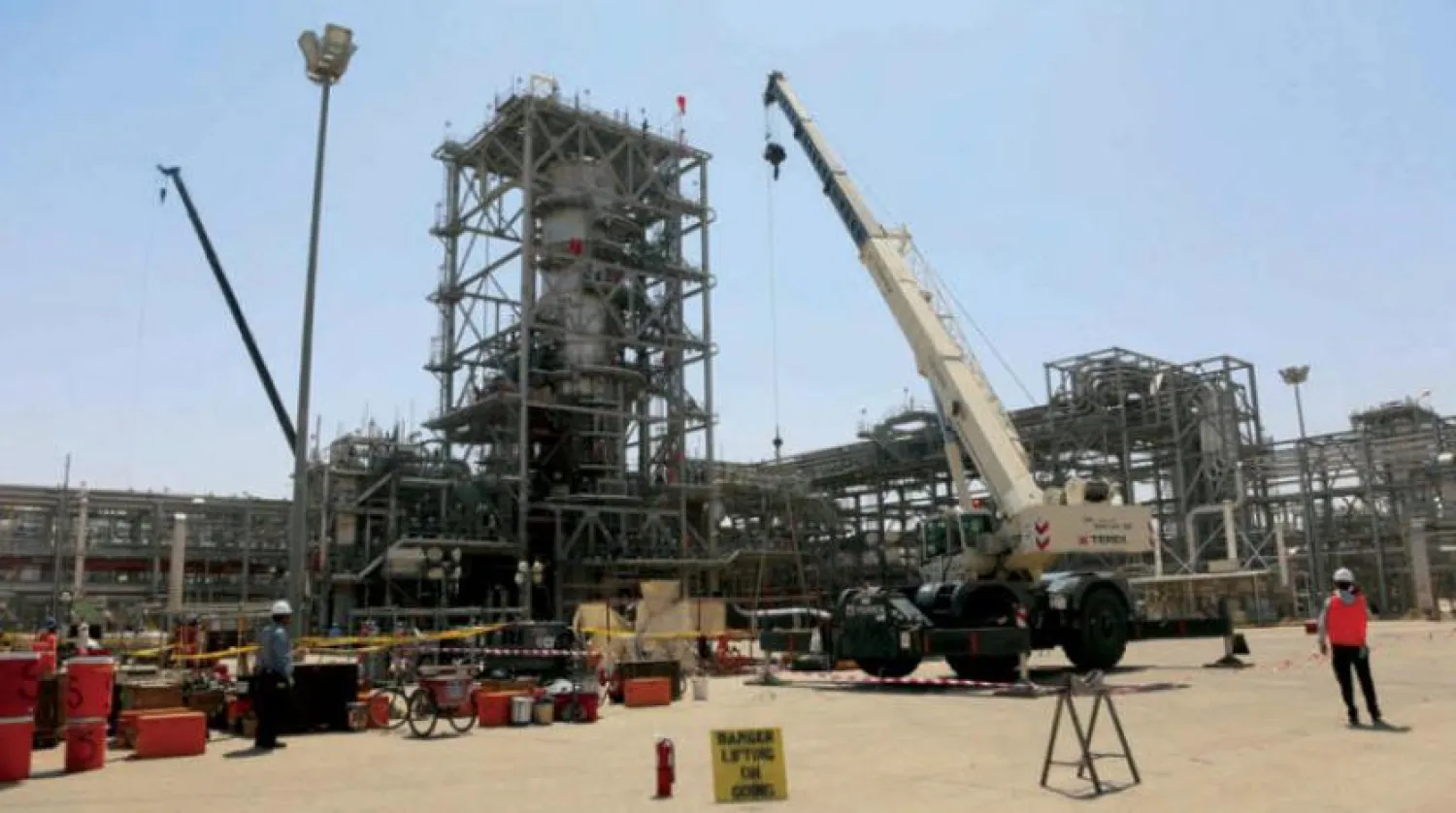
Saudi Arabia maintains a faster than expected recovery after the Sept. 14 attacks on its oil facilities. Photo by Saad Al-Dossary
TT

Saudi Aramco Restores Oil Output Earlier than Expected

Saudi Arabia maintains a faster than expected recovery after the Sept. 14 attacks on its oil facilities. Photo by Saad Al-Dossary

Saudi Arabia has restored its oil production capacity to 11.3 million barrels per day, three sources briefed on Saudi Aramco’s operations told Reuters, maintaining a faster than expected recovery after the Sept. 14 attacks on its oil facilities.

Crude output from the Khurais field is now at 1.3 million bpd and the Abqaiq plant is currently at about 4.9 million bpd, the sources said. On Monday, sources had said Abqaiq production was about 3 million bpd.

The Sept. 14 attacks on the two plants caused a spike in oil prices, fires and damage that halved the crude output of the world’s top oil exporter, by shutting down 5.7 million bpd of production.

Saudi Energy Minister Prince Abdulaziz bin Salman and the chief executive of state oil company Aramco, Amin Nasser, have said output will be fully back online by the end of September.

The attacks initially sent oil prices up 20% although they dropped soon after as the Kingdom pledged to bring back output swiftly.

The Kingdom has managed to maintain supplies to customers at levels prior to the attacks by drawing from its huge oil inventories and offering other crude grades from other fields, Saudi officials said.

Meanwhile, Aramco will officially announce its intention to sell shares on the stock market at some point around October 20, people familiar with the planning told Bloomberg.

According to one of Bloomberg’s sources, November indeed could be a targeted timeline for listing shares of Aramco on the Saudi stock market.

The details of the listing and a timeline will depend on market conditions and demand from investors, Bloomberg’s sources said. 

In another fresh report about the initial public offering (IPO), The Wall Street Journal reported that Aramco is considering the offer of not 5 but 10 percent of its stock.

Also Wednesday, a Reuters report said that Aramco has asked banks to submit proposals for a project finance loan of more than $1 billion.

The state oil company’s request for proposals (RFPs) was sent this week, one of two sources with direct knowledge of the matter said.

It was not immediately clear from the RFP the specific nature of the projects the funds will be used for, the sources said.

The request to banks went in a few days after the Sept. 14 attacks, Reuters reported.

Nasser has said the company was still in the process of estimating repair work but that it was “not that significant,” given the company’s size.

Aramco, the most profitable oil company in the world, earlier this year raised $12 billion with its first international bond issue after receiving more than $100 billion in orders.



Saudi Industry Minister Explores Localization Opportunities with Airbus Helicopters

Saudi Minister of Industry and Mineral Resources Bandar Alkhorayef and other officials during the meeting. (SPA)
TT

Saudi Industry Minister Explores Localization Opportunities with Airbus Helicopters

Saudi Minister of Industry and Mineral Resources Bandar Alkhorayef and other officials during the meeting. (SPA)

Saudi Minister of Industry and Mineral Resources Bandar Alkhorayef held talks Airbus Helicopters CEO Bruno Even on the sidelines of the World Defense Show 2026 in Riyadh to discuss joint opportunities for localizing aerospace industries and their supply chains in the Kingdom.

The meeting reviewed ways to strengthen industrial cooperation and expand strategic partnership opportunities in the localization of aircraft and helicopter manufacturing in Saudi Arabia, said a ministry statement on Tuesday.

It addressed ongoing efforts to localize the production of aluminum panels and titanium processing to support the requirements of the aerospace sector.

The talks underscored the importance of developing enabling models that attract Airbus Helicopters’ global suppliers and facilitate the establishment or expansion of their operations in the Kingdom, contributing to the resilience and sustainability of global aviation supply chains.

Separately, Alkhorayef met with leaders of the Technology Equipment Trading Establishment, which specializes in military industries. They discussed opportunities to localize defense industries in the Kingdom, the enablers supporting local content development, and initiatives to boost national capabilities in military manufacturing.


Bessent Says US, China Could Have Very Productive Relationship

US Secretary of the Treasury Scott Bessent, left, shakes hands with Chinese Vice Premier He Lifeng, right, during a bilateral meeting between the United States and China, in Geneva, Switzerland, on Saturday, May 10, 2025. (KEYSTONE/EDA/Martial Trezzini) /Handout via Reuters
TT

Bessent Says US, China Could Have Very Productive Relationship

US Secretary of the Treasury Scott Bessent, left, shakes hands with Chinese Vice Premier He Lifeng, right, during a bilateral meeting between the United States and China, in Geneva, Switzerland, on Saturday, May 10, 2025. (KEYSTONE/EDA/Martial Trezzini) /Handout via Reuters

US Treasury Secretary Scott Bessent said on Tuesday that the US relationship with China could be very productive and welcomed Beijing as a rival.

"The US-China relationship now is in a very comfortable place. We are going to be rivals, but we want the rivalry to be fair," Bessent said during an appearance at the ‌BTG Pactual ‌CEO Conference, held in Sao Paolo, Brazil. "We ‌do ⁠not want ‌to decouple from China, but we do need to de-risk."

Bessent is preparing to meet with Chinese Vice Premier He Lifeng in coming weeks ahead of a planned visit to China by US President Donald Trump in April.

The Treasury has not given details about the timing or venue for Bessent's meeting with He.

Bessent told the conference ⁠that the US was working on "retaking sovereignty" from China in strategic industries including ‌critical minerals, semiconductors and medicines.

"We're always ‍going to be competitors," he ‍said. "And I'm of the view that competition makes you better, ‍keeps you from stagnating."

In the long run, he said China would have to rebalance its economy, adding, "The world cannot have a situation where China persistently runs a $1 trillion trade surplus. That's just not possible."

Bessent and US Trade Representative Jamieson Greer spoke with He by phone in December, and both sides agreed to promote the ⁠stable development of bilateral trade and economic ties, China's official Xinhua news agency reported at the time.

Bessent last met with He in Malaysia in October, when both sides discussed a framework agreement under which Beijing agreed to defer export controls on rare earth supplies and Washington dropped a 100% US tariff on Chinese goods.

The US Treasury Secretary has said in recent weeks that China is on track to meet its commitments under a US-China trade agreement, including the purchase of 12 million metric tons ‌of US soybeans, by the end of February.


AlUla Conference for Emerging Market Economies Highlights Policies to Strengthen Resilience, Support Growth

The second AlUla Conference for Emerging Market Economies was held in AlUla on February 8–9 - SPA
TT

AlUla Conference for Emerging Market Economies Highlights Policies to Strengthen Resilience, Support Growth

The second AlUla Conference for Emerging Market Economies was held in AlUla on February 8–9 - SPA

At the conclusion of the second AlUla Conference for Emerging Market Economies, held in AlUla on February 8–9 and co-organized by the Saudi Ministry of Finance and the International Monetary Fund, Minister of Finance Mohammed Aljadaan and Managing Director of the International Monetary Fund Kristalina Georgieva issued a joint statement.

The statement expressed appreciation to emerging-market policymakers, leading global academics, and heads of regional and international financial institutions for convening once again in AlUla to discuss the key challenges facing emerging-market economies and the policies needed to strengthen resilience and support growth, SPA reported.

It noted that the second conference reaffirmed the value of a dedicated global forum focused on the shared challenges, opportunities, and aspirations of emerging market economies.

Over the two days, discussions centered on how emerging markets can navigate a global environment characterized by persistent uncertainty, geopolitical shifts, evolving trade patterns, and rapid technological change.

These developments, the statement said, underscore the urgency of strengthening policy frameworks and institutions to bolster resilience and seize opportunities ahead.

Several key messages emerged. First, sound macroeconomic and financial policies—underpinned by strong institutions and effective governance—remain the cornerstone of resilience in an increasingly shock-prone world. Experiences across many emerging markets demonstrate that credible policy frameworks and institutional upgrades have helped deliver better inflation outcomes, maintain financial stability, and preserve market access, even amid heightened uncertainty.

Second, having achieved greater stability, emerging markets now face the challenge of advancing to a new phase of reforms that deliver higher, more sustainable, and more job-rich growth. Unlocking private-sector potential will be central to this effort, including by deepening financial markets, reducing barriers to entrepreneurship and investment, and harnessing artificial intelligence through investments in digital infrastructure and skills development to help young people thrive in a changing global labor market.

Third, amid shifting trade and investment patterns, deeper intra-regional and inter-regional integration presents significant opportunities. Strengthening trade and regional cooperation remains critical as emerging markets adapt to the evolving global economic landscape.

According to SPA, the statement concluded by welcoming the commitment shown by emerging market economies to work together, learn from one another, and act decisively to address global challenges, and by expressing anticipation of continuing these discussions and building on the momentum at future editions of the AlUla Conference for Emerging Market Economies.