


Sanctions Paralyze Goods' Imports via Iranian Ports

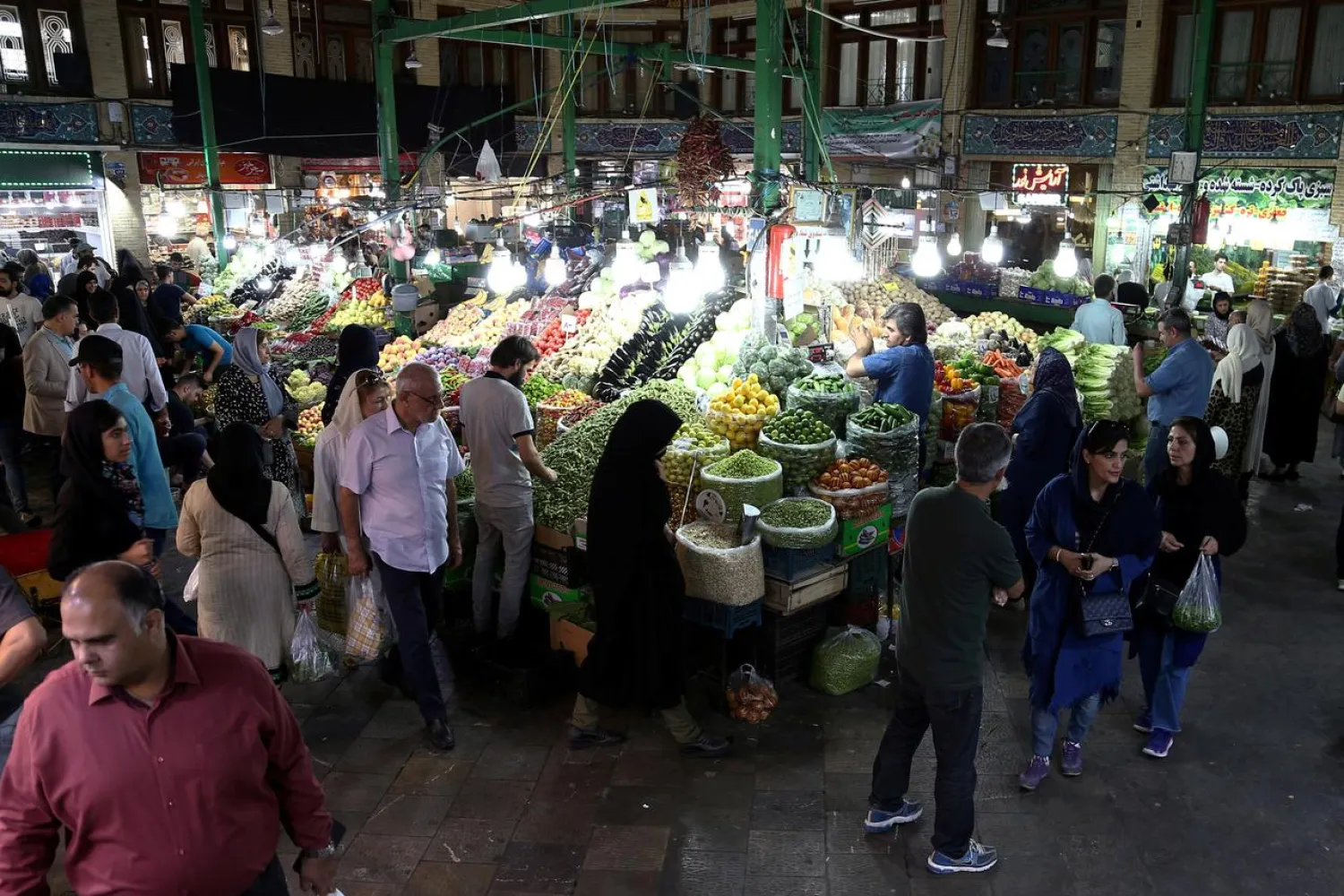
 People buy fruits and vegetables from Tajrish Bazaar in Tehran, Iran August 1, 2019. Nazanin Tabatabaee/WANA (West Asia News Agency) via REUTERS/File Photo
People buy fruits and vegetables from Tajrish Bazaar in Tehran, Iran August 1, 2019. Nazanin Tabatabaee/WANA (West Asia News Agency) via REUTERS/File Photo
TT

Sanctions Paralyze Goods' Imports via Iranian Ports

 People buy fruits and vegetables from Tajrish Bazaar in Tehran, Iran August 1, 2019. Nazanin Tabatabaee/WANA (West Asia News Agency) via REUTERS/File Photo
People buy fruits and vegetables from Tajrish Bazaar in Tehran, Iran August 1, 2019. Nazanin Tabatabaee/WANA (West Asia News Agency) via REUTERS/File Photo

More than 20 ships carrying around one million tonnes of grain are stuck outside Iranian ports as US sanctions create payment problems and hamper the country’s efforts to import vital commodities, sources directly involved in the trade said.

Trading companies such as Bunge (BG.N) and China’s COFCO International have been hit by payment delays and additional costs of up to $15,000 a day as the renewed US restrictions stifle the processing of transactions, trade sources said.

According to Reuters, food, medicine and other humanitarian supplies are exempt from sanctions Washington re-imposed after US President Donald Trump said he was walking away from a 2015 international deal over Iran’s nuclear program.

But the US measures targeting everything from oil sales to shipping and financial activities have deterred several foreign banks from doing any Iranian business, including humanitarian deals such as food shipments.

The few remaining lenders still processing Iranian business face multiple hurdles to facilitate payments as financing channels freeze up.

Six Western and Iranian sources said the situation was contributing to the cargoes being held up for more than a month outside Iran’s biggest ports for goods, Bandar Imam Khomeini and Bandar Abbas.

The ships are carrying cargoes including soybeans and corn mostly from South America, the sources said. The grain vessels are also visible through ship tracking data.

“There are no restrictions on humanitarian business, but you can’t get paid for it,” one European source said. “You can be waiting for months to get a payment.”

“There is nervousness among traders about making more sales to Iran before the backlog (of ships) is cleared,” said another source.

A senior Iranian port official, who declined to be named, told Reuters there had been problems since US sanctions were imposed on its financial system in November 2018.

“What has changed is that now the number of banks, traders that are staying away from doing business with Iran is increasing,” the official said.

Separate US sanctions imposed in September on Iran’s central bank - following attacks on oil facilities in Saudi Arabia that US, UK, France, Germany and Saudi Arabia blamed on Tehran - have added to difficulties with transactions.

The United Nations Food and Agriculture Organization (FAO) estimated last month that Iran’s total cereal stocks in 2019 would total 5.1 million tonnes, falling to 4.8 million tonnes in 2020, versus 9.9 million tonnes in 2016.

Trade sources said Iranian ports were also struggling to process ships due to a lack of available berths.

Of the vessels still anchored, at least 20 dry bulk ships were waiting outside Bandar Imam Khomeini, Refinitiv data showed. A further two vessels had managed to discharge their cargoes after waiting for weeks, the data showed.

Separate data from shipping intelligence platform MarineTraffic showed a similar number of ships stationary for more than a month. A separate Iranian government official confirmed that ships were waiting but declined to give details.

Trade sources said Turkey’s Halkbank (HALKB.IS) - one of the main banks that Iran has relied on for such humanitarian trade - had not been able to process payments fast enough because of the complexity of the process and in some cases did not complete transactions with suppliers.

Suppliers have been left with additional costs, known as demurrage, of up to $15,000 a day as they wait to unload.

Trade sources said US agribusiness group Bunge and China’s COFCO International were among the companies affected, together with smaller Turkish and Iranian suppliers.

Bunge spokesman Frank Mantero said: “While we don’t comment on or confirm commercial contracts, Bunge exports agricultural commodities in accordance with all applicable legislative frameworks.”

Two sources said the increasing difficulties had prompted US agribusiness company ADM (ADM.N) to halt trading with Iran since August.

Trade sources told Reuters in December that Bunge and rival US group Cargill as well as other suppliers had halted new food supply deals to Iran due to payment issues.

Cargill said in a statement: “In certain countries where international sanctions exist, we provide that food using the humanitarian exception for medicine and food.”

A US Treasury spokesperson said Washington designated Iran’s central bank under its counter terrorism authorities, adding that the broad exceptions to the sanctions such as for humanitarian trade that once applied to transactions involving the central bank no longer applied.



Thai Army Accuses Cambodia of Violating Truce with over 250 Drones

Displaced residents rest in a bunker in Thailand's Surin province on December 11, 2025, amid clashes along the Thai-Cambodia border. (AFP)
TT

Thai Army Accuses Cambodia of Violating Truce with over 250 Drones

Displaced residents rest in a bunker in Thailand's Surin province on December 11, 2025, amid clashes along the Thai-Cambodia border. (AFP)

Thailand's army on Monday accused Cambodia of violating a newly signed ceasefire agreement, reached after weeks of deadly border clashes, by flying more than 250 drones over its territory.

The Thai army said "more than 250 unmanned aerial vehicles (UAVs) were detected flying from the Cambodian side, intruding into Thailand's sovereign territory" on Sunday night, according to a statement.

"Such actions constitute provocation and a violation of measures aimed at reducing tensions, which are inconsistent with the Joint Statement agreed" during a bilateral border committee meeting on Saturday, it added.

Cambodian Foreign Minister Prak Sokhonn said in remarks aired on state television on Monday that the two sides had discussed the incident and agreed to investigate and "resolve it immediately".

Prak Sokhonn described it as "a small issue related to flying drones seen by both sides along the border line".

Thailand and Cambodia agreed to the "immediate" ceasefire on Saturday, pledging to end renewed border clashes that killed dozens of people and displaced more than a million this month.

The reignited fighting spread to nearly every border province on both sides, shattering an earlier truce for which US President Donald Trump took credit.

Under the agreement signed on Saturday, the Southeast Asian neighbors agreed to cease fire, freeze troop movements and cooperate on demining efforts and combatting cybercrime.


Mexican Train Derailment Kills at Least 13 People, 98 Injured

Authorities work at the site of train derailment on the Interoceanic Corridor of the Isthmus of Tehuantepec, a railway line connecting Mexico's Pacific and Gulf coasts, where several passengers were killed and injured near Nizanda, Oaxaca state, Mexico, December, 28, 2025. (Reuters)
TT

Mexican Train Derailment Kills at Least 13 People, 98 Injured

Authorities work at the site of train derailment on the Interoceanic Corridor of the Isthmus of Tehuantepec, a railway line connecting Mexico's Pacific and Gulf coasts, where several passengers were killed and injured near Nizanda, Oaxaca state, Mexico, December, 28, 2025. (Reuters)

Mexican authorities said on Sunday that at least 13 people ​were killed after an Interoceanic Train carrying 250 people derailed in the southern state of Oaxaca.

The Mexican Navy said the train, which derailed near the town of Nizanda, was carrying nine crew members and 241 passengers.

Of those on board, 139 were reported to be out of ‌danger, while 98 ‌were injured, including 36 ‌who ⁠were ​receiving medical assistance.

President ‌Claudia Sheinbaum said on X that five of the injured were in critical condition, adding that senior officials had been dispatched to the site to assist the families of those killed.

The governor of Oaxaca, Salomon Jara Cruz, expressed condolences to the families ⁠of those killed in the accident and said state authorities ‌were coordinating with federal agencies to ‍assist those affected.

Mexico's Attorney ‍General's Office has already opened an investigation into ‍the incident, Attorney General Ernestina Godoy Ramos said in a social media post.

The Interoceanic Train, inaugurated in 2023 under former President Andres Manuel Lopez Obrador, forms ​part of the broader Interoceanic Corridor project.

The initiative was designed to modernize the rail link across ⁠the Isthmus of Tehuantepec, connecting Mexico's Pacific port of Salina Cruz with Coatzacoalcos on the Gulf Coast.

The Mexican government has sought to develop the isthmus into a strategic trade corridor, expanding ports, railways and industrial infrastructure with the goal of creating a route that could compete with the Panama Canal.

The train service is also part of a broader push to expand passenger and freight rail ‌in southern Mexico and stimulate economic development in the region.


North Korea Says It Tested Long-Range Cruise Missiles

A person watches a TV news report at Seoul Station in Seoul, South Korea, 29 December 2025. According to South Korea's Joint Chiefs of Staff (JCS), North Korea launched several long-range strategic cruise missiles on 28 December. (EPA)
TT

North Korea Says It Tested Long-Range Cruise Missiles

A person watches a TV news report at Seoul Station in Seoul, South Korea, 29 December 2025. According to South Korea's Joint Chiefs of Staff (JCS), North Korea launched several long-range strategic cruise missiles on 28 December. (EPA)

North Korea said Monday it fired long-range strategic cruise missiles into the sea to test the country’s nuclear deterrence, days after it showed apparent progress in the construction of its first nuclear-powered submarine.

Sunday’s launches were the latest weapons display by North Korea ahead of its planned ruling Workers’ Party congress early next year. Keen outside attention on the congress, the first of its kind in five years, will be on whether North Korean leader Kim Jong Un will establish new priorities in relations with the US and respond to Washington's calls to resume long-dormant talks.

The official Korean Central News Agency reported that Kim expressed “great satisfaction” over Sunday's launches, which occurred off the country’s west coast. It said Kim noted that testing the reliability of North Korea's nuclear deterrence and demonstrating its might are “just a responsible exercise of the right to self-defense and war deterrence” in the face of external security threats.

South Korea’s Joint Chiefs of Staff said it was aware of several cruise missile launches made from North Korea’s capital region on Sunday morning. It said South Korea maintains a readiness to repel any potential North Korean provocations through its alliance with the United States.

UN Security Council resolutions prohibit North Korea from launches involving its huge stockpile of ballistic missiles. Its cruise missile tests aren’t banned, but they still pose a threat to the US and South Korea because they are highly maneuverable and fly at low altitudes to avoid radar detection. Analysts say North Korea would aim to use cruise missiles to strike US warships and aircraft carriers in the event of conflict.

Last week, North Korea test-launched new anti-air missiles off its east coast and displayed photos showing a largely completed hull of a developmental nuclear-powered submarine. North Korea implied it would arm the submarine with nuclear missiles.

A nuclear-powered submarine is among a slew of sophisticated weapons systems that Kim has vowed to introduce to cope with what he describes as US-led security threats. Some experts say North Korea’s recent alignment with Russia — including sending thousands of troops and military equipment to support President Vladimir Putin’s war in Ukraine — may have helped it to receive crucial technologies in return.

North Korea has focused on weapons-testing activities to expand its nuclear arsenal since Kim's high-stakes nuclear diplomacy with US President Donald Trump collapsed in 2019.

But in an apparent response to Trump’s repeated outreach, Kim suggested in September that he could return to talks if the US drops “its delusional obsession with denuclearization” of North Korea. Experts say Kim might think his enlarged nuclear arsenal would give him greater leverage to wrest concessions in potential talks with Trump.