
One That Got Away for Maradona and Napoli Remains Wrapped in Suspicion

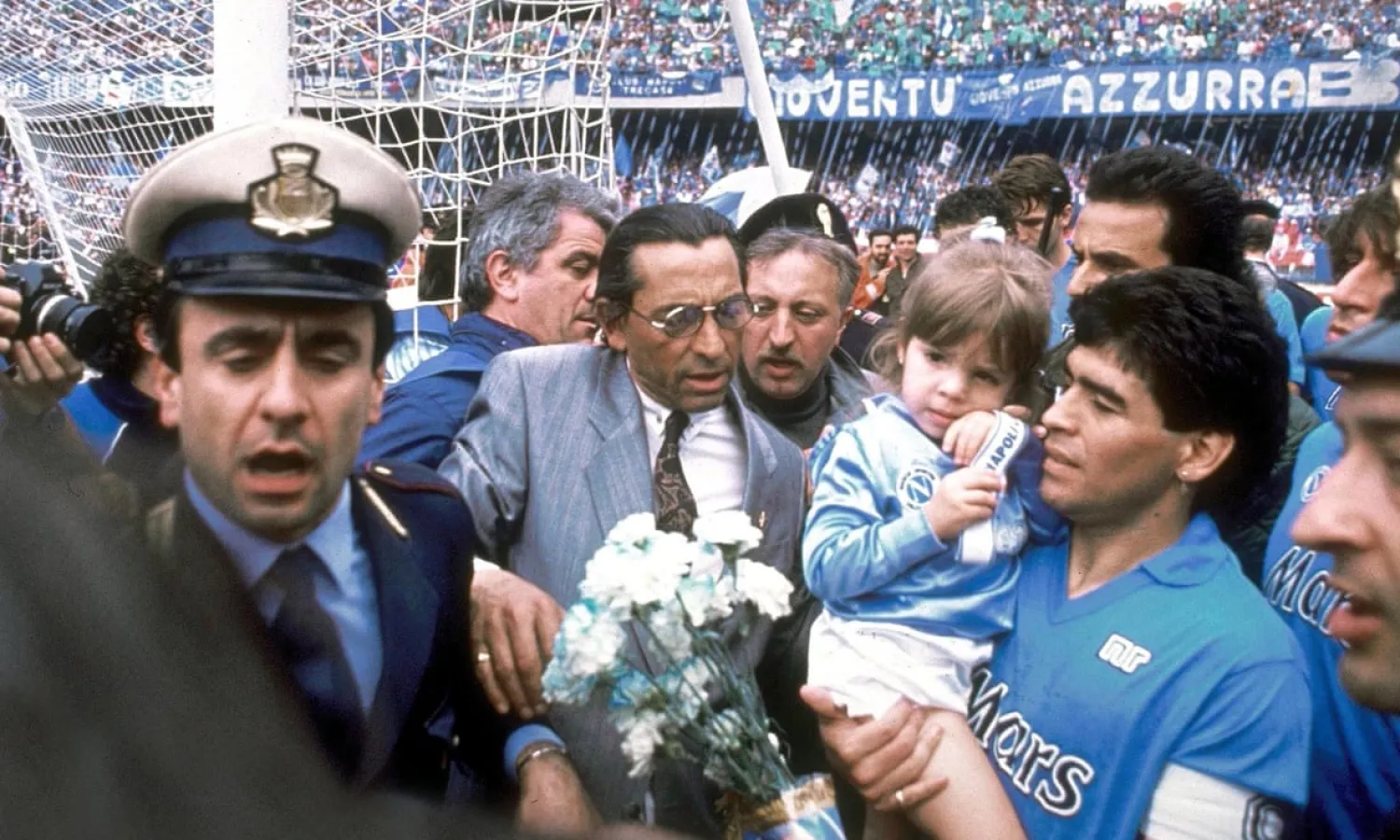
Diego Maradona and his daughter Dalma are surrounded after Napoli won their first Serie A title in 1987 Photograph: Olycom Spa/Rex/Shutterstock
TT

One That Got Away for Maradona and Napoli Remains Wrapped in Suspicion

Diego Maradona and his daughter Dalma are surrounded after Napoli won their first Serie A title in 1987 Photograph: Olycom Spa/Rex/Shutterstock

When Napoli beat Juventus 1-0 in November 1985, thanks to a Diego Maradona free-kick, five people fainted in the stadium and two had heart attacks. On the television news that night, a stern-faced presenter announced: “So quite literally by scoring this goal, Maradona made a big mess.” A year and a half later, Napoli were champions of Italy, their first scudetto in a long, underwhelming history. The party went on for two months. Hundreds of newborn boys were named Diego, the girls Diega.

These are details from the riveting, immersive new documentary Diego Maradona, made by Asif Kapadia, whose previous films have traced the extraordinary lives and premature demises of Ayrton Senna and Amy Winehouse. Much of Diego Maradona is preoccupied with the crazy tale of how the best player in the world ended up at one of Italy’s least desirable clubs and what happened next. The fact that the Argentinian, within three seasons, almost single-footedly took Napoli from perennial relegation-dodgers to the summit of the best and toughest league in the world is often used by his admirers to explain why he should be regarded as the greatest player ever to step on a football pitch.

I was in Naples last month and it’s easy to find people who remember the first title – in 1986-87 – as if it was five minutes ago. Gennaro Montuori, an ultra who directed 20,000 fans in Curva B at Napoli’s Stadio San Paolo, was one. Now in his early 60s, he pulled out his hearing aid to show me what happens when you stand in front of 50 drummers every fortnight for decades (Maradona apparently paid for some of the drums, so the atmosphere would be especially intense). Asked what that first title felt like, Montuori said: “It’s very hard to explain. You are writing an article, Asif Kapadia made a film, but you will never understand what it was like for someone like me, who lived through it.”

Yet often with Napoli fans, they would spend as much time talking about the following season. The One That Got Away. This doesn’t feature much in Kapadia’s film, perhaps because Maradona’s life was enough of a soap opera without it. But it was a year that still perplexed Neapolitans, niggled at them more than 30 years on. And hearing them talk about it, it was not hard to understand why it rankled.

The champions started the next season in ruthless form. Maradona had been joined by the Brazilian striker Careca, one of the stars of the 1986 World Cup. Together with the Italian Bruno Giordano, they became known as “Ma-Gi-Ca”, the most feared frontline in Serie A. Milan, meanwhile, seemed to be in transition. The media tycoon Silvio Berlusconi had bought the club in 1986 and installed the Parma manager, Arrigo Sacchi, in the top job. Their new signings Ruud Gullit and Marco van Basten did not immediately settle. Juventus, without the just-retired Michel Platini and with Ian Rush, signed from Liverpool, struggling, looked unconvincing.

From the opening day, Napoli were on a charge. Milan rallied after a poor start (a loss at home to Fiorentina, draws with mid-table Torino and Cesena), but with five matches remaining Napoli were clear by four points. With two points for a win, it was almost dormie. But then, having lost two games all season, Napoli went into meltdown. In their last five matches, they drew one and lost four, including a dramatic showdown against Milan at home that ended in a 3-2 defeat.

Winning the scudetto had inspired the biggest party in the history of Naples. Now, one year later, there was almost a wake.

Of course, dramatic collapses happen all the time in sport. Think of Greg Norman at the 1996 Masters or Jean van de Velde – three strokes ahead on the final hole – at the 1999 Open. There’s Newcastle United, 12 points clear in mid-January in 1995-96, or even Barcelona losing the plot against Liverpool last month. Pressure builds, nerves crack; it’s one of the main reasons we all tune in and keep watching even when a result seems determined.

But Napoli’s choke in 1987-88 has always been wrapped up in deep folds of suspicion. The city has been home to the Camorra crime syndicate since the 17th century. The 1980s were an especially violent time; in 1988, there were at least 32 distinct clans battling for superiority, with hundreds of deaths every year.

One of the main revenue streams for the Camorra was the totonero, black-market betting. At the start of the 1987-88 season, every single Neapolitan, it seemed, put money on their team to win a second championship. While there has never been a proven link, success for Napoli would have been highly disadvantageous for the crime families of the city. “If they had won that season, the Camorra would have had to pay out about 200bn lire in bets,” Simone Di Meo, an investigative journalist who specializes in the Camorra, told me. “They would have gone bankrupt.”

Certainly, there were some strange goings-on towards the end of the season. Maradona’s car was smashed up, while the midfielder Salvatore Bagni had his home burgled twice. In Kapadia’s documentary, the link between Maradona and the Camorra is explored. He is shown with the Guiliano clan, a ruthless family who ran the impoverished Forcella neighborhood. Maradona went to their parties, graced their weddings and accepted the Rolexes that were a standard appearance gift.

Napoli did rise again, to win a second title – they haven’t won it again since – in 1990. In Diego Maradona, there is footage inside the dressing room as the team celebrate and a loaded exchange between Maradona and the club’s president, Corrado Ferlaino. Maradona, as was his wont, had grabbed a microphone and was playing reporter. He asks Ferlaino if he’s happy and the president replies that he’d have liked to have won the title the two previous seasons as well. “Mamma mia, really?” says Maradona, either indignant or pretending to be. “But president, we have to let someone else win, otherwise it gets boring.”

(The Guardian)


Tottenham Hotspur Sack Head Coach Thomas Frank

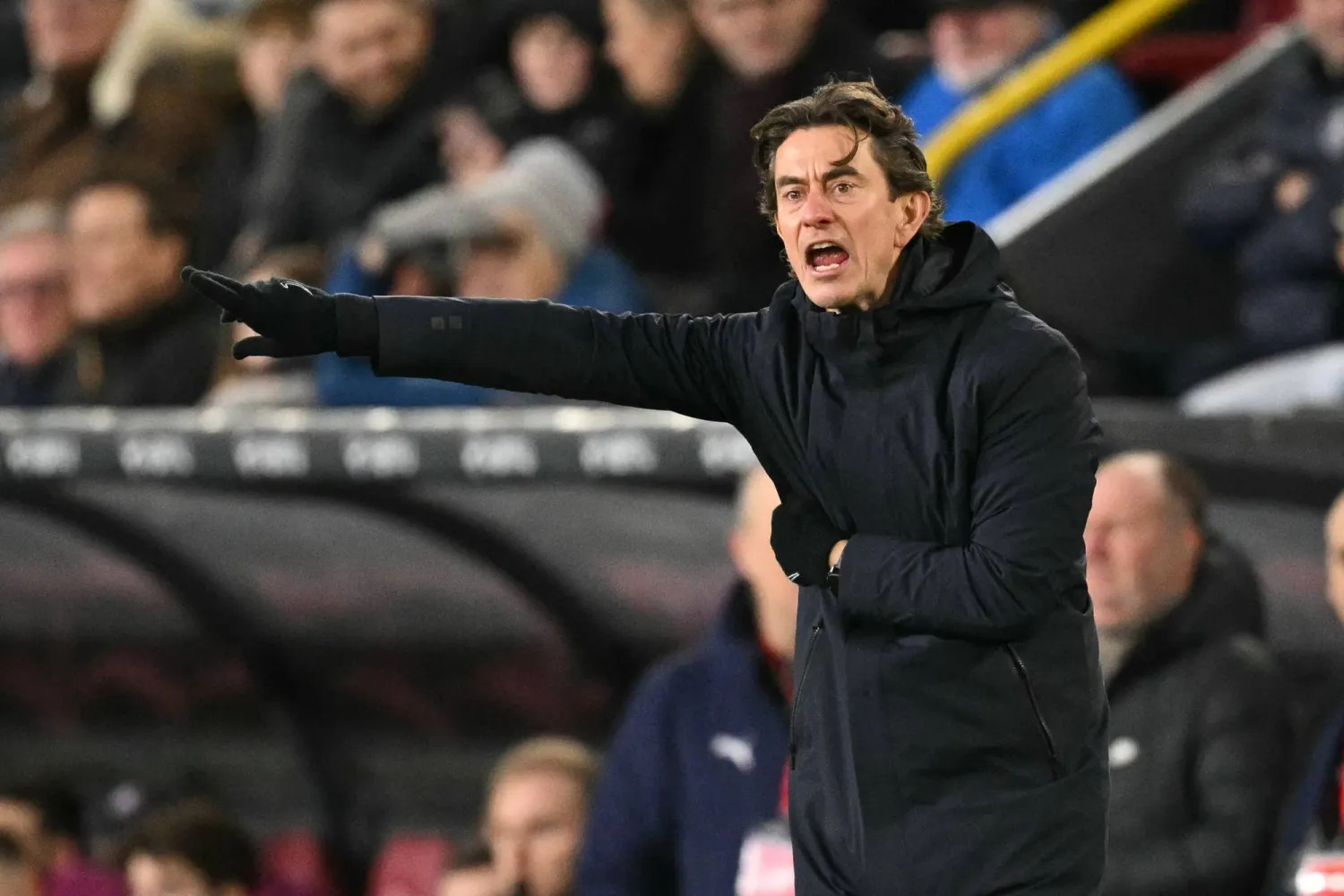
(FILES) Tottenham Hotspur's Danish head coach Thomas Frank gestures on the touchline during the English Premier League football match between Burnley and Tottenham Hotspur at Turf Moor in Burnley, north-west England on January 24, 2026. (Photo by Oli SCARFF / AFP)/
TT

Tottenham Hotspur Sack Head Coach Thomas Frank

(FILES) Tottenham Hotspur's Danish head coach Thomas Frank gestures on the touchline during the English Premier League football match between Burnley and Tottenham Hotspur at Turf Moor in Burnley, north-west England on January 24, 2026. (Photo by Oli SCARFF / AFP)/

Thomas Frank was fired by Tottenham on Wednesday after only eight months in charge and with his team just five points above the relegation zone in the Premier League.

Despite leading Spurs to the round of 16 in the Champions League, Frank has overseen a desperate domestic campaign. A 2-1 loss to Newcastle on Tuesday means Spurs are still to win in the league in 2026.

“The Club has taken the decision to make a change in the Men’s Head Coach position and Thomas Frank will leave today,” Tottenham said in a statement. “Thomas was appointed in June 2025, and we have been determined to give him the time and support needed to build for the future together.

“However, results and performances have led the Board to conclude that a change at this point in the season is necessary.”

Frank’s exit means Spurs are on the lookout for a sixth head coach in less than seven years since Mauricio Pochettino departed in 2019.


Marseille Coach De Zerbi Leaves After Humiliating 5-0 Loss to PSG 

Marseille's Italian coach Roberto De Zerbi looks on from the technical area during the French Cup round of 32 football match between FC Bayeux and Olympique de Marseille (OM) at the Michel-d'Ornano Stadium in Caen on January 13, 2026. (AFP) 
TT

Marseille Coach De Zerbi Leaves After Humiliating 5-0 Loss to PSG 

Marseille's Italian coach Roberto De Zerbi looks on from the technical area during the French Cup round of 32 football match between FC Bayeux and Olympique de Marseille (OM) at the Michel-d'Ornano Stadium in Caen on January 13, 2026. (AFP) 

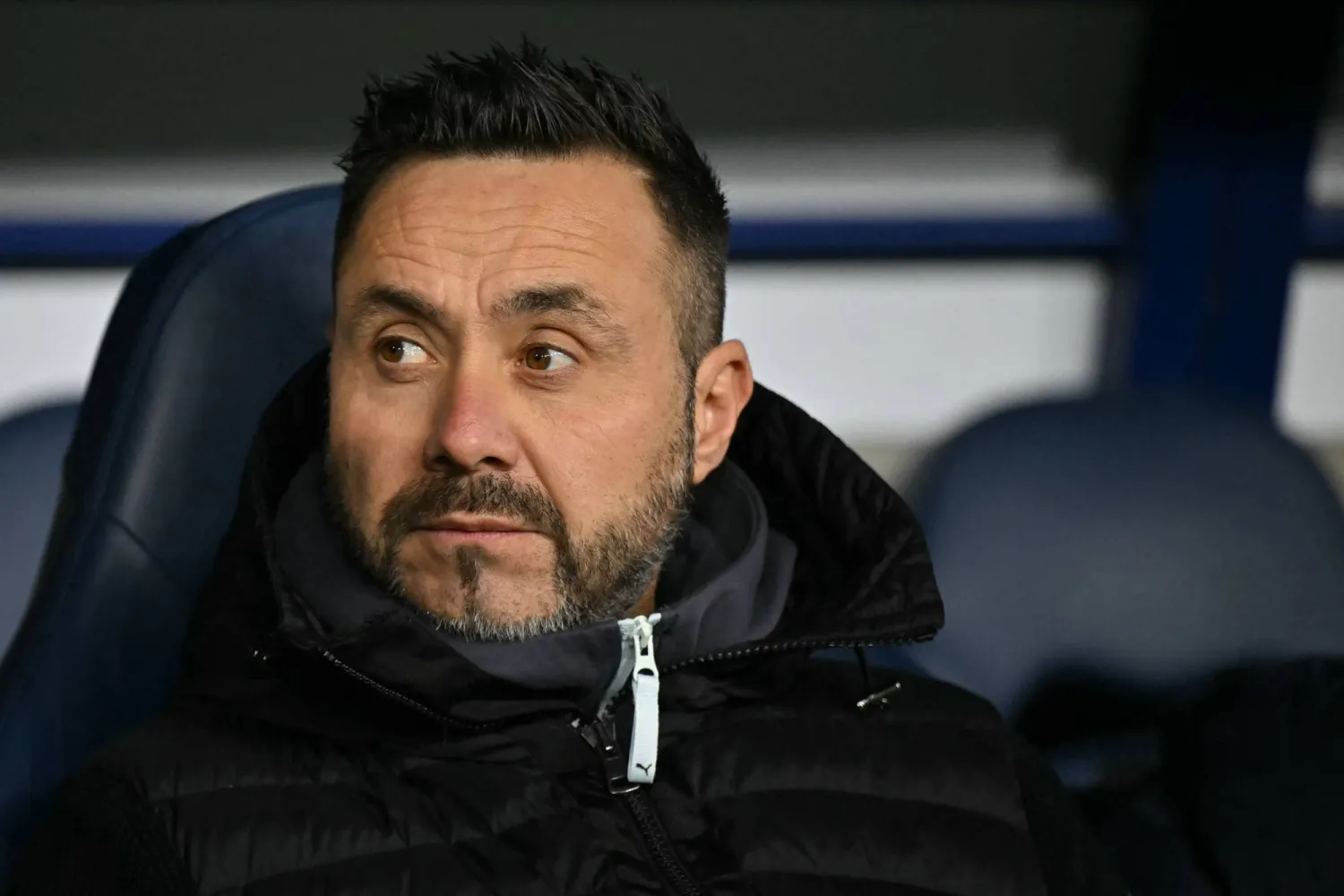
Marseille coach Roberto De Zerbi is leaving the French league club in the wake of a 5-0 thrashing at the hands of PSG in French soccer biggest game.

The nine-time French champions said on Wednesday that they have ended “their collaboration by mutual agreement.”

The heavy loss Sunday at the Parc des Princes restored defending champion PSG’s two-point lead over Lens after 21 rounds, with Marseille in fourth place after the humiliating defeat.

De Zerbi's exit followed another embarrassing 3-0 loss at Club Brugge two weeks ago that resulted in Marseille exiting the Champions League.

De Zerbi, who had apologized to Marseille fans after the loss against bitter rival PSG, joined Marseille in 2024 after two seasons in charge at Brighton. After tightening things up tactically in Marseille during his first season, his recent choices had left many observers puzzled.

“Following consultations involving all stakeholders in the club’s leadership — the owner, president, director of football and head coach — it was decided to opt for a change at the head of the first team,” Marseille said. “This was a collective and difficult decision, taken after thorough consideration, in the best interests of the club and in order to address the sporting challenges of the end of the season.”

De Zerbi led Marseille to a second-place finish last season. Marseille did not immediately announce a replacement for De Zerbi ahead of Saturday's league match against Strasbourg.

Since American owner Frank McCourt bought Marseille in 2016, the former powerhouse of French soccer has failed to find any form of stability, with a succession of coaches and crises that sometimes turned violent.

Marseille dominated domestic soccer in the late 1980s and early 1990s. It was the only French team to win the Champions League before PSG claimed the trophy last year. It hasn’t won its own league title since 2010.


Olympic Fans Hunt for Plushies of Mascots Milo and Tina as They Fly off Shelves 

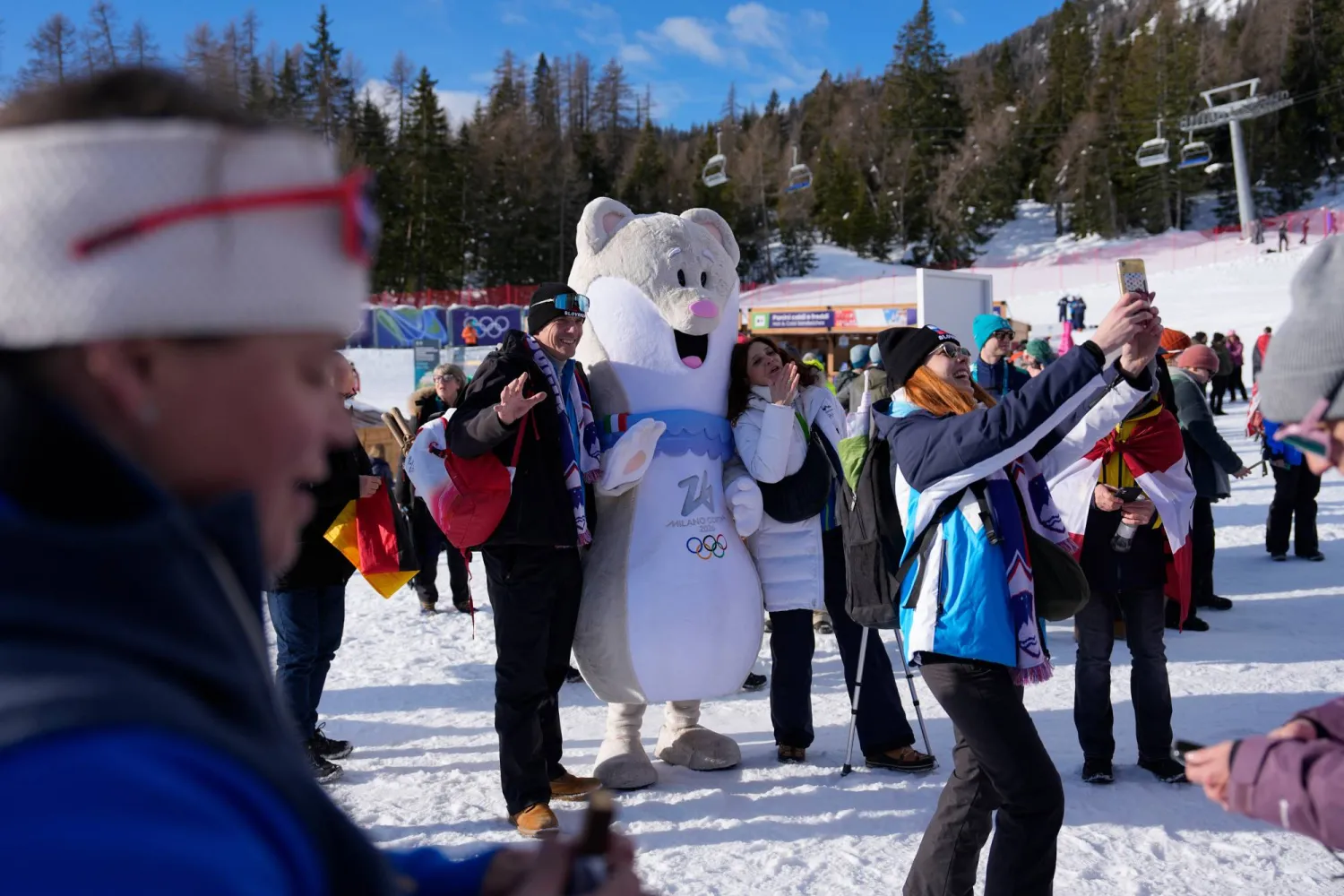
Fans take selfies with the Olympic mascot Tina at the finish area of an alpine ski, slalom portion of a women's team combined race, at the 2026 Winter Olympics, in Cortina d'Ampezzo, Italy, Tuesday, Feb. 10, 2026. (AP)
TT

Olympic Fans Hunt for Plushies of Mascots Milo and Tina as They Fly off Shelves 

Fans take selfies with the Olympic mascot Tina at the finish area of an alpine ski, slalom portion of a women's team combined race, at the 2026 Winter Olympics, in Cortina d'Ampezzo, Italy, Tuesday, Feb. 10, 2026. (AP)

For fans of the Milan Cortina Olympic mascots, the eponymous Milo and Tina, it's been nearly impossible to find a plush toy of the stoat siblings in Milan and Cortina d’Ampezzo.

Many of the official Olympics stores in the host cities are already sold out, less than a week into the Winter Games.

“I think the only way to get them is to actually win a medal,” Julia Peeler joked Tuesday in central Milan, where Tina and Milo characters posed for photos with fans.

The 38-year-old from South Carolina is on the hunt for the plushies for her niece. She's already bought some mascot pins, but she won't wear them on her lanyard. Peeler wants to avoid anyone trying to swap for them in a pin trade, a popular Olympic pastime.

Tina, short for Cortina, is the lighter-colored stoat and represents the Olympic Winter Games. Her younger brother Milo, short for Milano, is the face of the Paralympic Winter Games.

Milo was born without one paw but learned to use his tail and turn his difference into a strength, according to the Olympics website. A stoat is a small mustelid, like a weasel or an otter.

The animals adorn merchandise ranging from coffee mugs to T-shirts, but the plush toys are the most popular.

They're priced from 18 to 58 euros (about $21 to $69) and many of the major official stores in Milan, including the largest one at the iconic Duomo Cathedral, and Cortina have been cleaned out. They appeared to be sold out online Tuesday night.

Winning athletes are gifted the plush toys when they receive their gold, silver and bronze medals atop the podium.

Broadcast system engineer Jennifer Suarez got lucky Tuesday at the media center in Milan. She's been collecting mascot toys since the 2010 Vancouver Games and has been asking shops when they would restock.

“We were lucky we were just in time,” she said, clutching a tiny Tina. “They are gone right now.”

Friends Michelle Chen and Brenda Zhang were among the dozens of fans Tuesday who took photos with the characters at the fan zone in central Milan.

“They’re just so lovable and they’re always super excited at the Games, they are cheering on the crowd,” Chen, 29, said after they snapped their shots. “We just are so excited to meet them.”

The San Franciscan women are in Milan for the Olympics and their friend who is “obsessed” with the stoats asked for a plush Tina as a gift.

“They’re just so cute, and stoats are such a unique animal to be the Olympic mascot,” Zhang, 28, said.

Annie-Laurie Atkins, Peeler's friend, loves that Milo is the mascot for Paralympians.

“The Paralympics are really special to me,” she said Tuesday. “I have a lot of friends that are disabled and so having a character that also represents that is just incredible.”