


Bulgaria Bad, England Good? Actually This Is Not as Black and White as It Seems

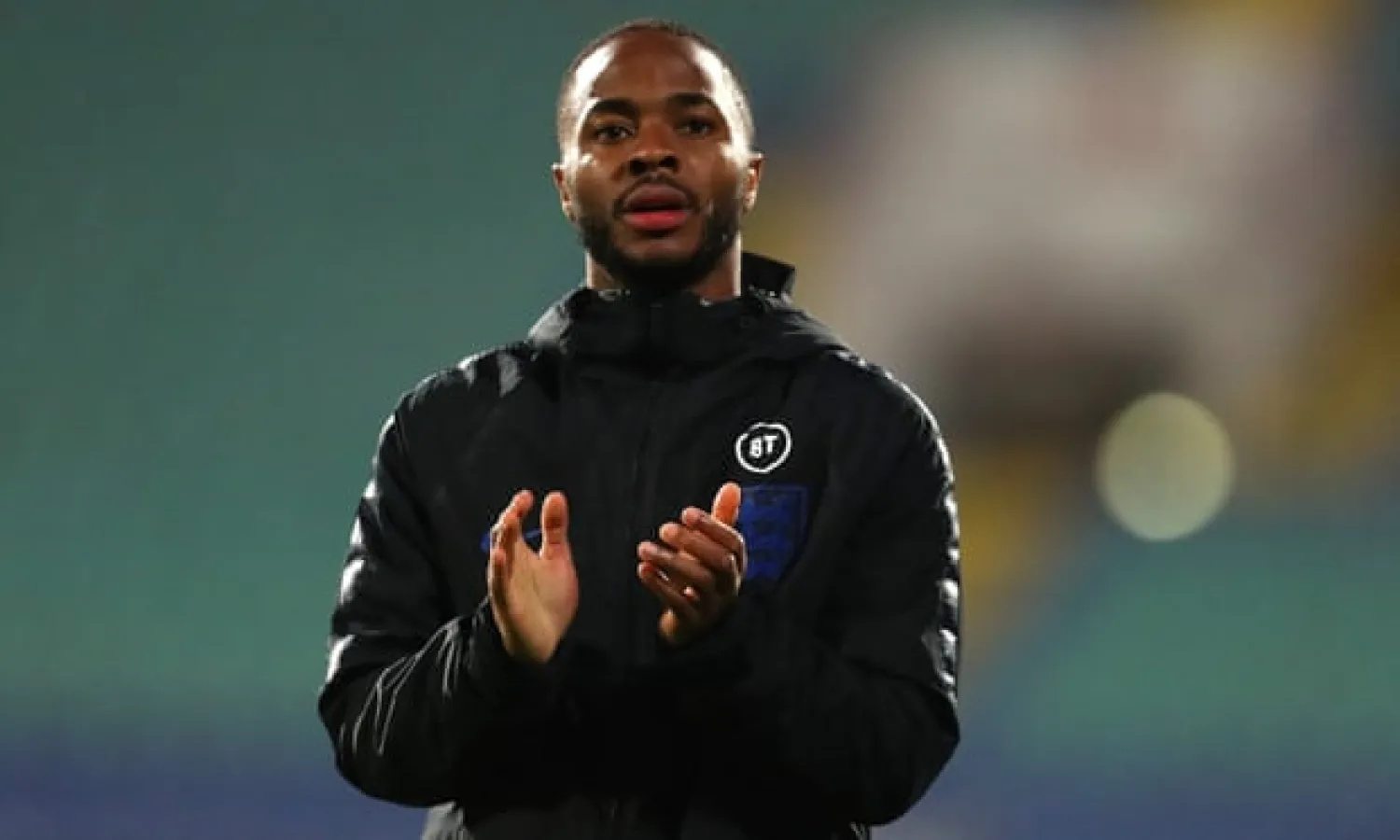
 Raheem Sterling applauds England fans after the game in Sofia. Photograph: Catherine Ivill/Getty Images
Raheem Sterling applauds England fans after the game in Sofia. Photograph: Catherine Ivill/Getty Images
TT

Bulgaria Bad, England Good? Actually This Is Not as Black and White as It Seems

 Raheem Sterling applauds England fans after the game in Sofia. Photograph: Catherine Ivill/Getty Images
Raheem Sterling applauds England fans after the game in Sofia. Photograph: Catherine Ivill/Getty Images

There has scarcely been a more breakneck reverse ferret than the support now shown by some sections of Her Majesty’s press for Raheem Sterling. You love to see it. Certain papers who cheerily trashed Sterling for so long, for reasons they could never quite put their finger on – but he could – recently seem to have become dimly sentient about the existence of racism.

The truly hideous scenes during England’s twice‑halted 6-0 win over Bulgaria on Monday apparently marked a coming of age, with various outlets and pundits now turning on Uefa for the sort of inactivity of which they were guilty or supportive of about 10 minutes ago. I am sure Sterling and others will raise a wry eyebrow at the spectacle of some of the same hacks who lacerated him for buying a house or something now pontificating that the England side should actually have walked off in Sofia. They can never get it QUITE right, can they, these players?

As for sections of the media – a small minority, as sections always are – it certainly helps when they can behold people literally making Nazi salutes. That, they can all agree, is racist. Also monkey noises. Definitely racist. Even the Daily Express put “England Stand Up To Racist Fans” on their front page on Tuesday. Unfortunately, it’s all the many other notorious Express front pages that will end up having had rather more influence on our own shores, where racism has not been kicked out, and is not yet a distant dream. Still, other countries are worse, so what does it matter?

It matters, of course, to people who endure racism here. Football reflects society, not the other way around. After the repulsive behaviour of some Bulgarian fans in Sofia, Gareth Southgate reported ruefully of his conversations with England’s black players: “Sadly, because of their experiences in our own country, they are hardened to racism. I don’t know what that says about our society but that’s the reality.”

Yet again, you have to salute Southgate, who always confronts the more complex aspects of a situation, however tempting it must be to ignore them when some of the worst extremes were on show. What an extraordinary leader he is, for a generation of players that inspire in so many different ways. (Very incidentally, it should always be remembered that he is in position completely by accident. All the FA people who were paid to find expensive failures – sporting and moral – to be England manager only alighted by default on the caretaker when their other terrible choices had flamed out. To say the understudy turned out to be the very best of them doesn’t begin to cover it).

So yes, Southgate isn’t selectively blind, but many more seem to see the extreme events in Sofia as grounds for full complacency. This feels somewhat premature for a country where the prime minister has been accused on multiple occasions of using racist language, where the Windrush scandal has changed precisely nothing, and where ethnic minorities have faced significant rises in levels of abuse and discrimination since the Brexit referendum.

Much has been made of the fact that in Sofia, a small section of England fans were singing “Who put the ball in the racists’ net? Raheem fucking Sterling!” Perhaps this and the actual Nazi salutes means we don’t have to talk about the fact that for a much, much larger section of England fans, “No Surrender” IS now the fourth line of the national anthem, every time.

The singing of “No Surrender” has got louder and louder over the past few years, a full 21 years on from the Good Friday Agreement, along with “fuck the pope” and various other things which ought to be historical relics, but very much aren’t. On Monday night’s TV footage it was being sung at a volume absolutely indistinguishable from the rest of God Save the Queen, a song it has unofficially colonised. Just as bars in host cities are unofficially colonised by a section of England fans, who regard international fixtures as a sort of war-effect mini break.

Obviously, obviously, it is a small minority – though apparently, not obviously enough that you don’t have to make that very clear every time you mention it in case someone not in the minority takes it upon themselves to claim needless offence.

But small minorities can be influential, and the decision of England’s long-notorious Small Minority to arrive in cities and literally plant their flags while singing xenophobic and sectarian songs, for the sheer toxically bonding provocation of it, is – unfortunately – not encased in a vacuum. It has a knock-on effect with other small but influential minorities. How could it not? If you act like the big man laying down a challenge, some will take you at your word. If there is drunken aggression – as there was in Prague only last Friday – bottles thrown at the police, arrests, footage of it all on the TV news, then an always‑aggressive atmosphere of travelling xenophobia has been created by a small but sadly significant section of England’s fanbase. Their reputation precedes them. And a local Small Minority, scarcely in need of an excuse, may consider themselves challenged.

Still, other people are worse, so it doesn’t matter. As long as Nazi salutes are kept out, and people don’t take too close a look at some of the stuff you hear lower down the leagues, and fine, say, Millwall a whole £10,000 for racist chanting during an FA Cup tie, and completely ignore the wider points Sterling continues to make about the demonisation of young black men, and so on … well, haven’t we done well. We are top of the league of anti‑racism. Two world wars and only one banana thrown last season – print that on a flag and inform some native you’re hanging it over their bar.

The Guardian Sport


Veteran Monfils Exits to Standing Ovation on Australian Open Farewell

Gael Monfils of France acknowledges to the crowds after losing his Men’s Singles first round match against Dane Sweeny of Australia at the Australian Open tennis tournament in Melbourne, Australia, 20 January 2026. (EPA)
TT

Veteran Monfils Exits to Standing Ovation on Australian Open Farewell

Gael Monfils of France acknowledges to the crowds after losing his Men’s Singles first round match against Dane Sweeny of Australia at the Australian Open tennis tournament in Melbourne, Australia, 20 January 2026. (EPA)

French entertainer Gael Monfils was bundled out of the Australian Open in the first round on Tuesday in a brave farewell to a tournament he has lit up so many times.

The 39-year-old, one of the most colorful and popular players in men's tennis, battled all the way but Australian qualifier Dane Sweeny prevailed 6-7 (3/7), 7-5, 6-4, 7-5 in an epic lasting nearly four hours.

There was an on-court presentation and standing ovation afterwards for Monfils, who said: "Somehow it is the finish line, but thank you so much for an amazing ride.

"I have a lot of great memories here."

Monfils, who has won 13 ATP titles in a career stretching back to 2004, said in October that this year would be his last in tennis.

Launching his 20th Australian Open campaign, Monfils outlasted Sweeny, who is 15 years his junior, in an attritional first set.

Roared on by a partisan full house at Melbourne Park, Sweeny fought back to seize the second set and level an enthralling match.

Monfils, now ranked 110 but who rose to six in the world in his pomp, looked to be struggling physically in glaring sunshine.

The French veteran was frequently bent over double between points, one hand on his left knee and the other using his racquet to stay upright.

He alternately grimaced and grinned.

Monfils saw a trainer after losing the second set but still trudged out for the third, and was soon broken on the way to losing the set.

In a raucous party atmosphere, Monfils summoned reserves of energy from somewhere to race into a 4-1 lead in the fourth set, only for Sweeny to peg him back.

Sweeny clinched on his first match point before collapsing to the court.

He faces American eighth seed Ben Shelton in round two.

Paris-born Monfils has never won a Grand Slam but he has frequently gone deep in the biggest tournaments, including making the quarter-finals in Melbourne in 2016 and 2022.

Monfils married Ukrainian player Elina Svitolina in 2021 and they welcomed a daughter, Skai, a year later.


Morocco's Igamane Suffers ACL Injury

Morocco's forward #07 Hamza Igamane reacts as he misses his penatly during the Africa Cup of Nations (CAN) semi-final football match between Nigeria and Morocco at the Prince Moulay Abdellah stadium in Rabat on January 14, 2026. (Photo by FRANCK FIFE / AFP)
TT

Morocco's Igamane Suffers ACL Injury

Morocco's forward #07 Hamza Igamane reacts as he misses his penatly during the Africa Cup of Nations (CAN) semi-final football match between Nigeria and Morocco at the Prince Moulay Abdellah stadium in Rabat on January 14, 2026. (Photo by FRANCK FIFE / AFP)

Lille striker Hamza Igamane suffered an anterior cruciate ligament injury in Morocco's Africa Cup of Nations final against Senegal, the Ligue 1 side announced on Monday, casting doubt over his participation in this year's World Cup.

The 23-year-old was on the bench ‌for the ‌final, which Senegal ‌won ⁠1-0, before ‌coming on in extra time as the sixth substitute. He lasted seven minutes before going off injured, leaving Walid Regragui's side to finish the match with ⁠10 men.

"Tests carried out on the ‌player have unfortunately confirmed ‍a serious ‍injury. Hamza Igamane has indeed ‍suffered a rupture of the anterior cruciate ligament in his right knee," Reuters quoted Lille as saying in a statement.

"Hamza will be unavailable for several months," it added, with ⁠the injury coming five months before the 2026 World Cup, where Morocco will face Brazil, Scotland and Haiti in Group C.

Igamane, who joined Lille from Rangers in the close season, has scored nine goals in 21 games for the French ‌side in all competitions.


Precision-Serving Former Finalist Rybakina Powers on in Melbourne

Kazakhstan's Elena Rybakina signs autographs after her victory against Slovenia's Kaja Juvan in their women's singles match on day three of the Australian Open tennis tournament in Melbourne on January 20, 2026. (AFP)
TT

Precision-Serving Former Finalist Rybakina Powers on in Melbourne

Kazakhstan's Elena Rybakina signs autographs after her victory against Slovenia's Kaja Juvan in their women's singles match on day three of the Australian Open tennis tournament in Melbourne on January 20, 2026. (AFP)

Former finalist Elena Rybakina warned Tuesday if her serve was firing she would be a threat at the Australian Open, after reinforcing her title credentials with a comfortable first-round victory.

The fifth seed, who lost the 2023 final in three tough sets to Aryna Sabalenka, sent Slovenia's Kaja Juvan packing 6-4, 6-3 with her serve proving a potent weapon.

Rybakina won 83 percent of her first-serve points to keep up her record of safely negotiating the first hurdle at every Grand Slam since the 2022 US Open.

"No matter who is on the other side, if the serve is going, then it's perfect," she said after routinely racing to 40-0 leads and holding to love three times.

"Of course, little things (to work on) on the serve. Maybe adjust, be better in the first few shots of the rally, then we will see how it's going to go.

"But I'm happy with the serve, it really worked today."

It was her second serve that truly separated her from Juvan, winning 10 of 18 points behind it and not facing a break point until the final game of the match.

Rybakina, who won Wimbledon in 2022, faces France's Varvara Gracheva next.
