John Barnes: ‘I Was Seen as the Voice of Reason on Race. I Haven’t Changed’

 John Barnes: ‘Bits and pieces of what I say are used against me.’ Photograph: Fabio De Paola/The Guardian
John Barnes: ‘Bits and pieces of what I say are used against me.’ Photograph: Fabio De Paola/The Guardian
TT

John Barnes: ‘I Was Seen as the Voice of Reason on Race. I Haven’t Changed’

 John Barnes: ‘Bits and pieces of what I say are used against me.’ Photograph: Fabio De Paola/The Guardian
John Barnes: ‘Bits and pieces of what I say are used against me.’ Photograph: Fabio De Paola/The Guardian

“Football, and you can put this in your article,” John Barnes says as he leans forward and points at the dictaphone on the table between us, “is the least racist industry in this country. Yes, you have people shouting racist abuse and throwing bananas on the field, and there are issues regarding the number of black coaches and managers in the game, but which other industry allows a young black boy the exact same opportunity as a young white boy? Even at League One and League Two level you’ll see five or six black players, because they are given an opportunity to maximise their potential.”

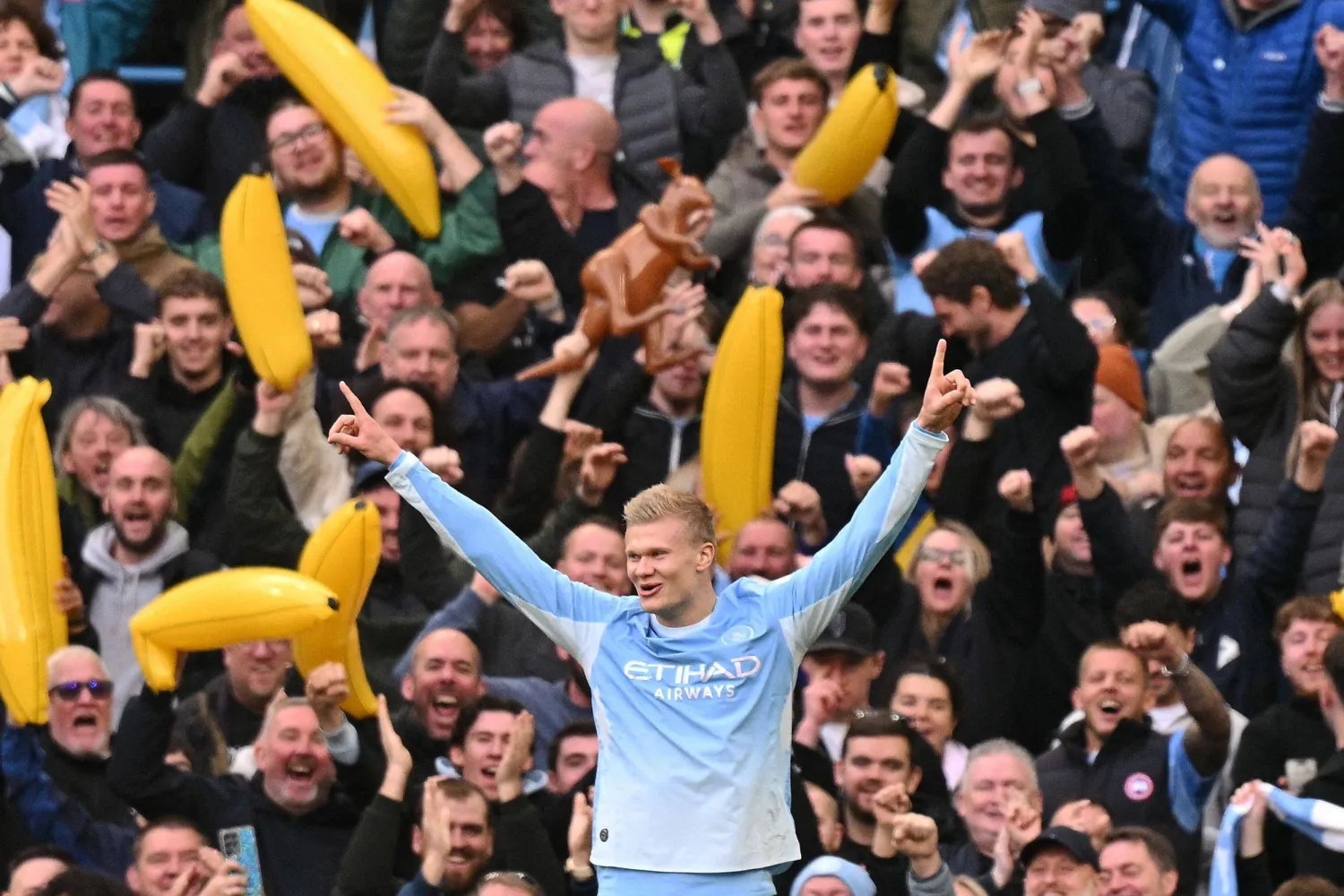
Barnes has never been afraid to speak his mind when it comes to the issues that have increasingly come to define him – race and racism, on and off the field. He is arguably the most famous black player in England and had to endure racism as a player – the picture of him back-heeling a banana off the pitch during a Merseyside derby in 1988 is iconic.

He is a pioneer and an inspiration, but for many he has also become an apologist for cases of racism in recent months and that is why we are meeting at De Montfort University in Leicester before Barnes gives a talk there – so he can defend himself and have his say. It proves to be an engrossing hour or so in the company of the former Liverpool and England winger.

For Barnes it started in February when he came out in support of Liam Neeson after the actor had revealed during an interview that he once set out to kill a random black man in revenge for a woman he knew being raped. Barnes claimed Neeson “deserved a medal” for his honesty and that the only thing he was guilty of was unconscious bias. That led to criticism before the storm passed, only to break out again last month when Barnes spoke in defence of his former teammate Peter Beardsley after he was suspended by the Football Association for making racist comments to young black players in his capacity as Newcastle’s under‑23 coach.

Then came Barnes’s backing of Bernardo Silva after the midfielder tweeted an image of his Manchester City teammate Benjamin Mendy alongside the logo for the Spanish chocolate confectionery company Conguitos and compared the two. Silva was accused of racial stereotyping by the anti-racist group Kick It Out and has been charged by the FA with misconduct. But Barnes saw nothing wrong in what Silva did, which led to more outrage, especially on social media where the 55-year-old was accused of being out of touch and, yes, an apologist.

“I’m not an apologist,” Barnes insists. “I give balanced, constructive views and what happens is that bits and pieces of what I say are used against me. For a long time John Barnes was seen as the voice of reason when it came to race. John Barnes hasn’t changed; what’s changed is the reporting of John Barnes.”

I ask Barnes what he means by that and he goes on to speak about “elite black groups” in this country that sought his involvement in helping tackle racism in football but then did not want to know after he said he would only work with them if he could also focus his efforts on what is happening to black children growing up in inner-city areas, from a social, educational and vocational point of view.

“For these groups it is only about how terrible discrimination is in Montenegro or how terrible it is when Chelsea fans abuse Raheem Sterling, but these things have no impact on the black community. They are not what I want to focus my agenda on, and it was when I made that clear that the reporting of me changed.”

It is an intriguing and characteristically strongly delivered answer from Barnes, who goes on to reference this country’s “black elite” on more than one occasion. There is clear anger there and also defiance, which is equally notable when Barnes reiterates his defence of Neeson, Beardsley and, in particular, Silva. “What is wrong with a black man with big lips and a round head?” he says in reference to the Conguitos logo. “If you had to draw, say, N’Golo Kanté as a cartoon, how would he look? Would he not have black skin, big lips and a round head? Why is that negative?”

I make the point that the issue many people have with the Conguitos logo is its historical context. Conguitos literally means “little people of Congo” and its logo, dating back to the country’s independence from Belgium in 1960, appears quite clearly to be wrapped up in racist tropes from the time.

“If you go back to the cartoons the logo originates from then yes, that is unacceptable. But I’m pretty sure Bernardo Silva has not seen those cartoons, nor was he referencing them in his tweet,” Barnes replies. “All he’s come across is a picture on a Spanish sweet and a picture of Benjamin Mendy and said he thinks they look alike. Also, Sterling came out and said he saw nothing wrong with Silva’s tweet. Where is the criticism towards him?

“For a long time, images of black men with big lips and a round head were used to make us feel inferior, but it doesn’t need to be like that, we don’t need to self‑loathe. We can change the narrative. Many members of the black elite agree with me on that but, off the record, they claim we can’t say that publicly because that’s a very intellectual way to look at things and the black community isn’t ready for that. So are the black elite saying the black community is too thick to understand that? I want no part of that.”

Barnes is talking at De Montfort as part of the campus’s Black History Season. He is dressed in a dark jacket, blue shirt and dark trousers and is clearly energised by the prospect of sharing his thoughts on race and racism with an audience, something he has regularly been doing at colleges and universities since retiring as a player two decades ago. The same principles are brought up: scapegoating achieves nothing and that each case needs to be judged on its own merit, with the understanding that unconscious bias – something everyone is guilty of – could be at play. In regards to football specifically, Barnes also believes that racism cannot be eradicated from stadiums until it is eradicated from society.

It is in this context that Barnes disagrees with the idea of players walking off the pitch in protest against racist abuse, something members of England’s current squad, among them Sterling and Tammy Abraham, have said they are willing to do, starting, potentially, with Monday’s Euro 2020 qualifier in Bulgaria.

“It depends on what we consider to be racist abuse,” says Barnes. “Because while we know monkey chants are illegal, if the whole stadium wants to boo a black player every time he gets the ball, while we know why they’re doing it from a racial perspective, booing is not illegal. So we ban booing, but then they’ll clap instead. But again, clapping is not illegal. So what do we do then – ban clapping?

“The simple fact is there are no laws you can pass to stop people racially abusing black footballers. So the solution is to come up with something that doesn’t make people want to abuse black footballers in the first place.”

Barnes then homes in on his insistence that racism in football is directly linked to racism in society and, in doing so, calls on those involved in the sport, Sterling included, to play a more active role. “Raheem gave 550 FA Cup semi-final tickets to schoolchildren in Wembley, where he’s from. Instead of that why doesn’t he take those 550 children in to a press conference and tell the world’s media that these young people are being disenfranchised, that they haven’t got a good education, a good level of housing, that’s there’s crime in their area? Wouldn’t that be better?

“The black elite in this country should be using their platform to improve the lives of the black people they are meant to represent. By improving the lives of black people they’ll change the perception of black people, which in turn will see the entire black community prosper. That is the real fight against racism and what I have been championing for years.”

By now Barnes is full flow. The power and eloquence of his words are striking, and while his views are controversial they are also thought-provoking and unique among his peers. When I ask Barnes where that comes from he immediately references his late father, Ken. “My dad was a colonel, second in command of the Jamaican army, and when I meet soldiers who knew him they always say how much they loved him. While other elite members of the army stood back and strategised, my dad got involved with the troops and always made sure he had their backs. On an almost subliminal level that has influenced me – I do things in my life and realise afterwards ‘my dad would have done that’.”

The Guardian Sport


Chelsea Injuries up 44% After Club World Cup but Report Says Event Has Had ‘Minimal’ Impact

Chelsea's Reece James, center, lifts the trophy following the Club World Cup final soccer match between Chelsea and PSG at MetLife Stadium in East Rutherford, N.J., Sunday, July 13, 2025. (AP)
TT

Chelsea Injuries up 44% After Club World Cup but Report Says Event Has Had ‘Minimal’ Impact

Chelsea's Reece James, center, lifts the trophy following the Club World Cup final soccer match between Chelsea and PSG at MetLife Stadium in East Rutherford, N.J., Sunday, July 13, 2025. (AP)

Chelsea suffered a 44% spike in injuries after competing in the supersized Club World Cup this year, according to findings published on Tuesday.

But the newly expanded tournament has so far had a “minimal impact” on injuries overall, the latest edition of the Men’s European Football Injury Index found.

There was fierce opposition to FIFA's new flagship club event when it was confirmed in 2023 that it would increase from seven to 32 teams, with players' unions warning of physical and mental burnout of players due to an ever expanding match schedule. But FIFA pressed ahead and staged the tournament in the United States in June-July.

Chelsea went on to win the inaugural competition, receiving the trophy from US President Donald Trump at MetLife Stadium and taking home prize money of around $125 million. But, according to the Index, from June-October, Chelsea picked up more injuries — 23 — than any of the nine clubs from Europe's top leagues that participated in the Club World Cup.

They included star player Cole Palmer, and was a 44% increase on the same period last year.

While Chelsea, which played 64 games over the entire 2024-25 season, saw an increase in injuries, the Index, produced by global insurance firm Howden, found that overall there was a decrease.

“In principle you would expect this increased workload to lead to an increase in the number of injuries sustained, as a possible rise in overall injury severity,” the Index report said, but added: “The data would suggest a minimal impact on overall injury figures.”

Despite the figures, the authors of the report accept it was too early to assess the full impact of the Club World Cup, with the findings only going up to October.

“We would expect to see the impact to spike in that sort of November to February period,” said James Burrows, Head of Sport at Howden. “What we’ve seen previously is that’s where the impact is seen from summer tournaments."

Manchester City has sustained 22 since the tournament, which is the highest among the nine teams from Europe's top leagues — England, Spain, Italy, Germany and France.

Those teams have recorded 146 injuries from June-October, which is down on the previous year's figure of 174.

From August-October that number is 121, the lowest for that three-month period in the previous six years of the Index.


Sunderland Worst Hit by Losing Players to African Cup of Nations 

14 December 2025, United Kingdom, London: Sunderland's Habib Diarra (L) and Leeds United's Gabriel Gudmundsson battle for the ball during the English Premier League soccer match between Brentford and Leeds United at the Gtech Community Stadium. (dpa)
TT

Sunderland Worst Hit by Losing Players to African Cup of Nations 

14 December 2025, United Kingdom, London: Sunderland's Habib Diarra (L) and Leeds United's Gabriel Gudmundsson battle for the ball during the English Premier League soccer match between Brentford and Leeds United at the Gtech Community Stadium. (dpa)

Premier League Sunderland will have to do without six players over the next few weeks and are the club worst hit as the Africa Cup of Nations takes its toll on European clubs competing over the holiday season.

Sunderland, eighth in the standings, had four of their African internationals in action when they beat Newcastle United on Sunday, but like 14 other English top-flight clubs will now lose those players to international duty.

The timing of the African championship, kicking off in Morocco on Sunday and running through to January 18, has long been an irritant for coaches, with leagues in Belgium, France, Germany, Italy, Netherlands, Portugal, and Spain also affected.

Hosting the tournament in the middle of the season impacts around 58% of the players at the Cup of Nations, though the Confederation of African Football did try to mitigate the impact by moving the start to before Christmas, so it is completed before the next round of Champions League matches.

The impact on European clubs was also lessened by allowing them to release players seven days, rather than the mandatory 14 days, before the tournament, meaning they could play for their clubs last weekend.

Sunderland's Congolese Arthur Masuaku and Noah Sadiki, plus full back Reinildo (Mozambique), midfielder Habib Diarra (Mali), and attackers Chemsdine Talbi (Morocco) and Bertrand Traore (Burkina Faso) have now departed for Morocco.

Ironically, Mohamed Salah’s absence from Liverpool to play for Egypt should lower the temperature at the club after his recent outburst against manager Arne Slot, but Manchester United will lose three players in Noussair Mazraoui, Bryan Mbeumo and Amad Diallo, who scored in Monday’s 4-4 draw with Bournemouth.

France is again the country with the most players heading to the Cup of Nations, and with 51 from Ligue 1 clubs. But their absence is much less impactful than previously as Ligue 1 broke after the weekend’s fixtures and does not resume until January 2, by which time the Cup of Nations will be into its knockout stage.

There are 21 players from Serie A clubs, 18 from the Bundesliga, and 15 from LaLiga teams among the 24 squads at the tournament in Morocco.


Rodgers Takes Charge of Saudi Team Al-Qadsiah After Departure from Celtic 

Then-Celtic head coach Brendan Rodgers greets supporters after a Europa League soccer match between Red Star and Celtic at Rajko Mitic Stadium in Belgrade, Serbia, Sept. 24, 2025. (AP)
TT

Rodgers Takes Charge of Saudi Team Al-Qadsiah After Departure from Celtic 

Then-Celtic head coach Brendan Rodgers greets supporters after a Europa League soccer match between Red Star and Celtic at Rajko Mitic Stadium in Belgrade, Serbia, Sept. 24, 2025. (AP)

Brendan Rodgers has returned to football as the coach of Saudi Arabian club Al-Qadsiah, six weeks after resigning from Scottish champion Celtic.

Al-Qadsiah, whose squad includes Italian striker Mateo Retegui and former Real Madrid defender Fernandez Nacho, is in fifth place in the Saudi Pro League in its first season after promotion.

Rodgers departed Celtic on Oct. 27 and has opted to continue his managerial career outside Britain for the first time, having previously coached Liverpool, Leicester and Swansea.

In its statement announcing the hiring of Rodgers on Tuesday, Al-Qadsiah described him as a “world-renowned coach” and said his arrival “reflects the club’s ambitious vision and its rapidly growing sporting project.”

Aramco, the state-owned Saudi oil giant, bought Al-Qadsiah in 2023 in a move that has helped to transform the club’s status.

“This is a landmark moment for the club,” Al-Qadsiah chief executive James Bisgrove said. “The caliber of his experience and track record of winning reflects our ambition and long-term vision to establish Al-Qadsiah as one of Asia’s leading clubs.”

Rodgers is coming off winning back-to-back Scottish league titles with Celtic, where he won 11 major trophies across his two spells. He also won the FA Cup with Leicester.

Al-Qadsiah's last two coaches were former Liverpool striker Robbie Fowler and former Spain midfielder Michel.