At Least England’s Footballers Lead by Example in the Face of Racism

Bulgarian fans clustered together, many dressed in black, made monkey chants and gave Nazi salutes. Photograph: Nikolay Doychinov/AFP via Getty Images
TT

At Least England’s Footballers Lead by Example in the Face of Racism

Bulgarian fans clustered together, many dressed in black, made monkey chants and gave Nazi salutes. Photograph: Nikolay Doychinov/AFP via Getty Images

If you want to feel good about Britain right now, or at least England, where do you look? Not to our parliament, in the latter stages of its descent into something close to chaos, the green spaces around the Palace of Westminster slowly being churned into mud by ceaseless protests. And there is little comfort to be had turning to our prime minister, a man so renowned for dishonesty that the likelihood that he will break his word is baked into the political calculations of his opponents.

Across the world, our reputation as a serious-minded, pragmatic (even perfidious) nation is in tatters and our former sense of ourselves as a reasonable, level-headed, no-nonsense people is difficult to sustain after the past three and half years of political turmoil.

One place we could look last week for signs of the seriousness and professionalism for which we were once known was a stadium in Bulgaria. There, a group of twentysomething players and their manager stood huddled together, under the floodlights, facing what their manager later described as an “impossible situation”.

If you want leadership, it was there in abundance. Not just in the calm thoughtfulness of Gareth Southgate, but in Tyrone Mings, the 26-year-old whose England debut came on the night he and his teammates were subjected to torrents of racist abuse.

It came from sections of the Bulgarian fans who, clustered together – many dressed in black, their faces half concealed by hoods – made monkey chants and gave Nazi salutes. Despite the grimness of it all, despite the two stoppages in the first half and the sheer awful predictability of it all, Mings and his teammates went on to defeat Bulgaria 6-0 and navigate the impossibility of the night.

That the England team represents the best of the nation shows not just how much they have risen under Southgate’s management, but how much the England they represent has fallen. For decades, we were regarded as a consistent and reliable nation with an inconsistent and unreliable football team. Now the opposite is true.

Many commentators wrote of how England’s players had shown “dignity”, played through their torment and “let their feet do the talking”. But it is not the job of England’s players to lead by example in the face of racist abuse. The job of stamping out racism in European football falls to Uefa, an institution that had almost as bad a night as the Bulgarian Football Union (BFU).

Uefa’s three-step protocol for dealing with racism from supporters, although followed by the England players and officials, was shown in Sofia to be deeply flawed. The first step is for the team subjected to abuse to report it to the referee, who then arranges for a stadium announcement to be made requesting that the chanting stop.

The illogicality and seemingly wilful naivety of that part of the protocol was highlighted by the sports psychologist Dr Peter Olusoga (he’s my younger brother), who questioned whether “politely asking racist thugs if perhaps they might consider not being racist, you know, if it’s not too much trouble” is a flawed approach. “Imagine in any other job hearing, ‘Yeah, so I know that racists are screaming at you while you’re trying to work, but are you OK to keep working?’”

Yet the overt racism that echoed around the stadium is only part of the story. This was also about structural racism: forms of prejudice in which black people are told that their own lived experiences are merely interpretations or opinions. Mings told an interviewer that the racist chants had begun during the warm-up, before kick-off. Yet even after the match, the Bulgaria manager, Krasimir Balakov, claimed that he “didn’t hear anything”. Worse, he demanded that before any action is taken the racism that England’s players had suffered had to be “proved to be true”.

Balakov was not just being disingenuous, he was gaslighting England’s black players, calling their honesty and professionalism into question, defending the indefensible, minimizing what had happened and helping to drag football into the post-truth era.

Balakov’s resignation on Friday, which followed that of the president of the BFU, Borislav Mikhailov, might be taken as signs that last week’s events have finally stunned the Bulgarians into action. Yet what happened on Monday was both predictable and widely predicted. There had been racist chanting directed against England players in the same stadium eight years ago during a European Championship qualifier. Any football authority serious about combating racism would have taken action before the match, not after.

On Tuesday, Boris Johnson condemned on Twitter what he called the “vile racism we saw and heard last night”, saying it had “no place in football or anywhere else”. But this support arrives from a prime minister who, in 2002, when many of England’s black players were infants, described black children as “piccaninnies”, the same term Enoch Powell deployed in his “rivers of blood” speech.

The contrast between the leadership displayed by the England team and the lack of leadership in politics was further demonstrated during the post-match press conference. There, the England manager could have done the easy thing – condemned the Bulgarian fans and then soaked up the glory of a victory achieved under the most difficult of conditions. Southgate instead showed what leadership looks like. Diverting the attention away from himself and on to his players (as he consistently does), he took the path of most resistance, and invited the English game to look at itself in the mirror. “Sadly, my players, because of their experiences in our own country, are hardened to racism,” he said. “I don’t know what that says about our society, but that’s the reality.”

(The Guardian)



Tottenham Hotspur Sack Head Coach Thomas Frank

(FILES) Tottenham Hotspur's Danish head coach Thomas Frank gestures on the touchline during the English Premier League football match between Burnley and Tottenham Hotspur at Turf Moor in Burnley, north-west England on January 24, 2026. (Photo by Oli SCARFF / AFP)/
TT

Tottenham Hotspur Sack Head Coach Thomas Frank

(FILES) Tottenham Hotspur's Danish head coach Thomas Frank gestures on the touchline during the English Premier League football match between Burnley and Tottenham Hotspur at Turf Moor in Burnley, north-west England on January 24, 2026. (Photo by Oli SCARFF / AFP)/

Thomas Frank was fired by Tottenham on Wednesday after only eight months in charge and with his team just five points above the relegation zone in the Premier League.

Despite leading Spurs to the round of 16 in the Champions League, Frank has overseen a desperate domestic campaign. A 2-1 loss to Newcastle on Tuesday means Spurs are still to win in the league in 2026.

“The Club has taken the decision to make a change in the Men’s Head Coach position and Thomas Frank will leave today,” Tottenham said in a statement. “Thomas was appointed in June 2025, and we have been determined to give him the time and support needed to build for the future together.

“However, results and performances have led the Board to conclude that a change at this point in the season is necessary.”

Frank’s exit means Spurs are on the lookout for a sixth head coach in less than seven years since Mauricio Pochettino departed in 2019.


Marseille Coach De Zerbi Leaves After Humiliating 5-0 Loss to PSG 

Marseille's Italian coach Roberto De Zerbi looks on from the technical area during the French Cup round of 32 football match between FC Bayeux and Olympique de Marseille (OM) at the Michel-d'Ornano Stadium in Caen on January 13, 2026. (AFP) 
TT

Marseille Coach De Zerbi Leaves After Humiliating 5-0 Loss to PSG 

Marseille's Italian coach Roberto De Zerbi looks on from the technical area during the French Cup round of 32 football match between FC Bayeux and Olympique de Marseille (OM) at the Michel-d'Ornano Stadium in Caen on January 13, 2026. (AFP) 

Marseille coach Roberto De Zerbi is leaving the French league club in the wake of a 5-0 thrashing at the hands of PSG in French soccer biggest game.

The nine-time French champions said on Wednesday that they have ended “their collaboration by mutual agreement.”

The heavy loss Sunday at the Parc des Princes restored defending champion PSG’s two-point lead over Lens after 21 rounds, with Marseille in fourth place after the humiliating defeat.

De Zerbi's exit followed another embarrassing 3-0 loss at Club Brugge two weeks ago that resulted in Marseille exiting the Champions League.

De Zerbi, who had apologized to Marseille fans after the loss against bitter rival PSG, joined Marseille in 2024 after two seasons in charge at Brighton. After tightening things up tactically in Marseille during his first season, his recent choices had left many observers puzzled.

“Following consultations involving all stakeholders in the club’s leadership — the owner, president, director of football and head coach — it was decided to opt for a change at the head of the first team,” Marseille said. “This was a collective and difficult decision, taken after thorough consideration, in the best interests of the club and in order to address the sporting challenges of the end of the season.”

De Zerbi led Marseille to a second-place finish last season. Marseille did not immediately announce a replacement for De Zerbi ahead of Saturday's league match against Strasbourg.

Since American owner Frank McCourt bought Marseille in 2016, the former powerhouse of French soccer has failed to find any form of stability, with a succession of coaches and crises that sometimes turned violent.

Marseille dominated domestic soccer in the late 1980s and early 1990s. It was the only French team to win the Champions League before PSG claimed the trophy last year. It hasn’t won its own league title since 2010.


Olympic Fans Hunt for Plushies of Mascots Milo and Tina as They Fly off Shelves 

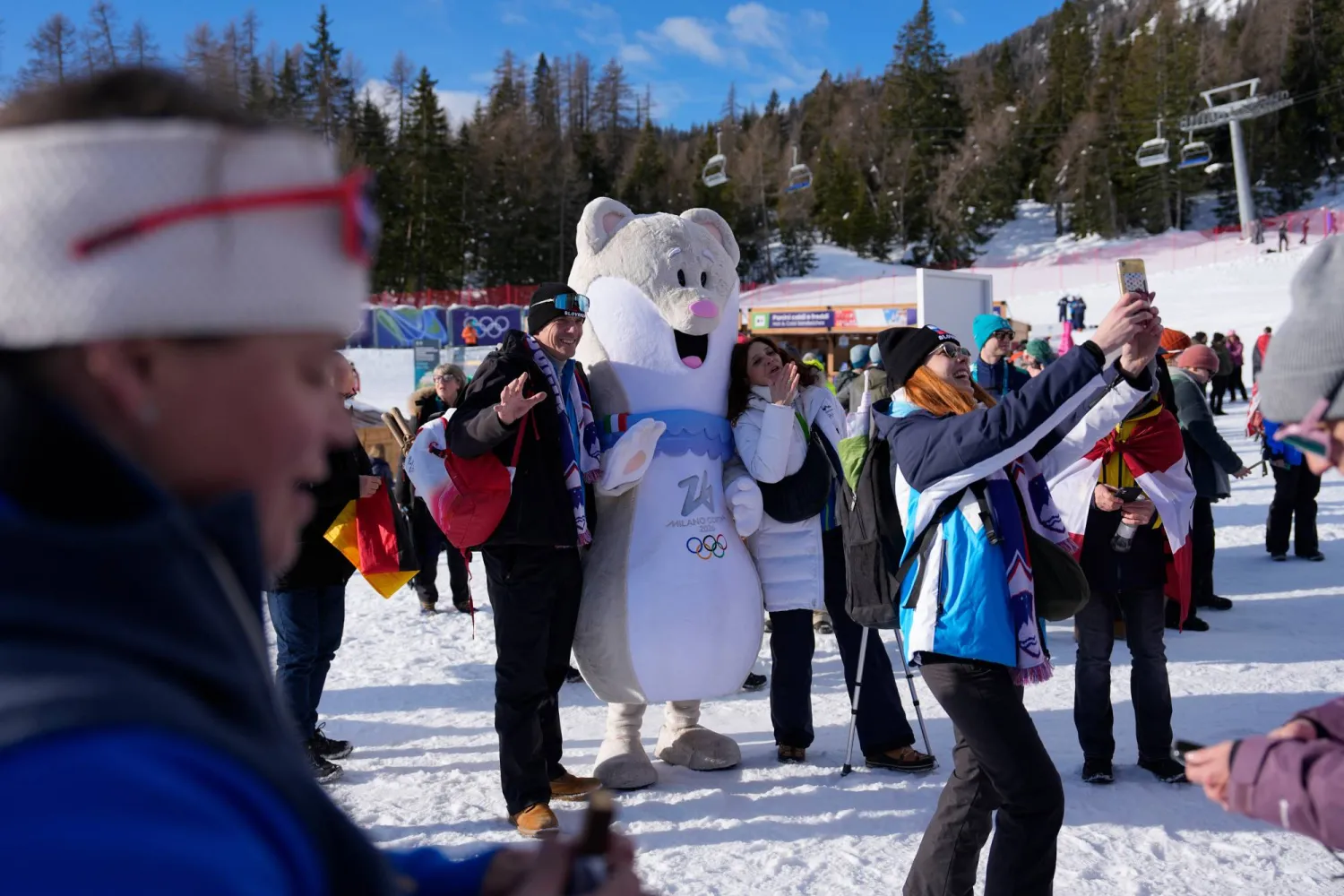
Fans take selfies with the Olympic mascot Tina at the finish area of an alpine ski, slalom portion of a women's team combined race, at the 2026 Winter Olympics, in Cortina d'Ampezzo, Italy, Tuesday, Feb. 10, 2026. (AP)
TT

Olympic Fans Hunt for Plushies of Mascots Milo and Tina as They Fly off Shelves 

Fans take selfies with the Olympic mascot Tina at the finish area of an alpine ski, slalom portion of a women's team combined race, at the 2026 Winter Olympics, in Cortina d'Ampezzo, Italy, Tuesday, Feb. 10, 2026. (AP)

For fans of the Milan Cortina Olympic mascots, the eponymous Milo and Tina, it's been nearly impossible to find a plush toy of the stoat siblings in Milan and Cortina d’Ampezzo.

Many of the official Olympics stores in the host cities are already sold out, less than a week into the Winter Games.

“I think the only way to get them is to actually win a medal,” Julia Peeler joked Tuesday in central Milan, where Tina and Milo characters posed for photos with fans.

The 38-year-old from South Carolina is on the hunt for the plushies for her niece. She's already bought some mascot pins, but she won't wear them on her lanyard. Peeler wants to avoid anyone trying to swap for them in a pin trade, a popular Olympic pastime.

Tina, short for Cortina, is the lighter-colored stoat and represents the Olympic Winter Games. Her younger brother Milo, short for Milano, is the face of the Paralympic Winter Games.

Milo was born without one paw but learned to use his tail and turn his difference into a strength, according to the Olympics website. A stoat is a small mustelid, like a weasel or an otter.

The animals adorn merchandise ranging from coffee mugs to T-shirts, but the plush toys are the most popular.

They're priced from 18 to 58 euros (about $21 to $69) and many of the major official stores in Milan, including the largest one at the iconic Duomo Cathedral, and Cortina have been cleaned out. They appeared to be sold out online Tuesday night.

Winning athletes are gifted the plush toys when they receive their gold, silver and bronze medals atop the podium.

Broadcast system engineer Jennifer Suarez got lucky Tuesday at the media center in Milan. She's been collecting mascot toys since the 2010 Vancouver Games and has been asking shops when they would restock.

“We were lucky we were just in time,” she said, clutching a tiny Tina. “They are gone right now.”

Friends Michelle Chen and Brenda Zhang were among the dozens of fans Tuesday who took photos with the characters at the fan zone in central Milan.

“They’re just so lovable and they’re always super excited at the Games, they are cheering on the crowd,” Chen, 29, said after they snapped their shots. “We just are so excited to meet them.”

The San Franciscan women are in Milan for the Olympics and their friend who is “obsessed” with the stoats asked for a plush Tina as a gift.

“They’re just so cute, and stoats are such a unique animal to be the Olympic mascot,” Zhang, 28, said.

Annie-Laurie Atkins, Peeler's friend, loves that Milo is the mascot for Paralympians.

“The Paralympics are really special to me,” she said Tuesday. “I have a lot of friends that are disabled and so having a character that also represents that is just incredible.”