


Libyan Schools Shut as Teachers on Swollen Payroll Demand Better Wages

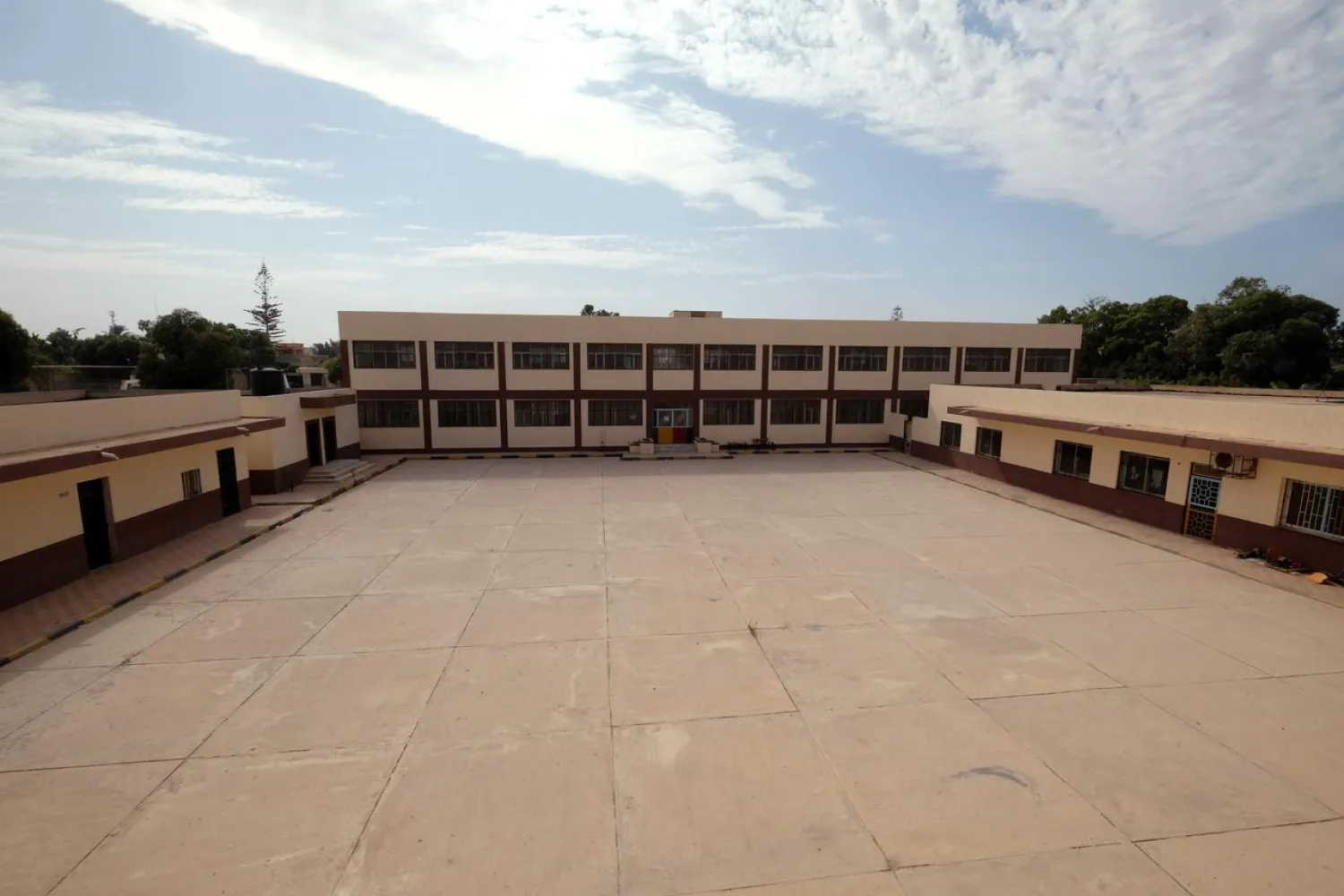
A courtyard empty of students inside a closed school as teachers strike in support of demands for a salary increase in Benghazi, Libya October 17, 2019. REUTERS/Esam Omran Al-Fetori
TT

Libyan Schools Shut as Teachers on Swollen Payroll Demand Better Wages

A courtyard empty of students inside a closed school as teachers strike in support of demands for a salary increase in Benghazi, Libya October 17, 2019. REUTERS/Esam Omran Al-Fetori

Strikes are keeping classrooms shut at the start of the school year in Libya as teachers seek better pay from a budget under strain from a massive public salary bill and renewed conflict.

State-run schools were meant to open on Oct. 13, but teachers angered by falling living conditions and stagnant wages have been staging sit-ins in Benghazi, Libya’s second city, and Tripoli, the capital.

Chemistry teacher Ramadan Mohamed, a 47-year-old father of six among those on strike in Benghazi, said he had been forced to take up work as a taxi driver to provide for his family.

“There are times I miss classes when I have financial obligations,” he said. “If I had an excellent salary that covered the needs of my home, I wouldn’t do another job, I’d devote all my time to students and teaching.”

Living standards in oil-rich Libya, once one of the wealthiest countries in the region, have been sliding downwards amid stop-start warfare and political turmoil.

Monthly salaries range from 500 to 850 Libyan dinars in state-run schools ($360-$610 at the official exchange rate, much less on the parallel market), and have not risen significantly since before the uprising that overthrew former leader Muammar Gaddafi in 2011. Schools are run down, and teachers do not receive health insurance or bonuses.

Libya has been split between rival governments and parliaments based in Tripoli and the east from 2014. For the past six months forces led by military commander Khalifa Haftar and aligned with the eastern government have been waging a campaign to take control of the capital. The fighting has drained resources on both sides.

Much of Libya’s population of 6.5 million depends on state salaries, which account for more than half of all public spending - a legacy of corruption and political patronage before and after 2011.

Funded by oil revenues, salaries are paid by the Tripoli central bank to citizens across the country. Some fraudulent or duplicate salaries have been eliminated, but many collect wages without working.

The education sector is especially bloated. Officials in Tripoli said nearly 240,000 teachers and other staff were on its books in western and southern regions, including 60,000-70,000 replacement teachers. The head of the teachers’ union in Benghazi said another 190,000 teachers were registered under the government in the east.

‘HOLDING THE CHALK’
The eastern parliament approved a decree last year to increase teachers’ salaries, but it has not been implemented.

In Benghazi, teachers have been staging sit-ins downtown and outside the education ministry building since last month.

More than 200 schools have been shut by the protest, said Mustafa al-Darsi, Benghazi’s education superintendent. Families that can afford to have been moving their children to private schools.

Darsi said that just 18,000 of the 47,000 officially employed as teachers in Benghazi had been turning up to work and “holding the chalk”. They deserved a raise, but financial constraints made that impossible.

“The situation in the country doesn’t even allow for an increase of a penny, not just for teachers but in general,” he said.

In Tripoli, some school buildings are being used as shelters for people displaced by recent fighting, which had disrupted schooling before the summer.

Dozens of teachers protested on Sunday outside the government headquarters calling for a salary increase and the dismissal of Education Minister Othman Abduljaleel.

“We hear about billions of oil revenues per month, we see no development and the government does not want to increase our salaries ... this is not fair,” said Mariam, a primary school teacher in the capital who gave only her first name.

In response, Abduljaleel has said that teachers who don’t report for work by Oct. 27 will be prosecuted.



Rescue Teams Search for Survivors in Building Collapse that Killed at Least 2 in Northern Lebanon

A Lebanese flag is pictured, in the aftermath of a massive explosion, in Beirut's damaged port area, Lebanon August 17, 2020. REUTERS/Hannah McKay
TT

Rescue Teams Search for Survivors in Building Collapse that Killed at Least 2 in Northern Lebanon

A Lebanese flag is pictured, in the aftermath of a massive explosion, in Beirut's damaged port area, Lebanon August 17, 2020. REUTERS/Hannah McKay

At least two people were killed and four rescued from the rubble of a multistory apartment building that collapsed Sunday in the city of Tripoli in northern Lebanon, state media reported.

Rescue teams were continuing to dig through the rubble. It was not immediately clear how many people were in the building when it fell.

The bodies pulled out were of a child and a woman, the state-run National News Agency reported.

Dozens of people crowded around the site of the crater left by the collapsed building, with some shooting in the air.

The building was in the neighborhood of Bab Tabbaneh, one of the poorest areas in Lebanon’s second largest city, where residents have long complained of government neglect and shoddy infrastructure. Building collapses are not uncommon in Tripoli due to poor building standards, according to The AP news.

Lebanon’s Health Ministry announced that those injured in the collapse would receive treatment at the state’s expense.

The national syndicate for property owners in a statement called the collapse the result of “blatant negligence and shortcomings of the Lebanese state toward the safety of citizens and their housing security,” and said it is “not an isolated incident.”

The syndicate called for the government to launch a comprehensive national survey of buildings at risk of collapse.


Israel to Take More West Bank Powers and Relax Settler Land Buys

A view of Israeli settlement of Maale Adumim, in the West Bank, Sunday, June 18, 2023. (AP)
TT

Israel to Take More West Bank Powers and Relax Settler Land Buys

A view of Israeli settlement of Maale Adumim, in the West Bank, Sunday, June 18, 2023. (AP)

Israel's security cabinet approved a series of steps on Sunday that would make it easier for settlers in the occupied West Bank to buy land while granting Israeli authorities more enforcement powers over Palestinians, Israeli media reported.

The West Bank is among the territories that the Palestinians seek for a future independent state. Much of it is under Israeli military control, with limited Palestinian self-rule in some areas run by the Western-backed Palestinian Authority (PA).

Citing statements by Finance Minister Bezalel Smotrich and Defense Minister Israel Katz, Israeli news sites Ynet and Haaretz said the measures included scrapping decades-old regulations that prevent Jewish private citizens buying land in the West Bank, The AP news reported.

They were also reported to include allowing Israeli authorities to administer some religious sites, and expand supervision and enforcement in areas under PA administration in matters of environmental hazards, water offences and damage to archaeological sites.

Palestinian President Mahmoud Abbas said the new measures were dangerous, illegal and tantamount to de-facto annexation.

The Israeli ministers did not immediately respond to requests for comment.

The new measures come three days before Prime Minister Benjamin Netanyahu is scheduled to meet in Washington with US President Donald Trump.

Trump has ruled out Israeli annexation of the West Bank but his administration has not sought to curb Israel's accelerated settlement building, which the Palestinians say denies them a potential state by eating away at its territory.

Netanyahu, who is facing an election later this year, deems the establishment of any Palestinian state a security threat.

His ruling coalition includes many pro-settler members who want Israel to annex the West Bank, land captured in the 1967 Middle East war to which Israel cites biblical and historical ties.

The United Nations' highest court said in a non-binding advisory opinion in 2024 that Israel's occupation of Palestinian territories and settlements there is illegal and should be ended as soon as possible. Israel disputes this view.


Arab League Condemns Attack on Aid Convoys in Sudan

A general view shows the opening session of the meeting of Arab foreign ministers at the Arab League Headquarters (Reuters)
TT

Arab League Condemns Attack on Aid Convoys in Sudan

A general view shows the opening session of the meeting of Arab foreign ministers at the Arab League Headquarters (Reuters)

Arab League Secretary-General Ahmed Aboul Gheit strongly condemned the attack by the Rapid Support Forces on humanitarian aid convoys and relief workers in North Kordofan State, Sudan.

In a statement reported by SPA, secretary-general's spokesperson Jamal Rushdi quoted Aboul Gheit as saying the attack constitutes a war crime under international humanitarian law, which prohibits the deliberate targeting of civilians and depriving them of their means of survival.

Aboul Gheit stressed the need to hold those responsible accountable, end impunity, and ensure the full protection of civilians, humanitarian workers, and relief facilities in Sudan.