Saudi Arabia: Israel Deprives Palestinians of their Natural Resources

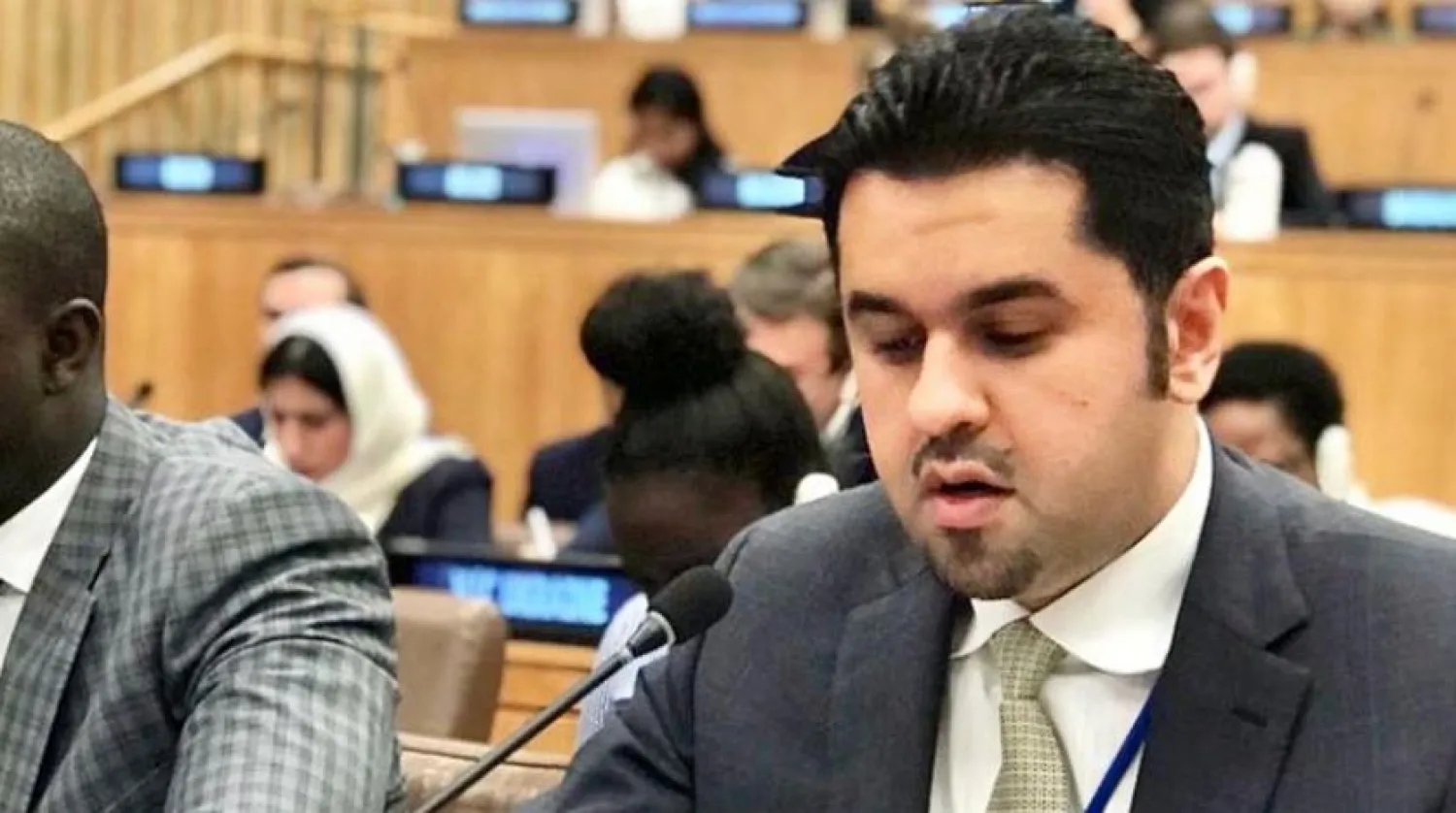
Faisal bin Mishari. Asharq Al-Awsat
TT

Saudi Arabia: Israel Deprives Palestinians of their Natural Resources

Faisal bin Mishari. Asharq Al-Awsat

Saudi Arabia agrees with the Special Rapporteur on the situation of human rights in the occupied Palestinian territory since 1967 that the occupation forces’ exploitation of Palestinian natural resources deprives them of the vital assets they need to develop the future Palestinian state.

In a statement, Faisal bin Mishari said the Kingdom’s delegation read the report of Michael Lynk, the Special Rapporteur on Palestinian territories, and was informed of Israel not cooperating with UN mechanisms.

Failure to cooperate with UN mechanisms is a blatant violation of the legal obligations of member states, he said.

He added that Palestinian rights are inalienable especially the right of self-determination. Ending the occupation and establishing an independent Palestinian state are all rights guaranteed by international charters and covenants.

Israel - as an occupation force- has obligations by virtue of international law, he said, and it should rule based on the best interest of the people under the occupation and should seek to end the occupation the soonest.

However, Israel sidestepped its legal obligations, and its illegal occupation of the Palestinian land continues for more than five decades.

Israel confiscates public and private properties without any legal authority, bin Mishari continued.

Further, Israel’s deprivation of Palestinians of water resources is a flagrant violation of international humanitarian law, international human rights law and the human right to water.

According to bin Mishari, Saudi Arabia backs the recommendations of the special rapporteur, namely tackling the basic challenges that prolong the conflict and halting daily violations as well as ending the occupation.


OIC Condemns Israeli Cabinet's Legalization of Settlements

 Israeli soldier points his weapon towards the camera, during a weekly settlers' tour in Hebron, in the Israeli-occupied West Bank, February 7, 2026. (Reuters)
Israeli soldier points his weapon towards the camera, during a weekly settlers' tour in Hebron, in the Israeli-occupied West Bank, February 7, 2026. (Reuters)
TT

OIC Condemns Israeli Cabinet's Legalization of Settlements

 Israeli soldier points his weapon towards the camera, during a weekly settlers' tour in Hebron, in the Israeli-occupied West Bank, February 7, 2026. (Reuters)
Israeli soldier points his weapon towards the camera, during a weekly settlers' tour in Hebron, in the Israeli-occupied West Bank, February 7, 2026. (Reuters)

The General Secretariat of the Organization of Islamic Cooperation (OIC) condemned on Monday the Israeli cabinet’s approval of measures that aim to deepen Israeli control over the occupied West Bank and weaken the already limited powers of the Palestinian Authority.

The OIC said Israel’s “colonial settlement policy constitutes a war crime and a flagrant violation of international law and relevant United Nations resolutions, foremost among which is Security Council Resolution 2334 and the legal opinion issued by the International Court of Justice.”

It renewed its call on the international community, particularly the Security Council, “to shoulder its responsibilities and take immediate action to put an end to all crimes and violations committed by Israel against the Palestinian people, their land, and their holy sites.”

The office of Israeli far-right Finance Minister Bezalel Smotrich in a statement announced the decisions that would make it easier for Jewish settlers to force Palestinians to give up land, adding that “we will continue to bury the idea of a Palestinian state.”

Palestinian President Mahmoud Abbas in a statement called the decision “dangerous” and an “open Israeli attempt to legalize settlement expansion” and land confiscation. He called for the United States and UN Security Council to intervene immediately.

The decision was announced a few days before Israeli Prime Minister Benjamin Netanyahu is expected to meet with US President Donald Trump in Washington about Iran and other matters.

The measures announced Sunday include canceling a prohibition on sales of West Bank land to Israeli Jews, declassifying West Bank land registry records to ease land acquisition, transferring construction planning at religious and other sensitive sites in the volatile city of Hebron to Israeli authorities, and allowing Israeli enforcement of environmental and archaeological matters in Palestinian-administered areas.

The measures also would revive a committee that would allow the state of Israel to make “proactive” land purchases in the territory — “a step intended to guarantee land reserves for settlement for generations to come.”


US Affirms Partnership with Riyadh is at its Strongest Level

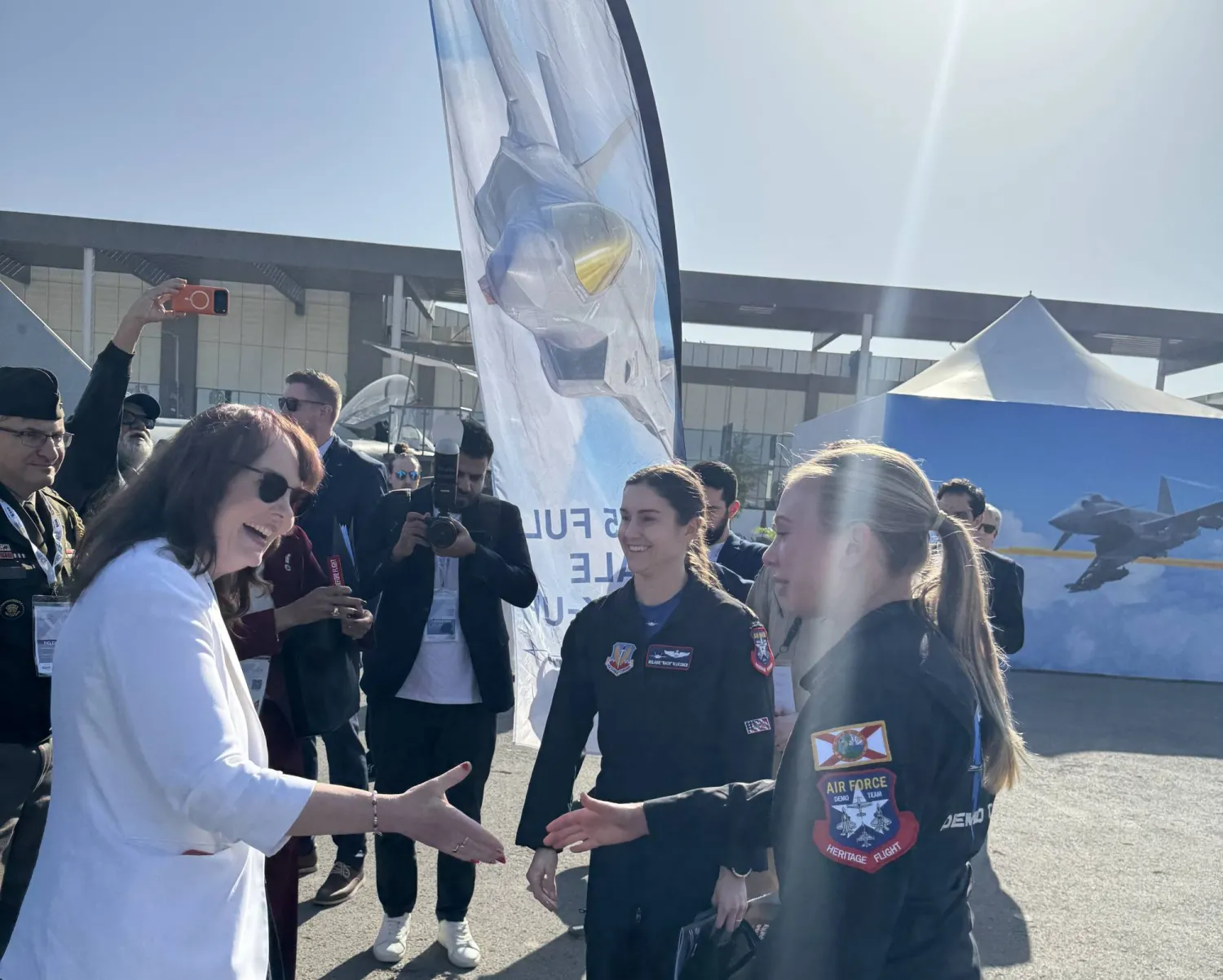
Alison Dilworth, Charge d’Affaires ad interim to Saudi Arabia, shakes hands with a participant from the United States at the exhibition (Asharq Al-Awsat)
TT

US Affirms Partnership with Riyadh is at its Strongest Level

Alison Dilworth, Charge d’Affaires ad interim to Saudi Arabia, shakes hands with a participant from the United States at the exhibition (Asharq Al-Awsat)

US Charge d’Affaires ad interim to Saudi Arabia, Alison Dilworth, said Sunday that the World Defense Show currently being held in Riyadh reflects the strongest manifestation of the bilateral partnership between the United States and the Kingdom, affirming that relations between the two countries “have never been stronger than they are today.”

In remarks to Asharq Al-Awsat on the sidelines of the Show, Dilworth said the strong US participation in the exhibition clearly demonstrates the strength of cooperation between Washington and Riyadh. She pointed out that the partnership has witnessed sustained and strengthening growth in recent years.

Dilworth added that the Show brings together major global names in defense and aviation, such as Boeing and Lockheed Martin, alongside small and medium-sized US companies working in artificial intelligence, cybersecurity, and advanced defense systems, reflecting the diversity of American participation and the broad scope of technical and industrial cooperation.

She highlighted that US companies aim to grow with Saudi partners, supporting the Kingdom’s security and prosperity in line with Vision 2030.

On the Saudi-US political momentum that has strengthened bilateral relations in recent years, Dilworth said that 2025 saw what she described as a “historic” visit by US President Donald Trump to the Kingdom, followed by a visit by the Saudi Crown Prince to Washington in November.

The two visits resulted in the signing of 23 agreements which she described as “pivotal achievements” in the trajectory of US-Saudi cooperation.

Regarding the military displays at the exhibition, the diplomat highlighted that the F-35 and the scheduled aerial demonstrations underscore the US commitment as a long-term partner to Saudi Arabia.


World Defense Show in Riyadh Witnesses Signing of Important Agreements

Saudi Minister of Defense Prince Khalid bin Salman bin Abdulaziz signs an agreement with his Slovakian counterpart. SPA
TT

World Defense Show in Riyadh Witnesses Signing of Important Agreements

Saudi Minister of Defense Prince Khalid bin Salman bin Abdulaziz signs an agreement with his Slovakian counterpart. SPA

Saudi Minister of Defense and Vice Chairman of the Board of Directors of the General Authority for Military Industries (GAMI) Prince Khalid bin Salman bin Abdulaziz inaugurated in Riyadh the third edition of the World Defense Show, organized by GAMI until February 12.

At the Saudi Arabian Military Industries (SAMI) Group pavilion, the Defense Minister launched on Sunday SAMI Land Company, SAMI Autonomous Company, SAMI Land Industrial Complex, and the HEET Program.

He also unveiled the SAMI Local Content Program (RUKN), the group's flagship supply chain program.

Prince Khalid and his South Korean counterpart witnessed the signing of a memorandum of understanding between the Saudi General Authority for Defense Development and the Korean Agency for Defense Development.

The agreement focuses on defense research, development, and innovation in advanced military technologies and systems.

The Saudi Defense Minister also signed three defense cooperation agreements with Slovakia, Malaysia, and Somalia.

Furthermore, the National Industrial Development Center signed a cooperation memorandum with European aerospace corporation Airbus to explore opportunities for developing and localizing the aviation and helicopter industry in Saudi Arabia.

Under the memorandum, the two sides aim to strengthen collaboration to establish an integrated aviation industrial base in the Kingdom. They will study the creation of an engineering center to develop national capabilities in manufacturing, assembly, maintenance, and repair, alongside a supporting logistics network.

The agreement also covers technology and knowledge transfer, encouraging global suppliers to invest in Saudi Arabia, and developing Saudi talent through educational and training partnerships with domestic institutions. It includes coordination with relevant authorities to examine procurement options, support the shift toward exports, and explore incentives and financing mechanisms to enhance project readiness and competitiveness.

GE Aerospace and the Middle East Propulsion Company Ltd. (MEPC) announced signing three new agreements to enhance operational readiness for the Royal Saudi Air Force (RSAF) F110 fleet and build in-country capabilities.

Leveraging their decade-old partnership, are focused on the RSAF’s F110-129 engines and will also support F110-129 customers across the broader region.

These agreements represent Phase 3 of a long-term initiative, building on the success of similar Phase 1 and 2 agreements, which saw GE Aerospace providing repair and overhaul services support to MEPC.

The agreements seek to ensure sustained material supply and comprehensive maintenance and repair services support for the RSAF F110 Engine Structural Integrity Program (ENSIP).

They highlight the shared vision of both companies to advance the safety, efficiency, and operational excellence of defense aircraft in the wider Middle East.

MEPC Managing Director Mohammed Alnawkhani said: “These agreements represent the next phase of our strategic partnership with GE Aerospace and a major step forward in enhancing readiness for the RSAF F110 fleet.”

“Together, we are expanding in-Kingdom F110-129 sustainment capabilities, ensuring long-term material availability, and delivering the high standards of safety and performance required by our customers in the Kingdom and across the region.”

“This milestone also strengthens localization efforts in support of Saudi Vision 2030, contributing to national industrial development and building sovereign aerospace sustainment capabilities,” he added.

Salim Mousallam, Vice President, Defense & Systems for the Middle East, Africa, and Türkiye at GE Aerospace said that the enduring partnership with MEPC is a testament to the company’s shared vision of enhancing in-country capabilities and ensuring peak operational readiness through maximized availability for its customers.

“These agreements will significantly increase engine availability, streamline MRO processes, and directly support the RSAF’s critical missions. As a trusted partner to the Kingdom, we are proud to provide high-quality services to MEPC, reducing maintenance burden and service disruptions for their mission-critical F110 fleet,” he said.

Under the F110-129 Material Support Agreement, GE Aerospace will provide essential ENSIP Kits (F110-129 parts) to support MEPC in performing the necessary overhaul of RSAF F110-129 engines within the Kingdom.

The F110-129 repair and overhaul agreement further solidifies the provision of comprehensive repair and overhaul services specifically for the Royal Saudi Air Force fleet. GE Aerospace also signed a new F110-129 services agreement to extend critical repair and overhaul capabilities to support other F110 customers across the region.