


Iran's Thirsty Energy Industry Runs up against Water Shortage

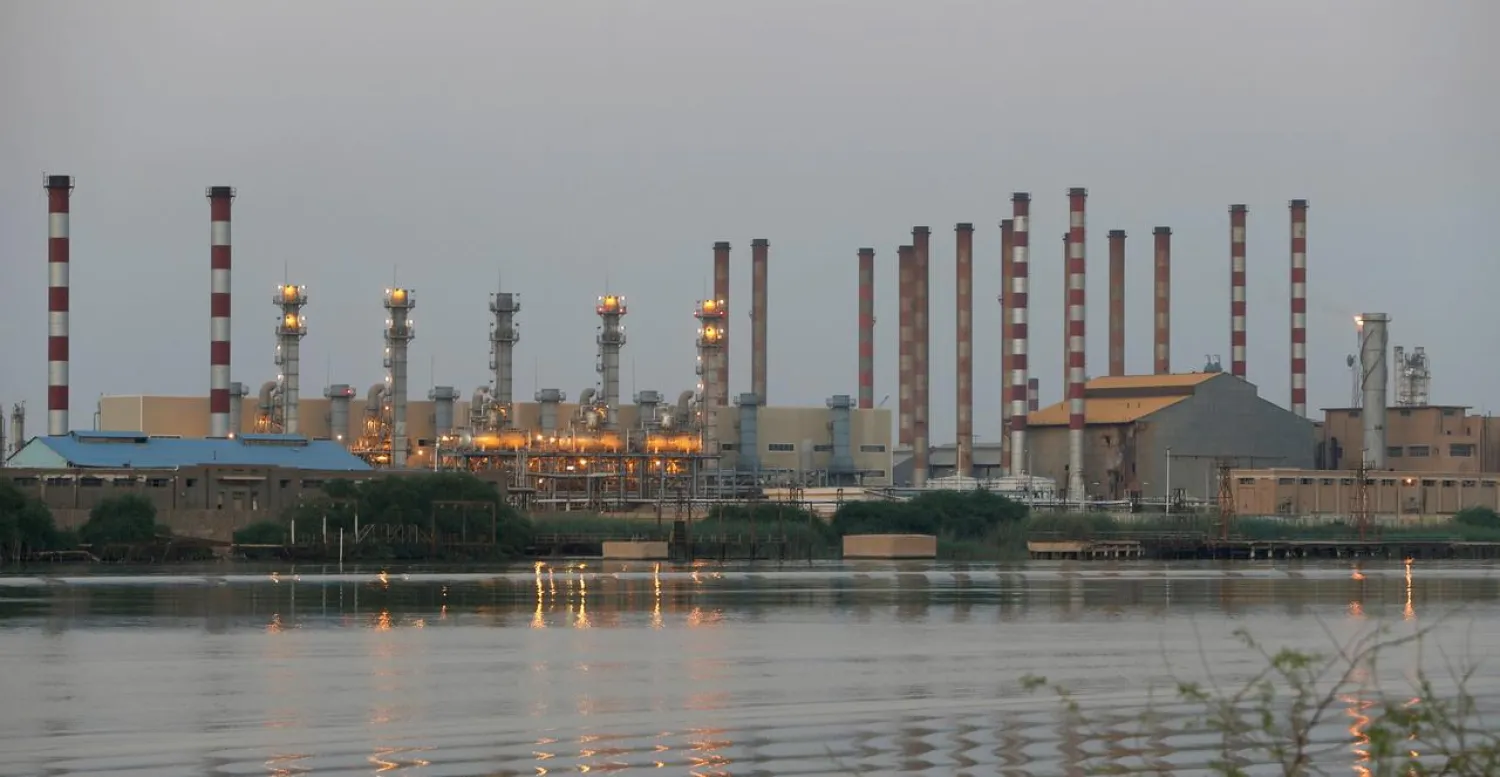
A general view of Abadan oil refinery in southwest Iran, is pictured from Iraqi side of Shatt al-Arab in Al-Faw south of Basra, Iraq September 21, 2019. (Reuters)
TT

Iran's Thirsty Energy Industry Runs up against Water Shortage

A general view of Abadan oil refinery in southwest Iran, is pictured from Iraqi side of Shatt al-Arab in Al-Faw south of Basra, Iraq September 21, 2019. (Reuters)

The plan to build a petrochemical plant near the Iranian city of Firouzabad had everything usually needed to get a project off the ground: approval from the nation’s top authority, funding from the Revolutionary Guards and plentiful gas feedstock.

But a decade on, work at the site is only 10% complete because of a row over an increasingly scarce resource in Iran that is vital to keep the facility cool: water.

“In early project studies, there were some mistakes about the amount of water the plant would need,” said Hamidreza Soleymannejad, one of the plant’s project managers. “They found the plant needs a lot of water, but the region could not provide that.”

The fate of the Firouzabad plant is not unique in Iran, even though the nation has huge oil and gas reserves and is eager to expand output of downstream products which can more easily evade crippling US sanctions on its vital energy industry.

At least a dozen petrochemical, fertilizer and refinery projects, with combined capacity to produce more than 5 million tonnes a year of products, have hit the buffers or been delayed due to water supply problems, according to a Reuters assessment.

The list was compiled based on reports in state media, direct comments from project managers involved in several of the delayed plants, traders, and details published by some of the companies or major shareholders in the developments.

Reuters sought comment from investors or companies involved. Most did not respond to emailed requests, while two confirmed water shortages were a major issue. One denied there was any problem, although a trader with close links to the project flagged a lack of water supplies as a crucial factor.

Fasa Petrochemical Company and Darab Petrochemical Company, which each own 30% in Firouzabad Petrochemical Company, did not respond to requests for comment.

“Many of these projects were proposed by lawmakers who were trying to create jobs in their constituencies. Unfortunately the technical studies have been widely ignored,” said Reza Banimahd, a businessman in Tehran who has worked on refinery projects.

The water shortage is one of many challenges facing Tehran as it seeks to skirt US sanctions by ramping up production of products, which are more difficult to trace back to Iran than Iranian crude, which has clearly identifiable characteristics.

Under sanctions, crude exports have plunged 80% and are now worth about $700 million a month - a calculation based on Iran’s normal selling price although under sanctions Iran tends to sell crude at a discount. By comparison, Tehran has kept oil product sales at about $500 million a month, Reuters calculations show.

Keeping cool

Oil refineries and other processing plants need water mainly for cooling. Producing a single gallon of gasoline requires 0.61–0.71 of a gallon of water. But diverting limited supplies away from farming towards industry carries political risks.

Drought and depleting water supplies have sparked unrest. Farmers in Iran's central region protested in several cities in 2018 over water mismanagement, as rainfall dropped 25% below the average.

The plant in Firouzabad, an inland area in the parched south of the country, aimed to produce 1 million tonnes of ethylene a year. Based on figures for a similar capacity plant, that output would use more than 2 million tons of water a year.

The government, which worries about falling national groundwater levels, wants the $500 million plant moved to the coast where desalinated water could be used. But local officials and a senior cleric have objected and the project has stalled.

Azizollah Hashemizadeh, Firouzabad’s Friday prayer leader who reports to supreme leader Ali Khamenei, said in June the project would bring prosperity and could not be shifted.

While Khamenei has the last word in state affairs, there are a range of parallel institutions below him that often compete for influence. For example, the Revolutionary Guards, an investor in the Firouzabad plant, has a separate command structure to the conventional army and has vast industrial interests.

The Revolutionary Guards did not respond to a request for comment sent via their website.

The structure of rival power centers often creates a tortured decision-making process and can push aside commercial and environmental factors.

“There is a problem with coordination between ministries over development plans,” said Kaveh Madani, a former Iranian deputy vice president for the environment and now visiting professor at London’s Imperial College, adding that sanctions had pushed the government to prioritize jobs over water and the environment.

The delay in the Firouzabad plant has had knock on effects, disrupting four other projects that aimed to use the facility’s output of ethylene, an ingredient used to make products such as polyester resins and adhesives. Those offtake plants would also have added to strains on the region’s scant water reserves.

“Delay is not a good word. After 12 years, we are practically facing a failed project,” said another project manager for the Firouzabad plant when contacted by Reuters.

Asking not to be identified, he said the proposed new coastal site was empty, flattened but with nothing yet built.

Despite the challenges, Iran has boosted refining capacity, announcing in February it was self sufficient in gasoline.

Iran’s petrochemical plants have capacity to make about 65 million tons of products a year, of which about 22.5 million tons is exported.

At a standstill

Social Security Investment Company, a state body with 200 subsidiaries and major energy investments, flagged problems facing the industry in a 2018 report including sanctions and “the drought and shortage of water for the inland refineries.”

It said some projects “were not economically feasible as they were initiated to create jobs in unsuitable locations.”

In northeast Iran, Khorasan Petrochemical Company has struggled to launch a fertilizer plant to produce 660,000 tonnes of urea, using gas as a feedstock. Five years on, the project is at a standstill despite securing $700 million in state support.

“Water resources for the project have not been provided and remain unclear,” Tamin Petroleum and Petrochemical Investment Company (TAPPICO), a major shareholder, wrote on its website.

Agriculture, a major employer in Iran, accounts for about 90% of Iran’s water usage, with industry using 10%. But any extra demand strains Iran’s depleting reserves. UN data indicate Iran is using 3.8 billion cubic meters of water a year more than is replaced, leading to a fast falling water table.

Nevertheless, some projects still go ahead even in areas where strains are acute.

Shazand refinery in central Iran had to drill deep wells to pump groundwater, state news agency IRNA reported in 2018, alarming environmentalists and sapping supplies from farmers.

When asked to comment, Shazand Petrochemical Company pointed to a statement published on its website that was published after Reuters made the request: “To reduce consumption of groundwater, the company has planned to use the reservoir of Kamal Saleh dam - when it is full - and wastewater of neighboring cities.”

The company said it was seeking a contractor for its water recycling project.


US Concerned About Expansion of Terrorism in Sahel, West Africa

Members of the Nigeria Armed Forces interact with residents following an attack in Woro, Kwara State, on February 5, 2026. (Photo by Light Oriye Tamunotonye / AFP)
TT

US Concerned About Expansion of Terrorism in Sahel, West Africa

Members of the Nigeria Armed Forces interact with residents following an attack in Woro, Kwara State, on February 5, 2026. (Photo by Light Oriye Tamunotonye / AFP)

The United States is concerned by the “expansion” of al-Qaeda affiliates in the Sahel and West Africa, including Jama'at Nusrat al-Islam wal-Muslimin (JNIM) and ISIS-Sahel’s territorial gains.

US Ambassador to the United Nations Mike Waltz shared the concern in his remarks at this week’s UN Security Council Briefing on Terrorist Threats to International Peace and Security caused by terrorist acts.

Highlighting JNIM and ISIS-Sahel’s territorial gains and use in particular of kidnapping for ransom, Waltz said the threats are increasingly diffuse and complex as they involve foreign fighters converging in multiple conflict zones.

The diplomat cited the latest Analytical Support and Sanctions Monitoring Team report, which showed that terror cells continue to adapt and exploit instability across Africa, the Middle East, and South Asia.

Waltz said ISIS’ growing focus on Africa, and the resilience of its cells in Syria and Iraq, and the persistent threat from ISIS-K in Afghanistan, truly reinforces the need for sustained, coordinated counterterrorism efforts.

Washington is particularly concerned by terrorist groups’ exploitation of new technologies, such as commercial satellite communications, artificial intelligence, drones and cryptocurrencies, he said.

“All of these further complicates the threat landscape and it requires our vigilance, vigilance from Member States and particularly where I think there is room for all of us to improve – is our coordination with the private sector as we face this threat,” Waltz added.

The ambassador called for further disruption of terrorist financing networks, saying the recent successes in Somalia and in West Africa demonstrate that following the money and stopping the money to these various groups can have bold decisive effects.

He said the US commends UN Member States whose counterterrorism operations have constrained ISIS and al-Qaeda, especially in Iraq, Syria, and Somalia.

He also urged all states to strengthen cooperation, including intelligence sharing and joint operations, and to support the effective implementation and evolution of the 1267 sanctions regime.

“Member States should collaborate on screening and information sharing to prevent terrorist movement across borders, in support of UN Security Council Resolution 2396,” Waltz noted.

Last November, the United Kingdom, which currently chairs the UN Security Council, expressed similar concern about the proliferation of terrorist groups in the Sahel and West Africa.

The US has sent a small team of troops to Nigeria, the general in charge of the US command for Africa said on Tuesday, the first acknowledgment of US forces on the ground since Washington struck by air on Christmas Day.

General Dagvin RM Anderson, head of the US military's Africa Command AFRICOM, said the US team was sent after both countries agreed that more needed to be done to combat the terrorist threat in West Africa.

“That has led to increased collaboration between our nations to include a small US team that brings some unique capabilities from the United States,” he told journalists during a press briefing in Dakar on Tuesday.


Kim Expected to Issue Major Policy Goals at NKorea Party Congress

This picture taken on February 1, 2026 and released by North Korea's official Korean Central News Agency (KCNA) via KNS on February 2, 2026 shows North Korean leader Kim Jong Un attending the inauguration ceremony of the Sinuiju Combined Greenhouse Farm in North Pyongan Province, North Korea. (Photo by KCNA VIA KNS / AFP)
TT

Kim Expected to Issue Major Policy Goals at NKorea Party Congress

This picture taken on February 1, 2026 and released by North Korea's official Korean Central News Agency (KCNA) via KNS on February 2, 2026 shows North Korean leader Kim Jong Un attending the inauguration ceremony of the Sinuiju Combined Greenhouse Farm in North Pyongan Province, North Korea. (Photo by KCNA VIA KNS / AFP)

North Korea will convene a major political conference later this month, the country’s state media said Sunday, where leader Kim Jong Un is expected to outline his domestic and foreign policies for the next five years.

The ruling Workers’ Party congress, which Kim previously held in 2016 and 2021, comes after years of accelerated nuclear and missile development and deepening ties with Moscow over the war in Ukraine that have increased his standoffs with the United States and South Korea.

According to The Associated Press, North Korea’s official Korean Central News Agency said the party’s political bureau met under Kim's supervision and decided the congress would be held in late February. State media did not immediately specify a date or release agenda details.

The congress will likely continue for days as a highly choreographed display of Kim’s authoritarian leadership. In recent weeks, Kim has inspected weapons tests and toured military sites and economic projects as state media highlighted his purported achievements, crediting his “immortal leadership” with strengthening the country’s military capabilities and advancing national development.

His recent activities and comments suggest Kim will use the congress to double down on economic development through “self-sustenance” and mass mobilization while announcing plans to further expand the capabilities of his nuclear-armed military, including upgrading conventional weapons systems and integrating them with nuclear forces.

Kim also could highlight his increasingly assertive foreign policy based on closer ties with Moscow and Beijing while hardening an adversarial approach toward rival South Korea as he continues to embrace the idea of a “new Cold War,” experts say.

Kim's willingness to resume diplomacy with the US is unclear. Relations derailed in 2019 after his second summit with US President Donald Trump due to disagreements over sanctions against his nuclear weapons program.

Kim has rejected Trump’s overtures for dialogue since the US president began his second term in January 2025. Kim insists Washington abandon demands for the North to surrender its nuclear weapons as a precondition for future talks.

Entering his 15th year in rule, Kim finds himself in a stronger position than when he opened the previous congress in 2021 during the shock of the COVID-19 pandemic. Navigating what was seen as his toughest stretch in a decade of power, Kim acknowledged his previous economic policies failed and issued a new five-year development plan through 2025.

He called for accelerated development of his nuclear arsenal and issued an extensive wish list of sophisticated assets including solid-fuel intercontinental ballistic missiles, multi-warhead systems, tactical nuclear weapons, spy satellites and nuclear-powered submarines.

Kim has exploited geopolitical turmoil to his advantage. He used Russia's invasion of Ukraine as a window to accelerate weapons testing and align himself with Russian President Vladimir Putin, who has accepted thousands of North Korean troops and large quantities of military equipment for the war.

Kim also has pursued closer ties with China, traditionally the North’s primary ally and economic lifeline. He traveled to Beijing in September for a World War II event and the first summit with Chinese President Xi Jinping in six years.

While Kim’s strict information blockade prevents precise assessments, South Korean analysts say the North's economy appears to have improved over the past five years, possibly due to a gradual recovery in trade with China and an industrial boost from arms exports to Russia.


Trump Praises New Honduras President after Talks in US

(COMBO) This combination of pictures created on February 06, 2026 shows Honduras' President Nasry Asfura walking following the inauguration ceremony at the Honduran Congress in Tegucigalpa on January 27, 2026, and US President Donald Trump smiling during an announcement in the Oval Office of the White House in Washington, DC, on October 16, 2025. (Photo by Johny MAGALLANES and ANDREW CABALLERO-REYNOLDS / AFP)
TT

Trump Praises New Honduras President after Talks in US

(COMBO) This combination of pictures created on February 06, 2026 shows Honduras' President Nasry Asfura walking following the inauguration ceremony at the Honduran Congress in Tegucigalpa on January 27, 2026, and US President Donald Trump smiling during an announcement in the Oval Office of the White House in Washington, DC, on October 16, 2025. (Photo by Johny MAGALLANES and ANDREW CABALLERO-REYNOLDS / AFP)

US President Donald Trump on Saturday praised Honduran counterpart Nasry Asfura, whom he endorsed on the campaign trail, following a meeting at his Mar-a-Lago resort.

Asfura, a conservative businessman and former mayor of Honduran capital Tegucigalpa, was sworn in last week after winning November elections with Trump's backing.

Trump had threatened to cut aid to Central America's poorest country if his "friend" was defeated.

"I had a very important meeting with my friend, and the President of Honduras, Nasry 'Tito' Asfura," Trump wrote on his Truth Social platform.

"Once I gave him my strong Endorsement, he won his Election! Tito and I share many of the same America First Values. We have a close partnership on Security."

He said the pair discussed investment and trade between the two nations.

Asfura is set to speak to media about the talks Sunday, AFP reported.

The Honduran presidency released a photo of the two leaders smiling and giving a thumbs up.

Asfura already met with US Secretary of State Marco Rubio on January 12, after which the two countries announced plans for a free trade deal.

His win gave Trump another ally in Latin America after conservatives campaigning heavily on crime and corruption replaced leftists in Chile, Bolivia, Peru and Argentina.

Trump has been pressuring countries in Washington's backyard to choose between close ties with Washington or Beijing.

Asfura, who succeeded left-wing leader Xiomara Castro, has said he is considering switching diplomatic ties from China to the self-ruled island of Taiwan.

On the eve of the Honduran election, Trump in a surprise move pardoned former president Juan Orlando Hernandez, from Asfura's party, who was serving a 45-year prison sentence in the US for drug trafficking.

Hernandez was convicted of helping to smuggle 400 tons of cocaine into the United States.

Trump's decision to pardon him, even as US forces were blowing up alleged drug boats in the Caribbean and tightening the noose on Venezuela's Nicolas Maduro, whom Washington accuses of drug trafficking, drew heavy criticism.
