


Why All of Your Favorite MLS Stars Are Argentinian

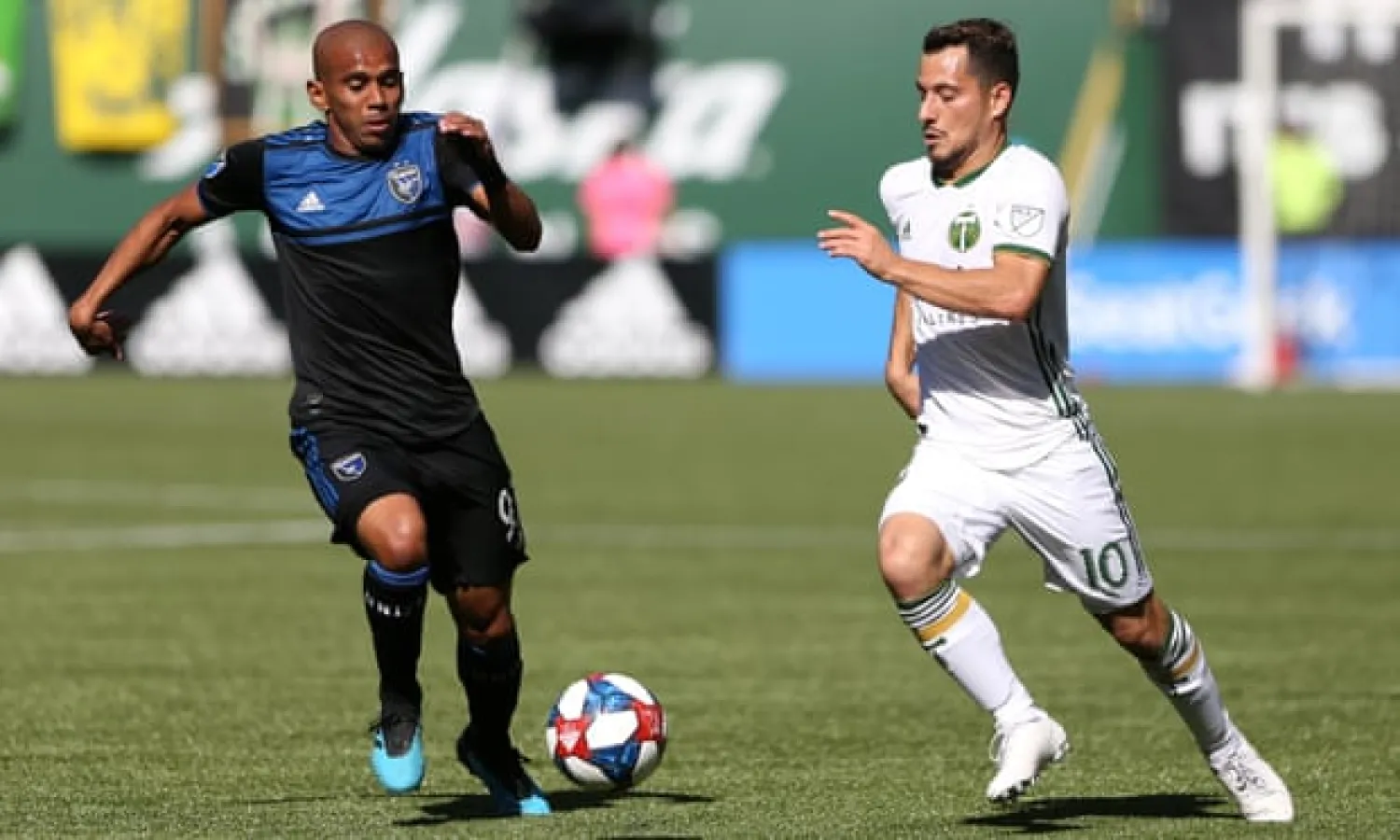
 The Portland Timbers’ Sebastián Blanco has led a vanguard of Argentinian imports to Major League Soccer. Photograph: Sean Meagher/AP
The Portland Timbers’ Sebastián Blanco has led a vanguard of Argentinian imports to Major League Soccer. Photograph: Sean Meagher/AP
TT

Why All of Your Favorite MLS Stars Are Argentinian

 The Portland Timbers’ Sebastián Blanco has led a vanguard of Argentinian imports to Major League Soccer. Photograph: Sean Meagher/AP
The Portland Timbers’ Sebastián Blanco has led a vanguard of Argentinian imports to Major League Soccer. Photograph: Sean Meagher/AP

With a tortured lilt, in 1945 Enrique Campos first sang a tale of a boy whose life is made by an unexpected call up to his club’s first team. As so many tangos have, El Sueño del Pibe permeated into the Argentinian consciousness creating a shared dream where maybe, just maybe, fútbol can lead to salvation.

We have seen Carlos Tevez and Diego Maradona fulfill it, carrying themselves and their families out of poverty. But now, as the Argentinian league wilts under financial stress, the dream withers away.

“It’s a beautiful dream … it’s just not true,” said Sebastián Blanco, the Portland Timbers number 10.

Argentina’s economy is in freefall. As of September 2019, Argentina’s currency registered a more than 50% inflation rate in the last year, a record in the last 29 years. The peso is fluctuating around 61 pesos to the US dollar, officially. This means, one Argentinian peso is valued at under a tenth of an American quarter.

The jarring reality of the country’s economic crisis has made a stable landing ground of the MLS, a new paradise for Argentinian footballers to settle and expand their careers. This year, they were the most represented foreign nationality in the league other than Canadians, according to MLS data. Mexican players, it may surprise, were in the single digits.

“More than three years ago it would have been unthinkable for an Argentinian to come to the MLS,” said Blanco.

After a four-year spell in Europe between Metalist Kharkiv and West Bromwich Albion, Blanco returned to the team he has always supported. He ran the midfield for a San Lorenzo squad that won the Supercopa Argentina, their first hardware in over two years, and missed out on the domestic league title by just three points. Still, just after his 29th birthday, he landed in Portland.

It wasn’t his first choice, though. He eyed a possible return to Europe and friends in Buenos Aires called him “crazy” for considering a “retirement league”. He was too young and too in form. But now married and with his first daughter on the way, Blanco felt his calculus was different. A conversation with Diego Valeri, already a Timbers vet, convinced him.

“You’re going to enjoy your profession, Diego told me,” said Blanco.

He’d be able to just play without external pressures: no threat of violence, top quality infrastructure and most importantly, consistent paychecks. It’s no secret that South American teams often struggle to pay their players on time.

The top clubs back home guarantee contracts and many times in dollars, but the ever widening gap in the exchange rate makes them harder to fulfill.

“It gets complicated when you have players with wages in $600,000 and $700,000 range, when we brought them the dollar was at 22,” Boca Juniors president Daniel Angelici said.

The MLS operates as a single-entity meaning the league employs the players, coaches, trainers and other staff, guarantees and pays all salaries biweekly.

Miguel Almirón wrote about having to support his family on a couple of hundred dollars a month while waiting sometimes three or four months to be paid while at Cerro Porteño in Paraguay.

“It’s not the family’s fault. I don’t want to go home and say we’ll have to wait two months for a salary,” said Blanco.

He never had any issues at San Lorenzo and never wanted on, he said. His whole family supports the Pope Francis’ favorite club. His contract was nearly fulfilled in its entirety just before signing for Portland, Blanco said and explained that filing a formal complaint through the players union could make you “look like a traitor” to your club, risking your relationships and career there.

“Budgets [in the MLS] are like puzzles, every cent is so valuable and they can’t miss a single one,’’ he said.

It was unlikely until recently for a players in their teens to leave the top five clubs – River Plate and Boca Juniors, Independiente, Racing Club, San Lorenzo. Carlos Tevez only made it to West Ham aged 22 in 2006, for example. But, the climbing exchange rate has ravaged the Argentinian leagues development farms, too. And teams need to offload green talent for a quick buck to make up for costs, the MLS is happy to receive them.

The league’s view of players worth signing has taken a “180-degree turn”, said Alfonso Mondelo, the leagues technical director of competition, forgoing names for promising, young talent.

“If you want to win a championship you have to have an Argentinian player,” he said. Since its introduction the designated player rule has been used on Argentinians more than any other country, but they’re becoming easier to pick up as opposed to Mexican players who “are paid well at home”, Mondelo was frank in saying.

Recently, a few young forwards have been signed as designated players: Ezequiel Barco (20) for Atlanta United, Milton Valenzuela (21) for Columbus Crew and Matías Pellegrini became the first for Inter Miami CF, still 19 and having only 23 appearances for Estudiantes de la Plata.

For Valentin Castellanos, coming to NYC FC was a chance to prove himself where Argentinian teams had not given him the space. His fresh call up to the Argentinian U-23 squad last month proves there’s room to grow without disappearing in the US.

“If it’s money you’re after you should get into the gambling business” said the NYC FC midfielder. Players don’t only play for the money, he insisted.

Pep Guardiola has been seen in the box seats at Yankee Stadium. Castellanos noticed. After a few failed trials at River Plate he signed for Universidad de Chile, where he debuted in 2016, and then spent two years at Torque, the Uruguayan club owned by City Football Group.

“Maybe only playing for River or Boca can give you the level of connections NYC FC provides,” said Castellanos, who hopes to rocket off to Europe one day.

Argentina votes for a new president on Sunday. The downturn is the key issue for voters. It’s unclear whether anyone can help stabilize Argentina’s economy, or at least stop the bleeding. Only time will tell what it will mean for the country’s best exports.

The Guardian Sport


Hospital: Vonn Had Surgery on Broken Leg from Olympics Crash

This handout video grab from IOC/OBS shows US Lindsey Vonn crashing during the women's downhill event at the Milano Cortina 2026 Winter Olympic Games on February 8, 2026. (Photo by Handout / various sources / AFP)
TT

Hospital: Vonn Had Surgery on Broken Leg from Olympics Crash

This handout video grab from IOC/OBS shows US Lindsey Vonn crashing during the women's downhill event at the Milano Cortina 2026 Winter Olympic Games on February 8, 2026. (Photo by Handout / various sources / AFP)

Lindsey Vonn had surgery on a fracture of her left leg following the American's heavy fall in the Winter Olympics downhill, the hospital said in a statement given to Italian media on Sunday.

"In the afternoon, (Vonn) underwent orthopedic surgery to stabilize a fracture of the left leg," the Ca' Foncello hospital in Treviso said.

Vonn, 41, was flown to Treviso after she was strapped into a medical stretcher and winched off the sunlit Olimpia delle Tofane piste in Cortina d'Ampezzo.

Vonn, whose battle to reach the start line despite the serious injury to her left knee dominated the opening days of the Milano Cortina Olympics, saw her unlikely quest halted in screaming agony on the snow.

Wearing bib number 13 and with a brace on the left knee she ⁠injured in a crash at Crans Montana on January 30, Vonn looked pumped up at the start gate.

She tapped her ski poles before setting off in typically aggressive fashion down one of her favorite pistes on a mountain that has rewarded her in the past.

The 2010 gold medalist, the second most successful female World Cup skier of all time with 84 wins, appeared to clip the fourth gate with her shoulder, losing control and being launched into the air.

She then barreled off the course at high speed before coming to rest in a crumpled heap.

Vonn could be heard screaming on television coverage as fans and teammates gasped in horror before a shocked hush fell on the packed finish area.

She was quickly surrounded by several medics and officials before a yellow Falco 2 ⁠Alpine rescue helicopter arrived and winched her away on an orange stretcher.


Meloni Condemns 'Enemies of Italy' after Clashes in Olympics Host City Milan

Demonstrators hold smoke flares during a protest against the environmental, economic and social impact of the Milano-Cortina 2026 Winter Olympics in Milan, Italy, February 7, 2026. REUTERS/Kevin Coombs
TT

Meloni Condemns 'Enemies of Italy' after Clashes in Olympics Host City Milan

Demonstrators hold smoke flares during a protest against the environmental, economic and social impact of the Milano-Cortina 2026 Winter Olympics in Milan, Italy, February 7, 2026. REUTERS/Kevin Coombs

Italian Prime Minister Giorgia Meloni has condemned anti-Olympics protesters as "enemies of Italy" after violence on the fringes of a demonstration in Milan on Saturday night and sabotage attacks on the national rail network.

The incidents happened on the first full day of competition in the Winter Games that Milan, Italy's financial capital, is hosting with the Alpine town of Cortina d'Ampezzo.

Meloni praised the thousands of Italians who she said were working to make the Games run smoothly and present a positive face of Italy.

"Then ⁠there are those who are enemies of Italy and Italians, demonstrating 'against the Olympics' and ensuring that these images are broadcast on television screens around the world. After others cut the railway cables to prevent trains from departing," she wrote on Instagram on Sunday.

A group of around 100 protesters ⁠threw firecrackers, smoke bombs and bottles at police after breaking away from the main body of a demonstration in Milan.

An estimated 10,000 people had taken to the city's streets in a protest over housing costs and environmental concerns linked to the Games.

Police used water cannon to restore order and detained six people.

Also on Saturday, authorities said saboteurs had damaged rail infrastructure near the northern Italian city of Bologna, disrupting train journeys.

Police reported three separate ⁠incidents at different locations, which caused delays of up to 2-1/2 hours for high-speed, Intercity and regional services.

No one has claimed responsibility for the damage.

"Once again, solidarity with the police, the city of Milan, and all those who will see their work undermined by these gangs of criminals," added Meloni, who heads a right-wing coalition.

The Italian police have been given new arrest powers after violence last weekend at a protest by the hard-left in the city of Turin, in which more than 100 police officers were injured.


Liverpool New Signing Jacquet Suffers 'Serious' Injury

Soccer Football - Ligue 1 - RC Lens v Stade Rennes - Stade Bollaert-Delelis, Lens, France - February 7, 2026  Stade Rennes' Jeremy Jacquet in action REUTERS/Benoit Tessier
Soccer Football - Ligue 1 - RC Lens v Stade Rennes - Stade Bollaert-Delelis, Lens, France - February 7, 2026 Stade Rennes' Jeremy Jacquet in action REUTERS/Benoit Tessier
TT

Liverpool New Signing Jacquet Suffers 'Serious' Injury

Soccer Football - Ligue 1 - RC Lens v Stade Rennes - Stade Bollaert-Delelis, Lens, France - February 7, 2026  Stade Rennes' Jeremy Jacquet in action REUTERS/Benoit Tessier
Soccer Football - Ligue 1 - RC Lens v Stade Rennes - Stade Bollaert-Delelis, Lens, France - February 7, 2026 Stade Rennes' Jeremy Jacquet in action REUTERS/Benoit Tessier

Liverpool's new signing Jeremy Jacquet suffered a "serious" shoulder injury while playing for Rennes in their 3-1 Ligue 1 defeat at RC Lens on Saturday, casting doubt over the defender’s availability ahead of his summer move to Anfield.

Jacquet fell awkwardly in the second half of the ⁠French league match and appeared in agony as he left the pitch.

"For Jeremy, it's his shoulder, and for Abdelhamid (Ait Boudlal, another Rennes player injured in the ⁠same match) it's muscular," Rennes head coach Habib Beye told reporters after the match.

"We'll have time to see, but it's definitely quite serious for both of them."
Liverpool agreed a 60-million-pound ($80-million) deal for Jacquet on Monday, but the 20-year-old defender will stay with ⁠the French club until the end of the season.

Liverpool, provisionally sixth in the Premier League table, will face Manchester City on Sunday with four defenders - Giovanni Leoni, Joe Gomez, Jeremie Frimpong and Conor Bradley - sidelined due to injuries.
