


Lebanese Importers Struggle as Banks Impose Credit Controls

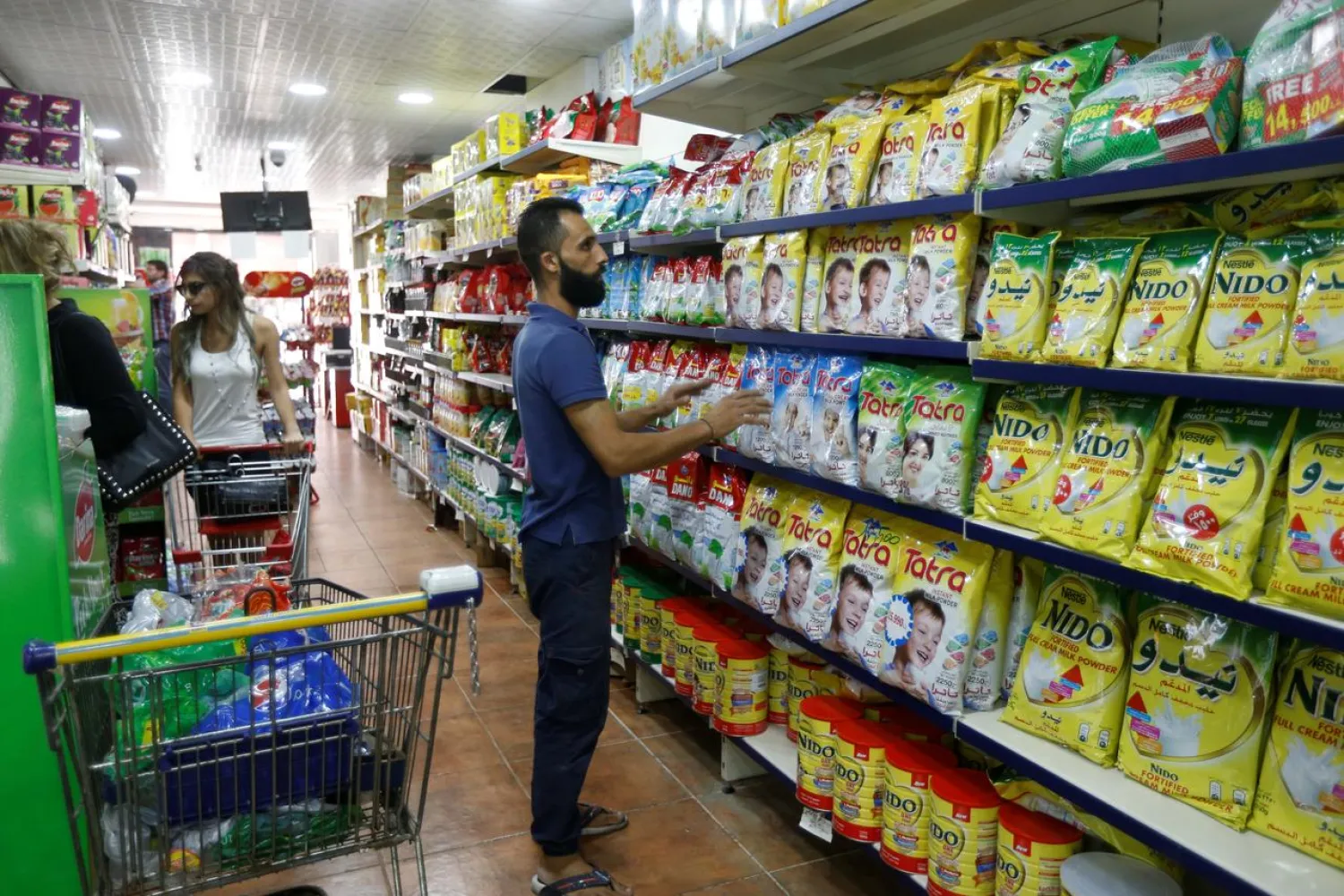
People shop at a supermarket in Beirut, Lebanon August 28, 2017. (Reuters)
TT

Lebanese Importers Struggle as Banks Impose Credit Controls

People shop at a supermarket in Beirut, Lebanon August 28, 2017. (Reuters)

Lebanese traders are struggling to pay for imports of everything from pasta to nappies as banks impose restrictions on lines of credit in response to concerns about tighter liquidity after weeks of street demonstrations.

Huge anti-government protests have led to the resignation of Prime Minister Saad Hariri and heaped pressure on an economy facing its sternest test since the 1975-90 civil war.

Importers received notices from several banks in recent days that unused credit lines were being temporarily suspended.

The notices, seen by Reuters, caused a huge headache for importers who rely on such facilities to pay for goods from overseas.

“It’s disastrous,” said Hani Bohsali, general manager of Bohsali Foods. “We have shipments to bring and suddenly we’re not able to transfer to suppliers.

“Yesterday I had a payment due for one company in Egypt of $35,000 and tomorrow I have another due for a company in Thailand. Everything is frozen until further notice.”

Bohsali, president of the Syndicate of Importers of Foodstuffs, Consumer Products and Drinks, which represents around 50 importers, imports several hundred thousand dollars of goods a week, ranging from pasta to cocoa powder.

The central bank has not imposed formal capital controls on banks, which re-opened on Friday after being closed for two weeks due to the demonstrations.

But with a scramble for US dollars straining the fixed exchange rate, banks have introduced temporary controls to prevent capital flight.

Credit restrictions

Importers have so far not reported shortages of goods and are not concerned about that risk in the coming days as they expect the credit restrictions to be temporary.

But the restrictions are putting more strain on an economy already struggling with zero growth and slowing capital inflows when the protests erupted on October 17.

Since then, some companies have paid their staff half salaries for October while other firms will do the same in November, employees said.

Some banks have also restricted the amount of money customers can withdraw from US dollar accounts to a few thousand dollars a week.

“When the banks reopened we were told by the banks you’re not able to use the balance of the old credit facilities we use to pay suppliers,” said Shadi Hussein, regional business development manager at Obegi Consumer Products, one of Lebanon’s biggest food companies.

“Fortunately, we have a good relationship with our suppliers so they understand the situation for a period of time but for smaller companies it’s very difficult,” said Hussein, who imports biscuits, canned food and other consumer goods.

Banks are reviewing the situation hourly in coordination with the central bank and adjusting their position accordingly, said Salim Sfeir, chairman of the Association of Banks in Lebanon.

“The country is going through a political upheaval and we are trying to avoid turning it into a financial crisis,” he said in written response to questions from Reuters.

“Our main task is to provide vital needs to the country. Because of the two weeks of closure due to security concerns, we had requests piling up. We don’t have a policy of restrictions but we are prioritizing.”

Import-reliant

With only a tiny industrial and manufacturing sector and few natural resources, the Lebanese economy relies on imports. Lebanon’s imports hit $10.1 billion in the first half of 2019, 6% up from the same period of last year, while its trade deficit, the measure by which imports exceed exports, widened to $8.4 billion.

Hussein said the restrictions were a further headache for companies already reeling because the closure of the banks prevented sales staff from collecting payment from customers.

A slowdown in cash remittances from Lebanese abroad has put pressure on the central bank’s foreign currency reserves in recent years.

Before the protests erupted and as dollar scarcity created a parallel market for the Lebanese pound, the central bank said it would prioritize dollars for fuel, medicine and wheat.

Not all payments for goods are disrupted. Some traders who do not use lines of credit are able to transfer funds to suppliers directly.

Paul Mansour, who owns a flour mill, said he made four payments to suppliers by putting cash in the bank himself to make the transfers.



Gold Bounces Back on Softer Dollar, US-Iran Concerns; Silver Rebounds

Gold and silver bars are stacked in the safe deposit boxes room of the Pro Aurum gold house in Munich, Germany, January 10, 2025. REUTERS/Angelika Warmuth
TT

Gold Bounces Back on Softer Dollar, US-Iran Concerns; Silver Rebounds

Gold and silver bars are stacked in the safe deposit boxes room of the Pro Aurum gold house in Munich, Germany, January 10, 2025. REUTERS/Angelika Warmuth

Gold rebounded on Friday and was set for a weekly gain, helped by bargain hunting, a slightly weaker dollar and lingering concerns over US-Iran talks in Oman, while silver recovered from a 1-1/2-month low.

Spot gold rose 3.1% to $4,916.98 per ounce by 09:31 a.m. ET (1431 GMT), recouping losses posted during a volatile Asia session that followed a fall of 3.9% on Thursday. Bullion was headed for a weekly gain of about 1.3%.

US gold futures for April delivery gained 1% to $4,939.70 per ounce.

The US dollar index fell 0.3%, making greenback-priced bullion cheaper for the overseas buyers.

"The gold market is seeing perceived bargain hunting from bullish traders," said Jim Wyckoff, senior analyst at Kitco Metals.

Iran and the US started high-stakes negotiations via Omani mediation on Friday to try to overcome sharp differences over Tehran's nuclear program.

Wyckoff said gold's rebound lacks momentum and the metal is unlikely to break records without a major geopolitical trigger.

Gold, a traditional safe haven, does well in times of geopolitical and economic uncertainty.

Spot silver rose 5.3% to $74.98 an ounce after dipping below $65 earlier, but was still headed for its biggest weekly drop since 2011, down over 10.6%, following steep losses last week as well.

"What we're seeing in silver is huge speculation on the long side," said Wyckoff, adding that after years in a boom cycle, gold and silver now appear to be entering a typical commodity bust phase.

CME Group raised margin requirements for gold and silver futures for a third time in two weeks on Thursday to curb risks from heightened market volatility.

Spot platinum added 3.2% to $2,052 per ounce, while palladium gained 4.9% to $1,695.18. Both were down for the week.


Europe, Türkiye Agree to Work Toward Updating Customs Union

European Union (R) and Turkish flags fly at the business and financial district of Levent in Istanbul, Türkiye September 4, 2017. REUTERS/Osman Orsal
TT

Europe, Türkiye Agree to Work Toward Updating Customs Union

European Union (R) and Turkish flags fly at the business and financial district of Levent in Istanbul, Türkiye September 4, 2017. REUTERS/Osman Orsal

The European enlargement chief and the Turkish foreign minister said on Friday they had agreed to continue work toward modernizing the EU-Türkiye customs union and to improve its implementation, Reuters reported.

European Commissioner for Enlargement Marta Kos met Turkish Foreign Minister Hakan Fidan in the capital Ankara on Friday.

"They shared a willingness to work for paving the way for the modernization of the Customs Union and to achieve its full potential in order to support competitiveness, and economic security and resilience for both sides," they said in a joint statement afterward.

The sides also welcomed the gradual resumption of European Investment Bank (EIB) operations in Türkiye and said they intended to support projects across the country and neighbouring regions in cooperation with the bank.


Bitcoin Falls 8% and Asian Shares Mostly Slip after Wall Street is Hit by Tech Stock Losses

FILE PHOTO: Representation of Bitcoin cryptocurrency in this illustration taken September 10, 2025. REUTERS/Dado Ruvic/Illustration/File Photo
TT

Bitcoin Falls 8% and Asian Shares Mostly Slip after Wall Street is Hit by Tech Stock Losses

FILE PHOTO: Representation of Bitcoin cryptocurrency in this illustration taken September 10, 2025. REUTERS/Dado Ruvic/Illustration/File Photo

US futures and Asian shares traded mostly lower on Friday, tracking Wall Street’s losses as technology stocks again dragged on markets.

Bitcoin sank to roughly half its record price, giving back all it gained since US President Donald Trump won the White House for his second term.

Tokyo’s Nikkei 225 was up 0.8% to 54,253.68, recovering from losses earlier this week, with technology-related stocks leading gains. SoftBank Group rose 2.2% and chipmaker Tokyo Electron rose 2.6%. Japan will also be holding its general election on Sunday, in which Prime Minister Sanae Takaichi expects to win a stronger public mandate for her policies.

Shares of Toyota Motor were up 2%. The carmaker said Friday its CEO Koji Sato will be stepping down in April, and is to be replaced by Chief Financial Officer Kenta Kon, The Associated Press said.

South Korea’s Kospi lost 1.4% to 5,089.14, weighed down by tech shares. Samsung Electronics, the country’s biggest listed company, fell 0.4%. Chipmaker SK Hynix was also down 0.4%.

Hong Kong’s Hang Seng fell 1.4% to 26,519.60. The Shanghai Composite index was down 0.3% to 4,065.58.

In Australia, the S&P/ASX 200 shed 2% to 8,708.80.

Taiwan’s Taiex was mostly flat. India's Sensex traded 0.1% lower.

Against the backdrop of the technology sell-off this week, bitcoin, the world’s largest cryptocurrency, saw dimming enthusiasm and was trading about 8% lower at just under $65,000 early Friday, after it briefly sank over 12% to below $64,000 on Thursday. That’s down from a record of above $124,000 in October.

The future for the S&P 500 was 0.2% lower, while that for the Dow Jones Industrial Average fell 0.1%.

On Thursday, the S&P 500 fell 1.2% to 6,798.40, its sixth loss in the seven days. The Dow Jones Industrial Average fell 1.2% to 48,908.72. The Nasdaq composite dropped 1.6% to 22,540.59.

Technology stocks were among the worst hit as concerns persist over whether massive AI investments by many of the Big Tech firms will pay off.

Chipmaker Qualcomm sank 8.5% despite better-than-expected quarterly revenues. Alphabet lost 0.5% as investors were focused on its huge spendings on AI.

Amazon fell 11% in after hours trading Thursday after it announced plans to boost capital spending by more than 50% to $200 billion in AI and other areas.

American artificial intelligence startup Anthropic ’s new AI tools also fueled the sell-off of software stocks on Wall Street this week, as its sophistication means many traditional software development services and products could be disrupted or replaced.

Gold and silver prices have been volatile this week following a monthslong rally as investors moved into safe haven assets prompted by factors including elevated geopolitical tensions. Gold prices fell 0.6% on Friday to $4,858.60 per ounce, after nearing $5,600 last week.

Silver prices dropped 5.5% to $72.52 per ounce after rising earlier this week. It lost more than 31% last Friday.

In other dealings early Friday, US benchmark crude oil gained 35 cents to $63.64 a barrel. Brent crude, the international standard, rose 36 cents to $67.91 a barrel.

The US dollar fell to 156.74 Japanese yen from 157.03 yen. The euro was trading at $1.1789, up from $1.1777.