


Fuel Shortage, Price Hikes Squeeze Protest-Hit Lebanon

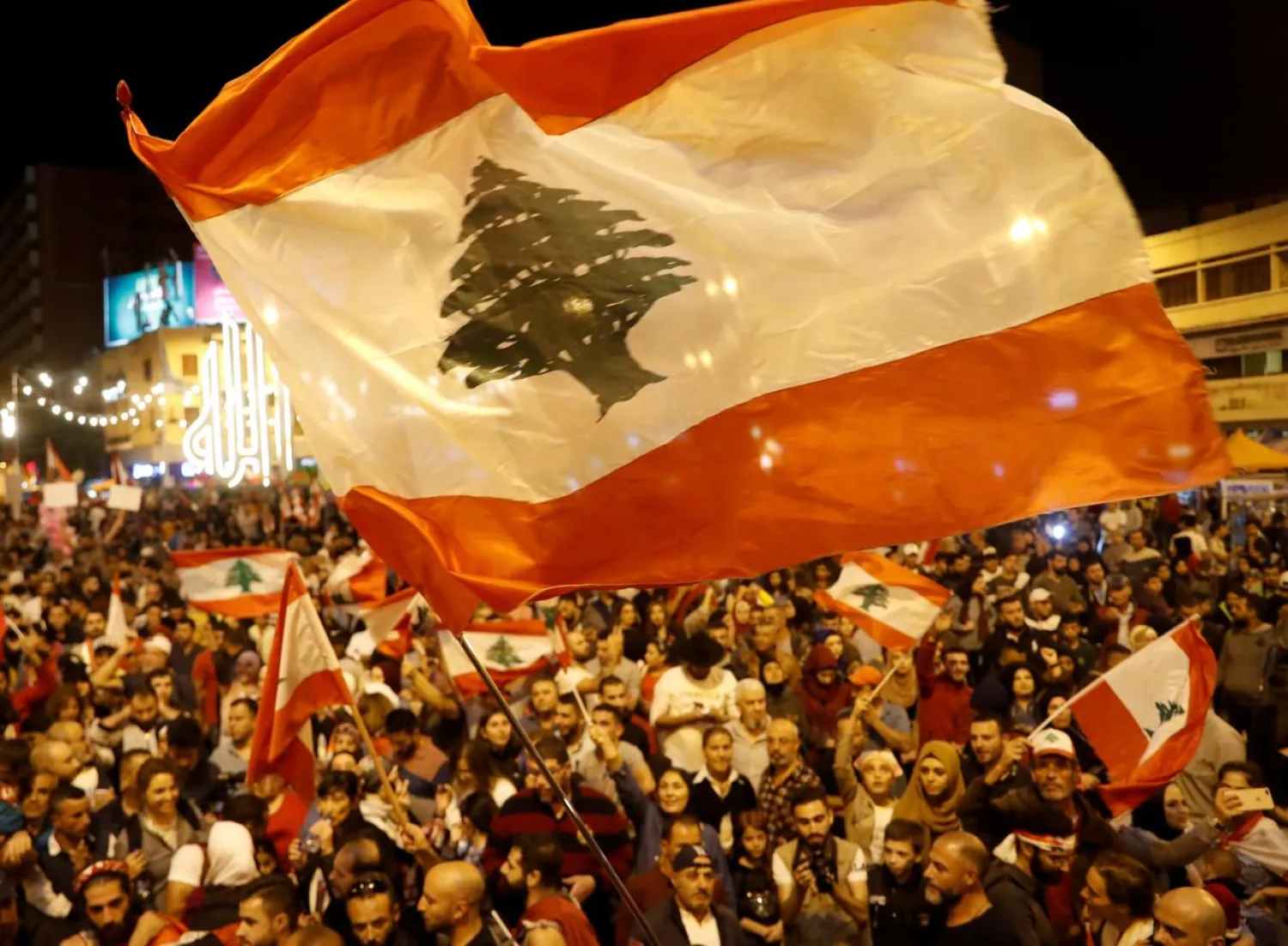
Demonstrators wave Lebanese flags during a protest in Tripoli, Lebanon, November 2, 2019. (Reuters)
TT

Fuel Shortage, Price Hikes Squeeze Protest-Hit Lebanon

Demonstrators wave Lebanese flags during a protest in Tripoli, Lebanon, November 2, 2019. (Reuters)

A rationing of dollars by banks in protest-hit Lebanon sparked growing alarm on Saturday as some petrol pumps ran dry and grocery stores introduced fresh price hikes.

For two decades, the Lebanese pound has been pegged to the greenback and both currencies used interchangeably in daily life.

But banks have gradually been reducing access to dollars since the end of the summer, following fears of a shortage in central bank reserves.

Access was limited further this week after banks reopened for the first time since an unprecedented popular uprising hit the country on October 17.

On Saturday, several petrol stations stopped services as reserves ran out because of a shortage of dollars needed to pay for imports, a syndicate head said.

"The petrol stations that opened today are the ones that still have reserves. They will close down as soon as supply runs out," said Sami Brax, the head of the Syndicate of Gas Station Owners.

He said if officials do not facilitate access to dollars by Tuesday, "we will be forced to stop imports and close down all petrol stations."

His warning came a day after hospitals threatened to stop receiving patients because of a lack of dollars to pay for medical imports.

Current medical stocks in the country "will not last more than a month", hospital syndicate head Suleiman Haroun said.

Price hikes

Lebanon has seen an unprecedented popular uprising against everything from power cuts and poor social security to state corruption.

The government yielded to popular pressure and stepped down last month, with the World Bank urging the quick formation of a new cabinet to prevent the economy from further deteriorating.

But the country seemed to plunge deeper into economic crisis after banks reopened this week and further limited dollar supply.

They halted all ATM withdrawals in dollars, introduced an additional charge on dollar withdrawals made at banks, and severely restricted conversions from Lebanese pounds.

This has forced many people to resort to the black market where they are charged higher exchange rates, in what amounts to the de-facto devaluation of the local currency.

The official exchange rate has remained fixed at 1,507 Lebanese pounds to the dollar, but the rate in the parallel market has surpassed 1,800.

According to Zouhair Berro, the head of the Lebanese Consumers Association, the dollar shortage is leading to price hikes, especially for meat, vegetables and dairy.

He said that suppliers are demanding payment in dollars.

Economist Naseeb Gharbeel said that banks are being put "under pressure" due to a large demand for dollars from Lebanese inside the country and abroad.

'Guarantee a future'

President Michel Aoun met central bank governor Riad Salameh and representatives from the Lebanese Association of Banks on Saturday to discuss the situation, according to the state-run National News Agency.

The meeting came as hundreds took part in student-led demonstrations across the country to pressure the government into meeting their demands.

The rallies have gained new momentum after pupils and university students boycotted lessons in recent days to spearhead the street movement.

“We want to guarantee a future for ourselves," said Mohammad, an 18-year-old high-school student.

"I shouldn't be forced to leave the country after I graduate to find a job," he said from a protest square in central Beirut.

"The current political class is not capable of providing this."

Even before protests erupted last month, growth in Lebanon had stalled following repeated political deadlocks in recent years, compounded by the war in Syria.

Public debt stood at more than $86 billion, over 150 percent of gross domestic product, according to the finance ministry.

Moody's ratings agency this week downgraded Lebanon's sovereign debt, saying the anti-government protests had hit investor confidence and threatened economic stability.

The World Bank had forecast a contraction of 0.2 percent before the turmoil, but has said that it now expects Lebanon's recession "to be even more significant".

Without quick steps to address the crisis, about half of Lebanon's population could fall into poverty and unemployment could "rise sharply", the lender said.
Rescue Teams Search for Survivors in Building Collapse that Killed at Least 2 in Northern Lebanon

A Lebanese flag is pictured, in the aftermath of a massive explosion, in Beirut's damaged port area, Lebanon August 17, 2020. REUTERS/Hannah McKay
TT

Rescue Teams Search for Survivors in Building Collapse that Killed at Least 2 in Northern Lebanon

A Lebanese flag is pictured, in the aftermath of a massive explosion, in Beirut's damaged port area, Lebanon August 17, 2020. REUTERS/Hannah McKay

At least two people were killed and four rescued from the rubble of a multistory apartment building that collapsed Sunday in the city of Tripoli in northern Lebanon, state media reported.

Rescue teams were continuing to dig through the rubble. It was not immediately clear how many people were in the building when it fell.

The bodies pulled out were of a child and a woman, the state-run National News Agency reported.

Dozens of people crowded around the site of the crater left by the collapsed building, with some shooting in the air.

The building was in the neighborhood of Bab Tabbaneh, one of the poorest areas in Lebanon’s second largest city, where residents have long complained of government neglect and shoddy infrastructure. Building collapses are not uncommon in Tripoli due to poor building standards, according to The AP news.

Lebanon’s Health Ministry announced that those injured in the collapse would receive treatment at the state’s expense.

The national syndicate for property owners in a statement called the collapse the result of “blatant negligence and shortcomings of the Lebanese state toward the safety of citizens and their housing security,” and said it is “not an isolated incident.”

The syndicate called for the government to launch a comprehensive national survey of buildings at risk of collapse.


Israel to Take More West Bank Powers and Relax Settler Land Buys

A view of Israeli settlement of Maale Adumim, in the West Bank, Sunday, June 18, 2023. (AP)
TT

Israel to Take More West Bank Powers and Relax Settler Land Buys

A view of Israeli settlement of Maale Adumim, in the West Bank, Sunday, June 18, 2023. (AP)

Israel's security cabinet approved a series of steps on Sunday that would make it easier for settlers in the occupied West Bank to buy land while granting Israeli authorities more enforcement powers over Palestinians, Israeli media reported.

The West Bank is among the territories that the Palestinians seek for a future independent state. Much of it is under Israeli military control, with limited Palestinian self-rule in some areas run by the Western-backed Palestinian Authority (PA).

Citing statements by Finance Minister Bezalel Smotrich and Defense Minister Israel Katz, Israeli news sites Ynet and Haaretz said the measures included scrapping decades-old regulations that prevent Jewish private citizens buying land in the West Bank, The AP news reported.

They were also reported to include allowing Israeli authorities to administer some religious sites, and expand supervision and enforcement in areas under PA administration in matters of environmental hazards, water offences and damage to archaeological sites.

Palestinian President Mahmoud Abbas said the new measures were dangerous, illegal and tantamount to de-facto annexation.

The Israeli ministers did not immediately respond to requests for comment.

The new measures come three days before Prime Minister Benjamin Netanyahu is scheduled to meet in Washington with US President Donald Trump.

Trump has ruled out Israeli annexation of the West Bank but his administration has not sought to curb Israel's accelerated settlement building, which the Palestinians say denies them a potential state by eating away at its territory.

Netanyahu, who is facing an election later this year, deems the establishment of any Palestinian state a security threat.

His ruling coalition includes many pro-settler members who want Israel to annex the West Bank, land captured in the 1967 Middle East war to which Israel cites biblical and historical ties.

The United Nations' highest court said in a non-binding advisory opinion in 2024 that Israel's occupation of Palestinian territories and settlements there is illegal and should be ended as soon as possible. Israel disputes this view.


Arab League Condemns Attack on Aid Convoys in Sudan

A general view shows the opening session of the meeting of Arab foreign ministers at the Arab League Headquarters (Reuters)
TT

Arab League Condemns Attack on Aid Convoys in Sudan

A general view shows the opening session of the meeting of Arab foreign ministers at the Arab League Headquarters (Reuters)

Arab League Secretary-General Ahmed Aboul Gheit strongly condemned the attack by the Rapid Support Forces on humanitarian aid convoys and relief workers in North Kordofan State, Sudan.

In a statement reported by SPA, secretary-general's spokesperson Jamal Rushdi quoted Aboul Gheit as saying the attack constitutes a war crime under international humanitarian law, which prohibits the deliberate targeting of civilians and depriving them of their means of survival.

Aboul Gheit stressed the need to hold those responsible accountable, end impunity, and ensure the full protection of civilians, humanitarian workers, and relief facilities in Sudan.
