

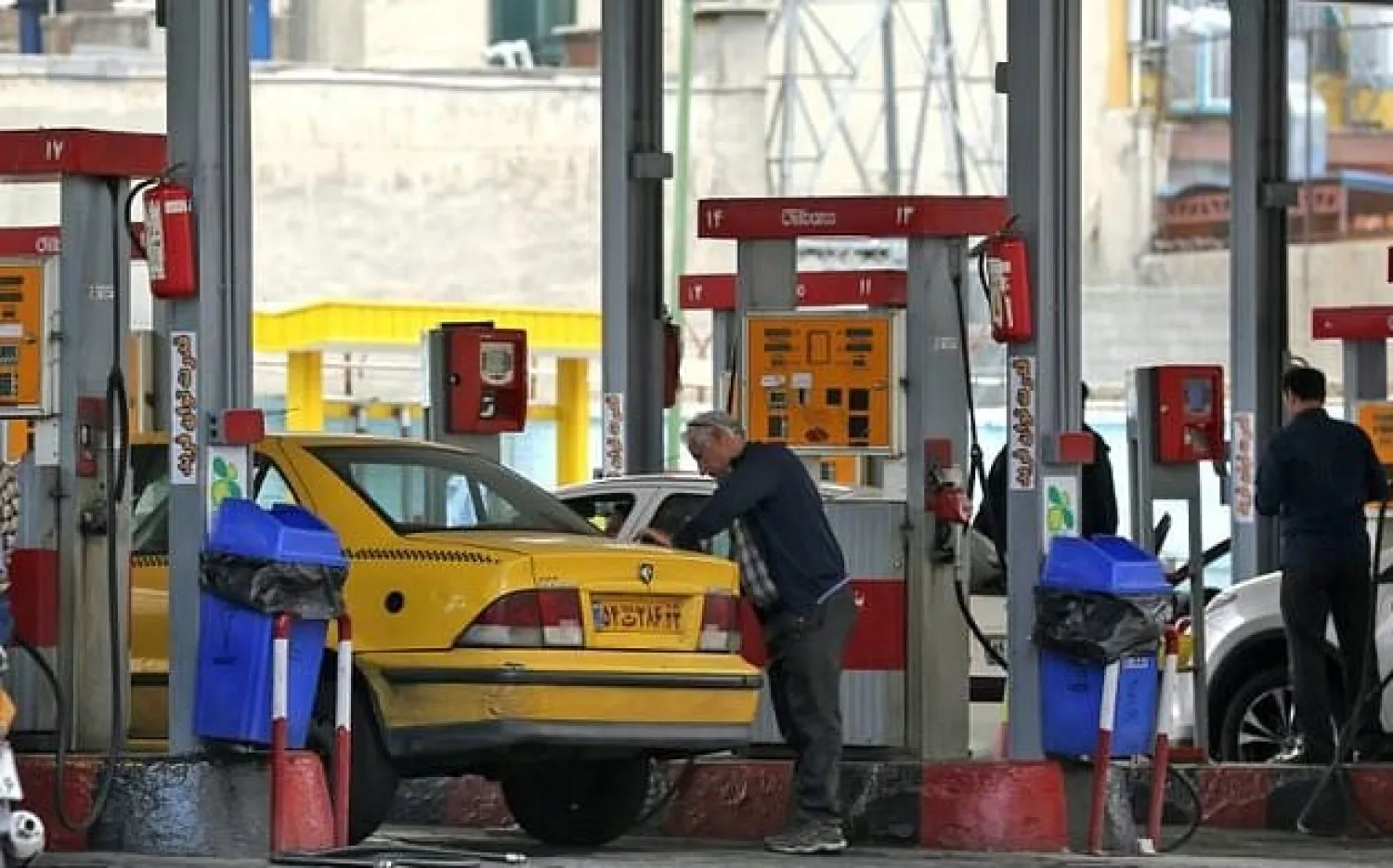

Iran Moves on Ultra-Cheap Petrol, Starts Rationing

Iranian drivers fill their tanks at a petrol station in the capital Tehran. AFP
TT

Iran Moves on Ultra-Cheap Petrol, Starts Rationing

Iranian drivers fill their tanks at a petrol station in the capital Tehran. AFP

Iran imposed petrol rationing and raised pump prices by at least 50 percent Friday, saying the move aims to help the needy with cash handouts and is not due to a budget deficit.

"Increasing petrol prices is to the people's benefit and also to help the society's strata under (economic) pressure," President Hassan Rouhani told a cabinet meeting, quoted by state news agency IRNA.

"No one should imagine that the government has done this because it is economically struggling; not at all, not a rial of this will go to the treasury," he added, AFP reported.

Each driver with a fuel card will now have to pay 15,000 rials (13 US cents) per litre for the first 60 litres of petrol bought each month, said the state-run National Iranian Oil Products Distribution Company.

Each additional litre will be charged at 30,000 rials.

Fuel cards were first introduced in 2007 with a view to reforming the subsidies system and curbing large-scale smuggling.

Iran's economy has been battered ever since US President Donald Trump withdrew from the 2015 nuclear agreement between world powers and Iran and reimposed punishing unilateral sanctions.

The rial has plummeted in value against the US dollar, inflation is now running at more than 40 percent and the International Monetary Fund projects that the troubled economy will contract by nine percent this year and stagnate in 2020.

- 'Under pressure' -

According to Rouhani, currently "75 percent of the country are under pressure" and the extra revenues from the price hike are going to be used to help about 60 million Iranians in need.

Payments will start "within the next week or 10 days", the head of Iran's Planning and Budget Organisation, Mohammad Bagher Nobakht, told state television.

The handouts will range from 550,000 rials ($4.68 based on latest open market prices) for couples to slightly more than 2 million rials ($17.46) for families with five members or more.

Ulta-low petrol prices have led to high consumption, with Iran's 80-million population buying an average of 90 million litres per day, according to IRNA.

They have also fuelled high levels of smuggling -- estimated at around 10 to 20 million litres per day, IRNA said.

Smuggling has intensified due to the rial's drastic drop in value, according to AFP.

Rouhani said in his speech that he had rejected calls by some in government to raise prices to regional levels to prevent smuggling, since it would increase inflation.

Iran's energy consumption is too high and can be countered through "changing the culture and manufacturing good cars", he said.

Efforts to modernise Iran's ageing and highly polluting cars have been hampered by a lack of investment, and foreign companies such as Peugeot and Renault were again forced to withdraw this year by the return of US sanctions.



US Forces Lift Blockade of Iran Ports

Iranians walk past a billboard at Enqelab square in Tehran, Iran, 18 June 2026. EPA/ABEDIN TAHERKENAREH
TT

US Forces Lift Blockade of Iran Ports

Iranians walk past a billboard at Enqelab square in Tehran, Iran, 18 June 2026. EPA/ABEDIN TAHERKENAREH

American forces on Thursday lifted their naval blockade of Iranian ports after more than two months of preventing ships from sailing from or to Iran, the US military said.

"Today, US forces lifted the blockade on all maritime traffic entering and exiting Iranian ports and coastal areas," US Central Command said in a post on X, adding that American warships "will remain in the general area to make sure that all aspects of the agreement are adhered to."

The move came after US President Donald Trump signed a deal to end the conflict.

The signing of the deal by Trump and Iranian President Masoud Pezeshkian set in motion a 60-day period for talks on wider issues between the two foes, including the Iranian nuclear program.

The US military, which had enforced its own blockade after Iran shut the Strait at the start of the war, has allowed at least 12 ships to pass through, Vice President JD Vance said.

Before the war, the strait saw around 120 transits per day, according to the shipping journal Lloyd's List.

Vance said he planned to go to Switzerland for "technical negotiations" with Iran "this weekend" rather than Friday, but emphasized that the plan "could change.”

In Iran, the Tasnim agency said "nothing has been confirmed" about the Iranian delegation's trip to Switzerland.


IOM Chief: Foreign Aid Cuts Push Up Migrant Flows

Men push a stuck cart toward Sudan at the Adre border post on June 8, 2026. (Photo by Joris Bolomey / AFP)
TT

IOM Chief: Foreign Aid Cuts Push Up Migrant Flows

Men push a stuck cart toward Sudan at the Adre border post on June 8, 2026. (Photo by Joris Bolomey / AFP)

Cuts in development aid by wealthy countries tend to drive up displacement away from the world's poorest regions, the head of the UN's International Organization for Migration warned in an interview with AFP on Thursday.

"When we see cuts in development assistance, we're actually just making the likelihood that people will have to leave in search of safety, in search of stability, so much higher," Amy Pope said.

"We've seen it in places like Sudan, which is the world's largest displacement crisis as a result of the war there," she added.

"With decreasing support for humanitarian assistance, we then see more Sudanese look for safety, look for opportunity further afield."

Several rich Western countries -- particularly the United States but also many European nations -- have cut their development aid budgets in recent years, while also tightening migration policies and strengthening border controls.

Pope was speaking on the sidelines of the Berlin Climate Mobility Forum.

"In order to respond to domestic political pressures", many countries are making "short-term decisions... that may not ultimately serve (them) in the long term", he said.

"The more we can connect assistance to the movement of people in ways that are humane and dignified, ways that give people agency and opportunity, the less likely we're going to see large patterns of movement," she said.

Shortly after entering the White House for a second time, US President Donald Trump cut 83 percent of the programs run by USAID. Before the cuts, the US development agency managed some 42 percent of global government humanitarian aid.

Germany has slashed its development budget under successive governments to just over 10 billion euros this year from nearly 14 billion in 2022.

Climate change is having an "enormous impact on migration around the world", Pope said.

Small Pacific island states such as Tuvalu are threatened by rising sea levels, while some 10 million people are estimated to have been displaced because of storms in the Philippines, the IOM chief said.

Several regions of Africa have been affected by prolonged drought.

Pope called on policymakers in the wealthiest countries, which bear the greatest responsibility for climate change, to offer more help for people forced to leave their homes.

"What are they willing to invest now to ensure more stability, more options, less likely occurrence of unplanned migration in the future?" she said.

"Let's not wait for the emergency... Let's make the investments now."

Contrary to the narratives being pushed by some political leaders about migration, most displacement happens within countries rather than across borders, Pope said.

By mid-2024 there were an estimated 304 million international migrants, according to the IOM, and more than 700 million internal migrants worldwide.

"In the first instance, people will stay in their country. They will go somewhere in their country if they can find resources or safety. Then they move in the neighboring countries," Pope said.

Providing support within the countries most affected "actually is a lot less expensive... and will have a more stabilizing effect", she added.

"Really, as policymakers, we should be looking at the issue in terms of where can we provide the most support in a way that saves the most lives."


Zelenskiy Says 'Moscow will Burn' if Russian Strikes Continue

Ukrayna Devlet Başkanı Volodimir Zelenskiy (EPA)
TT

Zelenskiy Says 'Moscow will Burn' if Russian Strikes Continue

Ukrayna Devlet Başkanı Volodimir Zelenskiy (EPA)

Ukrainian President Volodymyr Zelenskiy said on Thursday heavy drone attacks on Russia were retaliation for a strike that damaged a historic monastery in Kyiv this week, and that "Moscow will burn" if attacks continue.

Scores of drones targeted Moscow overnight, hitting the Russian capital's oil refinery for the second time this week.

"We don't want this war, we never did, and everyone knows it, and our partners know it," Zelenskiy said in a voice message sent to reporters on a WhatsApp group. "But if Ukraine burns, your Moscow will burn."

At least 10 people were killed on Monday across Ukraine in a drone and missile attack that damaged the 1,000-year-old Kyiv Pechersk Lavra monastery, Reuters reported.

Zelenskiy was due to attend a meeting of Ukraine's military allies in Brussels on Thursday. He said the supply of air defences to Ukraine through a NATO programme and the creation of an anti-ballistic missile system by Ukraine and its allies would be discussed at the meeting.

Zelenskiy called on Europe and the United states to increase pressure on Russia through sanctions on Russia's defence and energy sectors and broader economy to force President Vladimir Putin into ending the war.

"Everyone need to put pressure on Putin: Ukrainians, absolutely all the Europeans, Americans, and Russians - it's time to sober up and put pressure on their leader."