Half a Million ‘Arbitrarily’ Sacked Civil Servants to Sue Sudan’s Bashir

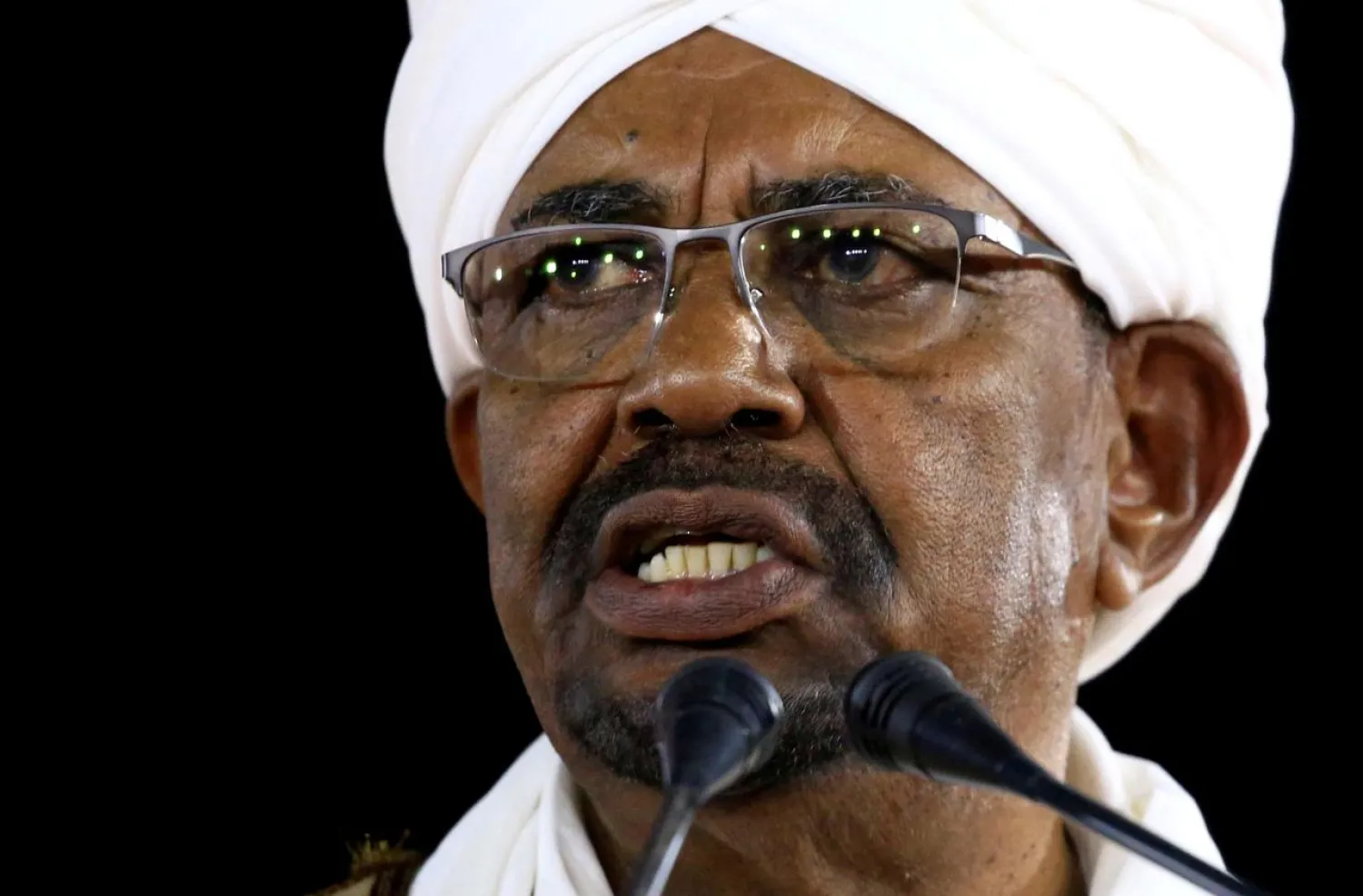
FILE PHOTO: Bashir delivers a speech at the Presidential Palace in Khartoum, Sudan February 22, 2019. REUTERS/Mohamed Nureldin Abdallah/File Photo
TT

Half a Million ‘Arbitrarily’ Sacked Civil Servants to Sue Sudan’s Bashir

FILE PHOTO: Bashir delivers a speech at the Presidential Palace in Khartoum, Sudan February 22, 2019. REUTERS/Mohamed Nureldin Abdallah/File Photo

More than half a million Sudanese, both civilian and military, are preparing to sue ousted president Omar al-Bashir for arbitrarily sacking them to empower Islamists during his rule.

A specialized committee put together for the arbitrarily dismissed, in a press conference held in Khartoum, said it documented 600,000 civilians and military cases.

Hundreds of thousands were laid off work by the National Islamic Front, Sudan’s re-branded Muslim Brotherhood, after it took over control of the African country in 1989.

The military coup occurred in Sudan on June 30, 1989 against the democratically-elected government of Prime Minister Sadiq al-Mahdi and President Ahmed al-Mirghani. The coup was led by Bashir who took power in its aftermath and would go on to rule the country for the next 30 years until he was overthrown in 2019.

Under Bashir, loyalists were hired in order to form a deep state strong enough to back the Islamists in the country.

In October, the transitional council of ministers issued a resolution establishing a committee to “consider the cases of the arbitrarily dismissed members of the civil service from June 1989 to December 2018.”

The committee has voiced its intentions to sue Bashir and a number of officials from his administration.

Since 1993, the US State Department has designated Sudan as a state sponsor of terrorism over Khartoum hosting al-Qaeda leader Osama bin Laden and later being involved in terrorist operations against US assets.

Sudanese Prime Minister Abdalla Hamdok is expected to leave for Washington in early December for talks with US officials, including President Donald Trump, on joint issues, in addition to removing Sudan from the list of state sponsors of terrorism.


Arab League Chief Pushes for Concrete Support for Lebanon

Lebanese President Joseph Aoun welcomes Arab League Secretary-General Nabil Fahmy (Lebanese Presidency)
TT

Arab League Chief Pushes for Concrete Support for Lebanon

Lebanese President Joseph Aoun welcomes Arab League Secretary-General Nabil Fahmy (Lebanese Presidency)

Arab League Secretary-General Nabil Fahmy has called for concrete political and financial support for Lebanon, as Lebanese leaders pressed for a diplomatic solution, Israel’s withdrawal and reconstruction.

“Lebanon is among the Arab League’s priorities, and among my own priorities as its secretary-general,” he said on Monday during a visit to Beirut that included meetings with President Joseph Aoun, Parliament Speaker Nabih Berri and Prime Minister Nawaf Salam.

Meeting the Arab League chief, Aoun accused Israel of failing to comply with the agreed framework and continuing its violations in South Lebanon, saying such actions only strengthened Lebanese determination to defend their land and rights.

He reaffirmed Lebanon’s commitment to diplomacy despite its difficulties, describing it as far less costly than a devastating war.

Declaring that it was time for Lebanon to enjoy some respite, Aoun welcomed Arab efforts to help the country overcome its challenges and stressed the importance of dialogue and negotiations.

The secretary-general said his visit followed a decision by Arab foreign ministers reaffirming support for Lebanon’s sovereignty, institutions and citizens.

He called for tangible financial and practical assistance that would strengthen state institutions and directly benefit the population, pledging to intensify contacts with Arab and Western governments.

Asked about the risk of a wider regional war, Fahmy denied conveying specific warnings to Aoun but acknowledged discussing the dangers posed by multiple conflicts and the possibility of a broader escalation.

He also reaffirmed the Arab League’s support for ending Israeli occupation and preserving Lebanon’s stability, stressing that each country had the right to determine its negotiating approach when asked about US-sponsored Lebanese-Israeli talks.

In talks with Berri, the Arab League chief reviewed regional developments and continued Israeli attacks, pledging to pursue diplomatic initiatives to secure assistance for Lebanese institutions and citizens.

The two also discussed the future of the United Nations Interim Force in Lebanon (UNIFIL), whose planned departure has raised concerns over a security vacuum.

The secretary-general said the Arab League opposed ending the mission, arguing that a continued UN presence offered the strongest framework for international oversight and accountability. Any alternative, he stressed, would require Lebanese agreement and a clear international legal mandate.

Salam urged continued Arab efforts to secure Israel’s complete withdrawal from Lebanese territory and extend state authority nationwide through its own forces.

He also urged support for recovery and reconstruction to help residents remain in their communities and strengthen state institutions.

The prime minister encouraged Arab investment in infrastructure and regional connectivity projects to stimulate growth and deepen Lebanon’s integration with its Arab neighbors.

Fahmy announced plans to visit South Lebanon to assess conditions firsthand and help shape further diplomatic engagement with Arab governments and international partners.

The visit would support efforts to secure political and financial assistance for Lebanese institutions, including the army.

He said the trip would allow him to return to Cairo with a clearer assessment of Lebanon’s needs, paving the way for follow-up on Arab commitments and closer coordination of political and financial support.


Jordan, Iraq Stress Importance of Implementing Basra-Aqaba Oil Pipeline Project

A view of the Shuaiba oil refinery southwest of Basra, Iraq (Reuters)
TT

Jordan, Iraq Stress Importance of Implementing Basra-Aqaba Oil Pipeline Project

A view of the Shuaiba oil refinery southwest of Basra, Iraq (Reuters)

Jordan’s King Abdullah II and Iraqi President Nizar Amidi have stressed the need to proceed with implementation of the Basra-Aqaba oil pipeline project, in service of the two countries and their peoples.

The king received a phone call from Amidi on Monday, during which they discussed the deep-rooted ties between Jordan and Iraq, as well as ways to enhance cooperation across various sectors.

The pipeline project, which has been stalled for years, would allow oil to be transported from Basra, on the Arabian Gulf coast, to the port of Aqaba in southern Jordan, bypassing the export route through the Strait of Hormuz.

Iraqi Parliament Speaker Haibat al-Halbousi described the project during a visit to Amman on June 7 as a “strategic option” for Iraq amid restrictions on oil exports through the strait.

The two countries signed a framework agreement in April 2012 to build a 1,700-kilometer pipeline with a capacity to transport one million barrels of oil per day. However, the project, whose cost is estimated at around $18 billion, has yet to be implemented.

The pipeline is expected to provide Jordan with about 150,000 barrels of crude oil per day. The project also includes the construction of storage facilities with a capacity of seven million barrels, as well as an oil export terminal.

Iraq has lost around $60 billion during the Middle East war, Foreign Minister Fuad Hussein said last week.

Iraq was producing about four million barrels of oil per day before the conflict, exporting about 3.5 million bpd -- mostly shipped from the country's south via the strait.

Iraq's foreign currency reserves have shrunk by 20 billion dollars and consumer prices have risen sharply.


West Bank on Verge of ‘Explosion’, Says Senior Palestinian Official

Israeli soldiers take positions during an army raid in the Rafidia area of Nablus, West Bank, 19 October 2026. (EPA)
TT

West Bank on Verge of ‘Explosion’, Says Senior Palestinian Official

Israeli soldiers take positions during an army raid in the Rafidia area of Nablus, West Bank, 19 October 2026. (EPA)

Israeli settler attacks risk setting off an "explosion" in the occupied West Bank, a senior Palestinian leader told AFP, while urging that the response remain peaceful.

Jibril Rajoub, the secretary general of the central committee of the Palestinian Authority's ruling Fatah faction, said he called for "peaceful confrontation" as he took part in meetings in Cairo with other Palestinian movements including Gaza-based rival Hamas, which led the October 7, 2023 attacks against Israel.

"The terrorism carried out by the army and settlers, under the supervision of the Israeli government... is a prelude to a coming reaction and explosion," Rajoub told AFP in Cairo.

But he said that a "peaceful, nonviolent struggle is a necessity and a strategic choice for all Palestinians".

"Bloodshed is no longer an acceptable option," he said, calling for "peaceful confrontation with the occupation, despite the crimes it commits".

Settlers have carried out daily physical attacks, thefts and other attacks against Palestinians, with the violence intensifying in the run-up to October 27 elections, in which Prime Minister Benjamin Netanyahu, governing with the fiercely pro-settlement far-right, is seeking a new mandate.

Violence has picked up as extremist settlers seek to stop the Palestinian olive harvest, an annual season with cultural resonance for the community.

More than 500,000 Israelis live in West Bank settlements, which are considered illegal under international law, surrounded by around three million Palestinians.

The talks in Cairo came after Palestinian leader Mahmoud Abbas, who has ruled since 2005, delayed elections slated to start next month until September 2027.

Rajoub said the talks called for "unified political representation" with the principle of a "single authority" and "only one legitimate armed force".

Hamas took over Gaza in 2007, dividing the two Palestinian territories. Israel has vowed to obliterate Hamas after the October 7, 2023 attack, the deadliest day in Israel's history. The Hamas attack resulted in 1,221 deaths.

At least 1,125 Palestinians have died in the West Bank since October 2023, mostly by the Israeli military, according to an AFP tally based on Palestinian health ministry figures.

Settler attacks have killed 23 Palestinians in that timeframe, according to the United Nations.

Palestinian attacks have killed at least 49 Israelis in the same period, according to Israeli figures.

In Gaza, the Israeli offensive has killed 74,459 Palestinians since October 2023, according to figures under the health ministry run under Hamas. The United Nations generally considers the figures reliable.