


Intelligence Leaks Reveal How Iran Gained Influence over Iraq

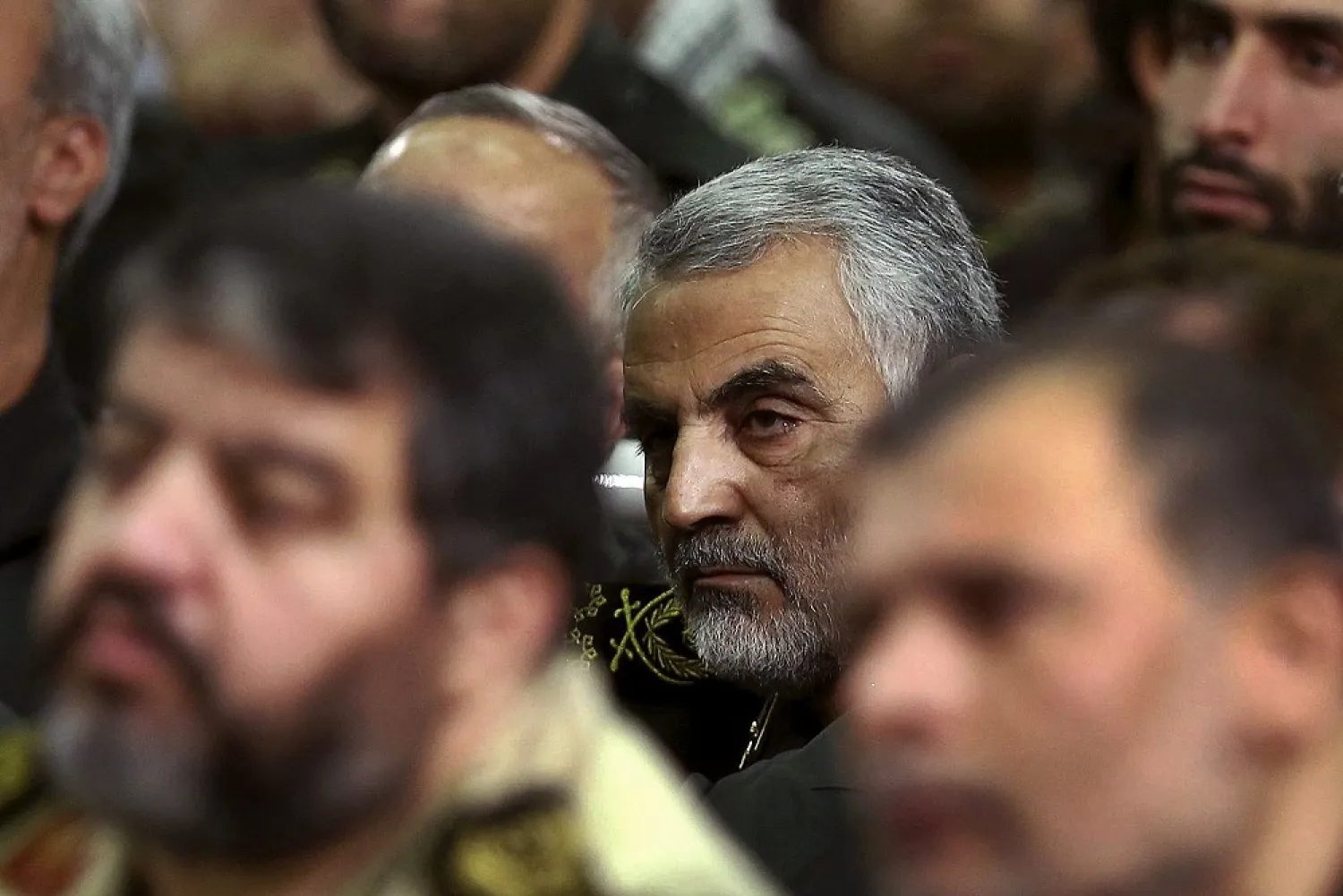
Iranian Quds Force commander Qasem Soleiman. (AP)
TT

Intelligence Leaks Reveal How Iran Gained Influence over Iraq

Iranian Quds Force commander Qasem Soleiman. (AP)

Hundreds of pages of Iranian intelligence documents detailing how Iran managed to gain influence over neighboring Iraq have been leaked.

Obtained by The New York Times and The Intercept, the 700 pages of Iranian intelligence cables show Tehran’s efforts to embed itself in Iraq, including the role Iranian spies played in appointing Iraqi officials.

Dating between 2014 and 2015, they revealed that Iraqi Prime Minister Adel Abdul Mahdi shared a “special relationship” with Tehran when he served as oil minister in 2014. The exact nature of that relationship is not detailed in the cable.

“No Iraqi politician can become prime minister without Iran’s blessing, and Abdul Mahdi, when he secured the premiership in 2018, was seen as a compromise candidate acceptable to both Iran and the United States,” reported The Intercept.

Former PM Nouri al-Maliki, meanwhile, spent more than two decades in exile in Syria and Iran. He was a favorite of Tehran’s and served as premier between 2006 and 2014. His replacement, the British-educated Haidar al-Abadi, was seen as more friendly to the West and less sectarian.

This did not worry the Iranians, because several ministers in Abadi’s government enjoyed close ties with Tehran.

For example, Ibrahim al-Jafari — who had previously served as Iraqi prime minister and by late 2014 was the foreign minister — was, like Abdul Mahdi, identified as having a “special relationship” with Iran. In an interview, Jafari did not deny that he had close relations with Iran, but said he had always dealt with foreign countries based on the interests of Iraq.

The transportation minister — Bayan Jabr, who had led the Iraqi Interior Ministry at a time when hundreds of prisoners were tortured to death with electric drills or summarily shot by death squads — was deemed to be “very close” to Iran. When it came to Iraq’s education minister, one cable said: “We will have no problem with him.”

The former ministers of municipalities, communications, and human rights were all members of the Badr Organization, a political and military group established by Iran in the 1980s to oppose Saddam Hussein.

The former minister of municipalities denied having a close relationship with Iran, while the former human rights minister did. The former minister of communications said that he served Iraq, not Iran, and that he maintained relationships with diplomats from many countries.

In fall 2014, Jabr, then the transportation minister, welcomed Qasem Soleimani, the Quds Force commander, to his office. Soleimani had come to ask a favor: Iran needed access to Iraqi airspace to fly planeloads of weapons and other supplies to support the Syrian regime of Bashar Assad in its fight against opposition factions.

Jabr agreed.

Jabr confirmed the meeting with Soleimani, but said the flights from Iran to Syria carried humanitarian supplies and religious pilgrims traveling to Syria to visit holy sites, not weapons and military supplies to aid Assad as American officials believed.

Meanwhile, the administration of Barack Obama believed that Maliki’s “draconian policies and crackdowns on Iraqi Sunnis had helped lead to the rise of the ISIS group,” reported The Intercept.

“In Iraq, Lebanon, and Syria, which Iran considers crucial to its national security, the Revolutionary Guards — and in particular its Quds Force, led by Soleimani — determines Iran’s policies.

“Ambassadors to those countries are appointed from the senior ranks of the Guards, not the foreign ministry, which oversees the intelligence ministry, according to several advisers to current and past Iranian administrations.”

According to the reports, after the American troop withdrawal in 2011, Iran moved quickly to add former CIA informants to its payroll. One undated section of an intelligence ministry cable shows that Iran began the process of recruiting a spy inside the State Department.

The State Department official is not named in the cable, but the person is described as someone who would be able to provide “intelligence insights into the US government’s plans in Iraq, whether it is for dealing with ISIS or any other covert operations.”

In interviews, Iranian officials acknowledged that Iran viewed surveillance of American activity in Iraq after the United States invasion as critical to its survival and national security.

When reached by telephone by The Intercept, Hassan Danaiefar, Iran’s ambassador to Iraq from 2010 to 2017 and a former deputy commander of the Revolutionary Guards’ naval forces, declined to directly address the existence of the cables or their release, but he did suggest that Iran had the upper hand in information gathering in Iraq.

“Yes, we have a lot of information from Iraq on multiple issues, especially about what America was doing there,” he said.

The cables also tackled the 2014 massacre of Sunnis in the farming community of Jurf al-Sakhar. It was a vivid example of the kinds of sectarian atrocities committed by armed groups loyal to Iran’s Quds Force.

Jurf al-Sakhar, which lies just east of Fallujah in the Euphrates River Valley, is lush with orange trees and palm groves. It was overrun by the ISIS in 2014, giving militants a foothold from which they could launch attacks on the cities of Karbala and Najaf.

When militias supported by Iran drove the militants out of Jurf al-Sakhar in late 2014, the first major victory over ISIS, it became a ghost town. Tens of thousands were displaced, and a local politician, the only Sunni member on the provincial council, was found with a bullet hole through his head.

Rescue Teams Search for Survivors in Building Collapse that Killed at Least 2 in Northern Lebanon

A Lebanese flag is pictured, in the aftermath of a massive explosion, in Beirut's damaged port area, Lebanon August 17, 2020. REUTERS/Hannah McKay
TT

Rescue Teams Search for Survivors in Building Collapse that Killed at Least 2 in Northern Lebanon

A Lebanese flag is pictured, in the aftermath of a massive explosion, in Beirut's damaged port area, Lebanon August 17, 2020. REUTERS/Hannah McKay

At least two people were killed and four rescued from the rubble of a multistory apartment building that collapsed Sunday in the city of Tripoli in northern Lebanon, state media reported.

Rescue teams were continuing to dig through the rubble. It was not immediately clear how many people were in the building when it fell.

The bodies pulled out were of a child and a woman, the state-run National News Agency reported.

Dozens of people crowded around the site of the crater left by the collapsed building, with some shooting in the air.

The building was in the neighborhood of Bab Tabbaneh, one of the poorest areas in Lebanon’s second largest city, where residents have long complained of government neglect and shoddy infrastructure. Building collapses are not uncommon in Tripoli due to poor building standards, according to The AP news.

Lebanon’s Health Ministry announced that those injured in the collapse would receive treatment at the state’s expense.

The national syndicate for property owners in a statement called the collapse the result of “blatant negligence and shortcomings of the Lebanese state toward the safety of citizens and their housing security,” and said it is “not an isolated incident.”

The syndicate called for the government to launch a comprehensive national survey of buildings at risk of collapse.


Israel to Take More West Bank Powers and Relax Settler Land Buys

A view of Israeli settlement of Maale Adumim, in the West Bank, Sunday, June 18, 2023. (AP)
TT

Israel to Take More West Bank Powers and Relax Settler Land Buys

A view of Israeli settlement of Maale Adumim, in the West Bank, Sunday, June 18, 2023. (AP)

Israel's security cabinet approved a series of steps on Sunday that would make it easier for settlers in the occupied West Bank to buy land while granting Israeli authorities more enforcement powers over Palestinians, Israeli media reported.

The West Bank is among the territories that the Palestinians seek for a future independent state. Much of it is under Israeli military control, with limited Palestinian self-rule in some areas run by the Western-backed Palestinian Authority (PA).

Citing statements by Finance Minister Bezalel Smotrich and Defense Minister Israel Katz, Israeli news sites Ynet and Haaretz said the measures included scrapping decades-old regulations that prevent Jewish private citizens buying land in the West Bank, The AP news reported.

They were also reported to include allowing Israeli authorities to administer some religious sites, and expand supervision and enforcement in areas under PA administration in matters of environmental hazards, water offences and damage to archaeological sites.

Palestinian President Mahmoud Abbas said the new measures were dangerous, illegal and tantamount to de-facto annexation.

The Israeli ministers did not immediately respond to requests for comment.

The new measures come three days before Prime Minister Benjamin Netanyahu is scheduled to meet in Washington with US President Donald Trump.

Trump has ruled out Israeli annexation of the West Bank but his administration has not sought to curb Israel's accelerated settlement building, which the Palestinians say denies them a potential state by eating away at its territory.

Netanyahu, who is facing an election later this year, deems the establishment of any Palestinian state a security threat.

His ruling coalition includes many pro-settler members who want Israel to annex the West Bank, land captured in the 1967 Middle East war to which Israel cites biblical and historical ties.

The United Nations' highest court said in a non-binding advisory opinion in 2024 that Israel's occupation of Palestinian territories and settlements there is illegal and should be ended as soon as possible. Israel disputes this view.


Arab League Condemns Attack on Aid Convoys in Sudan

A general view shows the opening session of the meeting of Arab foreign ministers at the Arab League Headquarters (Reuters)
TT

Arab League Condemns Attack on Aid Convoys in Sudan

A general view shows the opening session of the meeting of Arab foreign ministers at the Arab League Headquarters (Reuters)

Arab League Secretary-General Ahmed Aboul Gheit strongly condemned the attack by the Rapid Support Forces on humanitarian aid convoys and relief workers in North Kordofan State, Sudan.

In a statement reported by SPA, secretary-general's spokesperson Jamal Rushdi quoted Aboul Gheit as saying the attack constitutes a war crime under international humanitarian law, which prohibits the deliberate targeting of civilians and depriving them of their means of survival.

Aboul Gheit stressed the need to hold those responsible accountable, end impunity, and ensure the full protection of civilians, humanitarian workers, and relief facilities in Sudan.