


The Housing Market Needs More Than Low Mortgage Rates

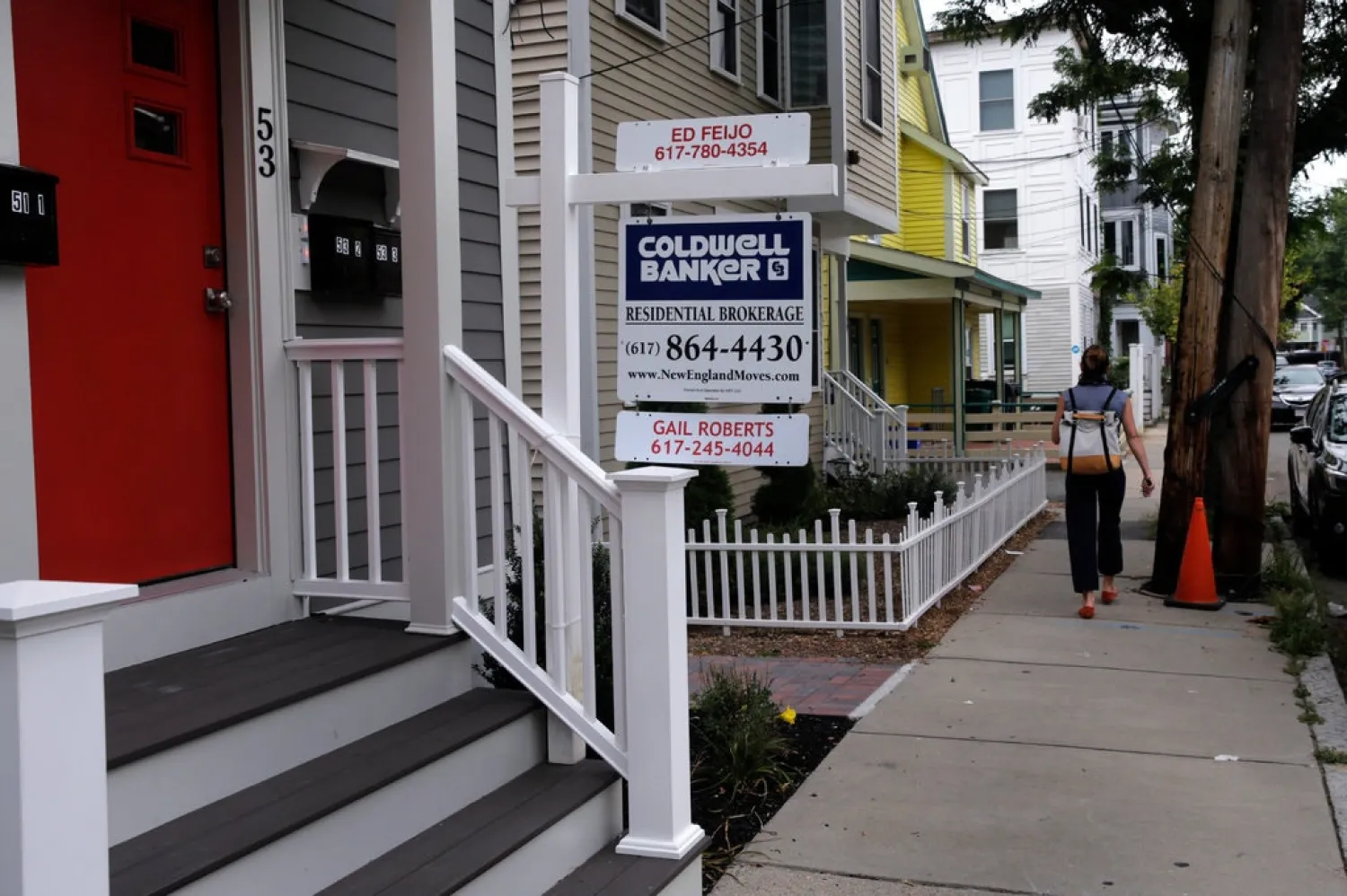
A home for sale in Cambridge, Mass. Housing prices have risen faster than wages in much of the country in recent years. AP
TT

The Housing Market Needs More Than Low Mortgage Rates

A home for sale in Cambridge, Mass. Housing prices have risen faster than wages in much of the country in recent years. AP

The Federal Reserve is hoping that its latest interest-rate cut will help keep the economy safely at cruising altitude. But don’t expect it to provide much of a lift to the housing market.

Housing is one of the pathways by which Fed policy produces results. When the central bank cuts interest rates, it encourages people to buy houses (since mortgages are cheaper) and builders to ramp up construction (since demand is strong and borrowing is easier). Those decisions then ripple through the economy, as people buy furniture, builders hire workers and brokers cash their commission checks.

But housing isn’t the engine it once was. The sector is a smaller part of the economy than before the financial crisis, and a smaller share of Americans are homeowners. And with rates already low, it isn’t clear that a further cut by the Fed will do much for housing — if it lowers mortgage rates at all. (More about that in a minute.)

Interest rates still matter for housing. The Fed’s first two rate cuts this year helped stabilize the housing market, which had been heading for a major slump. On Wednesday, the Commerce Department said that construction added to gross domestic product in the third quarter after six quarters of contraction. And lower rates could give another jolt to a refinancing boom that has injected billions of dollars into the economy in recent months.

But few economists expect the housing market to take off in response to this week’s rate cut, because rates aren’t what was holding back housing in the first place. Instead, they point to other factors.

Interest rates don’t matter if no one will give you a loan in the first place. And a lot of would-be buyers are in that situation.

After the housing bubble burst over a decade ago, banks and other financial institutions became far more cautious in their lending, partly because of new federal rules meant to discourage risky loans. No one wants a return of the bubble-era “liar loans,” for which borrowers were allowed to state their income without verification. But some argue that the pendulum has swung too far the other way.

The typical home buyer today has a FICO credit score of 741, compared with 700 before the housing crisis, according to data from the Urban Institute. Hardly any buyers have a score below 650. Other measures of affordability likewise show that lending standards have loosened a bit in recent years but remain tighter than in the early 2000s, before the subprime lending boom.

“There are a lot of people that have the income to afford their payments, they could be responsible homeowners, but they may have a lower FICO score, they may have a smaller down payment, and that really holds them back,” said Melissa Stegman, a lawyer at the Center for Responsible Lending, an advocacy group.

Jewell Handy has a steady income as a teacher, money for a down payment and even a history of successful homeownership. But when she decided to buy a house for herself and her mother in Houston this summer, she discovered that she couldn’t get a conventional mortgage. The reason: a credit score in the mid-600s because of an old issue with a student loan.

Ms. Handy eventually got approval for a more expensive loan through the Federal Housing Administration. But with a week left before the sale is scheduled to close, she is still fielding paperwork requests from her lender, and she isn’t sure the loan will go through.

“They’re somehow not confident in my finances, but I don’t really understand why,” she said.

Tight lending standards disproportionately affect African-Americans like Ms. Handy. Black workers earn less on average than white workers, and they are less likely to have well-to-do family members who can help with a down payment. The homeownership rate among black Americans tumbled during the housing market’s collapse and has barely recovered, even as whites and other racial groups have made progress.

Glenn Kelman, chief executive of the online brokerage Redfin, said the combination of low interest rates and tight lending standards was exacerbating existing economic divides.

“Right now, money’s really cheap, but you have to have a good credit score to be able to access it,” he said. “It’s been a bonanza for one group of people, the people who have always been able to get credit.”

It’s hard to find a house to buy (at least one you can afford).

Housing prices have risen faster than wages in much of the country in recent years. And many cities, particularly on the coasts, are in the midst of a full-blown affordability crisis. In cities like San Francisco, Seattle and Boston, the median price of a home listed for sale is well over half a million dollars, according to the real estate site Zillow, and even starter homes can top $300,000 — if there are any available.

At those prices, a modest dip in interest rates will hardly make a difference, said Susan M. Wachter, a professor of real estate at the University of Pennsylvania.

“This interest-rate decline will not do it — it will not turn these potential owners into buyers,” she said.



Aljadaan: Emerging Markets Account for 70% of Global Growth

Al-Jadaan speaking to the attendees at the "AlUla Conference for Emerging Market Economies" (Asharq Al-Awsat
TT

Aljadaan: Emerging Markets Account for 70% of Global Growth

Al-Jadaan speaking to the attendees at the "AlUla Conference for Emerging Market Economies" (Asharq Al-Awsat

Saudi Minister of Finance Mohammed Aljadaan stressed Sunday that the world economy is going through a “profound transition,” saying emerging markets and developing economies now account for nearly 60 percent of the global Gross Domestic Product (GDP) in purchasing power terms and over 70 percent of global growth.

In his opening remarks at the AlUla Conference for Emerging Market Economies, organized by the Saudi Ministry of Finance and the IMF in AlUla, the minister said these economies have become an increasingly important driver of global growth with their share of global economy more than doubling since 2010.

“Today, the 10 emerging economies in the G20 alone account for more than half of the world growth. Yet, they face a more complex and fragmented environment, elevated debt levels, slower trade growth and increasing exposure to geopolitical shocks.”

“Unfortunately, more than half of low income countries are either in or at the risk of debt distress. At the same time global trade growth has slowed at around half of what it was pre the pandemic,” Aljadaan added.

The Finance Minister stressed that the Saudi experience over the past decade has reinforced three lessons that may be relevant to the discussions at the two-day conference, which brings together a select group of ministers and central bank governors, leaders of international organizations, leading investors and academics.

“First, macroeconomic stability is not the enemy of growth. It is actually the foundation,” he said.

“Structural reforms deliver results only when institutions deliver. So there is no point of reforming ... if the institutions are unable to deliver,” he stated.

Finally, he said that “international cooperation matters more, not less, in a fragmented world.”


Georgieva from AlUla: Growth Still Lacks Pre-pandemic Levels

Kristalina Georgieva speaking to attendees at the second edition of the AlUla Conference for Emerging Market Economies (Asharq Al-Awsat)
TT

Georgieva from AlUla: Growth Still Lacks Pre-pandemic Levels

Kristalina Georgieva speaking to attendees at the second edition of the AlUla Conference for Emerging Market Economies (Asharq Al-Awsat)

International Monetary Fund (IMF) Managing Director Kristalina Georgieva said Sunday that world growth still lacks pre-pandemic levels, expressing concern as she expected more shocks amid high spending and rising debt levels in many countries.

Georgieva spoke at the AlUla Conference for Emerging Market Economies, organized by the Saudi Ministry of Finance and the IMF in AlUla.

The two-day conference brings together a select group of ministers and central bank governors, leaders of international organizations, leading investors and academics to deliberate on policies to global stability, prosperity, and multilateral collaboration.

Georgieva said that the conference was launched last year in recognition of the growing role of emerging market economies in a world of sweeping transformations.

“I came out of this gathering .... With a sense of hope for the pragmatic attitude and determination to pursue good policies and build strong institutions,” she said.

Georgieva stressed that “good policies pay off,” and said that growth rates across emerging economies reached four percent this year, exceeding by a large margin those of advanced economies that are around 1.5 percent.


Saudi Arabia’s flynas, Syrian Civil Aviation Authority Partner to Launch 'flynas Syria'

The new airline will operate commercial air transport services in accordance with approved regulations and standards (flynas)
TT

Saudi Arabia’s flynas, Syrian Civil Aviation Authority Partner to Launch 'flynas Syria'

The new airline will operate commercial air transport services in accordance with approved regulations and standards (flynas)

Saudi budget carrier flynas has signed an agreement with the Syrian General Authority of Civil Aviation and Air Transport to establish a new commercial airline under the name "flynas Syria," with operations scheduled to begin in the fourth quarter of 2026.

Saturday’s agreement comes within the framework of bilateral cooperation between Saudi Arabia and Syria, as well as the strategic investment agreements between the two countries, coordinated with the Saudi Ministry of Investment and the Syrian General Authority of Civil Aviation and Air Transport.

The new airline will operate commercial air transport services in accordance with approved regulations and standards, meeting the highest safety and aviation security requirements. All licensing and operational procedures will be completed in coordination with the relevant authorities.

The carrier will be established as a joint venture, with 51% ownership held by the Syrian General Authority of Civil Aviation and Air Transport and 49% by flynas.

The new airline will operate flights to several destinations across the Middle East, Africa, and Europe. This expansion aims to bolster air traffic to and from Syria, enhance regional and international connectivity, and meet growing demand for air travel.

"This step is part of our commitment to supporting high-quality cross-border investments. The aviation sector is a key enabler of economic development, and the establishment of 'flynas Syria' serves as a model for constructive investment cooperation,” said Saudi Minister of Investment Khalid Al-Falih.

“This partnership enhances economic integration and market connectivity and supports development goals by advancing air transport infrastructure, ultimately serving the mutual interests of both nations and promoting regional economic stability,” he added.

President of the Syrian General Authority of Civil Aviation and Air Transport Omar Hosari also stated that the establishment of flynas Syria represents a strategic step within a comprehensive national vision aimed at rebuilding and developing Syria's civil aviation sector on modern economic and regulatory foundations.

“This will be achieved while balancing safety requirements, operational sustainability, investment stimulation, and passenger services. The partnership reflects the state's orientation toward smart cooperation models with trusted regional partners, ensuring the transfer of expertise, the development of national capabilities, and the enhancement of Syria's air connectivity with regional and international destinations, in line with global best practices in the air transport industry."

flynas Chairman Ayed Al-Jeaid stated that the company continues to pursue strategies aimed at growth and international expansion, describing the agreement as a historic milestone in the company's journey and a promising investment model in partnership with Syria.

flynas CEO Bander Al-mohanna said the step represents a qualitative leap in the company's strategy and financial performance, highlighting the transfer of the company's low-cost aviation experience to the Syrian market to support regional and international air connectivity.

flynas currently operates 23 weekly flights from Riyadh, Jeddah, and Dammam to Damascus, including two daily direct flights from Riyadh, one daily flight from Jeddah, and two weekly flights from Dammam.

The airline made history on June 5, 2025, by adding the Syrian capital to its network, becoming the first Saudi carrier to resume scheduled flights to Damascus.