New App Predicts Water-Related Conflict in Iraq, Iran

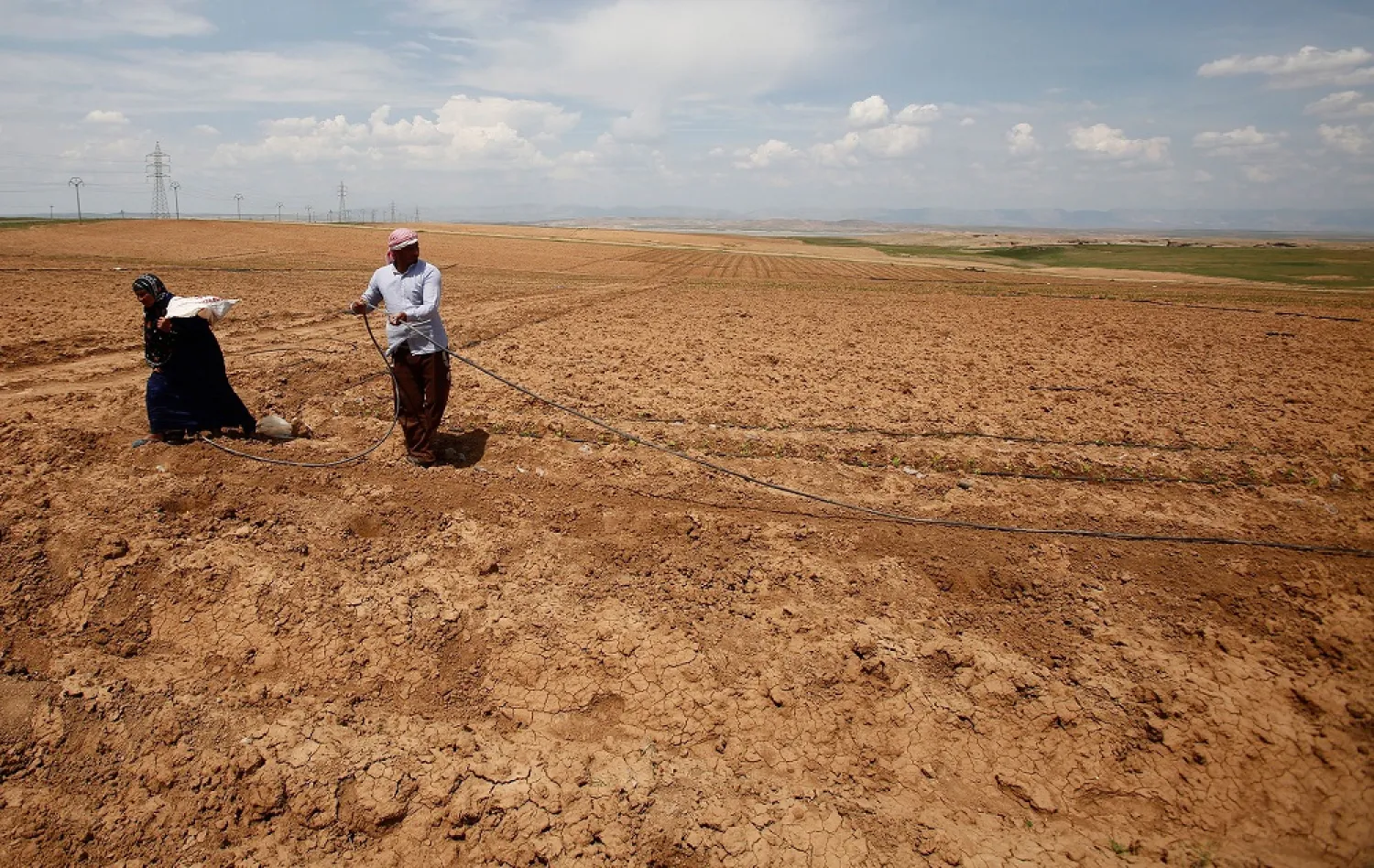
A view of a barren field in the Nineveh province in northern Iraq. (Reuters)
TT

New App Predicts Water-Related Conflict in Iraq, Iran

A view of a barren field in the Nineveh province in northern Iraq. (Reuters)

Conflicts over water are likely to flare up in Iraq, Mali and India in the coming year, according to the developers of an app launched on Thursday which aims to help prevent violence by flagging up potential flashpoints.

They said the “groundbreaking” early warning tool, which has also predicted risks in Iran, Nigeria and Pakistan, could spot the likelihood of conflicts - including water-related violence - up to 12 months in advance.

Climate change, increasing populations, rapid urbanization, economic growth and expanding agriculture are compounding pressures on the world’s limited water supplies.

UN data shows a quarter of the globe is using water faster than natural sources can be replenished.

The tool will enable governments and others, including development and disaster response experts, to intervene early to defuse conflicts, according to the Water, Peace and Security (WPS) partnership which is behind the app.

It said trials suggested an 86% success rate in identifying conflicts with 10 casualties or more.

“This app is very important given the escalation of water-related conflicts across the world,” said Jessica Hartog, a climate change expert with International Alert, a WPS partner.

“It will save lives, absolutely, if we see politicians acting on the early warning data it will provide,” she told the Thomson Reuters Foundation.

The WPS Global Early Warning Tool uses machine learning to pinpoint conflict risks on the basis of more than 80 variables going back 20 years.

This includes data on precipitation and droughts from satellite sources, and socio-economic and demographic data on everything from population density to past patterns of violence.

“Water is often an overlooked risk factor in conflict,” said Charles Iceland, a senior water expert at the World Resources Institute, part of the WPS partnership which is supported by the Netherlands’ foreign ministry.

“This could be a breakthrough in development and peacekeeping operations, giving time to intervene before bloodshed occurs.”

The tool has been trialed in Mali where water scarcity is a factor in violence between Dogon farmers and Fulani herders.

“Data is one of the most powerful things you can have to reach policymakers and politicians,” said International Alert’s Hartog.

“In Mali, we’re already bringing the government and civil society groups together to discuss the risks we’re seeing.”

In Iraq, WPS predicted the situation would deteriorate in Basra where access to safe water is a major problem, with more than 120,000 people hospitalized last year after drinking polluted supplies.


Iranians Expect No Post-War Respite Under Military Rule

People walk past closed shops at the nearly empty traditional main bazaar during Iranian New Year, or Nowruz, holidays in Tehran, Iran, Sunday, March 29, 2026. (AP)
TT

Iranians Expect No Post-War Respite Under Military Rule

People walk past closed shops at the nearly empty traditional main bazaar during Iranian New Year, or Nowruz, holidays in Tehran, Iran, Sunday, March 29, 2026. (AP)

Iranians striving to maintain a semblance of normal life after weeks of US and Israeli bombing and a deadly crackdown on protesters in January remain daunted by the future as damage from airstrikes and internet cuts take a toll.

With Iran and the US wrangling over a truce extension and an agreement to end the conflict, shops, restaurants and government offices have stayed open. On sunny spring mornings, city parks are busy with family picnics and young people playing sports while others gather at streetside cafes.

But behind such peaceful scenes, Iran's economy is in tatters and people are fearful of a new government clampdown and angry about the destructive airstrikes. The difficulties that spurred mass unrest in January look likely to worsen.

Talks in Islamabad this month - the first direct negotiations between the United States and Iran in years - ended without an agreement. But with the current fragile ceasefire due to end on Wednesday, US President Donald Trump said on Sunday that his envoys would head to Pakistan and were prepared to hold more talks.

FEAR OF INCREASED PRESSURE AS THEOCRACY ENDURES

"The war will end, but that’s when our real problems with the system begin. I’m very afraid that if the regime reaches an agreement with the United States, it will increase pressure on ordinary people," a 37-year-old named Fariba, who took part in the January unrest, told Reuters by phone from ‌Iran.

"People have not ‌forgotten the regime’s crimes in January, and the system has not forgotten that people do not want it. They are holding ‌back now ⁠because they don’t ⁠want to fight on a domestic front as well," she said.

The bombing has killed thousands, according to official death tolls, including many at a school on the first day of the conflict.

It has also destroyed infrastructure across the country, raising the prospect of mass job layoffs. Iran's revolutionary theocracy looks as entrenched as ever after surviving weeks of intense bombardment and asserting control over global oil supplies.

"Iranians understood that this war is not going to topple the regime, but at the same time, it's going to make their lives much worse economically," said Omid Memarian, Iran analyst at independent US-based think tank Dawn.

"The military is not going to put down their guns. They are going to stay and it's going to be bloody. It's going to be costly, with no prospect for a better future," he added.

In well-heeled north Tehran this week, Reuters interviewed young Iranians on camera about the war and their concerns. Foreign media in Iran operate under guidelines set ⁠by the Culture and Islamic Guidance Ministry, which regulates press activity and permissions.

Mehtab, who works at a private company and asked ‌not to use her family name, said things could be worse for Iranians given the impact of war and years ‌of sanctions and isolation.

"I do not want to say that it is normal, but as an Iranian with such a history, it is not very bad. We can live with it," she ‌said.

That view was not shared by Iranians Reuters reached by phone. They voiced far greater anxiety while speaking anonymously for fear of reprisals.

"Yes, people are enjoying the ceasefire ‌for now — but what comes next? What are we supposed to do with a regime that has become even more powerful?” said Sara, 27, a private teacher who declined to give her family name or location.

IRANIANS LEFT WITH FEW OPTIONS

Thousands were killed when the authorities crushed weeks of protests in January, prompting Trump to say he would come to the aid of Iranians.

Iran's permanent mission to the UN in Geneva did not immediately respond to requests for comment for this story. It has previously blamed the violence in January on "armed terrorists" linked to Israel and the United States.

While Trump and Israeli ‌Prime Minister Benjamin Netanyahu both said early in the war that they hoped it would topple the ruling clerics, that goal faded as the bombing continued.

Anger over the crackdown meant that many Iranians wanted new rulers, but soon soured on the ⁠war, Memarian said.

"I think it became more ⁠clear for many Iranians that this war is not designed, or is not aimed, at helping the Iranian people," he said.

Neither Mehtab nor other women sitting at a cafe in north Tehran were wearing the hijab, a head covering that was mandatory for decades in Iran. Looser public dress codes are the result of mass protests in 2022, including over women's rights, which the authorities violently suppressed while tacitly backing off from enforcement of some dress rules.

Independent UK-based Iranian political analyst Hossein Rassam said it became clear in January that authorities would not back down again easily, and later that they would not crumble under military attack.

The war had left Iranians even more polarized than before, but with few options. "This is a moment of reckoning for Iranians because, at the end of the day, Iranians, especially Iranians inside the country, realize that they need to live together. There is nowhere to go," he said.

'FIRE UNDER THE ASHES'

Many fear repression could now worsen.

"On the streets, women are going around without the hijab, but it’s unclear whether these kind of freedoms will continue after a deal with the United States. Pressure will 100% increase, because once there is peace with Washington, the regime will no longer face the same external pressure," Arjang, a 43-year-old father of two, told Reuters by phone from north Tehran.

The January protests brought no tangible change to people's lives, while leading the authorities to severely restrict internet use - a blow to both businesses and ordinary people desperate for information during war.

“Even the smallest things, like connecting with our family members who live outside the country, are impossible,” said Faezeh, 47, as she played volleyball with friends in a north Tehran park.

Popular frustration may start to mount after the war ends and people are less afraid of being labelled as traitors, said Memarian.

"There is a lot of fire under the ashes," he said.


Iraq Fish Die-off Leaves Farmers Mourning Lost Livelihoods

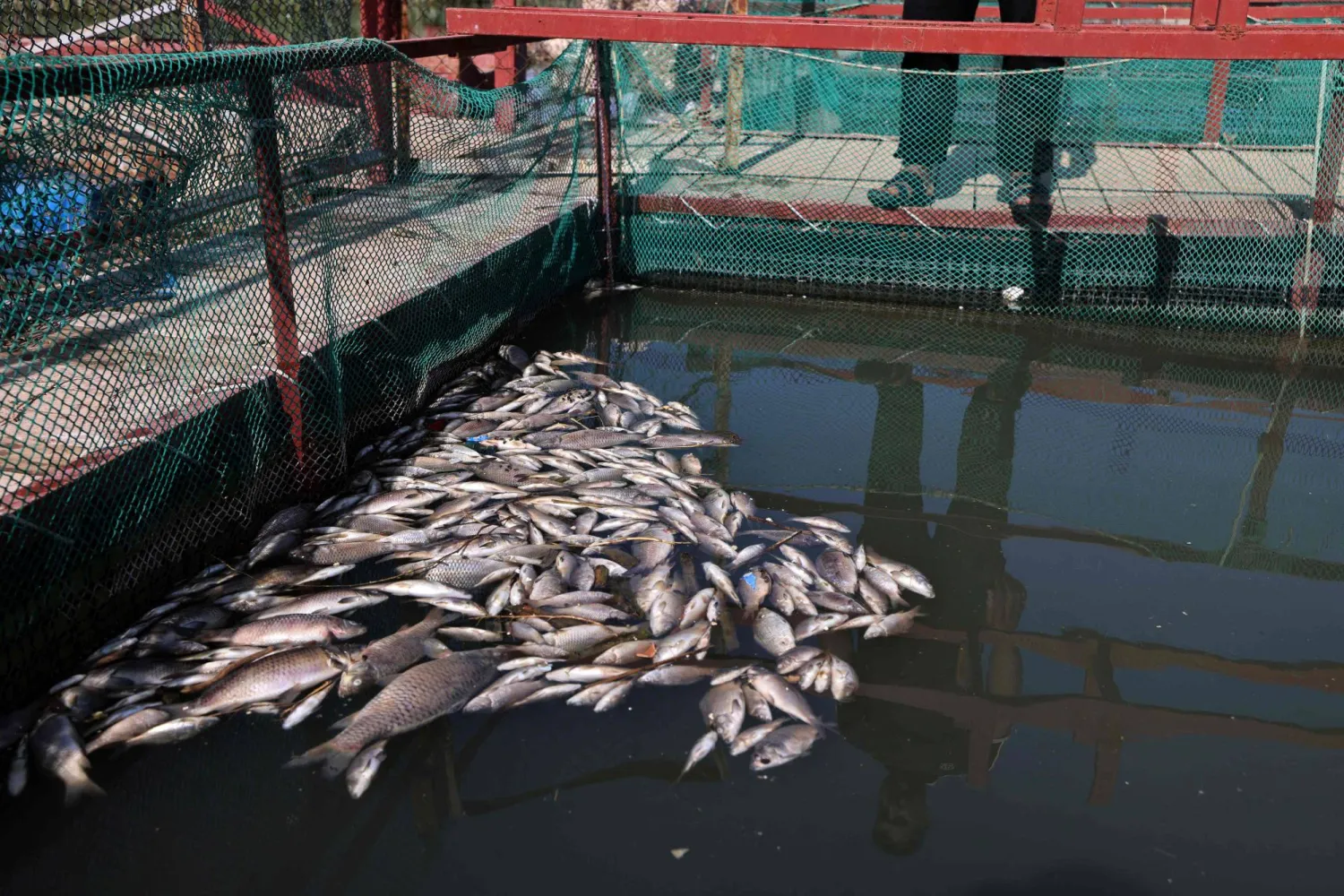
An Iraqi fish farmer stands over dead fish floating in a tank at his farm in the town of Zubaydiya, near the city of Kut in southern Iraq on April 14, 2026. (AFP)
TT

Iraq Fish Die-off Leaves Farmers Mourning Lost Livelihoods

An Iraqi fish farmer stands over dead fish floating in a tank at his farm in the town of Zubaydiya, near the city of Kut in southern Iraq on April 14, 2026. (AFP)

On the banks of Iraq's Tigris River, Haidar Kazem mourned 300 tons of the fish he had carefully raised in ponds wiped out by a flood of polluted water.

Water supplies in Iraq, the eastern half of what is known as the region's fertile crescent and which the United Nations ranks among the countries most affected by climate change, are in a dire state.

"In just two hours, my entire project was gone -- fish I had spent a year-and-a-half raising. I am back to zero," the 43-year-old fish farmer told AFP.

Earlier this month, after yet another very dry season, a brief spate of rain led authorities to open the gates of the Hamrin Dam, sending water into the Diyala, a tributary that is choked with untreated sewage.

The flood then swept the contaminated water into the larger Tigris, and the pollution was so severe that it was visible in satellite images.

Images from Copernicus Sentinel analyzed by AFP show that, following the late-March rainfall, a noticeably dark stream flows from Diyala to the Tigris throughout the period from March 28 to April 12.

"No one told us that polluted water was headed our way," Kazem said, adding that the contaminated stream reached his ponds on April 5, killed all his fish and caused losses exceeding a million dollars.

Kazem buried his stock -- carp for Iraq's beloved grilled dish masguf -- and now spends his days cleaning their floating cages on the banks of the Tigris, haunted by the question: how will he save his livelihood?

"I don't know any other trade, and I don't have the money to restart," he said.

- 1,000 tons -

Arkan al-Shimari, the head of the agriculture department in Kazem's province Wasit, said that the sewage stream has killed more than 1,000 tons of fish.

According to authorities, several water treatment plants discharge untreated sewage into the Diyala River, which years of drought in Iraq have left low and notorious for its foul odor.

Environmental open-source investigator Wim Zwijnenburg said that the Diyala consistently appears darker than the Tigris due to wastewater discharge, its low depth and weaker currents.

Normally, it would gradually mix into the Tigris, but this time heavy rain created a stronger current in Diyala, sending less-diluted polluted water into the Tigris, and "thus affecting downstream fisheries and potentially also water treatment plants".

As the situation worsened, authorities restricted water supply -- normally treated water from the Tigris -- in several areas of Wasit, reporting 20 documented cases of poisoning and rash.

Declining rain over recent years, coupled with rising temperatures, has brought water levels in the Tigris and Euphrates rivers to staggering lows, for which Baghdad also accuses upstream dams built by neighboring Türkiye and Iran.

- Black water -

Following the recent fish die-off, authorities vowed they would take the necessary measures to treat wastewater before discharge.

But decades of conflicts have left the country's infrastructure in a pitiful state and its water management systems in disrepair.

Iraq's new agency INA quoted a Baghdad official as saying that authorities will soon open seven more water treatment plants in the city.

In the town of al-Numaniyah, fish farmer Mazen Mansour, 51, gazed over the still water in his empty floating cages, which until recently held 38,000 fish he had been counting on selling next month.

Mansour said he did not realise polluted water had flooded the area until he saw his fish dying in the evening. He tried to save them by pumping air into his basins to provide oxygen, but it was too late.

"The water was black and filled with sewage," he said.

"All our work was gone in one night," added the father of four.

Now, he said, there is nothing he can do but wait and hope for compensation from the government.

"We urge the state to compensate us and hold those responsible accountable."


Why Iran’s ‘Mosquito Fleet’ Remains a Potent Threat in the Strait of Hormuz

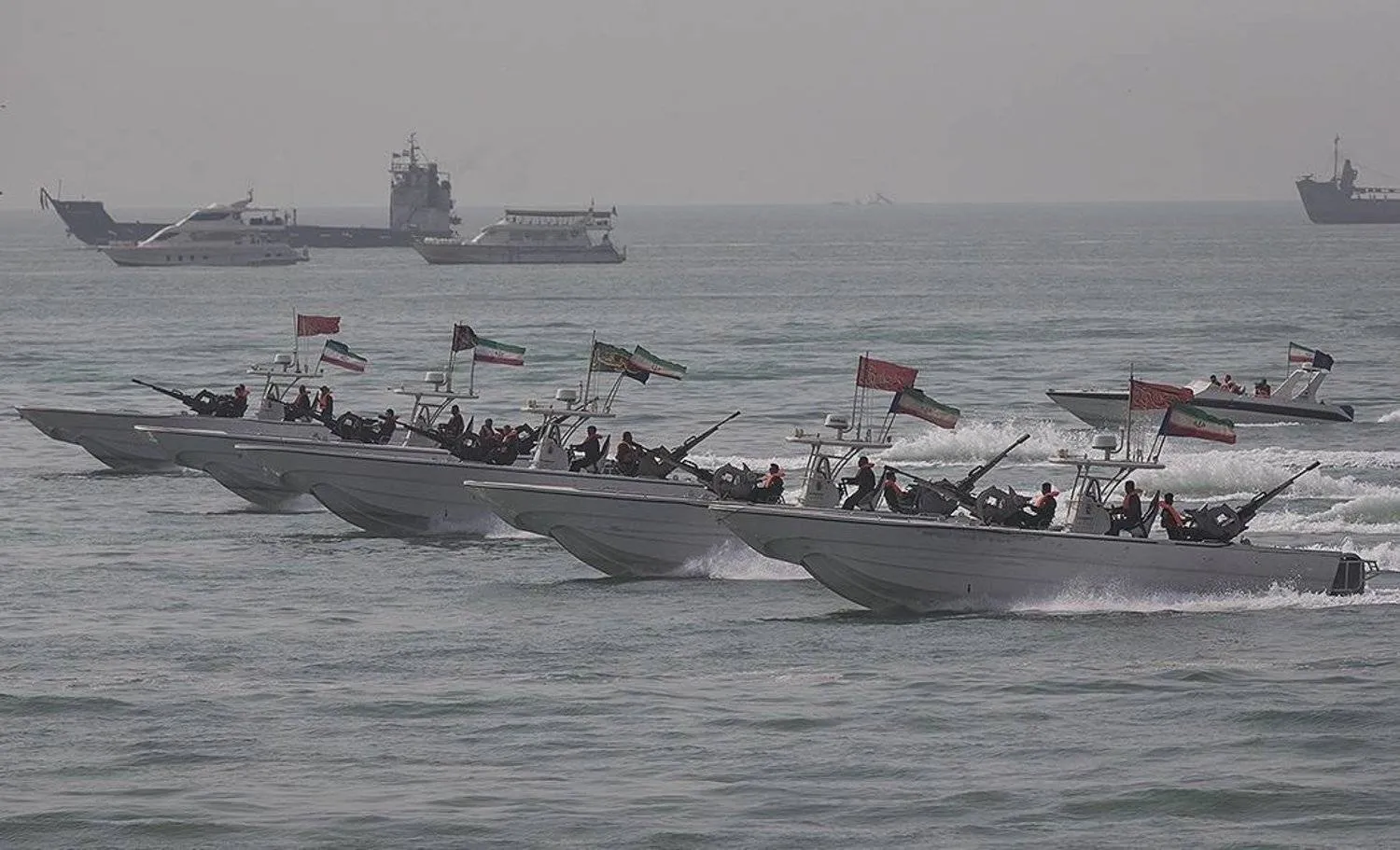
Revolutionary Guard speedboats are seen during maneuvers in the Strait of Hormuz. (Tasnim)
TT

Why Iran’s ‘Mosquito Fleet’ Remains a Potent Threat in the Strait of Hormuz

Revolutionary Guard speedboats are seen during maneuvers in the Strait of Hormuz. (Tasnim)

Iranian warships sunk by US and Israeli attacks litter naval harbors along the Gulf coast, but what is sometimes called a “mosquito fleet” lurks in the shadows.

It is a flotilla of small, fast, agile boats designed to harass shipping, and it forms the heart of the naval forces deployed by the Iranian Revolutionary Guards Corps, a force separate from Iran’s regular navy, reported the New York Times.

These boats, and especially the missiles and drones that the Guards navy can launch from them, or from camouflaged sites onshore, have been the main threat stymying shipping through the Strait of Hormuz.

Iran had vowed to keep the strait closed until there was a ceasefire in Lebanon. The ceasefire there took effect on Thursday. On Friday, senior Iranian officials made conflicting statements about whether that truce had prompted Iran to open the strait.

On Saturday, Iran’s military said the waterway had “returned to its previous state” and was “under strict management and control of the armed forces.”

Welcoming the initial Iranian announcement of the opening, US President Donald Trump pronounced the Hormuz situation “over,” while stressing on social media that the US blockade of Iranian ports would remain in place until a peace deal was reached.

The task of keeping the strait closed would fall to the Guards navy.

“The IRGC navy works more like a guerrilla force at sea,” said Saeid Golkar, an expert on the Guards and a political science professor at the University of Tennessee at Chattanooga.

“It is focused on asymmetrical warfare, especially in the Persian Gulf and the Strait of Hormuz,” he added. “So instead of relying on big warships and classic naval battles, it depends on hit-and-run attacks.”

During the war, at least 20 vessels were attacked, according to the International Maritime Agency, a United Nations agency.

The Guards navy rarely claimed the attacks, which analysts said were most likely carried out by drones fired from mobile launchers on land, which generate a faint footprint, difficult to trace.

On April 8, after a two-week ceasefire in the war was announced, General Dan Caine, the chairman of the Joint Chiefs of Staff, said more than 90% of the regular navy’s fleet, including its main warships, sat at the bottom of the ocean.

An estimated half of the Guards navy’s fast attack boats were also sunk, Caine said, but did not specify how many. Estimates of the overall number range from hundreds to thousands — it is difficult to count them.

The boats are often too small to appear on satellite images, and they are moored along piers within deep caves excavated along the rocky coastline, ready to be deployed in minutes, analysts said. Their arsenal poses a major threat to commercial ships in the gulf and the strait.

“It remains a disruptive force,” said Admiral Gary Roughead, a retired chief of US Naval Operations. “You never quite knew what they were up to and what their intentions were.”

Stepping in where the regular navy couldn’t

The Guards land forces were formed soon after the 1979 revolution because its leader, Khomeini, did not trust the regular army to protect the new government.

The Guards navy was added around 1986. The regular navy had proved reluctant during the Iran-Iraq war to attack oil tankers from Iraq’s financial backers, said Farzin Nadimi, a specialist on the Guards navy at the Washington Institute, a policy think tank in the US capital.

Eventually those attacks ratcheted up, and the United States then deployed warships to escort tankers. One of them, the USS Samuel B Roberts, almost sank after hitting an Iranian mine. In a subsequent battle, the US Navy scuppered two Iranian frigates and a number of other naval vessels.

Three years later, the Iranians watched as the United States laid waste to the Iraqi military during the first Gulf war.

That combination of events convinced Iran that it could never prevail in a direct confrontation with the US military, so it developed a stealth force to harass ships in the gulf, Nadimi said.

The Guards navy has an estimated 50,000 men, he said, and divides its forces into five sectors along the Gulf, including some presence on many of the 38 Gulf islands that Iran controls.

Overall, it has constructed at least 10 well-hidden, fortified bases for attack boats. One, Farur, is the center of operations for the naval special forces, whose equipment, even their sunglasses, are modeled on their US counterparts.

“The IRGC navy has always believed that it is at the forefront of the confrontation with the ‘Great Satan’, and has been in constant friction with the Americans in the Gulf,” Nadimi said.

An arsenal of small, nimble boats

Iran started by using recreational boats mounted with rocket-propelled grenades or machine guns, naval analysts said.

Over the years, it built a range of specially designed small boats, as well as miniature submarines and marine drones. Iran claims that some of those boats can reach speeds of more than 100 knots, or 115 miles per hour, experts said.

The Guards navy also recently developed larger, more sophisticated warships, many of which were targeted in the war, said Alex Pape, the chief maritime expert at Janes, a defense analysis firm.

Those damaged included its largest drone carrier, the Shahid Bagheri, a converted container ship that could also launch anti-ship missiles.

To counter a potential swarm of smaller boats, US warships have high-caliber cannons and other weaponry, experts said. Commercial vessels, though, have no way to fend off such attacks.

But the Iranians have never tested swarm attacks of small boats in combat, said Nicholas Carl, an Iran expert at the American Enterprise Institute, a think tank in Washington.

Since Trump on Monday imposed a naval blockade on ships traveling from Iranian ports, even the most powerful US warships are avoiding spending any time patrolling in the vicinity of the narrow Strait of Hormuz. There is little room to maneuver and almost no warning time to ward off a drone or a missile fired from nearby, experts said.

The US warships enforcing the blockade are likely to remain outside the strait, in the Gulf of Oman or even farther, in the Arabian Sea, where they can monitor shipping traffic but are far more difficult for the Guards to attack, experts said.

On Wednesday, Iran warned that it could expand operations into the Red Sea, another key shipping route in the region, through its proxy force in Yemen.

*Neil MacFarquhar for the New York Times