




After Shir Mohammad Panjshiri shoveled a final spadeful of dirt onto his brother’s grave, he left the cemetery burdened with questions.
His brother, Aziz Ahmad Panjshiri, a retired college professor, had been abducted from a car in northern Afghanistan on Nov. 5. He was later shot dead, his body dumped in a neighboring province.
His grieving brother still did not know why.
“What happened to my brother isn’t clear,” Mr. Panjshiri said after Professor Panjshiri, 69, was buried on a Kabul hillside. “We’re waiting for the government to tell us.”
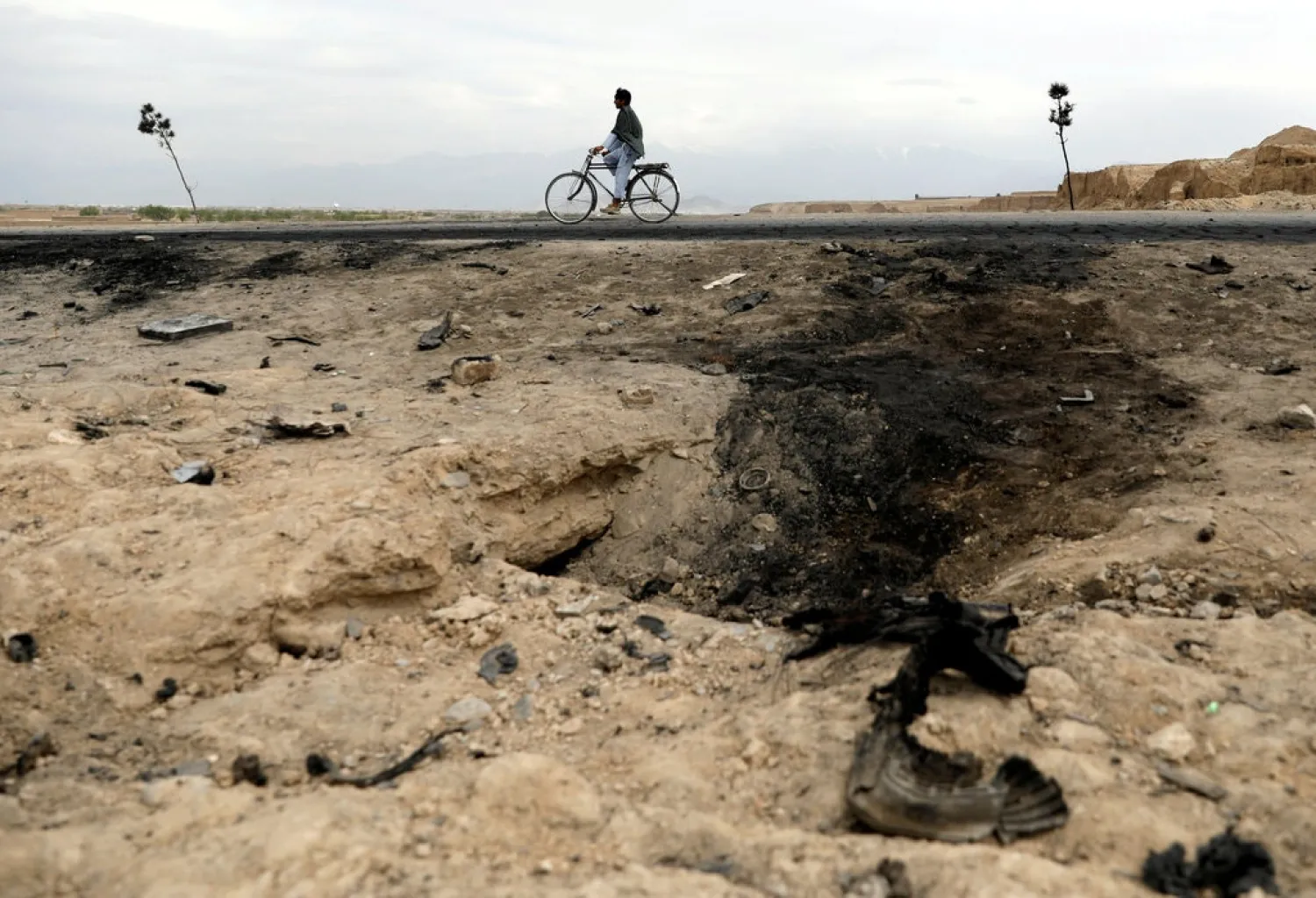
Afghan roads are some of the most dangerous in the world, turned into killing grounds through years of bitter guerrilla warfare. Off-duty police officers and soldiers, judges, government officials, human rights workers, businessmen, prosecutors — all have been killed on highways in Afghanistan’s rugged countryside.
Often, Taliban insurgents claim responsibility for ambushing representatives of the Afghan government. But in other cases, like the killing of Professor Panjshiri, families are left wondering whether their loved ones were killed by insurgents, thieves, kidnappers or someone else — and why.
There are so many ways to be killed simply for traveling here. Each day, Afghans are killed by suicide blasts, roadside bombs, checkpoint ambushes and airstrikes. People plan their routes carefully, sometimes seeking protection from government security forces who are not always up to the task.
Provincial roadways have strategic value. The Taliban attack travelers to demonstrate that the government cannot protect its citizens. They put up checkpoints in areas they control.
Government security forces fight to keep roadways open. But they frequently hunker down on their bases, leaving long stretches of road as no man’s lands where travelers risk their lives.
Because only provincial capitals are typically served by commercial airlines, local roads are the only way for many residents to reach jobs, family members and markets. Many flights are fully booked as people opt not to drive.
Two days after Professor Panjshiri was killed, three judges and a court clerk traveling to Kabul, the capital, were shot dead by gunmen in eastern Afghanistan. A week earlier, a man who worked for a CIA-backed government strike force was shot dead in his car in southern Afghanistan in front of his 3-year-old daughter, who survived.
In September, a provincial deputy of the country’s Independent Human Rights Commission was abducted and killed while driving in central Afghanistan. And in November, a prosecutor was shot dead in a car in eastern Afghanistan.
No one claimed responsibility for those ambushes, but provincial government officials blamed the Taliban in three of the cases.
The three judges had not coordinated their trip with security forces, said Major Rahme Khuda Mukhlis, the police chief in Logar Province, where the men were killed.
Fazal Qadir Qenaat, the head of the appellate court in neighboring Paktia Province, where the judges worked, said he had tried to persuade them not to make the dangerous drive.
“In fact, the Taliban were planning an ambush for me,” Mr. Qenaat said. He said that militants target judges because government courts often convict and sentence captured Taliban members. One of the judges killed, Mohammad Emal, 48, had sentenced a Taliban fighter from Logar Province to prison two weeks earlier, Mr. Qenaat said.
Mr. Qenaat said five judges from Paktia Province had been killed between early September and early November. He said several judges had arranged transfers for fear of assassination. Some districts were considered so unsafe that no judge would serve there.
“We ask local security officials, but they don’t provide good security and it seems they don’t want to escort us,” Mr. Qenaat added.
Numan Dost, a brother of another slain judge, Noorullah Qubani, 49, said they had been abducted near an army checkpoint. “We can’t count on our security forces,” he said.
Major Mukhlis, the Logar police chief, said soldiers had secured parts of the roadway where the judges were killed and were available as escorts.
A Taliban spokesman, Zabibullah Mujahid, said he was unaware of any Taliban involvement in the judges’ deaths.
But Mr. Dost noted that the victims’ families had recovered cash and cellphones from their bodies, suggesting that robbery was not a motive.
For Mr. Panjshiri, the death of his brother was like many other unsolved roadway murders — bewildering, politicized and ultimately incomprehensible.
Khanzada Mazlomyar, governor of the district where the professor’s body was found, blamed the Taliban. So did Ahmad Jawid Basharat, a spokesman for the Baghlan Province police.
But the Taliban denied the accusation, saying in a statement that Professor Panjshiri “was a civilian, and his killing can’t be justified. He wasn’t a target.”
At Professor Panjshiri’s funeral in Kabul, mourners suggested a more complicated narrative. They said the professor had been invited by acquaintances to visit them in his home province of Panjshir in northern Afghanistan. He was abducted en route, taken to neighboring Baghlan Province and killed the next day, they said.
Abdul Saboor, 27, a relative who said he had recovered the professor’s body, said the family paid an $18,000 ransom. But the kidnappers killed the professor, then dumped his body in a Taliban-controlled area to implicate the militants, he said.
The professor’s brother confirmed that his family had paid a ransom, but he declined to speculate about whether the Taliban or criminals were responsible for his abduction and killing.
Professor Panjshiri was eulogized as a popular, bookish man who had worked on cultural issues after retiring in 2015, following 30 years as a geology professor at Kabul University. A Ministry of Information and Culture official delivered a floral arrangement adorned with a photo of the white-haired professor.
Professor Panjshiri briefly served as a diplomat in Iran, friends said, but he was not overtly political. “He dedicated his life to the education of the Afghan people,” said Gul Haidar, a former mujahedeen commander from Panjshir and a close friend.
Mr. Haidar said the professor had been an adviser to Ahmad Shah Masood, a legendary anti-Taliban commander. But he said he didn’t know whether that was a factor in the killing.
“I don’t know who was behind this, but there is a political dimension, I’m sure,” Mr. Haidar said. “We hope to find out more.”
At the grave site, Mr. Panjshiri broke down in tears as he eulogized his brother.
“I haven’t been able to sleep since this happened,” he said.
(The New York Times)


