


Turkey to Send Troops to Libya, Receives Arab, Int'l Condemnation

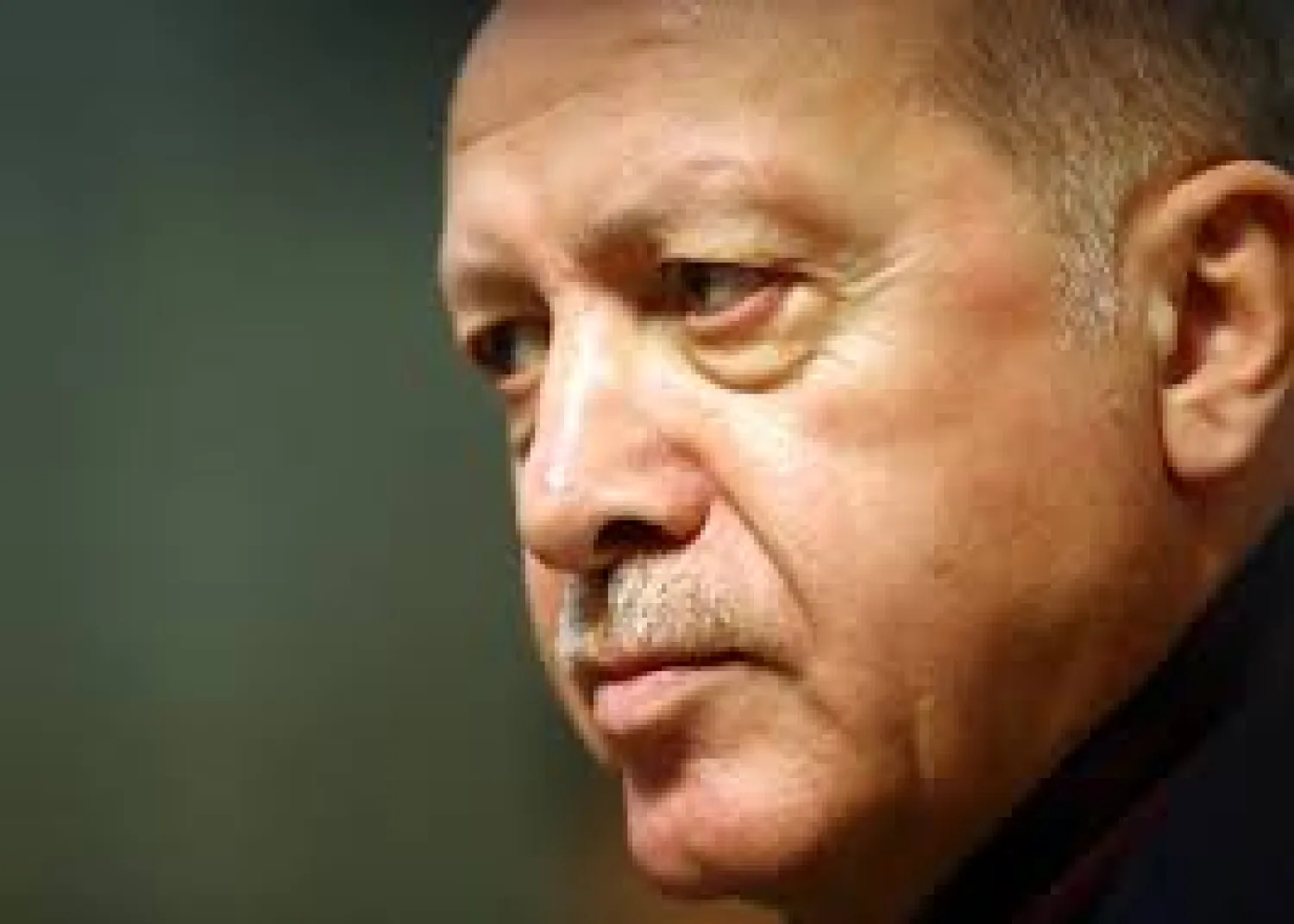
Turkey's President Recep Tayyip Erdogan leaves after the Global Refugee Forum at the United Nations in Geneva, Switzerland, December 17, 2019, REUTERS/Denis Balibouse
TT

Turkey to Send Troops to Libya, Receives Arab, Int'l Condemnation

Turkey's President Recep Tayyip Erdogan leaves after the Global Refugee Forum at the United Nations in Geneva, Switzerland, December 17, 2019, REUTERS/Denis Balibouse

Turkey will send troops to Libya at the request of Tripoli as soon as next month, President Tayyip Erdogan said on Thursday, putting the North African country’s conflict at the center of wider regional frictions.

Libya’s internationally recognized Government of National Accord (GNA) in Tripoli has been fighting with General Khalifa Haftar’s forces.

An official in Tripoli confirmed a formal request had been made for Turkish military support in the air, on the ground, and at sea.

The official, who asked not to be named, spoke after the GNA’s interior minister, Fathi Bashagha, suggested in comments to reporters in Tunis that no such request had been made.

Haftar’s forces, which are based in eastern Libya, could not be reached for comment.

Haftar’s fighters have failed to reach the center of Tripoli but have made small gains in recent weeks in some southern suburbs of the capital.

Last month, Ankara signed two separate accords with the GNA, led by Fayez al-Serraj, one on security and military cooperation and another on maritime boundaries in the eastern Mediterranean.

The maritime deal ends Turkey’s isolation in the East Mediterranean as it ramps up offshore energy exploration that has alarmed Greece and some other neighbors. The military deal would preserve its lone ally in the region, Tripoli.

“Since there is an invitation (from Libya) right now, we will accept it,” Erdogan told members of his AK Party in a speech. “We will put the bill on sending troops to Libya on the agenda as soon as parliament opens.”

The legislation would pass around Jan. 8-9, he said, opening the door to deployment.

US President Donald Trump on Thursday held a telephone call with Egyptian President Abdel Fattah al-Sisi, the White House said, in which the two leaders “rejected foreign exploitation” regarding Libya.

“The leaders ... agreed that parties must take urgent steps to resolve the conflict before Libyans lose control to foreign actors,” the White House said. Egypt reportedly supported Haftar’s forces, while Washington has called all sides to de-escalate and warned over rising Russian involvement.

TENSION WITH RUSSIA

For weeks Ankara has flagged the possibility of a military mission in Libya, which would further stretch its armed forces less than three months after it launched an incursion into northeastern Syria against a Kurdish militia.

Turkey has already sent military supplies to the GNA despite a UN arms embargo, Reuters reported last month according to a UN report.

Erdogan visited Tunisia on Wednesday to discuss cooperation for a possible ceasefire in neighboring Libya and said on Thursday that Turkey and Tunisia had agreed to support the GNA.

Tunisia’s presidency said on Thursday the country would never join any alliance or coalition and it would maintain sovereignty over all its territory, in an apparent response to Erdogan’s comments.

Moscow has voiced concerns over any Turkish deployment in support of the GNA. Russian President Vladimir Putin spoke to Italian Prime Minister Giuseppe Conte on Thursday and they agreed the crisis must be resolved peacefully, the Kremlin said.

Turkish and Russian officials held talks in Moscow this week to seek a compromise on the issues of both Libya and Syria, where Russia backs President Bashar al-Assad.

In the Mediterranean, Turkey is at loggerheads with Greece, Cyprus, and Egypt over rights to resources off the coast of the divided island of Cyprus. Athens says Ankara’s maritime deal with Tripoli violates international law.



EU Condemns Israel's West Bank Control Measures

The Israeli settlement of Har Homa, seen from the West Bank city of Bethlehem, Tuesday, Dec. 17, 2024. (AP)
TT

EU Condemns Israel's West Bank Control Measures

The Israeli settlement of Har Homa, seen from the West Bank city of Bethlehem, Tuesday, Dec. 17, 2024. (AP)

The European Union on Monday condemned new Israeli measures to tighten control of the West Bank and pave the way for more settlements in the occupied Palestinian territory, AFP reported.

"The European Union condemns recent decisions by Israel's security cabinet to expand Israeli control in the West Bank. This move is another step in the wrong direction," EU spokesman Anouar El Anouni told journalists.


Atrocities in Sudan's El-Fasher Were 'Preventable Human Rights Catastrophe'

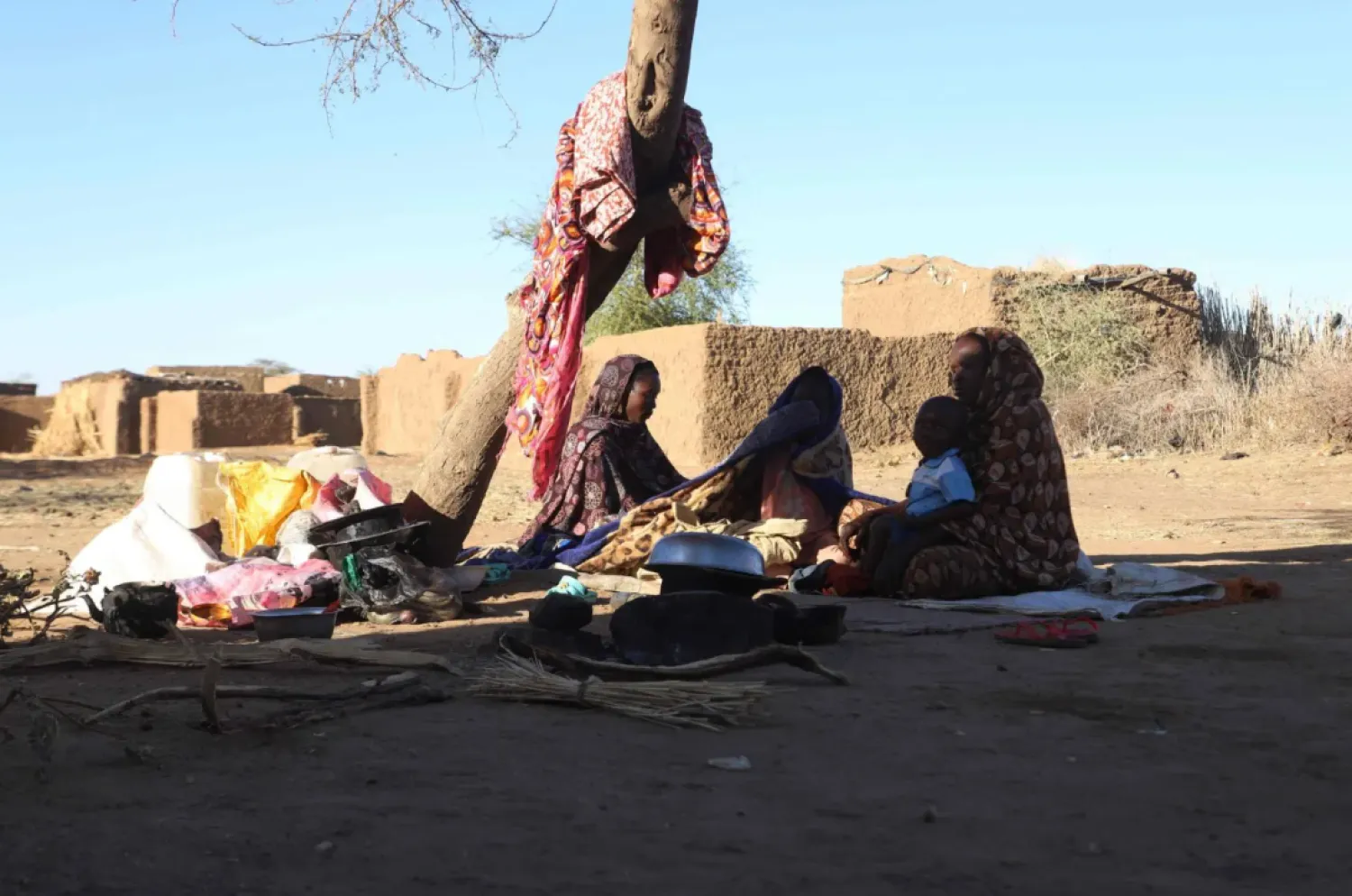
Sudanese displaced people who left El Fasher after its fall, sit in the shade in Tawila at the Rwanda camp reception point on December 17, 2025. (Photo by AFP)
TT

Atrocities in Sudan's El-Fasher Were 'Preventable Human Rights Catastrophe'

Sudanese displaced people who left El Fasher after its fall, sit in the shade in Tawila at the Rwanda camp reception point on December 17, 2025. (Photo by AFP)

The atrocities unleashed on El-Fasher in Sudan's Darfur region last October were a "preventable human rights catastrophe", the United Nations said Monday, warning they now risked being repeated in the neighbouring Kordofan region.


"My office sounded the alarm about the risk of mass atrocities in the besieged city of El-Fasher for more than a year ... but our warnings were ignored," UN rights chief Volker Turk told the Human Rights Council in Geneva.


He added that he was now "extremely concerned that these violations and abuses may be repeated in the Kordofan region".


Arab League Condemns Israel's Decisions to Alter Legal, Administrative Status of West Bank

A general view shows the opening session of the meeting of Arab foreign ministers at the Arab League Headquarters (Reuters)
TT

Arab League Condemns Israel's Decisions to Alter Legal, Administrative Status of West Bank

A general view shows the opening session of the meeting of Arab foreign ministers at the Arab League Headquarters (Reuters)

The General Secretariat of the Arab League strongly condemned decisions by Israeli occupation authorities to impose fundamental changes on the legal and administrative status of the occupied Palestinian territories, particularly in the West Bank, describing them as a dangerous escalation and a flagrant violation of international law, international legitimacy resolutions, and signed agreements, SPA reported.

In a statement, the Arab League said the measures include facilitating the confiscation of private Palestinian property and transferring planning and licensing authorities in the city of Hebron and the area surrounding the Ibrahimi Mosque to occupation authorities.

It warned of the serious repercussions of these actions on the rights of the Palestinian people and on Islamic and Christian holy sites.

The statement reaffirmed the Arab League’s firm support for the legitimate rights of the Palestinian people, foremost among them the establishment of their independent state on the June 4, 1967 borders, with East Jerusalem as its capital.