


Bailed Tycoon Ghosn Flees to Lebanon from 'Rigged' Japan

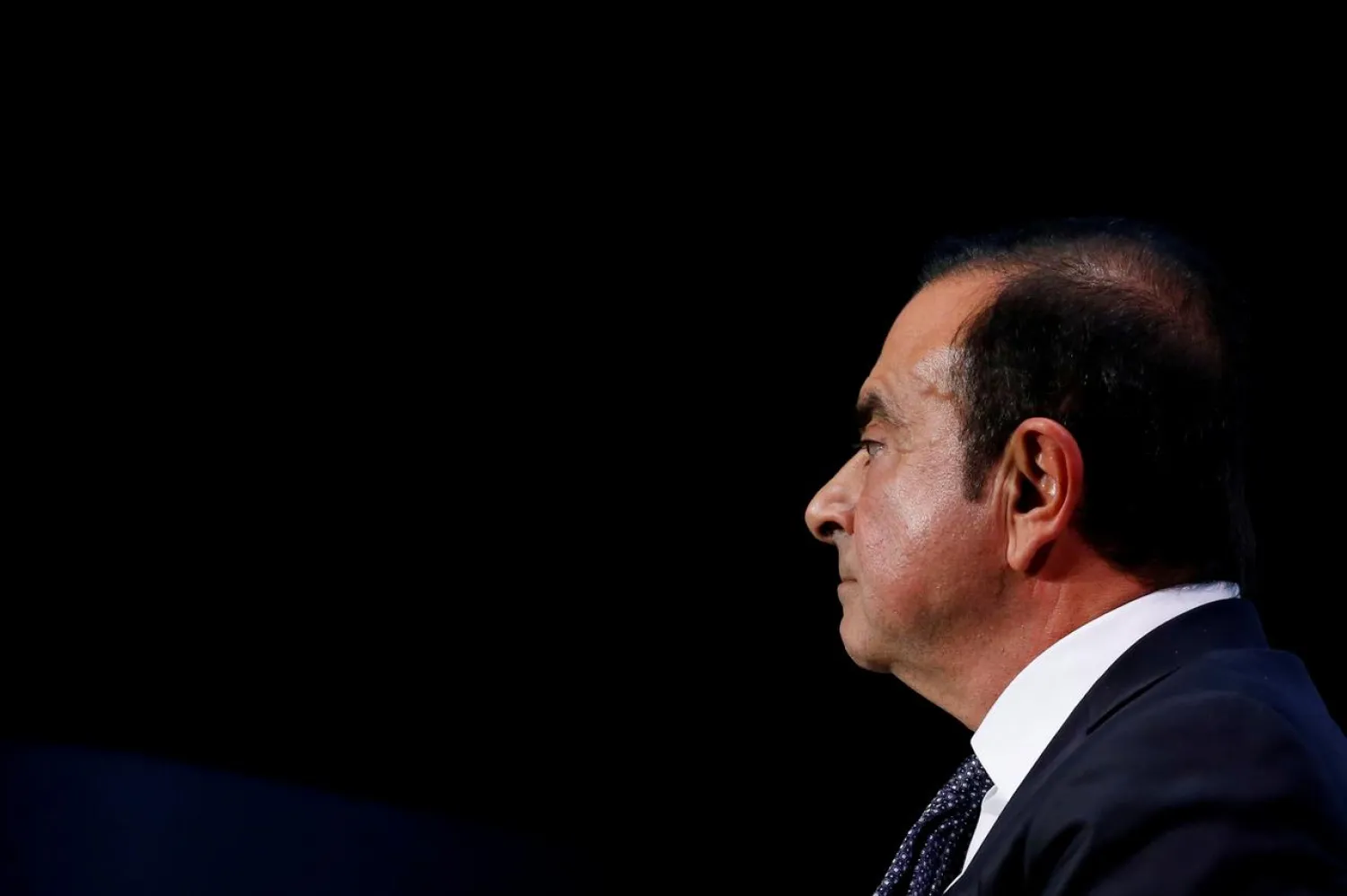
Former Nissan chief Carlos Ghosn. (Reuters)
TT

Bailed Tycoon Ghosn Flees to Lebanon from 'Rigged' Japan

Former Nissan chief Carlos Ghosn. (Reuters)

Former Nissan chief Carlos Ghosn said Tuesday he had fled to Lebanon to escape injustice in Japan, where he was on bail awaiting trial on financial misconduct charges.

The auto tycoon's abrupt departure was the latest twist in a rollercoaster journey that saw him fall from boardroom to detention center and sparked questions over an embarrassing security lapse in Japan.

In a statement, the 65-year-old said he would "no longer be held hostage by a rigged Japanese justice system, where guilt is presumed, discrimination is rampant, and basic human rights are denied".

"I have not fled justice -- I have escaped injustice and political persecution," said Ghosn, who vowed to communicate "freely" with the media "starting next week".

It was not clear how he managed to leave Japan, as his bail conditions barred him from exiting the country he had been held in since his sudden arrest in November 2018 sent shockwaves through the business world.

He and his lawyers have repeatedly voiced fears over the impossibility of a fair trial in Japan and have called for the case to be thrown out, citing missteps by the prosecutors' office.

Lebanon said the fallen car mogul -- who holds Lebanese, French and Brazilian nationalities -- had entered the country "legally" at dawn on Monday.

"There are no measures that warrant taking steps against him or prosecuting him," the country's General Security apparatus said.

Lebanon's foreign ministry said there was no accord for extradition or judicial cooperation between Beirut and Tokyo.

The circumstances of Ghosn's departure from Japan and arrival in Beirut were unknown, it added.

But Lebanese media reported Ghosn had flown by private plane from Turkey to Lebanon, where his parents were born and where he spent most of his childhood after arriving there as a toddler.

A source in the Lebanese presidency said Ghosn had entered the country with a French passport and his Lebanese identity card.

A family friend told AFP: "He is in Lebanon in his house with his wife."

"He is very happy. He is free."

'Dumbfounded'

Many Lebanese view Ghosn as a symbol of their country's large diaspora and a prime example of Lebanese entrepreneurial genius and were shocked by his arrest.

But in Tokyo, the unexpected turn of events sparked questions about how he gave authorities the slip.

His Japanese lawyer Junichiro Hironaka said he was "dumbfounded" by the news and confirmed that lawyers were still in possession of Ghosn's passports.

Public broadcaster NHK cited a foreign ministry official as saying: "He was not supposed to leave the country. Had we known about it beforehand, we would have reported that to proper law enforcement authorities."

The Japanese government has not commented publicly on Ghosn's flight.

But Taichiro Motoe, a lawmaker from Prime Minister Shinzo Abe's ruling Liberal Democrat Party (LDP), said the news had come as a "shock" and called for "swift and effective" improvements.

France said it was unaware of Ghosn's plans to flee and had no information about the circumstances.

Lebanon's MTV television reported that Ghosn was smuggled to the airport in Japan in a musical instrument case belonging to a band who had been booked to perform on New Year's Eve.

But a member of his entourage denied the report.

'Conspiracy'

Ghosn's sudden departure was nearly as dramatic as his arrest at a Tokyo airport.

Prosecutors stormed his private jet and whisked him off to a Tokyo detention center where he spent more than 100 days in spartan conditions far removed from his sometimes extravagant lifestyle.

He eventually won bail, striding out of the detention center disguised in a workman's uniform complete with mask and cap in an apparent bid to fool the world's media camped outside.

Then one morning in April, he was rearrested on another set of charges just days before he was due to give a hotly anticipated news conference.

He released a video apparently pre-recorded in which he accused "backstabbing" Nissan executives of a "conspiracy".

Later that month, he was released again on bail -- this time leaving in a business suit -- and he had been in Tokyo ever since preparing for his trial in "combative" mood, according to his lawyers.

He stands accused of two counts of under-reporting his salary to the tune of 9.23 billion yen ($85 million) from 2010 to 2018, deferring some of his pay and failing to declare this to shareholders.

Prosecutors also allege he attempted to get Nissan to cover around 1.85 billion yen in personal foreign exchange losses during the 2008 financial crisis.

The fourth charge against him is that he allegedly transferred millions from Nissan funds to a dealership in Oman, from which the executive supposedly skimmed off $5 million for his personal use.

He has consistently denied all charges against him, saying they are a "plot" by Nissan executives to get rid of him because they feared he was moving the Japanese firm to a closer tie-up with Renault.

In the meantime, Ghosn has lost the business empire he was once lauded for creating. Sacked from Nissan and Mitsubishi Motors, he resigned from Renault -- the third firm in the uneasy car alliance he forged.



Russia's FSB Says Ukraine's SBU Was behind Assassination Attempt on Top General

In this image made from video and provided by the Russian Defense Ministry Press Service, on June 23, 2023, Lt. Gen. Vladimir Alexeyev speaks to servicemen in an undisclosed location. (Russian Defense Ministry Press Service via AP)
TT

Russia's FSB Says Ukraine's SBU Was behind Assassination Attempt on Top General

In this image made from video and provided by the Russian Defense Ministry Press Service, on June 23, 2023, Lt. Gen. Vladimir Alexeyev speaks to servicemen in an undisclosed location. (Russian Defense Ministry Press Service via AP)

Russia's Federal Security Service said on Monday that the men suspected of shooting one of the country's most senior military intelligence officer had confessed that they were carrying out orders from the Security Service of Ukraine (SBU).

Ukraine has denied any involvement in Friday's attempted assassination of Lieutenant General Vladimir Alexeyev, deputy head of Russia's ‌GRU military ‌intelligence service. Alexeyev has regained ‌consciousness ⁠after surgery, reported Reuters.

Russia ‌said that the suspected shooter, a Ukrainian-born Russian citizen named by Moscow as Lyubomir Korba, had been questioned after he was extradited from Dubai. A suspected accomplice, Viktor Vasin, has also been questioned.

The FSB said in ⁠a statement that both Korba and Vasin had "confessed their ‌guilt" and given details ‍of the shooting which ‍they said was "committed on behalf of ‍the Security Service of Ukraine."

The FSB did not provide any evidence that Reuters was able to immediately verify. It was not possible to contact the men while they were in detention in Russia. The SBU could ⁠not be reached for immediate comment on the FSB statement.

The FSB said Korba was recruited by the SBU in August 2025 in Ternopil, western Ukraine, underwent training in Kyiv and was paid monthly in crypto-currency. For killing Alexeyev, Korba was promised $30,000 by the SBU, the FSB said.

The FSB said Polish intelligence was involved in his recruitment. ‌Poland could not be reached for immediate comment.


Venezuela's Machado Says Ally 'Kidnapped' after His Release

Venezuelan political leader Juan Pablo Guanipa gestures after their release outside Zona 7 prison in Caracas on February 8, 2026.  (Photo by Juan BARRETO / AFP)
Venezuelan political leader Juan Pablo Guanipa gestures after their release outside Zona 7 prison in Caracas on February 8, 2026. (Photo by Juan BARRETO / AFP)
TT

Venezuela's Machado Says Ally 'Kidnapped' after His Release

Venezuelan political leader Juan Pablo Guanipa gestures after their release outside Zona 7 prison in Caracas on February 8, 2026.  (Photo by Juan BARRETO / AFP)
Venezuelan political leader Juan Pablo Guanipa gestures after their release outside Zona 7 prison in Caracas on February 8, 2026. (Photo by Juan BARRETO / AFP)

Venezuela's Nobel peace laureate Maria Corina Machado said on Monday that armed men "kidnapped" a close ally shortly after his release by authorities, following ex-leader Nicolas Maduro's capture.

The country's Public Prosecutor's Office confirmed later that same day that former National Assembly vice president Juan Pablo Guanipa, 61, was again taken into custody and to be put under house arrest, arguing that he violated the conditions of his release.

Guanipa would be placed under house arrest "in order to safeguard the criminal process," the office said in a statement on Monday. The conditions of Guanipa's release have yet to be made public.

Machado claimed that her close ally had been "kidnapped" in the capital Caracas by armed men "dressed in civilian clothes" who took him away by force.

"We demand his immediate release," she wrote on social media platform X.

The arrest came after his release from prison on Sunday along with two other opposition figures, and as lawmakers prepared to vote Tuesday on a historic amnesty law covering charges used to lock up dissidents in almost three decades of socialist rule, reported AFP.

Shortly after his release, Guanipa visited several detention centers in Caracas, where he met with relatives of political prisoners and spoke to the press.

Guanipa had appeared earlier Sunday in a video posted on his X account, showing what looked like his release papers.

"Here we are, being released," Guanipa said in the video, adding that he had spent "10 months in hiding, almost nine months detained here" in Caracas.

- 'Let's go to an electoral process' -

Speaking to AFP later on Sunday, he had called on the government to respect the 2024 presidential election, which opposition candidate Edmundo Gonzalez Urrutia was widely considered to have won. Maduro claimed victory and remained in power till January.

"Let's respect it. That's the basic thing, that's the logical thing. Oh, you don't want to respect it? Then let's go to an electoral process," Guanipa said.

The opposition ally of Machado was arrested in May 2025, in connection with an alleged conspiracy to undermine legislative and regional elections that were boycotted by the opposition.

He was charged with terrorism, money laundering and incitement to violence and hatred.

Guanipa had been in hiding prior to his arrest. He was last seen in public in January 2025, when he accompanied Machado to an anti-Maduro rally.

Following Maduro's capture by US special forces on January 3, authorities have started to slowly release political prisoners. Rights groups estimate that around 700 people are still waiting to be freed.

A former Machado legal advisor, Perkins Rocha, was also freed on Sunday. So was Freddy Superlano, who once won a gubernatorial election in Barinas, a city that is the home turf of the iconic late socialist leader Hugo Chavez.

"We hugged at home," Rocha's wife Maria Constanza Cipriani wrote on X, with a photo of them.

Machado, who was awarded the 2025 Nobel Peace Prize for her efforts to advance democracy in Venezuela, had initially celebrated Guanipa's release.

"My dear Juan Pablo, counting down the minutes until I can hug you! You are a hero, and history will ALWAYS recognize it. Freedom for ALL political prisoners!!" she wrote on X on Sunday.

NGO Foro Penal said it had confirmed the release of 35 prisoners on Sunday. It said that since January 8 nearly 400 people arrested for political reasons have been freed thus far.

Lawmakers gave their initial backing to a draft amnesty last week which covered the types of crimes used to lock up dissidents during 27 years of socialist rule.

But Venezuela's largest opposition coalition denounced "serious omissions" in the proposed amnesty measures on Friday.

Meanwhile, relatives of prisoners are growing increasingly impatient for their loved ones to be freed.

Acting president Delcy Rodriguez, who was Maduro's vice president, is pushing the amnesty bill as a milestone on the path to reconciliation.

Rodriguez took power in Venezuela with the blessing of US President Donald Trump, who is eyeing American access to what are the world's largest proven oil reserves.

As part of its reforms, Rodriguez's government has taken steps towards opening up the oil industry and restoring diplomatic ties with Washington, which were severed by Maduro in 2019.


SKorea Grounds Aging Attack Choppers after Fatal Training Crash

South Korean military officials secure the site where an AH-1S Cobra attack helicopter crashed in Gapyeong, South Korea, February 9, 2026. Yonhap via REUTERS
TT

SKorea Grounds Aging Attack Choppers after Fatal Training Crash

South Korean military officials secure the site where an AH-1S Cobra attack helicopter crashed in Gapyeong, South Korea, February 9, 2026. Yonhap via REUTERS

South Korea grounded an aging fleet of military helicopters on Monday after a chopper crashed during a training exercise and killed two people on board.

The AH-1S Cobra was training for emergency landings when it "crashed due to an unidentified cause" in Gapyeong county west of Seoul, the army said in a statement.

Two service members were taken to hospital and later pronounced dead, AFP reported.

Photos in local media showed the helicopter's crumpled fuselage lying on a rocky river bank.

"Following the accident, the Army has suspended operations of all aircraft of the same model" and is investigating the cause, the forces said.

The AH-1S Cobra is a US-made, single-engine anti-tank attack helicopter.

Some of those used by South Korea's military are more than 30 years old. It is not clear how many are currently in service.

The country's defense acquisition agency said in 2022 that the Army's Cobra helicopters were "scheduled to be retired" as domestically developed light-armed choppers started flying.