


The Blame Game: How Messi’s Patience Finally Snapped at Barcelona

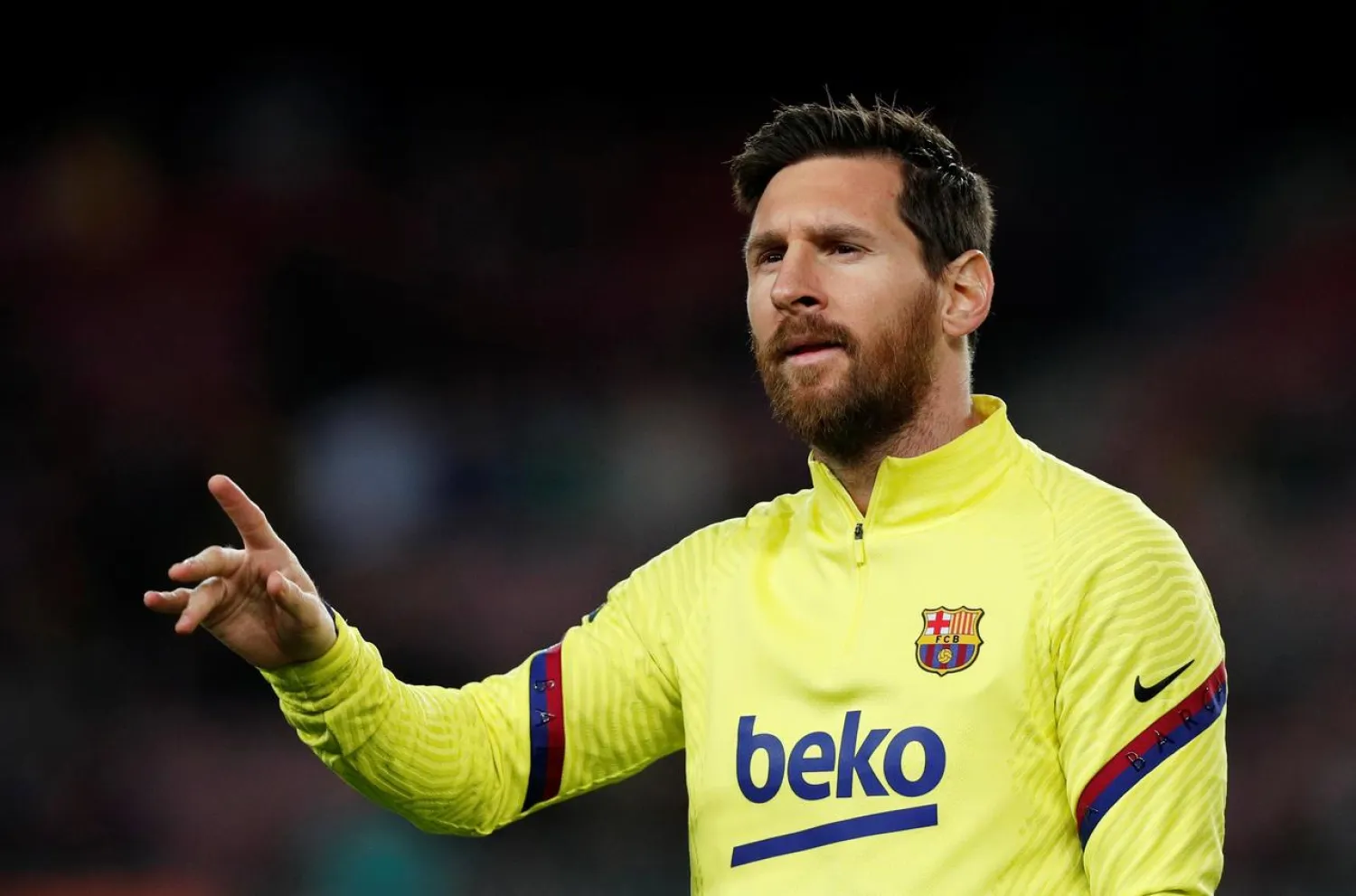
Barcelona superstar Lionel Messi. (Reuters)
TT

The Blame Game: How Messi’s Patience Finally Snapped at Barcelona

Barcelona superstar Lionel Messi. (Reuters)

Quique Setién scoffed and then started laughing. “No way,” he said. He had been talking for 12 minutes and he was only halfway through, still trying to put out the fire, when he was asked if he regretted becoming the Barcelona manager. “It’s true that a month ago I was at home and I had no problems, but [these are] blessed problems. I have the same enthusiasm as ever, the same will, because my life hasn’t been easy. You know things will happen here, you know the repercussions will be huge, but I’m blown by the north wind; I don’t go down easily.”

Nobody said it was easy, but nobody said it would be this hard. As for the problems, there are a lot. “It’s not normal to take over at a team that’s top,” Setién said when he arrived on January 13 but nor is it normal for so many things to happen so fast. And the scale of the latest problem – his captain and best player publicly calling out the sporting director – is yet to be fully gauged. The club’s president, Josep Maria Bartomeu, spoke to Eric Abidal and Lionel Messi on Wednesday, desperate to restore calm. After a long meeting, the decision was made to stick with Abidal.

The day before Setién turned up, it was confirmed Luis Suárez needed an operation and would be out for three or four months. They sold two strikers, Carles Pérez and Abel Ruiz, to raise funds and make space for another but, having briefed that it was all tied up, they failed to sign one. Carles Aleñá had gone too, and Jean-Clair Todibo, and Moussa Wagué, but still they had not raised enough. No matter, Setién said, Ousmane Dembélé would be the “signing”: he was on his way back to full fitness and would be “flying”. Then the news broke that Dembélé had torn a tendon in his thigh and would miss the rest of the season.

The squad are weaker, not stronger, than when Setién arrived; this is not what he was sold. On Wednesday morning only 16 first-team players were named to travel to face Athletic in Bilbao – and that is everyone they have got. Samuel Umtiti would have to make his own way there: he was wanted in court in the morning, accused of doing almost £170,000 worth of damage to a flat he was renting. At the weekend, Ivan Rakitic admitted he was unhappy at how Barcelona had tried to force him out. Arturo Vidal’s agents had already begun legal proceedings over a disputed bonus.

And then, as if all that was not enough, on Tuesday night Abidal gave an interview to Sport. In it, he said he was optimistic Messi would sign a new deal and that Barça’s star player was happy at Camp Nou. But what he said in response to that question was eclipsed by what he said in response to others, which in turn changed the veracity of that statement.

Abidal had suggested some of Barcelona’s players had been “unsatisfied” with the former manager Ernesto Valverde – responsible for this sacking, in other words. He also said they did not “work much”. For Messi, long assumed to wield power, the heaviest of dressing-room heavyweights and invariably burdened with responsibility, the accusation was intolerable. It took less than 90 minutes from the first brief advance of the interview going live for Messi to react: it was public and unequivocal, the division and resentment exposed.

On Messi’s Instagram account a red circle was drawn around the quote: “Lots of players were not satisfied and nor did they work much.” Below it, Messi demanded Abidal take responsibility for his actions, accusing him of “dirtying” the players and challenging the sporting director to name names. Messi takes more responsibility than he should; he was not going to take this one, too. Many thought he was right and even those who thought Abidal might be did not consider it a good idea to say so. The damage was done and it awoke the greatest fear: Messi leaving.

Messi has a clause in his contract that allows him to leave at the end of the season – and for free. As Abidal admitted, all he has to do is communicate that in May. The 32-year-old has said repeatedly he wants to finish his career at Barcelona but has also said he wants to compete and over the past five years he has felt increasingly like Barça do not. Nor does he have long left: at December’s Ballon d’Or presentation for the first time he raised the question of retirement. There is a growing feeling his final years are being wasted and Messi is not immune to that feeling.

Messi has not won the European Cup for five years. He has watched Barcelona fail to build around him – whether he is part of that problem is a broader, more complex question – and seen a generation slip into retirement and not be replaced. He has seen a lack of direction and certainty, four directors of sport and endless advisers under this regime. He has seen the president become vice-president as well and the team become weaker, despite spending €1,000m since the departure of Neymar. And now this. No wonder he snapped.

Messi’s response does not come in isolation: there have been small signs of distrust everywhere, glimpses of the divisions opening up, and not just from him. This is the player who stalled on posing for a photo with the president after his last contract renewal, as if reluctant to legitimize him; the player who said the director Javier Faus, who had suggested there was no reason why Messi should get a new contract every year, “doesn’t know anything about football”; who saw his friend Dani Alves suggest that, by leaving, he had delivered a deserved and “classy blow” to the board.

Since Neymar left there has been a sense of the club reaching for something that has gone, desperate for a solution that never arrives. The only solution, it often felt, was Messi. He was a shield behind which many hid, a reason for complacency, conditioning everything. He wanted to share that burden, have a team constructed around him. Instead, he must have wondered what else he had to do, why it always seemed to come down to him. In the last few weeks even his best friend Suárez has been absent, with Messi cutting an even lonelier figure.

This summer Messi watched his other great friend Neymar and Barcelona end up in court, even while they spent the summer supposedly courting each other. And then said: “I don’t know if the club did everything they could to sign him.” Messi wanted Neymar but he didn’t get that wish, however much they say he runs the place. The irony of course is that if the response is to sack Abidal, which it might be if only because the alternative is so awful, another short-term fix, it would reinforce the idea Messi is all powerful. Another fire to put out, sparked by Abidal’s hint that player power was too great.

There is no player like Messi; his reaction, at least, illustrates he felt the finger pointing at him and was not prepared to let it go. He asked for names: maybe some were not happy, maybe some were not working but do not look at me. And do not hide behind me, either. He has enough responsibility already to take on other people’s errors as his own, to be made a participant of the problems piling up since Setién arrived and well beyond that, failure delivered to his doorstep again. Above all, to be blamed for this mess.

The AS journalist Santi Giménez on Wednesday offered a simple response to the accusation Messi runs Barcelona: if only.

The Guardian Sport



Chelsea Injuries up 44% After Club World Cup but Report Says Event Has Had ‘Minimal’ Impact

Chelsea's Reece James, center, lifts the trophy following the Club World Cup final soccer match between Chelsea and PSG at MetLife Stadium in East Rutherford, N.J., Sunday, July 13, 2025. (AP)
TT

Chelsea Injuries up 44% After Club World Cup but Report Says Event Has Had ‘Minimal’ Impact

Chelsea's Reece James, center, lifts the trophy following the Club World Cup final soccer match between Chelsea and PSG at MetLife Stadium in East Rutherford, N.J., Sunday, July 13, 2025. (AP)

Chelsea suffered a 44% spike in injuries after competing in the supersized Club World Cup this year, according to findings published on Tuesday.

But the newly expanded tournament has so far had a “minimal impact” on injuries overall, the latest edition of the Men’s European Football Injury Index found.

There was fierce opposition to FIFA's new flagship club event when it was confirmed in 2023 that it would increase from seven to 32 teams, with players' unions warning of physical and mental burnout of players due to an ever expanding match schedule. But FIFA pressed ahead and staged the tournament in the United States in June-July.

Chelsea went on to win the inaugural competition, receiving the trophy from US President Donald Trump at MetLife Stadium and taking home prize money of around $125 million. But, according to the Index, from June-October, Chelsea picked up more injuries — 23 — than any of the nine clubs from Europe's top leagues that participated in the Club World Cup.

They included star player Cole Palmer, and was a 44% increase on the same period last year.

While Chelsea, which played 64 games over the entire 2024-25 season, saw an increase in injuries, the Index, produced by global insurance firm Howden, found that overall there was a decrease.

“In principle you would expect this increased workload to lead to an increase in the number of injuries sustained, as a possible rise in overall injury severity,” the Index report said, but added: “The data would suggest a minimal impact on overall injury figures.”

Despite the figures, the authors of the report accept it was too early to assess the full impact of the Club World Cup, with the findings only going up to October.

“We would expect to see the impact to spike in that sort of November to February period,” said James Burrows, Head of Sport at Howden. “What we’ve seen previously is that’s where the impact is seen from summer tournaments."

Manchester City has sustained 22 since the tournament, which is the highest among the nine teams from Europe's top leagues — England, Spain, Italy, Germany and France.

Those teams have recorded 146 injuries from June-October, which is down on the previous year's figure of 174.

From August-October that number is 121, the lowest for that three-month period in the previous six years of the Index.


Sunderland Worst Hit by Losing Players to African Cup of Nations 

14 December 2025, United Kingdom, London: Sunderland's Habib Diarra (L) and Leeds United's Gabriel Gudmundsson battle for the ball during the English Premier League soccer match between Brentford and Leeds United at the Gtech Community Stadium. (dpa)
TT

Sunderland Worst Hit by Losing Players to African Cup of Nations 

14 December 2025, United Kingdom, London: Sunderland's Habib Diarra (L) and Leeds United's Gabriel Gudmundsson battle for the ball during the English Premier League soccer match between Brentford and Leeds United at the Gtech Community Stadium. (dpa)

Premier League Sunderland will have to do without six players over the next few weeks and are the club worst hit as the Africa Cup of Nations takes its toll on European clubs competing over the holiday season.

Sunderland, eighth in the standings, had four of their African internationals in action when they beat Newcastle United on Sunday, but like 14 other English top-flight clubs will now lose those players to international duty.

The timing of the African championship, kicking off in Morocco on Sunday and running through to January 18, has long been an irritant for coaches, with leagues in Belgium, France, Germany, Italy, Netherlands, Portugal, and Spain also affected.

Hosting the tournament in the middle of the season impacts around 58% of the players at the Cup of Nations, though the Confederation of African Football did try to mitigate the impact by moving the start to before Christmas, so it is completed before the next round of Champions League matches.

The impact on European clubs was also lessened by allowing them to release players seven days, rather than the mandatory 14 days, before the tournament, meaning they could play for their clubs last weekend.

Sunderland's Congolese Arthur Masuaku and Noah Sadiki, plus full back Reinildo (Mozambique), midfielder Habib Diarra (Mali), and attackers Chemsdine Talbi (Morocco) and Bertrand Traore (Burkina Faso) have now departed for Morocco.

Ironically, Mohamed Salah’s absence from Liverpool to play for Egypt should lower the temperature at the club after his recent outburst against manager Arne Slot, but Manchester United will lose three players in Noussair Mazraoui, Bryan Mbeumo and Amad Diallo, who scored in Monday’s 4-4 draw with Bournemouth.

France is again the country with the most players heading to the Cup of Nations, and with 51 from Ligue 1 clubs. But their absence is much less impactful than previously as Ligue 1 broke after the weekend’s fixtures and does not resume until January 2, by which time the Cup of Nations will be into its knockout stage.

There are 21 players from Serie A clubs, 18 from the Bundesliga, and 15 from LaLiga teams among the 24 squads at the tournament in Morocco.


Rodgers Takes Charge of Saudi Team Al-Qadsiah After Departure from Celtic 

Then-Celtic head coach Brendan Rodgers greets supporters after a Europa League soccer match between Red Star and Celtic at Rajko Mitic Stadium in Belgrade, Serbia, Sept. 24, 2025. (AP)
TT

Rodgers Takes Charge of Saudi Team Al-Qadsiah After Departure from Celtic 

Then-Celtic head coach Brendan Rodgers greets supporters after a Europa League soccer match between Red Star and Celtic at Rajko Mitic Stadium in Belgrade, Serbia, Sept. 24, 2025. (AP)

Brendan Rodgers has returned to football as the coach of Saudi Arabian club Al-Qadsiah, six weeks after resigning from Scottish champion Celtic.

Al-Qadsiah, whose squad includes Italian striker Mateo Retegui and former Real Madrid defender Fernandez Nacho, is in fifth place in the Saudi Pro League in its first season after promotion.

Rodgers departed Celtic on Oct. 27 and has opted to continue his managerial career outside Britain for the first time, having previously coached Liverpool, Leicester and Swansea.

In its statement announcing the hiring of Rodgers on Tuesday, Al-Qadsiah described him as a “world-renowned coach” and said his arrival “reflects the club’s ambitious vision and its rapidly growing sporting project.”

Aramco, the state-owned Saudi oil giant, bought Al-Qadsiah in 2023 in a move that has helped to transform the club’s status.

“This is a landmark moment for the club,” Al-Qadsiah chief executive James Bisgrove said. “The caliber of his experience and track record of winning reflects our ambition and long-term vision to establish Al-Qadsiah as one of Asia’s leading clubs.”

Rodgers is coming off winning back-to-back Scottish league titles with Celtic, where he won 11 major trophies across his two spells. He also won the FA Cup with Leicester.

Al-Qadsiah's last two coaches were former Liverpool striker Robbie Fowler and former Spain midfielder Michel.