


Report: Hezbollah Steps in to Guide Iraqi Militias after Soleimani Killing

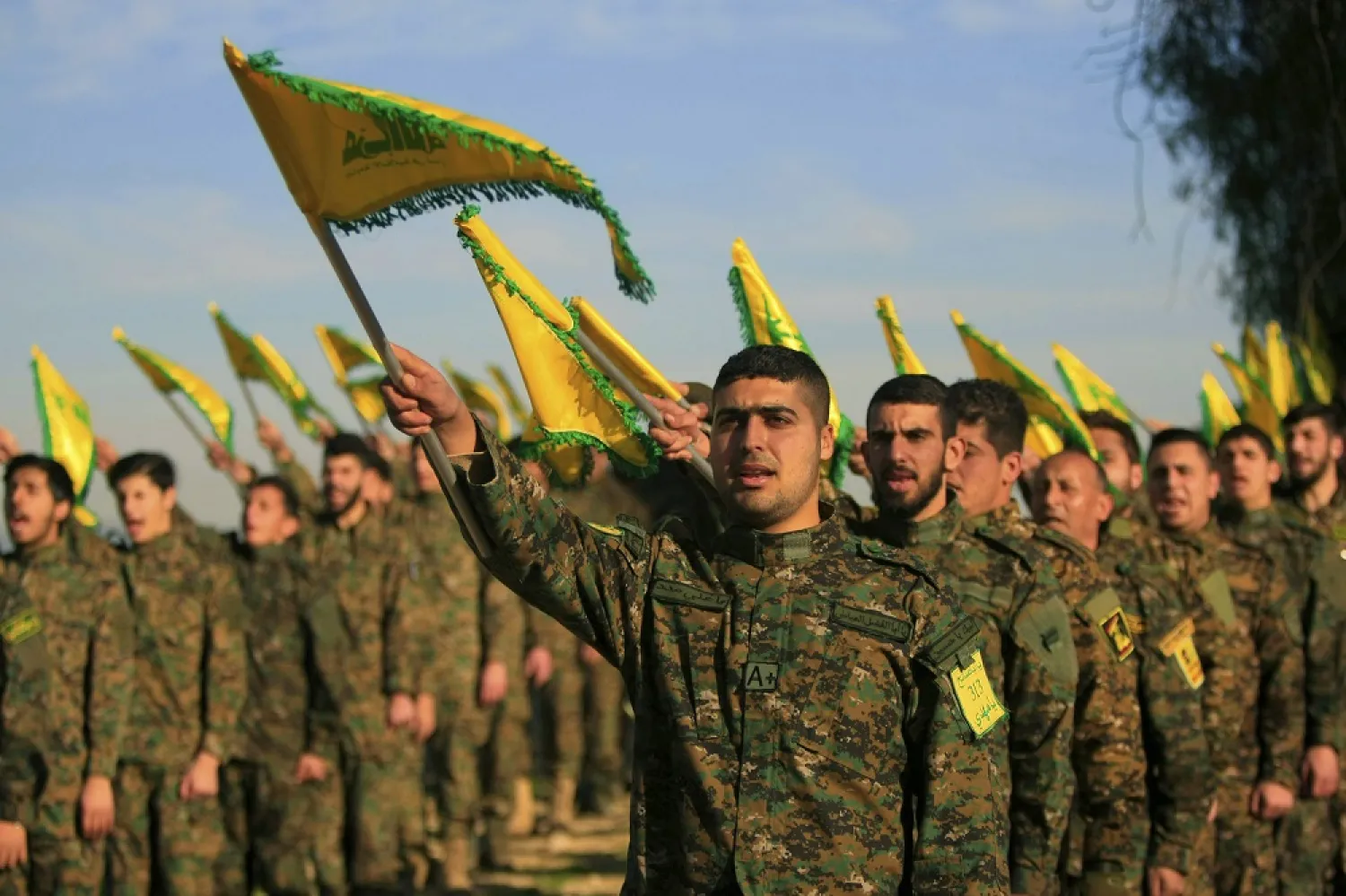
Hezbollah fighters hold flags as they attend the memorial of their slain leader Sheikh Abbas al-Mousawi, in Tefahta village, south Lebanon, on Feb. 13, 2016. (AP)
TT

Report: Hezbollah Steps in to Guide Iraqi Militias after Soleimani Killing

Hezbollah fighters hold flags as they attend the memorial of their slain leader Sheikh Abbas al-Mousawi, in Tefahta village, south Lebanon, on Feb. 13, 2016. (AP)

Shortly after Iranian top commander Qassem Soleimani was killed in a US drone strike in Iraq, the Tehran-backed Lebanese Hezbollah party urgently met with Iraqi militia leaders, seeking to unite them in the face of a huge void left by their powerful mentor’s death, two sources with knowledge of the meetings told Reuters.

The meetings were meant to coordinate the political efforts of Iraq’s often-fractious militias, which lost not only Soleimani but also Abu Mahdi al-Muhandis, the unifying Iraqi deputy chief of the Popular Mobilization Forces (PMF), in the Jan. 3 attack at Baghdad airport, the sources said.

While offering few details, two additional sources in a pro-Iran regional alliance confirmed that Hezbollah, which is sanctioned as a terrorist group by the United States, has stepped in to help fill the void left by Soleimani in guiding the militias.

All sources in this article spoke on condition of anonymity to address sensitive political activities rarely addressed in public. Officials with the governments of Iraq and Iran did not respond to requests for comment, nor did a spokesperson for the militia groups.

The discussions shed light on how Iran and its allied groups are trying to cement control in the unstable Middle East, especially in the wake of the devastating US attack on a revered Iranian military leader.

The Tehran-backed militias are critical to Iran’s efforts to maintain control over Iraq, where the US still maintains some 5,000 troops. The country has experienced years of civil war since US forces toppled Saddam Hussein and more recently, the government - and the militias - have faced growing protests against Iran’s influence in the country. Iran helped found some Iraqi militia groups.

In the months ahead of his death, Soleimani had waded ever deeper into the Iraq crisis, holding meetings with the Iraqi militias in Baghdad as Tehran sought to defend its allies and interests in its power struggle with the United States, one of the two Iraqi sources told Reuters.

Hezbollah’s involvement marks an expansion of its role in the region. The Shiite group, founded by Iran’s Revolutionary Guards in 1982, has been at the heart of Iran’s regional strategy for years, helping Soleimani to train paramilitary groups in both Iraq and Syria.

One pro-Iran regional official said Hezbollah’s guidance of the militias would continue until the new leadership in the Quds Force – a unit of the Revolutionary Guards led by Soleimani since 1998 – gets a handle on the political crisis in Iraq.

The meetings between Hezbollah and Iraqi militia leaders began in January, just days after Soleimani’s assassination, the two Iraqi sources said. Reuters couldn’t confirm the number of meetings or where they took place. One source said they were in Beirut and the other said they were either in Lebanon or Iran.

Sheikh Mohammad al-Kawtharani, the Hezbollah representative in Iraq who worked closely with Soleimani for years to guide the Iraqi militias, hosted the meetings, the Iraqi sources said.

Kawtharani picked up where Soleimani left off, the Iraqi sources said. The sources said Kawtharani berated the groups, as Soleimani had done in one of his final meetings with them, for failing to come up with a unified plan to contain popular protests against the Baghdad government and the paramilitaries that dominate it.

The government and militia groups have killed hundreds of protesters but not managed to contain the rebellion.

Kawatharani also urged a united front in picking a new Iraqi prime minister, the Iraqi sources said. Since then, former Iraqi communications minister Mohammed Tawfiq Allawi has been named - a development welcomed by Iran and accepted by the militia-linked parties it backs but opposed by protesters.

Soleimani ‘successor’

For now, Kawtharani is seen as the most suitable figure to direct Iraqi militias until a permanent Iranian successor can be chosen, although he possesses nowhere near Soleimani’s clout and charisma, according to the two Iraqi sources and a senior Iraqi Shiite leader.

“Kawtharani has connections with the militia groups,” the leader said, noting that he was born in Najaf, lived in Iraq for decades and speaks Iraqi dialect. “He was trusted by Soleimani, who used to depend and call on him to help him in crises and in meetings in Baghdad.”

One of the Iraqi sources close to the militias said that Kawtharani also met with the Iraqi populist cleric Moqtada al-Sadr, a powerful but unpredictable figure, to convince him to support the new Iraqi prime minister. As Reuters has reported, Sadr has given Allawi his support.

Kawtharani will face serious - perhaps insurmountable- challenges in filling the shoes of the leaders killed in the drone attack, the Iraqi sources close to the militias told Reuters.

“A lot of faction leaders see themselves as too big and important to take orders from,” one Iraqi source said. “For now, because of pressure from Iran, they’re cooperating with him, but I doubt that will continue and the Iranians know that.”

One of the pro-Iran sources, a military commander, said Hezbollah’s involvement would consist of political guidance but stop short of providing manpower and materiel to retaliate for the Solemani killing. The militias “do not need Hezbollah’s intervention because they have the strength in numbers, combat experience and firepower,” the commander said.

Those groups are difficult to control while Hezbollah is seen as more disciplined. But like the rest of Iran’s network, Hezbollah risks stretching itself thin, a senior US official in the region and an Iraqi political leader said.

In recent years, Hezbollah’s role has grown considerably. It has fought in support of Bashar Assad’s regime in Syria and extended political support to the Iran-allied Houthi militias in Yemen.

Iran is likely to rely partly on the clout of Hezbollah chief Hassan Nasrallah, a figure who commands deep respect among Iran’s allies across the region, the US official said. Nasrallah is seen as overseeing Kawtharani’s efforts, according to a senior Shiite Iraqi leader.

“I think ideologically, religiously, he’s seen as a charismatic figure to many of the Iraqi Shiite militias,” the US official said, requesting anonymity because he was not authorized to speak on the record.

In two lengthy televised addresses, Nasrallah has paid homage to Soleimani and vowed to avenge his death.

He has also declared it a goal of Hezbollah and its allies to eject US forces from the region once and for all. US forces have been in Iraq since 2014 as part of a coalition fighting against ISIS.



Iraq Closes Three Iran Crossings, Pursues Those Behind Attacks on Saudi Arabia

Travelers at the Shalamsheh border crossing between Iraq and Iran after Iraqi authorities ordered its closure as a precautionary measure following the latest drone attacks on Saudi Arabia on September 12, 2026 (Reuters)
TT

Iraq Closes Three Iran Crossings, Pursues Those Behind Attacks on Saudi Arabia

Travelers at the Shalamsheh border crossing between Iraq and Iran after Iraqi authorities ordered its closure as a precautionary measure following the latest drone attacks on Saudi Arabia on September 12, 2026 (Reuters)

Iraq closed three border crossings with Iran on Saturday, officials told AFP, after a drone attack on a Saudi Arabian pipeline that both Riyadh and Baghdad said was launched from Iraq.

An Iraqi security source and a government official told AFP that authorities ordered the closing of three border crossings with Iran.

The security source said the decision was "part of an intelligence effort to track down the perpetrators and prevent their escape... and to hinder the smuggling of drones through these crossings".

Both sources, who spoke on condition of anonymity because they were not allowed to speak to the media, could not specify when the crossings would reopen.

The closed crossings are Shalamsheh in Basra province, al-Shib in Missan and al-Mandali in the central province of Diyala.

Other border crossings with Iran are still open.

A security official said that "security forces found drone launchers near the Iraq-Iran border in the al-Tib" region, a remote part of Missan, close to the al-Shib crossing. A second security source gave the same account.

Military spokesperson Sabah al-Numan said the prime minister had approved "Iran's request to conduct a joint investigation into finding drone launch platforms near the Iraq-Iran border".

The government's security media cell said earlier that authorities "have started administrative and security reorganization operations at several border crossings".

It added that they had stepped up "intelligence activities" to determine "the breaches and violations that took place at these crossings".

It later announced that passengers stranded for hours at two crossings were permitted to pass.


Al-Halbousi Condemns Attacks on Saudi Arabia

Iraqi Speaker of parliament Mohammed al-Halbousi speaks with the news media as he departs the Department of State after meeting with Secretary of State Mike Pompeo, in Washington, on March 28, 2019. (AP)
TT

Al-Halbousi Condemns Attacks on Saudi Arabia

Iraqi Speaker of parliament Mohammed al-Halbousi speaks with the news media as he departs the Department of State after meeting with Secretary of State Mike Pompeo, in Washington, on March 28, 2019. (AP)

Speaker of the Iraqi Council of Representatives Haibat Al-Halbousi strongly condemned the attacks targeting the Kingdom of Saudi Arabia that originated from within Iraqi territory.

In a statement issued on Saturday, Al-Halbousi rejected the use of Iraq's territory or airspace to threaten Saudi Arabia's security or that of any neighboring state, describing such actions as unacceptable violations that contradict Iraq's national interests, stated foreign policy, and regional relations.

Al-Halbousi emphasized the critical need to restrict weapons exclusively to the state and its constitutional institutions under the authority of the commander-in-chief of the Armed Forces.

He stressed that enforcing state control over arms is vital to reinforcing national sovereignty, preserving domestic stability, and preventing Iraq from being drawn into wider regional conflicts.


Lebanese Army Detains Bashar Assad’s Relative on Weapons and Drugs Charges

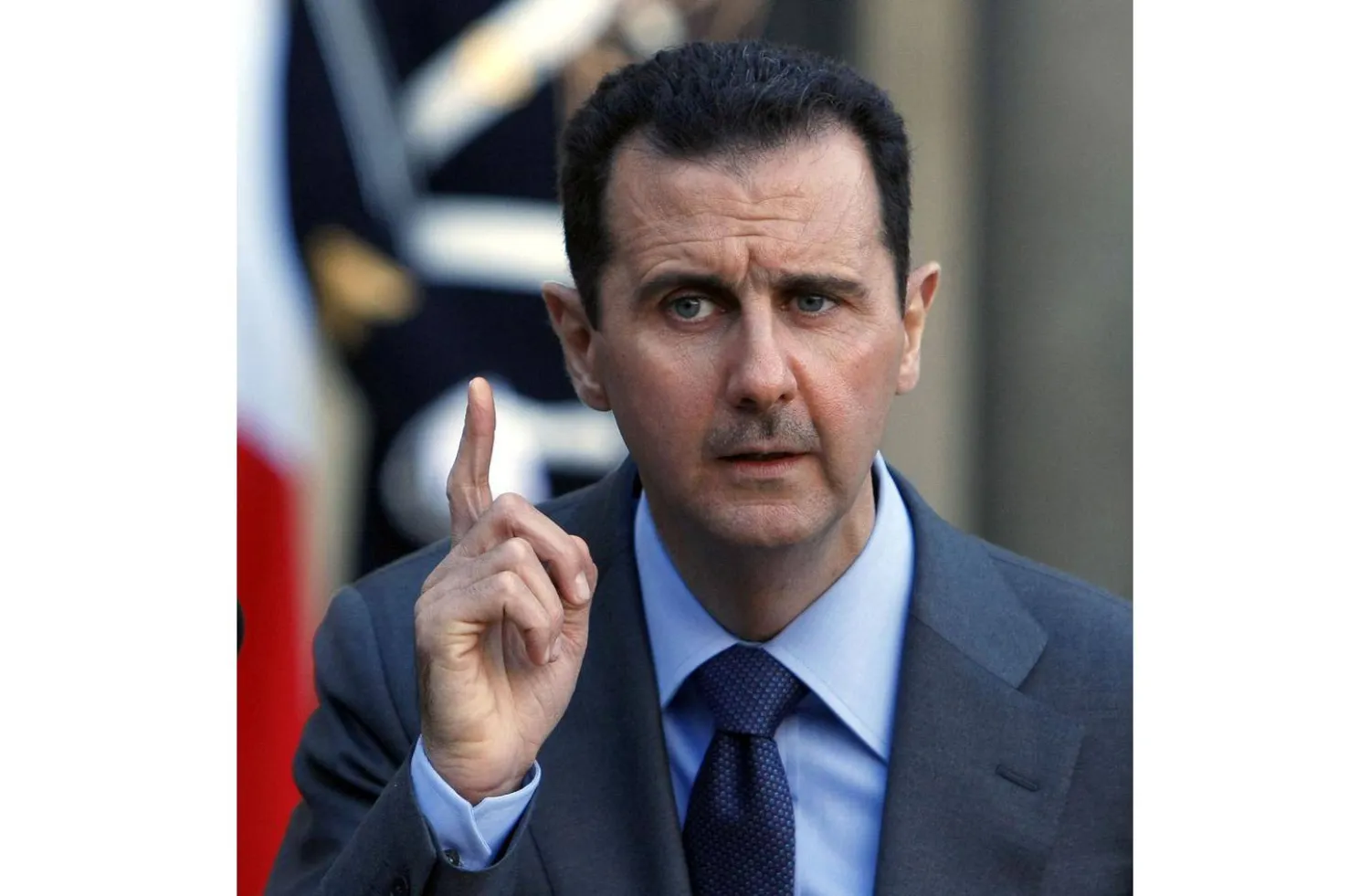
Ousted Syrian President Bashar Assad - File Photo
TT

Lebanese Army Detains Bashar Assad’s Relative on Weapons and Drugs Charges

Ousted Syrian President Bashar Assad - File Photo

Lebanese authorities have detained a relative of ousted Syrian President Bashar Assad along with the son of a notorious drug dealer in northeast Lebanon on charges of carrying weapons and drugs, officials and the Lebanese army said Saturday.

Suleiman Assad and Ali Zeiter, son of Noah Zeiter, the suspected drug trafficker arrested last year, were detained Friday near the northeastern city of Baalbek, said the two judicial officials, who spoke on condition of anonymity because they were not authorized to speak to the media. Suleiman Assad is the son of Hilal Assad, a cousin of the ousted president, The AP news reported.

A number of Syrian officials and relatives of Assad have fled from Syria to other countries including Lebanon, after the five-decade Assad family rule came to an end in December 2024, when the opposition seized power. Bashar Assad and his younger brother, Maher, have been living in Russia.

The Lebanese army said in a statement that it detained three people, including a Syrian citizen who did not have documents proving that he is staying legally in Lebanon.

The army said they had weapons with them along with hashish, a drug that is processed from cannabis that are widely planted in northeast Lebanon. The army did not release the names but the initials of their first and family names matched those of Assad and Zeiter. The army said they were questioned under the supervision of judicial officials.

The arrest of Suleiman Assad comes weeks after Lebanon handed over to Syrian authorities a retired major general who commanded a division in Bashar Assad’s army.