Tony Adams: ‘Alcohol Gave Me a Good Hiding – I Needed a Lot of Pain’

 Tony Adams says those in sport struggling ‘need a safe space’ to talk where ‘it won’t get on the socials’. Photograph: Andy Hooper/Daily Mail
Tony Adams says those in sport struggling ‘need a safe space’ to talk where ‘it won’t get on the socials’. Photograph: Andy Hooper/Daily Mail
TT

Tony Adams: ‘Alcohol Gave Me a Good Hiding – I Needed a Lot of Pain’

 Tony Adams says those in sport struggling ‘need a safe space’ to talk where ‘it won’t get on the socials’. Photograph: Andy Hooper/Daily Mail
Tony Adams says those in sport struggling ‘need a safe space’ to talk where ‘it won’t get on the socials’. Photograph: Andy Hooper/Daily Mail

“Captaining your country, going out at Wembley, captaining Arsenal to 10 trophies, playing your first game – they’re all amazing things. But, phew, saving people’s lives takes it out of all context.” It took Tony Adams a long time to really recognise what he has achieved with the Sporting Chance Clinic, the charity he established to provide support for sports professionals with mental health and addiction issues.

“Sometimes I have put myself on the cross in sobriety, definitely the early years. I didn’t feel the effect of the charity for a long time. I feel amazing now that I started this. I am going to cry if I am not careful.” Adams’s voice cracks before he continues: “I will cry later. Before, it was just another thing I did like winning the FA Cup. Done that, what’s next? Get on with it.

“When I was at the bottom, you see, football was off the radar. The game that I love to death, absolutely has given me everything in my life, why I’m here sitting with you guys today, is football. And I couldn’t give a fuck. It was off the agenda. The charity is the best thing I’ve ever done.”

The former Arsenal captain, whose battle with alcoholism is well documented, not least in his autobiographies Addicted and Sober, is speaking hours before the charity he founded and pioneered celebrates its 20th anniversary with a dinner.

It took hitting rock bottom himself to recognise that he needed help. “I needed a lot of pain,” Adams recalls. “Alcohol gave me a good hiding; prison, intensive care, pissing myself, shitting myself, still not giving up. Do you know what I mean? Sleeping with people I didn’t want to sleep with.

“I have to remind myself, at the end of my drinking I did not want to live, but I didn’t know how to kill myself. I was at ‘jumping off point’, we call it. I got there, and only then was I able to ask for help.”

Once he was sober, and having seen the support available from the employers of fellow addicts, such as a tube driver and a postman, his eyes were opened to what was missing in his own profession.

Adams sighs: “I got a couple of people over to look at the landscape at that time for addiction in the country, with all the sports organisations. They kind of confirmed that nothing was going on, really. They phoned the British Olympic Association and said: ‘What do you do with your athletes if they get done for taking cocaine?’ [The BOA] said: ‘A two-year ban.’ But they said: ‘What do you do for the athlete?’

“I got that answer from every single organisation that I went to. Football Foundation, the FA, the lot. No one was helping. Nobody wanted to take responsibility. They didn’t think it was their job.”

Two decades later and Sporting Chance has filled the hole. Its independence was important. “Highly tuned athletes want to talk to someone safe. It’s not gonna get out. It won’t get on the socials. They need to trust someone. I knew that very early on. The PFA said: ‘Bring it on board.’ The FA said: ‘Bring it to St George’s Park.’ But I said I couldn’t get involved. It had to be independent so players could come to us and feel free to deal with their stuff.”

The “stuff” is a variety of problems and one of the biggest is gambling. Of the 30% of patients who come to the clinic with an addiction, 70% have a problem with gambling. “Addictions within football, we’re talking gambling,” says Adams. “Premier League, it’s a bit of an epidemic to be honest.”

Although Adams has concerns over the prevalence of betting and alcohol companies within football, Sporting Chance stays neutral. “As a charity we are not anti-gambling and not anti-drinking,” he says. “We are very pro athletes who want help. We are not involved in the politics of the gambling companies or sponsorship. We don’t take any sponsorship from gambling or alcohol.

“It’s not part of me. I can’t be associated with something that nearly killed me. That would be morally wrong … Ideally I would get the advertising out of the game because it does influence people.”

For Adams, the timing of his sobriety with Arsène Wenger’s arrival at Arsenal helped. “I was six weeks clean and sober and going to meetings. It was great having someone that understood. Maybe not empathised but sympathised. His mum and dad had a pub near Strasbourg, he saw the way that alcohol changed people. He saw the way that gambling changed people. Subtly, more different, but he did see the psychological effect. He’s not an idiot, that guy. It’s one of his strong points, the psychology. He is an amazing man.”

The centre-back’s relationship with his former manager is not what it was, though. Rifts emerged when Adams felt his attempt to come back to work for the club as a coach was “handled badly”.

Adams says of part of the reason Wenger clung on to the Arsenal job for so long: “He was probably an addict. He couldn’t let go at the end – he’s a typical addict. He’s completely obsessed with the game, every single minute. It maybe cost him relationships and I think it cost him his job and not being able to let go.”

As an Arsenal fan, Adams says: “It’s been bloody depressing the last 10 years”. What is to blame? “Recruitment. It’s been very poor. You get players two ways: academy or buy them in. We haven’t had the money to buy them through the transition and I don’t think we have had the network, to be honest; 17 backroom staff gone, six scouts gone, Stevie Morrow [head of youth scouting] gone, probably the best academy scout in the country sacked. To bring players through agents, it might be the way the game is going but not how I would build.

“The whole club had different values. It was smaller. It’s a different game. It’s a business now. That level of connection within the club, a disconnect with the fans as well, it’s a real issue in the game.”

Adams is connected to another sport, as president of the Rugby Football League. The signing of Israel Folau by Catalans Dragons this week has provoked a significant backlash because of homophobic comments the Australian made on social media last year, but Adams declines to offer an opinion.

“I don’t really want to go there to be honest with you,” he says. “I have been told not to get into it and I don’t know enough about it. I know a little of Keegan Hirst’s story [the only current out gay rugby league player in Britain] and I like him a lot.”

He explains that his one-year role is aimed at cementing the relationship between the RFL and Sporting Chance and helping player welfare more broadly. “It’s a not-paid, to the disgust of my wife, honorary position, and I’m not going to get involved commenting on stuff.”

The Guardian Sport
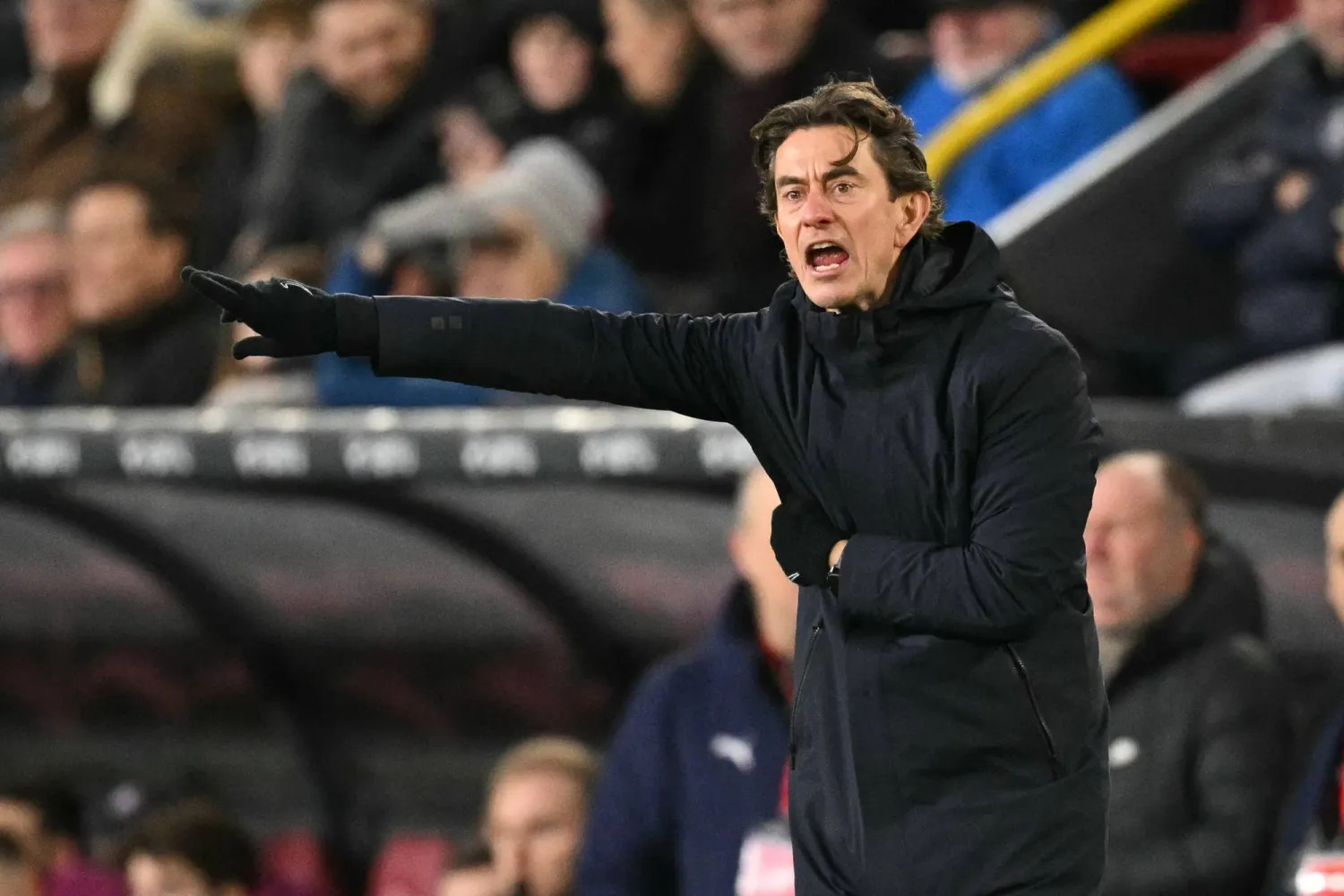


Morocco Coach Dismisses Aguerd Injury Talk, Backs Ait Boudlal ahead of Mali Test

Soccer Football - Africa Cup of Nations - Round of 16 - Morocco v South Africa - Laurent Pokou Stadium, San Pedro, Ivory Coast - January 30, 2024 Morocco coach Walid Regragui reacts REUTERS/Siphiwe Sibeko
TT

Morocco Coach Dismisses Aguerd Injury Talk, Backs Ait Boudlal ahead of Mali Test

Soccer Football - Africa Cup of Nations - Round of 16 - Morocco v South Africa - Laurent Pokou Stadium, San Pedro, Ivory Coast - January 30, 2024 Morocco coach Walid Regragui reacts REUTERS/Siphiwe Sibeko

Morocco coach Walid Regragui has dismissed reports that defender Nayef Aguerd is injured, saying the center back was fit and ready for ​Friday’s Africa Cup of Nations Group A clash against Mali.

"Who told you Aguerd is injured? He’s training as usual and has no problems," Regragui told reporters, Reuters reported.

Regragui confirmed captain Romain Saiss will miss the game with a muscle injury sustained against Comoros in their tournament ‌opener, while ‌full back Achraf Hakimi, ‌recently ⁠crowned ​African Player ‌of the Year, is recovering from an ankle problem sustained with Paris St Germain last month and could feature briefly. "Hakimi is doing well and we’ll make the best decision for him," Regragui said. The coach also heaped praise on 19-year-old ⁠defender Abdelhamid Ait Boudlal, calling him "a great talent".

"I’ve been following ‌him for years. I called ‍him up a ‍year and a half ago when he was ‍a substitute at Rennes and people criticized me. Today everyone is praising him – that shows our vision is long-term," Regragui said. "We must not burn the ​player. We’ll use him at the right time. We’ll see if he starts tomorrow ⁠or comes in later."

Ait Boudlal echoed his coach's confidence.

"We know the responsibility we carry. Every game is tough and requires full concentration. We listen carefully to the coach’s instructions and aim to deliver a performance that meets fans’ expectations," he said.

Morocco opened the tournament with a 2-0 win over Comoros and will secure qualification with victory over Mali at Rabat’s Prince Moulay Abdellah ‌Stadium.

"It will be a tough match against a strong team," Regragui added.


Mali coach Saintfiet hits out at European clubs, FIFA over AFCON changes

Mali coach Tom Saintfiet pictured at his team's opening AFCON game against Zambia in Casablanca on Monday © Abdel Majid BZIOUAT / AFP/File
TT

Mali coach Saintfiet hits out at European clubs, FIFA over AFCON changes

Mali coach Tom Saintfiet pictured at his team's opening AFCON game against Zambia in Casablanca on Monday © Abdel Majid BZIOUAT / AFP/File

Mali coach Tom Saintfiet on Thursday railed against the decision to play the Africa Cup of Nations every four years instead of two, insisting the move was forced upon the continent by FIFA and European clubs motivated by money.

"I am very shocked with it and very disappointed. It is the pride of African football, with the best players in African football," the Belgian told reporters in Rabat ahead of Friday's AFCON clash between Mali and Morocco, AFP reported.

"To take it away and make it every four years, I could understand if it was a request for any reason from Africa, but it is all instructed by the big people from (European governing body) UEFA, the big clubs in Europe and also FIFA and that makes it so sad."

Saintfiet, 52, has managed numerous African national teams including Gambia, who he led to the quarter-finals of the 2022 Cup of Nations.

He was appointed by Mali in August last year and on Friday will lead them out against current AFCON hosts in a key Group A game at the Prince Moulay Abdellah Stadium.

The Cup of Nations has almost always been held at two-year intervals since the first edition in 1957 but Confederation of African Football president Patrice Motsepe last weekend announced that the tournament would go ahead every four years after a planned 2028 tournament.

"We fought for so long to be respected, to then listen to Europe to change your history -- because this is a history going back 68 years -- only because of financial requests from clubs who use the load on players as the excuse while they create a World Cup with 48 teams, a Champions League with no champions," Saintfiet said.

"If you don't get relegated in England you almost get into Europe, it is so stupid," he joked.

"If you want to protect players then you play the Champions League with only the champions. You don't create more competitions with more load. Then you can still play AFCON every two years.

"Africa is the biggest football continent in the world, all the big stars in Europe are Africans, so I think we disrespect (Africa) by going to every four years.

"I am very sad about that -- I hoped that the love for Africa would win over the pressure of Europe."


My Grandfather Encouraged Me to Play for Algeria, Luca Zidane Says

 Algeria's goalkeeper #23 Luca Zidane reacts during the Africa Cup of Nations (CAN) Group E football match between Algeria and Sudan at Moulay Hassan Stadium in Rabat on December 24, 2025. (AFP)
Algeria's goalkeeper #23 Luca Zidane reacts during the Africa Cup of Nations (CAN) Group E football match between Algeria and Sudan at Moulay Hassan Stadium in Rabat on December 24, 2025. (AFP)
TT

My Grandfather Encouraged Me to Play for Algeria, Luca Zidane Says

 Algeria's goalkeeper #23 Luca Zidane reacts during the Africa Cup of Nations (CAN) Group E football match between Algeria and Sudan at Moulay Hassan Stadium in Rabat on December 24, 2025. (AFP)
Algeria's goalkeeper #23 Luca Zidane reacts during the Africa Cup of Nations (CAN) Group E football match between Algeria and Sudan at Moulay Hassan Stadium in Rabat on December 24, 2025. (AFP)

Luca Zidane, son of French World Cup-winner Zinedine, said his grandfather had supported him in switching international allegiance to Algeria, after playing for France at junior level.

Zinedine Zidane is widely regarded as one of the greatest French footballers, inspiring his country to their first World Cup victory in 1998 and scoring two goals in the 3-0 win over Brazil in the final in Paris. The midfielder also guided them to the Euro 2000 trophy, achieving an unprecedented double for Les Bleus.

The decision to switch nationalities by Luca, who chose to avoid comparisons with ‌his father from ‌an early age by opting to play as ‌a ⁠goalkeeper, came as ‌a surprise, especially since he made it at the age of 27.

He quickly became Algeria's first-choice keeper, and his father watched him play against Sudan in Vladimir Petković's side's opening Africa Cup of Nations Group E match on Wednesday, which they won 3-0.

Zidane was not tested much during the match, but he did make an important save from a dangerous chance that fell to Yaser Awad with the score at ⁠1-0.

"When I think of Algeria, I remember my grandfather. Since childhood, we’ve had this Algerian culture in the ‌family," Zidane told BeIN Sports France.

"I spoke to ‍him before playing for the national ‍team, and he was extremely happy about this step. Every time I receive ‍an international call-up, he calls me and says that I made a great decision and that he is proud of me."

He said his father had also backed his decision. "He supported me," Luca said. "He said to me ‘Be careful, this is your choice. I can give you advice, but in the end, the final decision will be yours'.

"From the moment the coach and the federation ⁠president reached out to me, it was clear that I wanted to go and represent my country. After that, I naturally spoke with my family, and they were all happy for me."

Zinedine Zidane, who was sent off in the 2006 World Cup final in Germany which they lost to Italy on penalties, won the Champions League in 2002 with Real Madrid and claimed the Ballon d'Or award in 1998.

His son, who plays in Spain for Granada after starting his career at Real Madrid, has always worn a shirt bearing the name Luca, but he decided his national team jersey would carry the name Zidane.

"So for me, being able to honor ‌my grandfather by joining the national team is very important," he said. "The next jersey with the name on it will be for him."