Saudi Labor Ministry Improves Contracts to Increase Efficiencyhttps://english.aawsat.com/home/article/2147151/saudi-labor-ministry-improves-contracts-increase-efficiency
Saudi Labor Ministry Improves Contracts to Increase Efficiency
Saudi Ministry of Labor and Social Development Logo
The Saudi labor market is witnessing a tangible progress in improving contracts and raising its efficiency and competitiveness, according to the Ministry of Labor and Social Development.
The Ministry asserted it wants to ensure that the rights of workers are protected through the mandatory electronic documentation program of labor contracts of employees in the private sector by the end of 2020.
The program aims to protect the rights of workers by archiving and documenting their contracts so that they are aware of the data and whether they approve its content or not.
It aims to protect the rights of the parties to the relationship, support emerging business, and remove barriers to business growth.
According to the minister’s new decision, all new contracts will be documented electronically.
The Ministry has recently held a seminar with the private sector in Riyadh to exchange views on improving the work environment and attract national talents, with the participation of Minister of Labor and Social Development Ahmed al-Rajhi, and a number of business owners and entrepreneurs in the private sector.
Business owners and private sector officials believe it is important to improve the contractual relations in order to create an attractive work environment for citizens and attract competencies to the labor market to serve the Kingdom's economy.
Is the $1.8 Trillion Private Credit Market Headed for a ‘Credit Winter’?https://english.aawsat.com/business/5279631-18-trillion-private-credit-market-headed-%E2%80%98credit-winter%E2%80%99
Is the $1.8 Trillion Private Credit Market Headed for a ‘Credit Winter’?
Raindrops hang on a sign for Wall Street outside the New York Stock Exchange in Manhattan in New York City, New York, US, October 26, 2020. (Reuters)
Could private credit become the next global financial crisis? The question is gaining urgency across financial and regulatory circles after years of explosive growth in lending outside the traditional banking system created a market worth more than $1.8 trillion, much of it operating beyond close regulatory scrutiny.
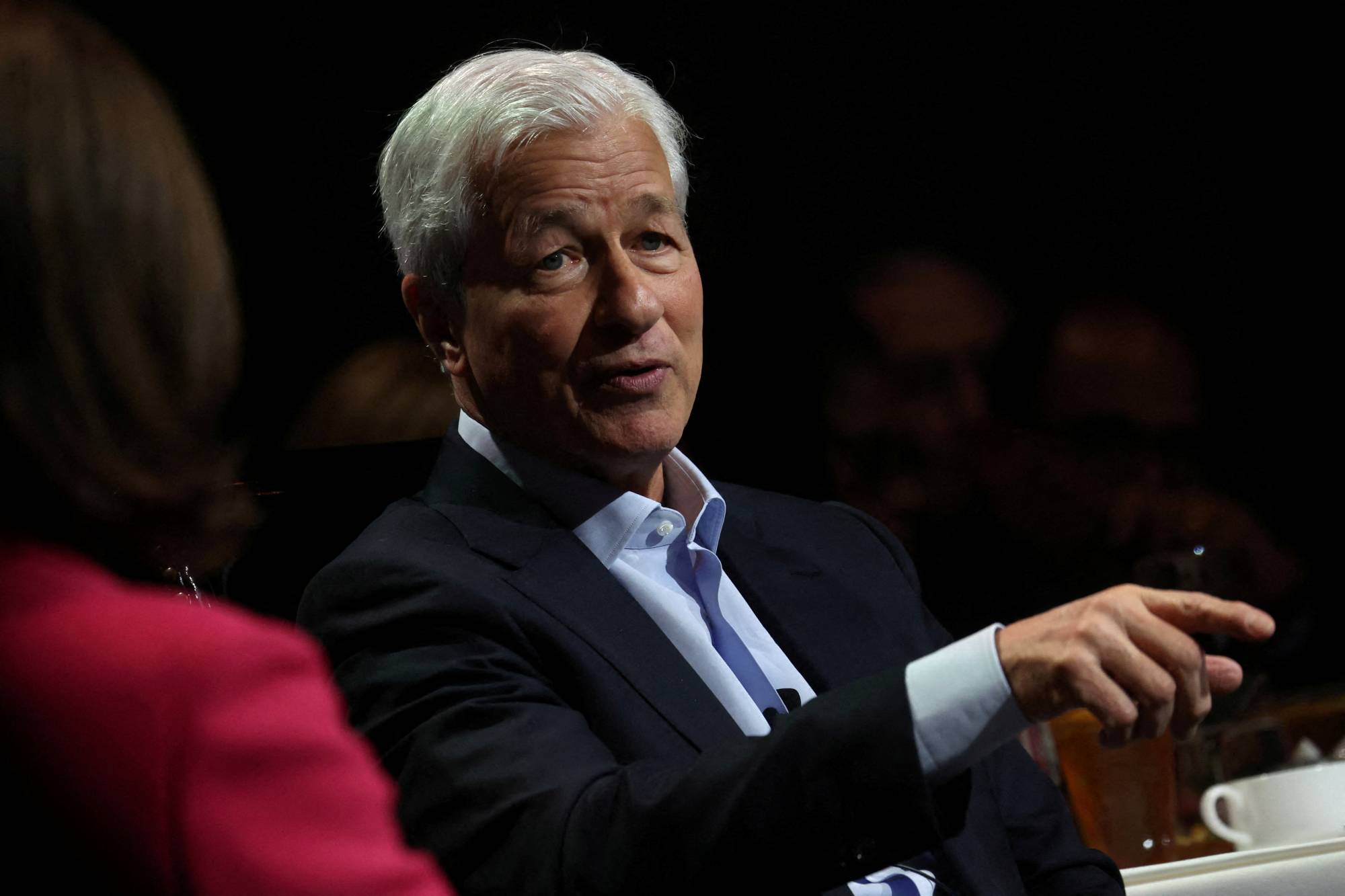
The concerns sharpened after JPMorgan Chase CEO Jamie Dimon warned that losses in the sector could exceed expectations once the credit cycle turns, citing deteriorating lending standards and rising leverage.
Regulators are beginning to respond. The Financial Stability Board, which includes G20 central bank governors and finance ministers, has urged national regulators to tighten oversight of private credit markets. At the same time, the European Central Bank identified private credit as one of the leading threats to financial stability alongside elevated asset valuations.
In its Financial Stability Review released in late May, the ECB highlighted two major vulnerabilities within the sector. The first was what it described as a “snowball effect,” with some funds struggling to liquidate assets while facing rising redemption requests from investors, increasing the risk of distressed sales.
The second was the rise of “double leverage,” as private credit funds increasingly borrow from traditional banks to finance their own lending activity, creating deeper links between banks and nonbank lenders.
Mohammed Farraj, senior executive for asset management at Arbah Capital, explained that the sector’s rapid expansion was rooted in structural shifts that followed the 2008 global financial crisis. As banks pulled back from lending to small and medium-sized companies under stricter Basel III capital and liquidity regulation, private credit funds moved in to fill the financing gap.
Jamie Dimon, Chairman and Chief Executive officer (CEO) of JPMorgan Chase & Co. (JPM) speaks to the Economic Club of New York in Manhattan in New York City, US, April 23, 2024. (Reuters)
“Their flexibility and ability to move quickly outside conventional banking restrictions allowed them to capture significant market share,” Farraj told Asharq Al-Awsat.
Private credit refers to direct lending to companies through nonbank financial institutions without using banks or public debt markets. Unlike traditional banks, which rely on short-term deposits and operate under strict liquidity requirements, private credit funds are financed by long-term institutional capital from pension funds, insurers, and sovereign wealth funds.
The sector encompasses a wide range of financing tools, including direct lending, mezzanine financing, distressed debt investing, startup financing, and asset-backed lending tied to real estate, equipment, or intellectual property.
Years of ultra-low interest rates after 2008 accelerated institutional demand for private credit as investors searched for higher yields. More recently, higher global interest rates have made the sector even more attractive because many private credit loans carry floating rates that rise automatically with central bank tightening.
Farraj argued that the current environment offers annual returns ranging from 10 percent to 15 percent, well above those available in traditional fixed-income markets.
The company logo and trading information for BlackRock is displayed on a screen on the floor of the New York Stock Exchange (NYSE) in New York, US, March 30, 2017. (Reuters)
However, he cautioned that higher borrowing costs are also placing growing pressure on heavily indebted companies, increasing the risk of defaults, particularly among businesses with fragile balance sheets.
Transparency remains one of the sector’s biggest weaknesses. Private credit assets are not priced daily in public markets but are instead valued periodically using internal models, potentially delaying the recognition of losses and creating a misleading impression of stability.
Concerns intensified earlier this year after a BlackRock private credit fund cut its net asset value by nearly 19 percent because of deteriorating technology-sector loans, prompting closer scrutiny from US regulators.
Despite mounting concerns, Farraj maintained that private credit differs fundamentally from the 2008 mortgage crisis because losses are concentrated among sophisticated institutional investors rather than bank depositors.
Still, he warned that hidden systemic risks could emerge through the growing ties between banks and private credit funds.
He expected the sector to surpass $3 trillion in the coming years, driven by institutional demand and the expanding use of artificial intelligence in credit analysis and risk assessment.
Saudi Healthcare Firms Post $305 Million in Q1 Profithttps://english.aawsat.com/business/5279622-saudi-healthcare-firms-post-305-million-q1-profit
Saudi Healthcare Firms Post $305 Million in Q1 Profit
Members of a family gather to visit a patient at a Dr. Sulaiman Al Habib hospital in Saudi Arabia (website)
Saudi Arabia’s listed healthcare companies reported combined net profits of SAR1.148 billion ($305.9 million) in the first quarter of 2026, as aggressive expansion plans and higher financing costs pressured earnings despite strong demand for medical services.
The Kingdom’s 13 publicly traded healthcare firms saw profits decline 38.3 percent from SAR1.862 billion ($496.2 million) a year earlier, according to financial disclosures on the Saudi Exchange (Tadawul). Analysts described the drop as a temporary correction tied to capital expenditures rather than a sign of weakening sector fundamentals.
The sector continued to benefit from rising demand for healthcare services, growing patient volumes, higher hospital occupancy rates, geographic expansion, increased operating capacity, and the steady growth of health insurance coverage. Government-backed digital transformation and healthcare reforms under Saudi Vision 2030 also continued to support the industry.
The listed firms include Dr. Sulaiman Al Habib Medical Group, Mouwasat Medical Services, Dallah Health, Saudi Chemical Company Holding , Ayyan Investment company, Care Medical, Fakeeh Care Group, SMC Healthcare, Al Hammadi Holding, Almoosa Health, Middle East Healthcare Company (Saudi German Health), Scientific and Medical Equipment House, and Canadian Medical Center.
Dr. Sulaiman Al Habib Medical Services Group remained the sector’s dominant player, accounting for about 43 percent of total industry profits. The company posted SAR503 million in net income during the quarter, although earnings fell 9.6 percent because of higher fixed costs linked to strategic expansion projects, as well as increased depreciation and financing expenses. Revenue nevertheless rose 8.8 percent to SAR3.44 billion.
Mouwasat Medical Services ranked second, reporting profits of SAR201 million, up 2 percent year-on-year. The company attributed the performance to the resilience of its operating model, lower zakat provisions, and a 9.1 percent increase in revenue to SAR 833.8 million.
Saudi Chemical Holding Company came third, posting net profits of SAR87.2 million, up 5.9 percent from the same period last year. The gains were driven by higher product sales volumes, lower provisions for trade receivables, reduced financing expenses, and profits from the revaluation of derivative instruments used to hedge interest-rate risks.
Financial analyst Nasser Alrashid said the healthcare sector remains among the Saudi market’s most defensive and stable industries, supported by long-term drivers including population growth, expanding health insurance coverage, and Vision 2030 healthcare reforms.
For his part, market analyst Tariq Al Atiq said sector profitability is likely to improve in the second half of 2026 as companies gradually absorb expansion-related costs and new projects reach stronger occupancy levels. He added that privatization, public-private partnerships, and wider adoption of digital technology and artificial intelligence are expected to further support growth.
Trump Administration Proposes 25% Tariff to Punish Brazil Over Trade Practiceshttps://english.aawsat.com/business/5279586-trump-administration-proposes-25-tariff-punish-brazil-over-trade-practices
US Trade Representative Jamieson Greer speaks with reporters at the White House in Washington, DC, US, April 2, 2026. (Reuters)
TT
TT
Trump Administration Proposes 25% Tariff to Punish Brazil Over Trade Practices
US Trade Representative Jamieson Greer speaks with reporters at the White House in Washington, DC, US, April 2, 2026. (Reuters)
The Trump administration has proposed a new punitive tariff of 25% on many imports from Brazil, after deciding its practices were unfair on a range of issues from digital trade to illegal deforestation, top trade official Jamieson Greer said on Monday.
The measures, under the Section 301 trade legislation, cover areas such as electronic payment services, preferential tariffs, intellectual property protection and ethanol market access as well, the Office of the United States Trade Representative said.
It proposed the new duties as it released the results of its unfair trade practices investigation into Brazil that started last year under Section 301 of the Trade Act of 1974.
But it excluded some items, such as beef, coffee, rare earths, other metals and aircraft parts from the new tariffs.
Brazil's practices in the areas investigated "are unreasonable and burden or restrict US commerce, are thus actionable under Section 301(b) of the Trade Act," the USTR said in a statement.
The tariffs would partially replace a tariff of 50% on many Brazilian goods imposed last year by President Donald Trump, with 40% as a punishment for Brazil's prosecution of its former president, Trump ally Jair Bolsonaro.
However, the US Supreme Court struck down those duties in February.
In a statement, Greer said he launched the Section 301 investigation to tackle "longstanding and pervasive US concerns with certain of Brazil's trade policies and practices."
Despite recent engagement with Brazilian President Inacio Lula da Silva and his cabinet, Greer said the United States and Brazil "continue to have substantial differences in resolving issues identified in this investigation."
PUBLIC HEARING ON PROPOSED TARIFFS SET FOR JULY 6
The trade agency invited comment on the proposed tariffs through July 1, with a public hearing set for July 6. It faces a July 15 deadline for taking "responsive action" in the Section 301 investigation.
Trump used the same statute to impose sweeping tariffs on Chinese goods during his first term.
The USTR has several other open Section 301 investigations that are expected to lead to new duties.
Among these are one covering excess industrial capacity in China and 15 other trading partners, as well as one into enforcement of forced labor bans in 60 countries.
The agency opened a new investigation on Friday into Vietnam's intellectual property practices.
Regarding its Brazil findings, the USTR said the proposed new 25% tariff would not apply to Brazilian imports subject to national security-related tariffs under Section 232 of the Trade Expansion Act of 1962.
These include 50% duties on steel, aluminum and copper and 25% duties on finished products made from those metals, as well as a 25% duty on motor vehicles and auto parts.
The USTR said products exempted from the proposed 25% tariffs included many fruits and nuts, crude oil and petroleum products, pharmaceutical compounds, organic chemicals and fertilizers.
These are in addition to beef, coffee, rare earths, certain other metals and ores and Brazilian aircraft and aircraft parts.
لم تشترك بعد
انشئ حساباً خاصاً بك لتحصل على أخبار مخصصة لك ولتتمتع بخاصية حفظ المقالات وتتلقى نشراتنا البريدية المتنوعة