

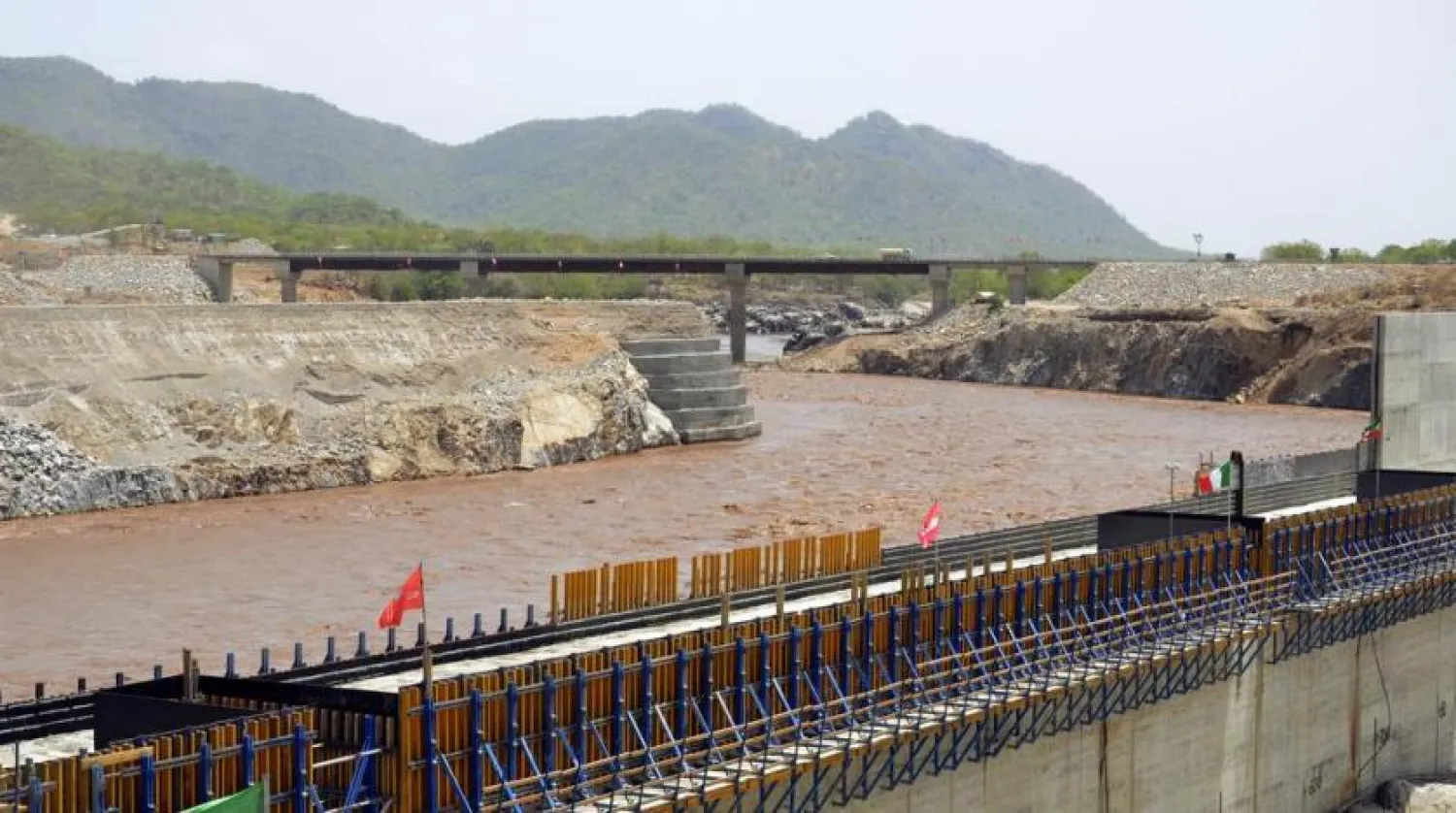

Ethiopia Pushes for African Role in Renaissance Dam Dispute

The Grand Renaissance Dam hydroelectric project in Ethiopia. AFP file photo
TT

Ethiopia Pushes for African Role in Renaissance Dam Dispute

The Grand Renaissance Dam hydroelectric project in Ethiopia. AFP file photo

The stalled negotiations on the Grand Ethiopian Renaissance Dam has caused growing tension between Egypt and Ethiopia.

Addis Ababa is looking for an African Union role to solve the GERD dispute after rejecting the US mediation and accusing Washington of bias, while Egypt continues to blame Ethiopia for the failure in achieving progress in the negotiations.

Egypt, Ethiopia and Sudan had expected to sign an agreement in Washington last month, but Ethiopia skipped the meeting and only Egypt has initialed the deal thus far.

Ethiopian Prime Minister Abiy Ahmed now wants to revive a previous proposal to ask South Africa’s president - as the incoming chair of the African Union (AU) - to intervene in the dispute with Egypt.

Some Ethiopian security experts urged the AU on Sunday to assume its responsibilities and back a solution in the stalled negotiations.

In January, Cairo ignored Ahmed’s proposal, attaching hopes on negotiations between the three Nile basin countries through the mediation of the US and the World Bank.

Training coordinator at the Institute for Security Studies (ISS) Meressa Dessu told the Ethiopian news agency on Sunday that AU’s role is important to solve disputes in the continent.

“The Nile dispute is an African problem. It affects more than 10 African Union member states and this proves that the Union should be responsible to solve issues related to the Nile,” she said.

On March 5, the Arab League Council voiced rejection of any infringement on Egypt’s historical rights to the waters of the Nile River.

Disso described the League’s statement concerning the dam as biased because it ignored Ethiopia’s rights.

Another researcher at the ISS, Dawit Yohannes, said that the dam dispute might have deep repercussions on peace and security in the region.

“This is why the African Union should participate in solving such conflicts in the continent,” Yohannes added.

Egyptian Foreign Minister Sameh Shoukry has delivered messages from President Abdel Fattah el-Sisi to several regional, African and European leaders as part of Cairo’s efforts to press its case in the dispute with Ethiopia.




EU Condemns Israel's West Bank Control Measures

The Israeli settlement of Har Homa, seen from the West Bank city of Bethlehem, Tuesday, Dec. 17, 2024. (AP)
TT

EU Condemns Israel's West Bank Control Measures

The Israeli settlement of Har Homa, seen from the West Bank city of Bethlehem, Tuesday, Dec. 17, 2024. (AP)

The European Union on Monday condemned new Israeli measures to tighten control of the West Bank and pave the way for more settlements in the occupied Palestinian territory, AFP reported.

"The European Union condemns recent decisions by Israel's security cabinet to expand Israeli control in the West Bank. This move is another step in the wrong direction," EU spokesman Anouar El Anouni told journalists.


Atrocities in Sudan's El-Fasher Were 'Preventable Human Rights Catastrophe'

Sudanese displaced people who left El Fasher after its fall, sit in the shade in Tawila at the Rwanda camp reception point on December 17, 2025. (Photo by AFP)
TT

Atrocities in Sudan's El-Fasher Were 'Preventable Human Rights Catastrophe'

Sudanese displaced people who left El Fasher after its fall, sit in the shade in Tawila at the Rwanda camp reception point on December 17, 2025. (Photo by AFP)

The atrocities unleashed on El-Fasher in Sudan's Darfur region last October were a "preventable human rights catastrophe", the United Nations said Monday, warning they now risked being repeated in the neighbouring Kordofan region.


"My office sounded the alarm about the risk of mass atrocities in the besieged city of El-Fasher for more than a year ... but our warnings were ignored," UN rights chief Volker Turk told the Human Rights Council in Geneva.


He added that he was now "extremely concerned that these violations and abuses may be repeated in the Kordofan region".


Arab League Condemns Israel's Decisions to Alter Legal, Administrative Status of West Bank

A general view shows the opening session of the meeting of Arab foreign ministers at the Arab League Headquarters (Reuters)
TT

Arab League Condemns Israel's Decisions to Alter Legal, Administrative Status of West Bank

A general view shows the opening session of the meeting of Arab foreign ministers at the Arab League Headquarters (Reuters)

The General Secretariat of the Arab League strongly condemned decisions by Israeli occupation authorities to impose fundamental changes on the legal and administrative status of the occupied Palestinian territories, particularly in the West Bank, describing them as a dangerous escalation and a flagrant violation of international law, international legitimacy resolutions, and signed agreements, SPA reported.

In a statement, the Arab League said the measures include facilitating the confiscation of private Palestinian property and transferring planning and licensing authorities in the city of Hebron and the area surrounding the Ibrahimi Mosque to occupation authorities.

It warned of the serious repercussions of these actions on the rights of the Palestinian people and on Islamic and Christian holy sites.

The statement reaffirmed the Arab League’s firm support for the legitimate rights of the Palestinian people, foremost among them the establishment of their independent state on the June 4, 1967 borders, with East Jerusalem as its capital.