Half-Million Infected Worldwide, Lockdown Economic Toll Mounts

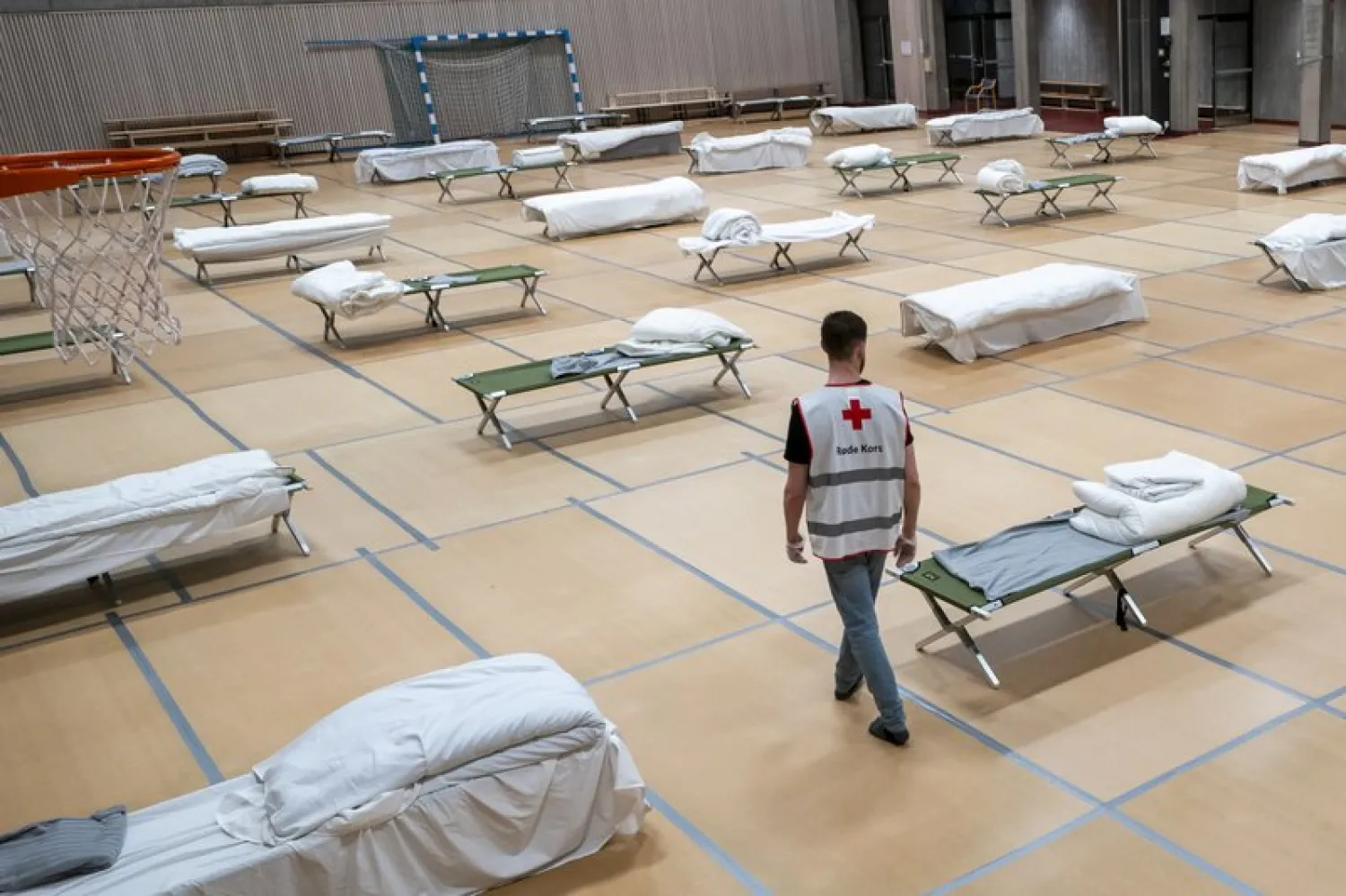
A Red Cross volunteer looks at beds set up for homeless people in the gymnasium of Uranienborg school, which is closed due to the corona eruption, in Oslo, Thursday, March 26, 2020. (Heiko Junge/NTB Scanpix via AP)
TT

Half-Million Infected Worldwide, Lockdown Economic Toll Mounts

A Red Cross volunteer looks at beds set up for homeless people in the gymnasium of Uranienborg school, which is closed due to the corona eruption, in Oslo, Thursday, March 26, 2020. (Heiko Junge/NTB Scanpix via AP)

The human and economic toll of the lockdowns against the coronavirus mounted Thursday as India struggled to feed the multitudes, Italy shut down most of its industry, and a record-shattering 3.3 million Americans applied for unemployment benefits in a single week. The US surpassed official Chinese government numbers to become the country with most reported infections.

As the number of cases worldwide topped a half-million and deaths climbed past 24,000, the damage to people's livelihoods and their well-being from the effort to flatten the rising curve started to come into focus.

In India, where the country's 1.3 billion people were under orders to stay home, legions of poor were suddenly thrown out of work, and many families were left struggling for something to eat.

"Our first concern is food, not the virus," said Suresh Kumar, 60, a bicycle rickshaw rider in New Delhi whose family of six relies on his daily earnings of 300 rupees, or $4. "I don´t know how I will manage."

India has the world's second-highest number of people living in extreme poverty, with produce peddlers, maids and other low-wage workers living day to day. The government announced a 1.7 trillion rupee ($22 billion) economic stimulus package to deliver monthly rations of grain and lentils to 800 million people.

Around the globe, the death toll rose to about 8,200 in Italy, 4,300 in Spain and 1,700 in France, including a 16-year-old. The US had about 1,300 deaths, about 400 of them in New York State, the worst hotspot in the nation. Most of those victims were in New York City, where hospitals are getting swamped.

A running count kept by Johns Hopkins University showed the United States now had the most reported cases of any country Thursday, with more than 85,000. Italy and China, the latter of which was the origin of the outbreak late last year, both had reported more than 80,000.

Louisiana was quickly becoming another smoldering hotspot. The number of new cases there jumped by more than 500 Thursday, for a total of over 2,300, with 86 deaths, including a 17-year-old, the health department said. The higher infection numbers reflected an increase in testing. New Orleans was gearing up for a possible overflow at hospitals, with plans to treat as many as 3,000 patients at the city´s convention center.

From New York's Fifth Avenue and London's Piccadilly Circus to the boulevards of Paris and the streets of Rome and Madrid, restaurants, hotels, airlines, giant chains and small shops are all shuttered, and factories across both continents have ground to a halt, as cities, states and entire countries have ordered the closing of nonessential businesses and instructed people to stay home.

Companies in Europe are laying off workers at the fastest pace since 2009, according to surveys of business managers. And the US is bleeding jobs as well: The number of Americans applying for unemployment benefits last week was nearly five times the old record, set in 1982.

Dann Dykas, 37, of Portland, Oregon, was laid off from his job helping design and set up displays for trade shows.

"Everything is so surreal," he said. "I can't even get an interview for another job, and we now have to worry more about being careful and taking care of ourselves."

In Georgia, 33-year-old Ian Smith was let go from his job at a wine bar and is working "side hustles" and relying on the generosity of friends.

"On my worst days, it´s hopelessness, and on some of my better days, it´s `What possibility can I create in all of this?'" he said. "I can´t pretend that I always feel that, though."

In a rare positive sign, stocks rallied on Wall Street for the third straight day after an unprecedented $2.2 trillion economic rescue package to help businesses, hospitals and ordinary Americans pull through the crisis won passage in the Senate. The Dow Jones Industrial Average jumped more than 1,350 points, or over 6%.

The rescue plan, which is expected to be voted on in the House on Friday, would dispense checks of $1,200 per adult and $500 per child.

President Donald Trump, meanwhile, announced that federal officials are developing guidelines to rate counties by risk of virus spread, as he aims to ease the restrictions meant to slow the outbreak.

Deborah Birx, the White House coronavirus response coordinator, said the task force is concerned about certain counties in the Midwest that appear to be seeing a rapid increase in cases. She listed two: Wayne County in Michigan and Cook County in Illinois.

Montana joined the growing list of US states ordering residents to stay home to fight the virus' spread.

Italy, the eurozone's third-biggest economy and a major exporter of machinery, textiles and other goods, became perhaps the first Western developed nation to idle most of its industry, extending a shutdown on smaller, nonessential businesses to heavy manufacturers.

Among the companies in Italy that have shut down or rolled back production: Fiat Chrysler, Ferrari, Pirelli tires and Luxottica eyewear, maker of Ray-Bans and Oakleys.

The industrial lobby Confindustria estimates a cost of 70 billion to 100 billion euros ($77 billion-$110 billion) of national wealth per month if 70% of companies are closed, as anticipated.

"We are entering a war economy,´´ said Confindustria president Vincenzo Boccia.

Elsewhere around the world, South Africa, with the most industrialized economy in Africa, headed into a three-week lockdown starting Friday. The country is already in recession, with an unemployment rate of 29%.

And Britain unveiled another relief effort, this time aimed at the gig economy, many of whose workers are facing financial ruin. The government will give the self-employed grants equal to 80% of their average profits, up to 2,500 pounds ($2,975) per month.

In other developments:

__ New York state´s death toll jumped by 100 in one day, pushing the number to 385, Gov. Andrew Cuomo said. He added that experts expect the number to increase as critically ill patients who have been on ventilators for several days succumb to the virus. "That is a situation where people just deteriorate over time," Cuomo said.

__ China´s National Health Commission on Friday reported 55 new cases of the virus, including 54 it said were imported infections in recent arrivals from overseas. Once again, there were no new cases reported in Wuhan, the provincial capital where the coronavirus emerged in December. China said it is temporarily barring most foreigners from entering as it tries to curb imported cases.

__ In the Mideast, Saudi Arabia announced a total lockdown on the capital, Riyadh, and Islam's two holiest cities, Makkah and Medina, in addition to a nationwide curfew. In the United Arab Emirates, authorities announced an overnight weekend lockdown and used drones to tell people to stay home.

__ The leaders of the Group of 20 major industrialized nations held a video summit for safety reasons and vowed to work together to confront the crisis but made no specific commitments.

__ In Brazil, the country's governors are defying President Jair Bolsonaro over his call to reopen schools and businesses, dismissing his argument that the "cure" of widespread shutdowns is worse than the disease. As of Thursday, the country had more than 2,500 cases and 59 deaths.

For most people, the coronavirus causes mild or moderate symptoms, such as fever and cough that clear up in two to three weeks. For some, especially older adults and people with existing health problems, it can cause more severe illness, including pneumonia and death.

So far, more than 120,000 people have recovered, according to the Johns Hopkins University tally.


Bahraini Transport Minister to Asharq Al-Awsat: Each Country to Finance Its Share of Gulf Railway Project

A conceptual rendering of the Gulf railway interconnection project. (X)
TT

Bahraini Transport Minister to Asharq Al-Awsat: Each Country to Finance Its Share of Gulf Railway Project

A conceptual rendering of the Gulf railway interconnection project. (X)

The Gulf Cooperation Council (GCC) member states took a new step toward completing the railway interconnection project by signing the project's general agreement in Bahrain on Sunday. This comes as part of efforts to establish an integrated transport network linking the six nations and boosting the movement of passengers, goods, and commercial trade among them.

Bahraini Minister of Transportation and Telecommunications Dr. Sheikh Abdulla bin Ahmed Al Khalifa told Asharq Al-Awsat that each country will fund and execute the portion of the project located within its territory.

Meanwhile, the costs, fees, and expenses associated with the shared interconnection components among member states will be determined collectively, he added.

He explained that the agreement establishes a joint framework for the project's execution and operation, while defining the obligations of member states and their coordination mechanisms.

He noted that the network, which extends some 2,117 kilometers, aims to transport 6 million passengers and 200 million tons of freight by 2030, with the figures projected to rise to more than 8 million passengers and 271 million tons of freight by 2045.

The project spans from Kuwait, passing through Saudi Arabia, Bahrain, Qatar, and the UAE, all the way to Oman, with the goal of achieving full network operations by December 2030.

According to the minister, interconnection lines between adjacent countries can become operational as soon as their components are completed, without the need to wait for the entire Gulf network to be finalized.

National financing and potential partnerships

On private sector participation, Al Khalifa said that it remains one of the viable options for financing, executing, or operating certain components of the project, depending on the outcomes of economic and financial studies. He stressed that there is no unified public-private partnership model approved across the entire network.

There are currently no pre-existing agreements with specific international partners to finance or execute the project, he said. However, the expertise of global companies in the fields of design, engineering, technology, and operating systems could be utilized based on the project's needs and its various phases.

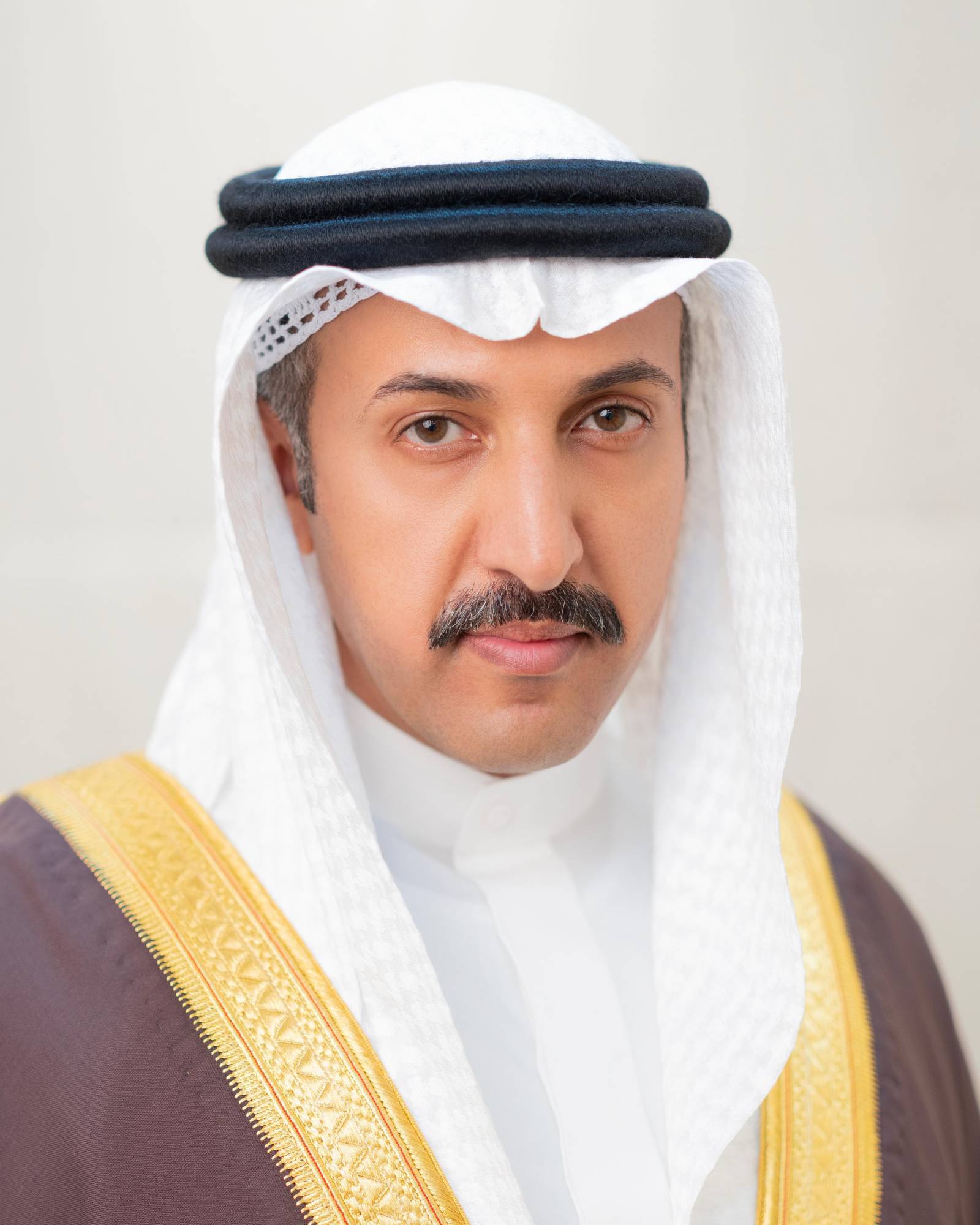
Bahraini Minister of Transportation and Telecommunications Dr. Sheikh Abdulla bin Ahmed Al Khalifa.

Concerning the project's announced completion rate, the minister explained that the 50 percent figure represents the average progress achieved across member states, and does not mean that half of the construction work for the entire Gulf network has been completed.

The project's cost estimates are currently undergoing review and updates in light of economic shifts, rising prices for materials and services, construction costs, and inflation, he revealed without specifying an updated total cost at the present time.

Returns beyond passenger and freight transport

Al Khalifa said that the economic impact of the project is not limited to facilitating passenger movement and freight transport, but extends to improving supply chain efficiency, boosting trade among GCC countries, and linking industrial centers, economic zones, and logistical hubs, as well as supporting employment and investment opportunities.

He added that determining the project's exact contribution to the gross domestic product (GDP) or estimating expected savings in time and costs remains premature, given that returns vary depending on transport routes, the nature of the cargo, and the points of origin and destination.

In light of the challenges facing maritime navigation in the region, the minister stressed that the Gulf railway network is not intended to serve as a substitute for maritime transport. Instead, it acts as a complementary route that boosts transport options and connectivity among GCC nations, increasing the resilience of supply chains against disruptions that could affect various modes of transportation.

He noted that integration between ports, roads, railways, and airports will strengthen the flexibility of the Gulf transport system, while connecting to broader international logistical corridors remains a future possibility contingent on completing studies, understandings, and coordination with the relevant countries and entities.

King Hamad Bridge to link Bahrain and Saudi Arabia

Regarding the connection between Bahrain and Saudi Arabia, Al Khalifa explained that the King Hamad Bridge project includes road lanes and railway lines, enabling the international passenger station in Bahrain to connect with the Saudi railway network and forming one of the essential components for completing the Gulf interconnection.

He added that work is underway on the privatization procedures for the King Fahd Causeway Authority, alongside completing the necessary studies and procedures to transition to the execution of the new bridge project.

Achieving the connection between Bahrain and Saudi Arabia is a fundamental requirement for operating the railway line between the two countries within the project's targeted timeframe in December 2030,e he said.


Egypt Seeks Faster Progress on Libya Gas, Refining and Power Projects

Egyptian Foreign Minister Badr Abdelatty speaks during a press conference with Minister of Information Diaa Rashwan (not pictured) in Cairo, Egypt, March 25, 2026. (Reuters)
TT

Egypt Seeks Faster Progress on Libya Gas, Refining and Power Projects

Egyptian Foreign Minister Badr Abdelatty speaks during a press conference with Minister of Information Diaa Rashwan (not pictured) in Cairo, Egypt, March 25, 2026. (Reuters)

Egypt aims to accelerate energy projects with Libya, including gas pipeline links, refining of Libyan crude in Egypt and an electricity interconnection, Egyptian Foreign Minister Badr Abdelatty said late on Saturday.

Abdelatty's comments were in ‌a ministry ‌statement after a meeting ‌with ⁠Libya’s acting oil ⁠and gas minister Khalifa Abdulsadek in Tripoli.

Abdelatty also ‌called for cooperation on petroleum products and the completion of projects to refine Libyan ‌oil in Egypt and re-export it, the statement said, ⁠adding ⁠that Abdulsadek had said that Libya would continue implementing existing projects and would visit Cairo soon to continue technical talks with Egypt’s petroleum and electricity ministers.

The statement did not provide details on costs or the status of the projects.


GCC: Railway Agreement Sets Joint Framework for Project Implementation and Operation

GCC transport ministers pose for a group photo following the 27th committee meeting in Kuwait. (GCC Railway Authority)
TT

GCC: Railway Agreement Sets Joint Framework for Project Implementation and Operation

GCC transport ministers pose for a group photo following the 27th committee meeting in Kuwait. (GCC Railway Authority)

Jasem Albudaiwi, secretary-general of the Gulf Cooperation Council (GCC), said on Sunday that the signing of the General Agreement on the GCC Railway Project marked an important step toward establishing an integrated regional transport network.

He said the network would facilitate the movement of citizens and residents, ease freight transport, boost intra-GCC trade efficiency and strengthen member states’ economic competitiveness and the region’s position in regional and international trade.

Albudaiwi's remarks came at the signing ceremony in the Bahraini capital, Manama, on Sunday, held under the patronage and in the presence of Bahrain’s Crown Prince and Prime Minister Salman bin Hamad Al Khalifa.

He said the project reflected the GCC’s shared ambition to connect member states and improve mobility and trade by linking their economic and industrial hubs, ports and logistics centers.

He added that the project would create opportunities for safe, reliable, affordable and environmentally friendly transport services that meet development needs, serve the aspirations of future generations and strengthen economic integration among GCC states.

Albudaiwi said the agreement sets a common framework for member states to implement and operate the project in coordination with their national railway networks, while establishing mechanisms and a timetable to accelerate its completion.

Albudaiwi praised GCC leaders and transport ministers for their support of strategic regional projects, thanking Bahrain’s crown prince and prime minister for hosting the signing ceremony and officials for advancing the railway project.