


UN General Assembly Resolution Calls for 'Cooperation' on Virus

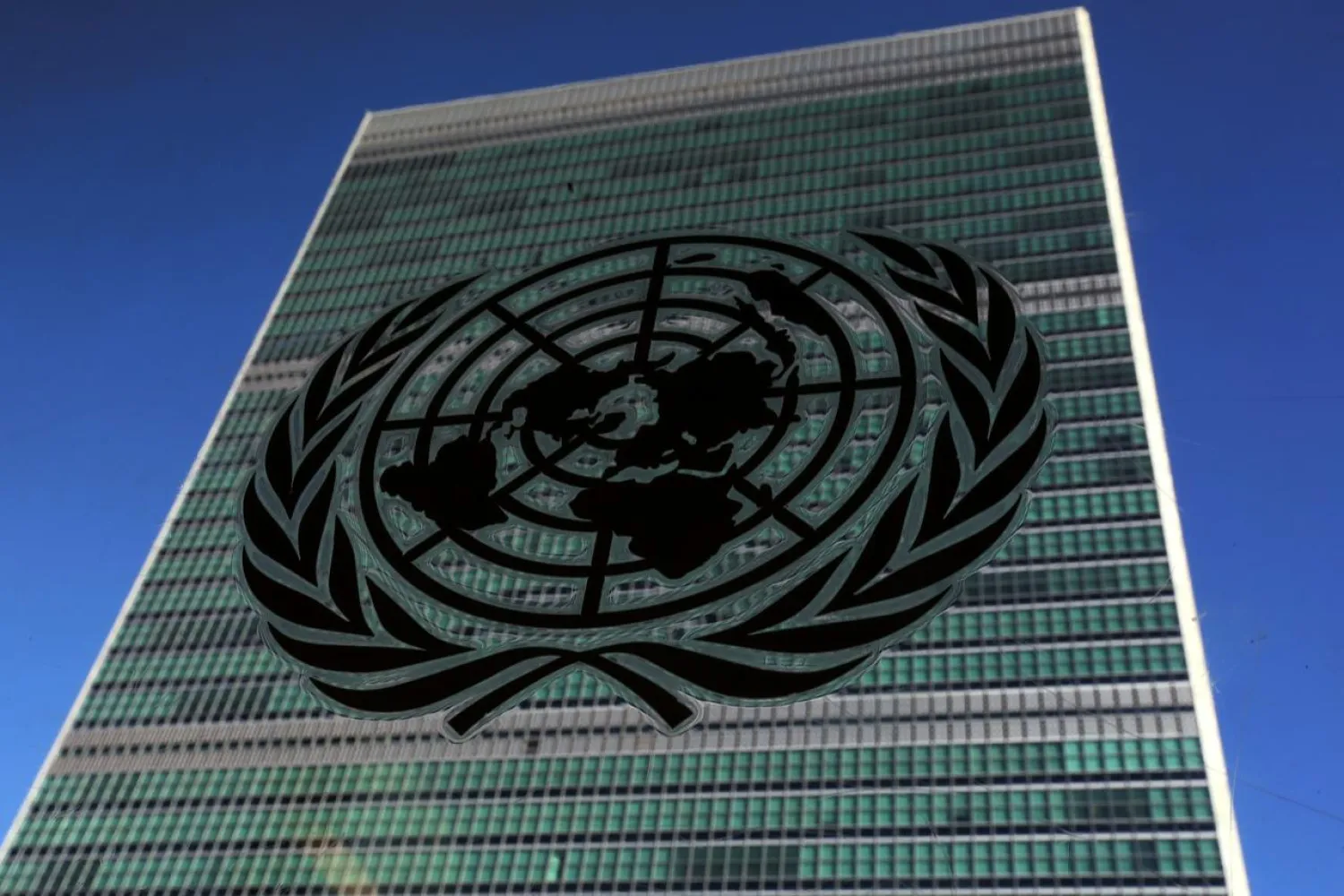
The United Nations logo is pictured in front of the United Nations Headquarters building in the Manhattan borough of New York, US, September 22, 2016. REUTERS/Carlo Allegri
TT

UN General Assembly Resolution Calls for 'Cooperation' on Virus

The United Nations logo is pictured in front of the United Nations Headquarters building in the Manhattan borough of New York, US, September 22, 2016. REUTERS/Carlo Allegri

The UN General Assembly on Thursday approved a resolution calling for "international cooperation" and "multilateralism" in the fight against COVID-19, in the first response by the international body since the outbreak began.

The resolution, approved by consensus, also stresses "the need for full respect for human rights" and that "there is no place for any form of discrimination, racism and xenophobia in the response to the pandemic."

Russia was unsuccessful in opposing the resolution with its own text that was supported by four other countries.

The UN resolution emphasizes the central role of the body in the global health and economic crisis. It was submitted by Switzerland, Indonesia, Singapore, Norway, Liechtenstein and Ghana, and adopted by 188 of the 193 states that make up the body, diplomats said.

The Russian text -- which also discussed cooperation but included an implicit demand for a general lifting of international sanctions, seen as a brake on efforts to fight the virus -- was supported by the Central African Republic, Cuba, Nicaragua and Venezuela.

Normally, General Assembly resolutions are adopted by majority votes or by consensus. But in this case, because ambassadors are working from their missions or from home as a result of COVID-19, the new rule calls for silence procedures for all votes.

Under the procedure, if a country supports a resolution, it does nothing. If it opposes a resolution, it sends an email breaking silence, which scuttles a resolution’s approval even if it has overwhelming support.

Unlike the UN Security Council, the resolutions adopted by the General Assembly are not binding but have a strong political value depending on their support.

According to UN Secretary-General Antonio Guterres, the coronavirus is "the most challenging crisis we have faced since the Second World War."

Just last week, as the pandemic spread around the world, killing thousands and infecting many more, Guterres warned that unless the world came together to fight the virus, millions of people could die.

On March 23, he called for an "immediate global ceasefire" to protect vulnerable civilians in conflict zones from the ravages of the pandemic.

Few countries have heeded his appeal.

On the Security Council, which has been silent since the start of the pandemic, the five permanent members (the US, the United Kingdom, Russia, China and France) are divided on reaching a resolution to support Guterres' appeal.

They have yet to produce a concrete solution, to the increasing exasperation of the 10 non-permanent members.

The US and China continue to clash over the origins of the virus that first emerged in central China late last year, which Washington wants to highlight.

Beijing and Moscow, which both have veto power, are also reluctant to see the Security Council -- which is responsible for global peace and security -- take up an issue that has until now been a primarily health and economic issue.



Top Trump Iran Negotiator Says Visits US Aircraft Carrier in Middle East

US Special Envoy Steve Witkoff delivers a press conference upon the signing of the declaration on deploying post-ceasefire force in Ukraine, during the so-called "Coalition of the Willing" summit, at the Elysee Palace in Paris, France, January 6, 2026. (Reuters)
TT

Top Trump Iran Negotiator Says Visits US Aircraft Carrier in Middle East

US Special Envoy Steve Witkoff delivers a press conference upon the signing of the declaration on deploying post-ceasefire force in Ukraine, during the so-called "Coalition of the Willing" summit, at the Elysee Palace in Paris, France, January 6, 2026. (Reuters)

US President Donald Trump's lead Iran negotiator Steve Witkoff on Saturday said he visited the USS Abraham Lincoln aircraft carrier currently in the Arabian Sea, with Washington and Tehran due to hold further talks soon.

"Today, Adm. Brad Cooper, Commander of US Naval Forces Central Command, Jared Kushner, and I met with the brave sailors and Marines aboard the USS Abraham Lincoln, her strike group, and Carrier Air Wing 9 who are keeping us safe and upholding President Trump's message of peace through strength," said Witkoff in a social media post.

Iranian Foreign Minister Abbas Araghchi said on Saturday he hoped talks with the United States would resume soon, while reiterating Tehran's red lines and warning against any American attack.


Israel’s Netanyahu Expected to Meet Trump in US on Wednesday and Discuss Iran

Israeli Prime Minister Benjamin Netanyahu delivers a speech during a special session to mark the 77th anniversary of the Knesset's establishment and the 60th anniversary of the dedication of the current building at the Knesset, the Israeli parliament, in Jerusalem, 02 February 2026. (EPA)
TT

Israel’s Netanyahu Expected to Meet Trump in US on Wednesday and Discuss Iran

Israeli Prime Minister Benjamin Netanyahu delivers a speech during a special session to mark the 77th anniversary of the Knesset's establishment and the 60th anniversary of the dedication of the current building at the Knesset, the Israeli parliament, in Jerusalem, 02 February 2026. (EPA)

Israeli Prime Minister Benjamin Netanyahu is expected to meet US President Donald Trump on Wednesday in Washington, where they will discuss negotiations with Iran, Netanyahu's office said on Saturday.

Iranian and US officials held indirect nuclear ‌talks in the ‌Omani capital ‌Muscat ⁠on Friday. ‌Both sides said more talks were expected to be held again soon.

A regional diplomat briefed by Tehran on the talks told Reuters Iran insisted ⁠on its "right to enrich uranium" ‌during the negotiations with ‍the US, ‍and that Tehran's missile capabilities ‍were not raised in the discussions.

Iranian officials have ruled out putting Iran's missiles - one of the largest such arsenals in the region - up ⁠for discussion, and have said Tehran wants recognition of its right to enrich uranium.

"The Prime Minister believes that any negotiations must include limiting ballistic missiles and halting support for the Iranian axis," Netanyahu's office said in a ‌statement.


Italy FM Rules Out Joining Trump’s ‘Board of Peace’

Italy's Minister for Foreign Affairs Antonio Tajani speaks to the press during the EPP Leaders’ meeting, in Zagreb, Croatia, 30 January 2026. (EPA)
TT

Italy FM Rules Out Joining Trump’s ‘Board of Peace’

Italy's Minister for Foreign Affairs Antonio Tajani speaks to the press during the EPP Leaders’ meeting, in Zagreb, Croatia, 30 January 2026. (EPA)

Italy will not take part in US President Donald Trump's "Board of Peace", Italian Foreign Minister Antonio Tajani said Saturday, citing "insurmountable" constitutional issues.

Trump launched his "Board of Peace" at the World Economic Forum in Davos in January and some 19 countries have signed its founding charter.

But Italy's constitution bars the country from joining an organization led by a single foreign leader.

Prime Minister Giorgia Meloni, a Trump ally, last month noted "constitutional problems" with joining, but suggested Trump could perhaps reopen the framework "to meet the needs not only of Italy, but also of other European countries".

Tajani appeared Saturday to rule that out.

"We cannot participate in the Board of Peace because there is a constitutional limit," he told the ANSA news agency.

"This is insurmountable from a legal standpoint," he said, the day after meeting US Secretary of State Marco Rubio and US Vice President JD Vance at the Olympics in Milan.

Although originally meant to oversee Gaza's rebuilding, the board's charter does not limit its role to the Palestinian territory and appears to want to rival the United Nations.