


What Premier League Clubs Would Change

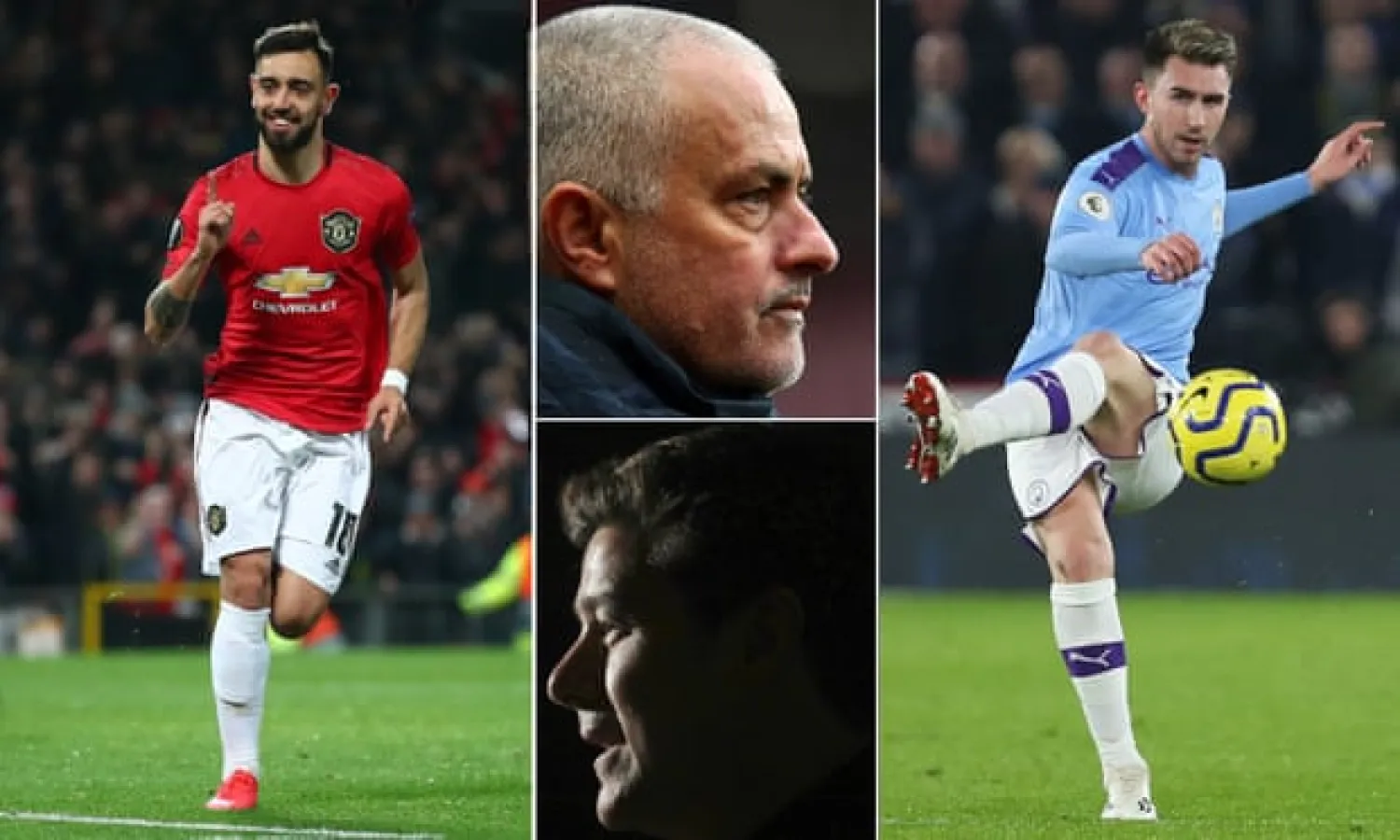
 Clockwise from left: Bruno Fernandes, José Mourinho Aymeric Laporte and Mauricio Pochettino. Composite: Getty Images; AMA/Getty Images; ProSports/Shutterstock; AP
Clockwise from left: Bruno Fernandes, José Mourinho Aymeric Laporte and Mauricio Pochettino. Composite: Getty Images; AMA/Getty Images; ProSports/Shutterstock; AP
TT

What Premier League Clubs Would Change

 Clockwise from left: Bruno Fernandes, José Mourinho Aymeric Laporte and Mauricio Pochettino. Composite: Getty Images; AMA/Getty Images; ProSports/Shutterstock; AP
Clockwise from left: Bruno Fernandes, José Mourinho Aymeric Laporte and Mauricio Pochettino. Composite: Getty Images; AMA/Getty Images; ProSports/Shutterstock; AP

The season must be completed. The season must be abandoned now. As the arguments gabble on, only occasionally acknowledging their own hypothetical nature given how little we know about how the virus will proceed, how long the lockdown may last and whether there may be a second wave of infections when it is lifted, it’s tempting t o dip into another hypothetical. What if this were like a game of Football Manager? What if we could quit without saving and go back and start again last summer? What would Premier League clubs, given their time over, do differently?

Let’s start with the obvious one: Tottenham’s decision to sack Mauricio Pochettino and replace him with José Mourinho. Once a path has been embarked on, there is perhaps some logic in pursuing it to its conclusion, but would Daniel Levy really take that road again? Tottenham are without a win in their past six games. They’ve gone out of the FA Cup and Champions League. They’re seven points adrift of fourth. They’ve kept three clean sheets in 26 games under Mourinho. For Spurs, this season has been a shambles.

Injuries haven’t helped, while Mourinho loyalists point to a creaking and jaded squad. But if the squad is an excuse for Mourinho, why was it not for Pochettino? It’s not as though he wasn’t aware of its failings, not as though he hadn’t been campaigning for two years for greater transfer spending.

Levy, given the choice between replacing the manager or the bulk of the squad, went for the manager, but it looks as if he will end up having to replace the bulk of the squad as well. And when it comes down to it, which would you rather have: a thrusting manager with a point to prove and a recent history of team-building on a budget or a weary former great who has come increasingly to deal in big transfers and whose ideas have begun to look outmoded?

In terms of other managerial comings and goings, Watford may think they could have sacked Javi Gracia in the summer rather than waiting until September and they certainly wouldn’t bother again with the 12 games under Quique Sánchez Flores. Everton, Arsenal and West Ham, perhaps, will think that they could have acted more swiftly to arrest seasons that were drifting.

In terms of the top of the table, Liverpool would presumably change very little, although they might perhaps look at what happened around the winter break and wonder if something in their schedule led to the slight loss of rhythm in February and early March. Given how the Atlético game turned out, they might also look at upgrading their reserve goalkeeper.

For Manchester City, though, there is one clear problem that they would surely take steps to address: the lack of cover at centre-back. The departure of Vincent Kompany inevitably risked leaving a vacuum of leadership, but there was no need for there also to be a vacuum of defensive nous. With Nicolás Otamendi always a slightly rash and clumsy figure, the least obviously Guardiolista player in the squad, and John Stones’s form uncertain, City were left extremely dependent on Aymeric Laporte. That he has started seven league games this season is the major reason the gap to Liverpool is so vast, not only because of his absence but because Fernandinho has been lost to the midfield as he has been forced to drop back as an emergency central defender.

Manchester United’s case is intriguing. Given their improvement after the arrival of Bruno Fernandes – they have won six and drawn three games since signing him at the end of January – they would presumably try to land him in the summer. Harry Maguire, assuming United still deemed him worth the £80m fee, would probably have been signed earlier in the summer to give him more time to adjust to his new teammates; the attempt to drive down the fee by drawing out negotiations simply did not work.

Given that Paul Pogba has started five league games this season and none since September, offloading him last summer presumably would be a priority; surely nobody now, even at United, thinks a positive future still awaits him at the club? And there are those, too, who would argue that Ole Gunnar Solskjær should have been replaced when Pochettino became available, although recent form has perhaps begun to soften the concerns about the Norwegian’s long-term suitability for the job.

What about signings that clubs would now avoid? Would City spend £58.5m on João Cancelo, who has started eight league games? Newcastle, surely, would not spend £40m on Joelinton, a forward wholly unsuited to the isolated frontman role he has been asked to fulfil. Spurs might still splash out £54m on Tanguy Ndombele, but not if they still planned to bring in Mourinho. Aston Villa, perhaps, would rethink their entire transfer strategy: they spent £140m to no great effect. While the injury to Wesley was unfortunate, only Tyrone Mings has been a clear success. West Ham would probably reconsider their transfer policy, but it’s hard to think of the last season when that wouldn’t have been the case.

Leicester and Chelsea presumably wouldn’t change too much, although Frank Lampard might start using Olivier Giroud earlier given the opportunity. But perhaps the most interesting case of a club with little to fix is Norwich. It is easy to say that they should have spent more, that a splurge on a couple of high-class players might make the difference for them.

But given the financial constraints under which they operate, it’s not clear how much more they could have done. Daniel Farke is a consistently engaging coach whose young team play attractive, bright football. It wouldn’t have taken much to have gone differently for them not to be adrift at the bottom.

That, perhaps, is the key: the league table doesn’t lie, but it cannot be considered without context. And that’s where asking, given context, what might reasonably have been improved feels useful. No audit can look only at results.

The Guardian Sport


Hospital: Vonn Had Surgery on Broken Leg from Olympics Crash

This handout video grab from IOC/OBS shows US Lindsey Vonn crashing during the women's downhill event at the Milano Cortina 2026 Winter Olympic Games on February 8, 2026. (Photo by Handout / various sources / AFP)
TT

Hospital: Vonn Had Surgery on Broken Leg from Olympics Crash

This handout video grab from IOC/OBS shows US Lindsey Vonn crashing during the women's downhill event at the Milano Cortina 2026 Winter Olympic Games on February 8, 2026. (Photo by Handout / various sources / AFP)

Lindsey Vonn had surgery on a fracture of her left leg following the American's heavy fall in the Winter Olympics downhill, the hospital said in a statement given to Italian media on Sunday.

"In the afternoon, (Vonn) underwent orthopedic surgery to stabilize a fracture of the left leg," the Ca' Foncello hospital in Treviso said.

Vonn, 41, was flown to Treviso after she was strapped into a medical stretcher and winched off the sunlit Olimpia delle Tofane piste in Cortina d'Ampezzo.

Vonn, whose battle to reach the start line despite the serious injury to her left knee dominated the opening days of the Milano Cortina Olympics, saw her unlikely quest halted in screaming agony on the snow.

Wearing bib number 13 and with a brace on the left knee she ⁠injured in a crash at Crans Montana on January 30, Vonn looked pumped up at the start gate.

She tapped her ski poles before setting off in typically aggressive fashion down one of her favorite pistes on a mountain that has rewarded her in the past.

The 2010 gold medalist, the second most successful female World Cup skier of all time with 84 wins, appeared to clip the fourth gate with her shoulder, losing control and being launched into the air.

She then barreled off the course at high speed before coming to rest in a crumpled heap.

Vonn could be heard screaming on television coverage as fans and teammates gasped in horror before a shocked hush fell on the packed finish area.

She was quickly surrounded by several medics and officials before a yellow Falco 2 ⁠Alpine rescue helicopter arrived and winched her away on an orange stretcher.


Meloni Condemns 'Enemies of Italy' after Clashes in Olympics Host City Milan

Demonstrators hold smoke flares during a protest against the environmental, economic and social impact of the Milano-Cortina 2026 Winter Olympics in Milan, Italy, February 7, 2026. REUTERS/Kevin Coombs
TT

Meloni Condemns 'Enemies of Italy' after Clashes in Olympics Host City Milan

Demonstrators hold smoke flares during a protest against the environmental, economic and social impact of the Milano-Cortina 2026 Winter Olympics in Milan, Italy, February 7, 2026. REUTERS/Kevin Coombs

Italian Prime Minister Giorgia Meloni has condemned anti-Olympics protesters as "enemies of Italy" after violence on the fringes of a demonstration in Milan on Saturday night and sabotage attacks on the national rail network.

The incidents happened on the first full day of competition in the Winter Games that Milan, Italy's financial capital, is hosting with the Alpine town of Cortina d'Ampezzo.

Meloni praised the thousands of Italians who she said were working to make the Games run smoothly and present a positive face of Italy.

"Then ⁠there are those who are enemies of Italy and Italians, demonstrating 'against the Olympics' and ensuring that these images are broadcast on television screens around the world. After others cut the railway cables to prevent trains from departing," she wrote on Instagram on Sunday.

A group of around 100 protesters ⁠threw firecrackers, smoke bombs and bottles at police after breaking away from the main body of a demonstration in Milan.

An estimated 10,000 people had taken to the city's streets in a protest over housing costs and environmental concerns linked to the Games.

Police used water cannon to restore order and detained six people.

Also on Saturday, authorities said saboteurs had damaged rail infrastructure near the northern Italian city of Bologna, disrupting train journeys.

Police reported three separate ⁠incidents at different locations, which caused delays of up to 2-1/2 hours for high-speed, Intercity and regional services.

No one has claimed responsibility for the damage.

"Once again, solidarity with the police, the city of Milan, and all those who will see their work undermined by these gangs of criminals," added Meloni, who heads a right-wing coalition.

The Italian police have been given new arrest powers after violence last weekend at a protest by the hard-left in the city of Turin, in which more than 100 police officers were injured.


Liverpool New Signing Jacquet Suffers 'Serious' Injury

Soccer Football - Ligue 1 - RC Lens v Stade Rennes - Stade Bollaert-Delelis, Lens, France - February 7, 2026  Stade Rennes' Jeremy Jacquet in action REUTERS/Benoit Tessier
Soccer Football - Ligue 1 - RC Lens v Stade Rennes - Stade Bollaert-Delelis, Lens, France - February 7, 2026 Stade Rennes' Jeremy Jacquet in action REUTERS/Benoit Tessier
TT

Liverpool New Signing Jacquet Suffers 'Serious' Injury

Soccer Football - Ligue 1 - RC Lens v Stade Rennes - Stade Bollaert-Delelis, Lens, France - February 7, 2026  Stade Rennes' Jeremy Jacquet in action REUTERS/Benoit Tessier
Soccer Football - Ligue 1 - RC Lens v Stade Rennes - Stade Bollaert-Delelis, Lens, France - February 7, 2026 Stade Rennes' Jeremy Jacquet in action REUTERS/Benoit Tessier

Liverpool's new signing Jeremy Jacquet suffered a "serious" shoulder injury while playing for Rennes in their 3-1 Ligue 1 defeat at RC Lens on Saturday, casting doubt over the defender’s availability ahead of his summer move to Anfield.

Jacquet fell awkwardly in the second half of the ⁠French league match and appeared in agony as he left the pitch.

"For Jeremy, it's his shoulder, and for Abdelhamid (Ait Boudlal, another Rennes player injured in the ⁠same match) it's muscular," Rennes head coach Habib Beye told reporters after the match.

"We'll have time to see, but it's definitely quite serious for both of them."
Liverpool agreed a 60-million-pound ($80-million) deal for Jacquet on Monday, but the 20-year-old defender will stay with ⁠the French club until the end of the season.

Liverpool, provisionally sixth in the Premier League table, will face Manchester City on Sunday with four defenders - Giovanni Leoni, Joe Gomez, Jeremie Frimpong and Conor Bradley - sidelined due to injuries.
