

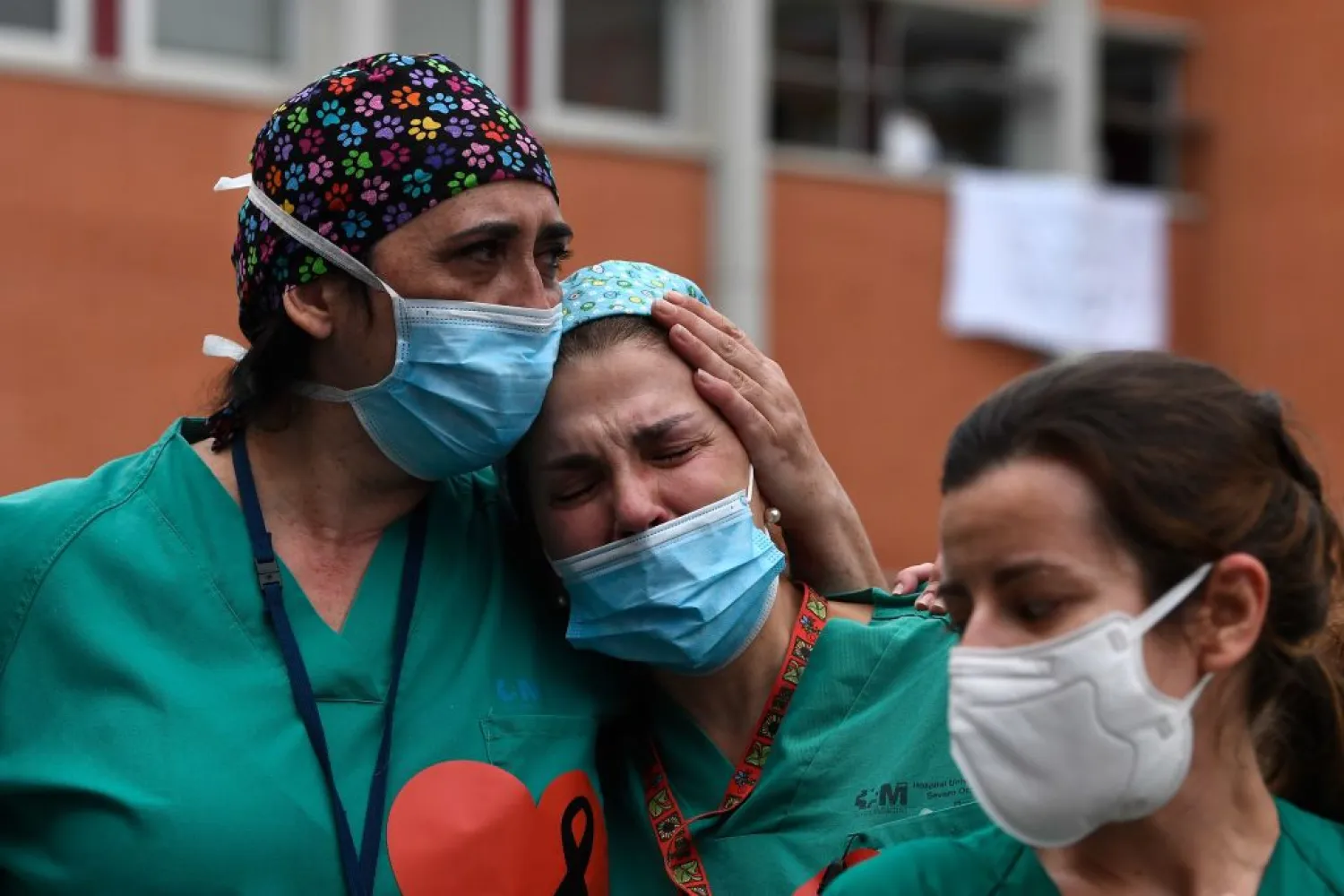

Struggle, Fear, and Heartbreak for Medical Staff on Virus Frontline

Healthcare workers have also faced the loss of colleagues to the virus they are battling | AFP
TT

Struggle, Fear, and Heartbreak for Medical Staff on Virus Frontline

Healthcare workers have also faced the loss of colleagues to the virus they are battling | AFP

Doctors, nurses and healthcare workers have become the unwitting heroes of the coronavirus pandemic, winning applause from balconies and streets around the world.

From Yaounde to Rome to New York, the pandemic has infected more than 1.9 million people and claimed 118,000 lives.

Hospital workers are dealing with a huge influx of patients, while also facing a lack of equipment in many cases and the fear of becoming infected themselves. Often, they face heartbreaking decisions while treating their patients.

AFP journalists spoke to healthcare workers around the world to find out what it's really like to be on the frontline in the coronavirus pandemic.

- ITALY: 'We can't get sick' -

In Italy, one of the worst affected countries, dozens of doctors and nurses have died from COVID-19 and thousands of healthcare workers have become infected.

Silvana de Florio, nursing coordinator in the COVID-19 intensive care unit of the Tor Vergata Hospital in Rome, underlined the importance of being appropriately kitted out with masks, visors, gloves, scrubs and suits to avoid contagion.

"We don't set aside a specific amount of time for it, but we have estimated that for a seven-hour shift, about 40-50 minutes is spent just on getting dressed," she said.

"In terms of hand washing and hand decontamination, we are talking about 60-75 minutes per day," she said after scolding a care worker for not wearing a mask.

"Medical staff can't get sick -- not so much because of their ability to work, but because it would not be fair."

- ECUADOR: the morgues are full -

In the Pacific port city of Guayaquil in Ecuador, a sick nurse makes no attempt to hide her anger: 80 of her colleagues have been infected and five have already died.

Ecuador is one of the worst affected countries in South America, with hundreds of dead bodies lying inside homes because the morgues are full.

"We went to war without any weapons," said the 55-year-old nurse, who spoke on condition of anonymity.

"The necessary equipment was not ready when this (the pandemic) was already happening, devastating Europe," said the nurse, who is resting at home as there is no space in the hospitals.

Patients with "severe symptoms" were arriving at her emergency department, "but due to a lack of tests, they were treated as if they had the flu and sent home."

"We had no personal protective equipment (PPE) but we could not refuse to treat the patients," she said.

- UNITED STATES: Lack of equipment -

In the United States, Judy Sheridan-Gonzalez, president of the New York State Nurses Association, also complained about the lack of protective gear for medical workers.

"We don't have the arms and the armor to protect ourselves against the enemy," she said at a recent protest outside a hospital.

Benny Mathew, a 43-year-old nurse in New York, said he caught the virus after caring for at least four patients without adequate medical dress.

Not long afterwards, when his fever had subsided, the hospital asked him to come back to work.

"They told me if you don't have fever you can come on work -- that was their only criteria," he said.

"I was told to wear a mask and come to work. We don't have enough staff so I think it was my duty to come back.

"But I was worried that I was going to transmit the disease to my coworkers, to the patients who don't already have it," he added.

With more than 195,000 confirmed cases of COVID-19 and around 10,000 deaths, New York state is the epicenter of the pandemic in the US, the worst affected country so far.

- PHILIPPINES: A living nightmare-

The doctors at Manila's San Lazaro hospital, a specialist center for infectious diseases, are used to battling humanity's nastiest contagions -- but they've never seen anything like COVID-19.

Suspected coronavirus cases have died at triage, terrified patients grow outraged when they can't get tested immediately and the doctors have to manage the anxiety they could be carriers too.

"It's a living nightmare," said doctor Ferdinand de Guzman, who at 60 years old is himself in a high-risk group.

With a limited number of intensive care rooms and ventilators, the doctors are burdened with horrific judgements.

"We don't like to play God," de Guzman said. "Clinicians just have to make decisions."

Many are afraid to go home after work. "We are worried about our families," de Guzman said.

"We always reserve one or two beds for (hospital) employees. We never had this problem before, ever."

- CAMEROON: 'We are afraid' -

Roger Etoa, a doctor in Cameroon, one of the worst-affected countries in sub-Saharan Africa, admits that fear of catching the disease also affects healthcare workers.

"I live with my wife and children," the 36-year-old said. "When I arrive in the evening I rush to the shower, but it is difficult to stop the children from jumping on you."

Etoa is the director of a healthcare centre in Douala, the capital of Cameroon.

As a precaution, he's started taking chloroquine, a drug used to treat malaria.

"We don't yet know if it works preventively or even curatively, but I prefer (to take it) just in case," he said.

Early studies have shown that chloroquine, may be effective in the treatment and prevention of COVID-19, though more evidence is needed.

"We are afraid, like the rest of the population. Afraid that our masks or suits are not fitted properly when we are dealing with a patient who is showing symptoms," the doctor said.

"We're obviously afraid of catching it. When you get up in the morning and you have a bit of a headache, you ask yourself, 'What if this is it? What if it's our turn to get the virus?'"

- SPAIN: Patients left alone -

Antonio Alvarez, a nurse in the intensive care unit at Vall d'Hebron, the biggest hospital in Barcelona, described the heartbreaking daily task of phoning a family member to say goodbye to their loved ones -- from behind the protective glass.

"It's difficult to see patients who are alone and have no family with them," the 33-year-old said.

"They're saying goodbye from the door and it's probably the last time they'll see them" since funeral ceremonies have been banned, he said.

"If it was a member of my family, I wouldn't be able to stand just sitting there and seeing them behind the door," Alvarez said.

"It's a very difficult situation."

- TURKEY: 'Like a war' -

"Everyone is working like crazy, as though it was a war," said Nuri Aydin, director of the Cerrahpasa Faculty of Medicine at Istanbul University.

"The atmosphere here is not like a normal workplace, but a battlefield," he said during a visit to the hospital.

Istanbul, a metropolis with some 15 million residents and Turkey's economic capital, has around 60 percent of confirmed COVID-19 cases in the country.

Many healthcare workers are sleeping in hotels or converted student dormitories, afraid of infecting their families.

"What they are doing is superhuman. There's no price for the work of healthcare workers, they're in the service of humanity," Aydin said.

- GERMANY: Neighbourly solidarity -

Thomas Kirschning is a senior doctor and intensive care coordinator in the German city of Mannheim, near the border with France.

The city recently sent home two French patients from Colmar, aged 64 and 68, after nursing them back to health.

"It was very motivating for the team that we were able to help," he said.

"We still had capacity in Mannheim, and it went without saying... that we would take care of these patients while there was an urgent situation in France."

Kirschning feels a little nervous when returning home to his wife and two daughters.

"I'm doing everything I can to make sure nothing happens when I come home," he said.

"We might not get as close as we normally would if it wasn't for this pandemic. We are all a little bit worried -- my family are worried for me, but of course I am also worried for my family."


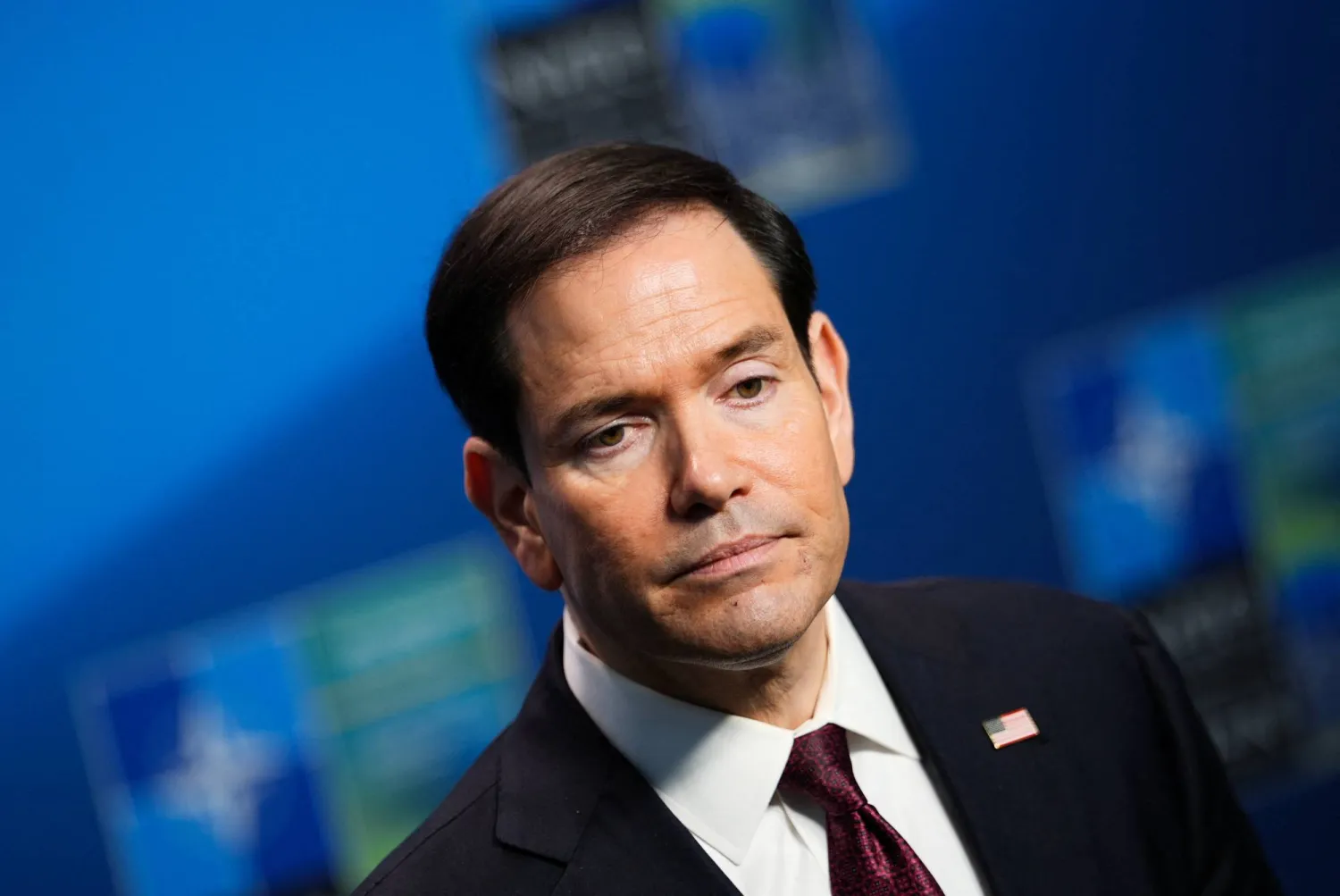

US Vice President Vance Heads to Armenia, Azerbaijan to Push Peace, Trade

US Vice President JD Vance speaks during the Critical Minerals Ministerial at the State Department in Washington, DC, US, February 4, 2026. (Reuters)
TT

US Vice President Vance Heads to Armenia, Azerbaijan to Push Peace, Trade

US Vice President JD Vance speaks during the Critical Minerals Ministerial at the State Department in Washington, DC, US, February 4, 2026. (Reuters)

US Vice President JD Vance will visit Armenia and Azerbaijan this week to push a Washington-brokered peace agreement that could transform energy and trade routes in the strategic South Caucasus region.

His two-day trip to Armenia, which begins later on Monday, comes just six months after the Armenian and Azerbaijani leaders signed an agreement at the White House seen as the first step towards peace after nearly 40 years of war.

Vance, the first US vice president to visit Armenia, is seeking to advance the Trump Route for International Peace and Prosperity (TRIPP), a proposed 43-kilometre (27-mile) corridor that would run across southern Armenia and give Azerbaijan a direct route to its exclave ‌of Nakhchivan ‌and in turn to Türkiye, Baku's close ally.

"Vance's visit should ‌serve ⁠to reaffirm the ‌US's commitment to seeing the Trump Route through," said Joshua Kucera, a senior South Caucasus analyst at Crisis Group.

"In a region like the Caucasus, even a small amount of attention from the US can make a significant impact."

The Armenian government said on Monday that Vance would hold talks with Prime Minister Nikol Pashinyan and that both men would then make statements, without elaborating.

Vance will then visit Azerbaijan on Wednesday and Thursday, the White House has said.

Under the agreement signed last year, ⁠a private US firm, the TRIPP Development Company, has been granted exclusive rights to develop the proposed corridor, with Yerevan ‌retaining full sovereignty over its borders, customs, taxation and security.

The ‍route would better connect Asia to Europe ‍while - crucially for Washington - bypassing Russia and Iran at a time when Western countries are ‍keen on diversifying energy and trade routes away from Russia due to its war in Ukraine.

Russia has traditionally viewed the South Caucasus as part of its sphere of influence but has seen its clout there diminish as it is distracted by the war in Ukraine.

Securing US access to supplies of critical minerals is also likely to be a key focus of Vance's visit.

TRIPP could prove a key transit corridor for the vast mineral wealth of ⁠Central Asia - including uranium, copper, gold and rare earths - to Western markets.

CLOSED BORDERS, BITTER RIVALS

In Soviet times the South Caucasus was criss-crossed by railways and oil pipelines until a series of wars beginning in the 1980s disrupted energy routes and shuttered the border between Armenia and Türkiye, Azerbaijan's key regional ally.

Armenia and Azerbaijan were locked in bitter conflict for nearly four decades, primarily over the mountainous region of Nagorno-Karabakh, an internationally recognized part of Azerbaijan that broke away from Baku's control as the Soviet Union fell apart in 1991.

Azerbaijan and Armenia fought two wars over Karabakh before Baku finally took it back in 2023. Karabakh's entire ethnic Armenian population of around 100,000 people fled to Armenia. The two neighbors have made progress in recent months on normalizing relations, including restarting ‌some energy shipments.

But major hurdles remain to full and lasting peace, including a demand by Azerbaijan that Armenia change its constitution to remove what Baku says contains implicit claims on Azerbaijani territory.


Adviser to Iran's Supreme Leader to Visit Oman on Tuesday

FILED - 06 February 2009, Bavaria, Munich: Ali Larijani, then chairman of the Iranian parliament, speaks at the 45th Munich Security Conference in Munich. Photo: Andreas Gebert/dpa
TT

Adviser to Iran's Supreme Leader to Visit Oman on Tuesday

FILED - 06 February 2009, Bavaria, Munich: Ali Larijani, then chairman of the Iranian parliament, speaks at the 45th Munich Security Conference in Munich. Photo: Andreas Gebert/dpa

Ali Larijani, an adviser to Iran's Supreme Leader Ali Khamenei, will visit Oman accompanied by a delegation on Tuesday, the ‌semi-official Tasnim news ‌agency reported ‌on ⁠Monday.

American and ‌Iranian diplomats held indirect talks in Oman last week, aimed at reviving diplomacy amid a US ⁠naval buildup near Iran and ‌Tehran's vows ‍of a ‍harsh response if ‍attacked.

"During this trip, (Larijani) will meet with high-ranking officials of the Sultanate of Oman and discuss the latest regional ⁠and international developments and bilateral cooperation at various levels," Tasnim said.

The date and venue of the next round of talks are yet to be announced.


Russia’s Lavrov Sees No ‘Bright Future’ for Economic Ties with US

06 February 2026, Russia, Moscow: Russian Foreign Minister Sergei Lavrov gives a press conference following a meeting with Organization for Security and Cooperation in Europe (OSCE) Chairperson-in-Office Ignazio Cassis, head of Switzerland's Federal Department of Foreign Affairs, Federal Councilor of the Swiss Confederation, and OSCE Secretary General Feridun Sinirlioglu at the Russian Foreign Ministry's Reception House. (Sofya Sandurskaya/TASS via ZUMA Press/dpa)
TT

Russia’s Lavrov Sees No ‘Bright Future’ for Economic Ties with US

06 February 2026, Russia, Moscow: Russian Foreign Minister Sergei Lavrov gives a press conference following a meeting with Organization for Security and Cooperation in Europe (OSCE) Chairperson-in-Office Ignazio Cassis, head of Switzerland's Federal Department of Foreign Affairs, Federal Councilor of the Swiss Confederation, and OSCE Secretary General Feridun Sinirlioglu at the Russian Foreign Ministry's Reception House. (Sofya Sandurskaya/TASS via ZUMA Press/dpa)

Russia remains open for cooperation with the United States but is not hopeful about economic ties despite Washington's ongoing efforts to end the Ukraine war, Russian Foreign Minister Sergei Lavrov said in an interview published on Monday.

Speaking to Russia-based media outlet TV BRICS, ‌Lavrov cited what ‌he called the ‌United ⁠States' declared ‌aim of "economic dominance".

"We also don't see any bright future in the economic sphere," Lavrov said.

Russian officials, including envoy Kirill Dmitriev, have previously spoken of the prospects for a major restoration ⁠of economic relations with the United States as ‌part of any eventual Ukraine ‍peace settlement.

But although ‍President Donald Trump has also ‍spoken of reviving economic cooperation with Moscow and has hosted his Russian counterpart Vladimir Putin on US soil since returning to the White House, he has imposed further onerous sanctions on Russia's vital ⁠energy sector.

Lavrov also cited Trump's hostility to the BRICS bloc, which includes Russia, China, India, Brazil and other major developing economies.

"The Americans themselves create artificial obstacles along this path (towards BRICS integration)," he said.

"We are simply forced to seek additional, protected ways to develop our financial, economic, logistical and ‌other projects with the BRICS countries."