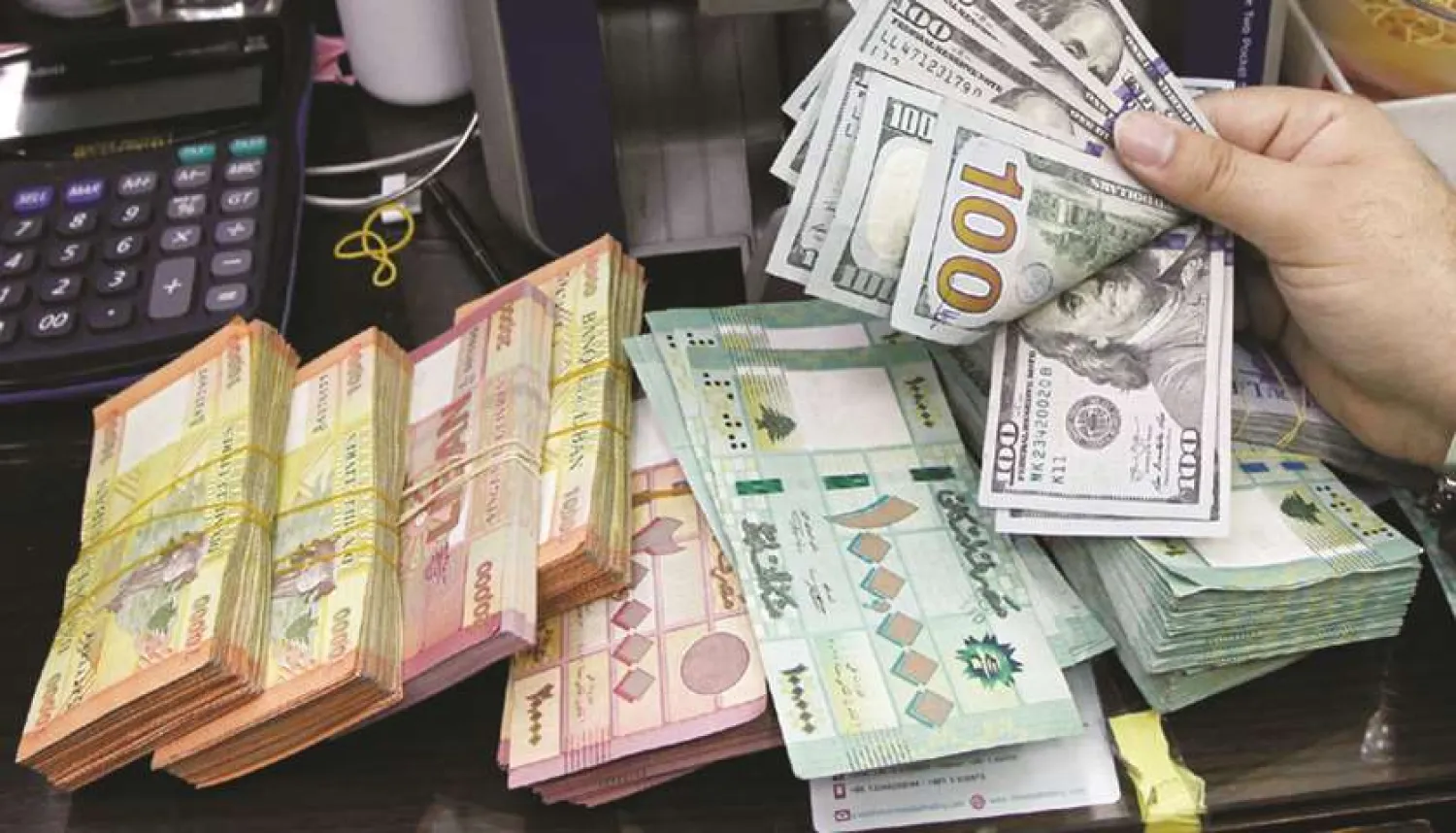

Lebanese banks have set an exchange rate of 3,000 pounds per dollar for withdrawals from US dollar accounts for this week, two banking sources said on Monday - around 50% weaker than the currency's official pegged value.
The central bank last week said depositors with dollar accounts in Lebanon would be paid cash in the local currency at a "market rate" within each bank's withdrawal limits.
It was one of several recent moves away from the official pegged rate of 1,507.5 pounds to the dollar that has been in place since 1997 and is still used for vital imports.
The pound has slumped since October as Lebanon has sunk deeper into a financial crisis that has hiked prices, fuelled unrest, and locked depositors out of their US dollar savings.
In a circular late on Sunday, the central bank said foreign exchange dealers could not sell US dollars for more than 3,200 Lebanese pounds. The currency weakened close to 4,000 pounds to the dollar last week in the parallel market.
"Starting tomorrow (Tuesday) every day it will be at 3,200 until further notice," the central bank source told Reuters.
Separately, the central bank has set an exchange rate of 3,800 pounds per dollar to be applied at money transfer firms on Monday, a central bank source said.
Lebanon's financial and banking crisis is widely considered to be the biggest risk to its stability since the 1975-90 civil war, undermining faith in the economy and the dollar peg.
Money transfer offices, used by many Lebanese abroad to send money to relatives at home, had previously dispensed transfers in dollars but hard currency has grown scarce since the crisis began.
In a related development, Lebanese parliament speaker Nabih Berri has warned that removing the central bank governor would send the currency tumbling and threaten deposits, after Prime Minister Hassan Diabslammed Riad Salameh for the pound’s fall.
Diab on Friday cast Riad Salameh as responsible for a currency crisis that has threatened to further destabilize a country already in dire financial straits.
The politically influential Maronite Christian patriarch said criticism of Salameh would only hurt Lebanon.
"We ask: who benefits from the destabilization of the central bank governorship?" said Patriarch Bechara Boutros Al-Rai. "We know the dire outcome, which is eliminating the confidence of the Lebanese people and (foreign) states in the constitutional foundations of the state."
Lebanon is governed according to a sectarian system that parcels out state positions according to religious group. The central bank governor is always a Maronite Christian while the premier is always a Sunni Muslim.
Diab's government was formed in January with the support of the powerful Iranian-backed Shiite movement Hezbollah, and has struggled to enact the economic reforms demanded by foreign donors.
Gebran Bassil, head of President Michel Aoun's Maronite Christian party, echoed much of Diab's criticism of Salameh, saying the central bank bore "great responsibility" for losses of currency reserves and lack of transparency and coordination.
He said the state must now "correct" these mistakes, denying that this would constitute a "coup against the free financial system or central bank independence".
The pound's rapid fall has triggered small protests and raised the prospect of price hikes and broader unrest at a time when unemployment has soared and a coronavirus lockdown has dealt an additional blow. Two banks were attacked, one with a small bomb and another with petrol bombs over the past two days.