
Lebanese must set aside their differences to tackle the country’s major financial crisis, Prime Minister Hassan Diab warned on Wednesday, saying a reform plan proposed by his government was not a sacred text and could be amended.
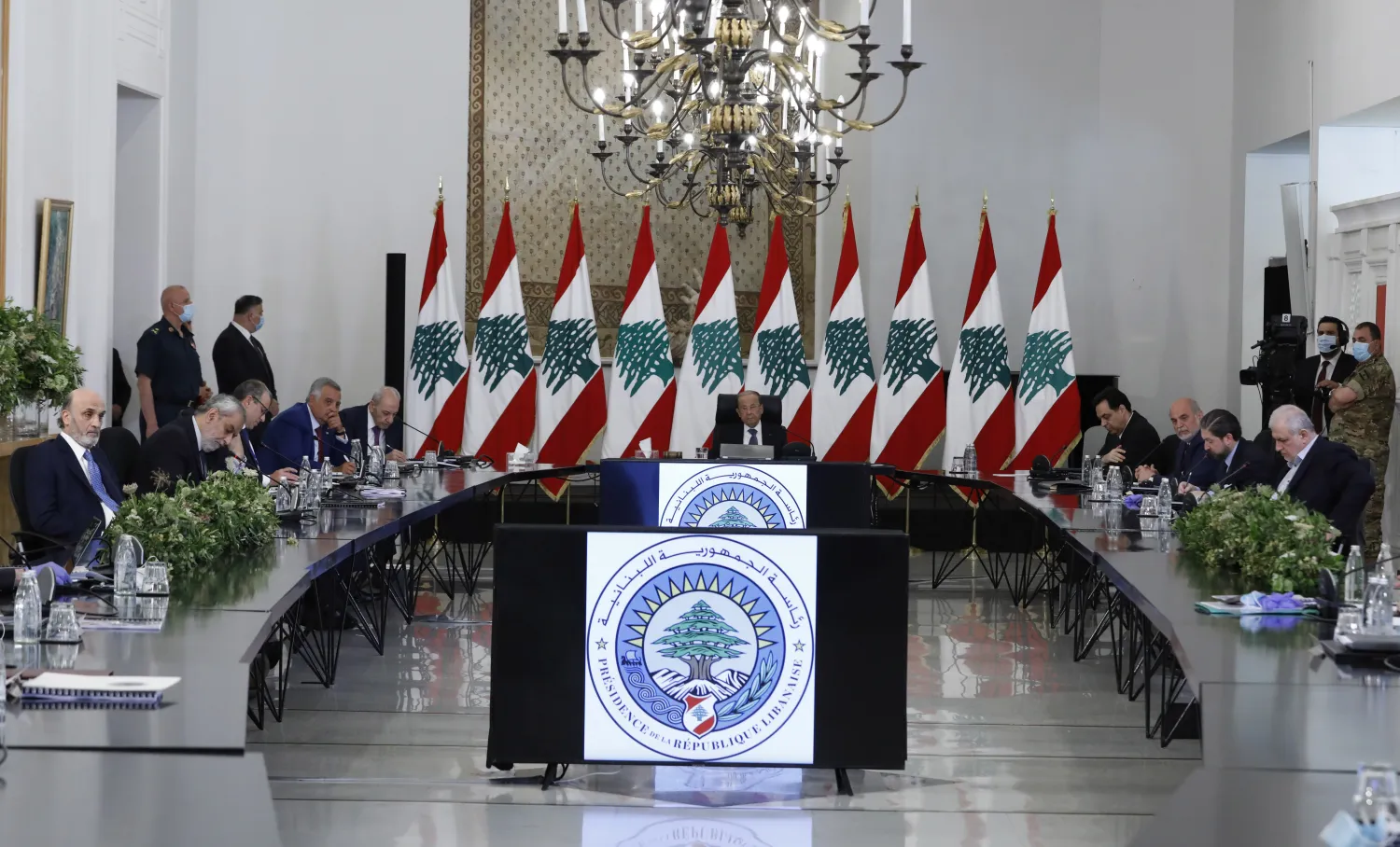
Diab was speaking at the Baabda presidential palace at a meeting for the heads of parliamentary blocs to review the plan that the cabinet approved last week.
The economic roadmap comes with a government request for International Monetary Fund (IMF) assistance, which President Michel Aoun called "a mandatory path for recovery if we negotiate well and we are all fully committed to... reform".
The government proposals have encountered strong criticism from the commercial banking sector which, according to the plan, is set to sustain losses of some $83.2 billion.
Parliament speaker Nabih Berri and Samir Geagea, head of the Lebanese Forces, were among the attendees of Wednesday's meeting.
But political heavyweights such as former prime minister Saad Hariri boycotted the session over objections to the government's approach to the economic crisis.
Aoun said the rescue plan was not the responsibility of a single group or party.
"Getting out of the dark tunnel that we are crossing is everybody's responsibility," he told the Baabda meeting.
As for Diab, he said "time is very precious.”
“The accumulated losses are very big. The situation is very painful, and the chance to rectify (the situation) will not last long," he added.
He urged political parties, economic syndicates and the banks to set aside differences. There was no place for score-settling, he said, adding that trading accusations would be "costly for all".
"What we are offering is not a sacred text, it can be developed" further, the PM said.
The local currency has lost more than half its value since October and depositors have largely been shut out of their savings as dollars have become ever more scarce. Inflation, unemployment and poverty have soared.
Lebanon defaulted on its sovereign debt in March.
Addressing the meeting, Finance Minister Ghazi Wazni said Lebanon had started negotiations to restructure its sovereign debt two weeks ago.
The benefits of going to the IMF included boosting international confidence in Lebanon and the provision of financial support of $9-$10 billion for the treasury, he said.
The plan adopts a flexible exchange rate in the coming phase but in "a gradual and studied" way, Wazni said. He said floating the exchange rate before restoring confidence and securing international support would lead to a big deterioration in the value of the pound, among other negative consequences.