Story of a Woman Who Listens with Her Eyes, Speaks with Her Hearthttps://english.aawsat.com/home/article/2271966/story-woman-who-listens-her-eyes-speaks-her-heart
Story of a Woman Who Listens with Her Eyes, Speaks with Her Heart
In the distant past, the ancient Greeks refused to teach the hearing impaired, believing that those were incapable of being educated. Other harmful theories followed, one of them claiming that a child losing the sense of hearing was as celestial punishment for the parents’ sins.
Fortunately, cultural and scientific advancement threw old notions away. A Spanish Benedictine monk named Pedro Ponce de Leon developed a method to teach the Deaf people sign language and finger-spelling.
This is, in short, how the sign language and lip-reading began to evolve.
But the most beautiful story is that of Mariam Al-Shehabi, who defied science, doctors and the Arab community and spoke, learned, graduated and succeeded, thanks to the love that her parents grew in her since they discovered, at the age of a year and a half, that she cannot not listen and therefore will not speak.
I saw Mariam in an interview on Instagram with anchor Mayssoun Azzam, during the lockdown period. I did not know her before, but as soon as I saw her smile and I understood her story, I got tangled in front of my phone screen, hearing this beautiful woman speak fluently in both Arabic and English with an amazing pronunciation.
I began dreaming of writing these lines because Mariam is a breath of hope in the time of the pandemic… In these difficult times, we are in dire need of a beautiful story, where suffering gracefully transforms into a lesson of humanity and positivity.
I contacted her. She welcomed the idea.
“I am Mariam, of the hearing-impaired, born on August 5, 1988, mother of two girls, Yasmin and Khawla. I graduated from Ahlia University in Bahrain, class of 2010, with a degree of distinction. I have worked in the Financial Supervision Department at the National Bank of Bahrain since 2011,” she wrote to me.
Her parents realized that she was suffering from a problem after they noticed that she did not pronounce a word when she was one and a half years old. She started treatment when she was two years old.
Her family’s reaction was like that of any parents who receive news of this impact, especially since the Arab community points, with many insulting phrases, to people with special needs.
Mariam’s parents refused to call their daughter disabled. They started the journey to search for a solution. Her father made a promise to himself that he would make Mariam speak…
Mariam recounts that the physician, who diagnosed her condition, told her family that he was announcing her death, because of the doctors’ ignorance of the culture of hearing problems at that time.
But her father’s love made him overcome the shock in a very short period, in a mere half-an-hour. It is a true miracle of love, she says.
Thirty years ago, hearing aids were very primitive. In other words, they did not meet the required purpose, especially for those who have severe hearing loss.
“My father began to search for a way or a place where I can learn to talk. He was eager to hear the word, Baba (daddy),” Mariam affirmed.
After a long search throughout the Arab world, her father concluded that in Egypt some centers teach pronunciation. She moved to live in Cairo with her little brother Saleh, accompanied by their mother. Unfortunately, they found out that the institute was of no use.
Mariam’s father did not stop searching and found a distinguished doctor in a private clinic called Dr. Muhammad Baraka, who teaches pronunciation by lip-reading. He had the greatest role in teaching her to speak through this method.
The toddler used to go to the doctor daily for 40 minutes. She spent the rest of the day in the kindergarten and with her mother, who had a very big and decisive role in her development as she devoted her life for this purpose.
After great efforts and perseverance, Mariam pronounced her first word, “Mamma” (mom), at the age of 2.
Maryam has always faced bullying. She trained herself to deal with this abhorrent feeling by surrounding herself with the tenderness of her parents, who instilled in their child a spirit of self-confidence and a positive outlook on life.
All difficulties can be overcome, as love conquers all obstacles, she says.
Mariam started school when she got 6 years-old, like all children of this age. She was the first child of a hearing problem to enroll in this government school. The principal, Professor Bahija Al-Dailami, accepted the challenge, so did her classroom teacher, Fatima Abdel Wahab.
She was not only satisfied with being able to pronounce by reading lips, but wanted to go further with her studies and pursue a brilliant future.
Every day comes with challenges that strengthen her and increase her confidence in her abilities.
“Challenges became a part of my life like air and water. I thank God every day for growing stronger and more confident… and mostly for becoming a source of inspiration for many people around me,” she asserts.
When asked about the most difficult thing about reading lips, Mariam replied: “When the mouth is very small or the lips are thin.”
She recalls that what made her what she is today is her parents’ insistence on dealing with her as if she was a normal child. She described her childhood as extremely happy.
“I did not realize that I am disabled until when I grew up and mingled with the society. My father tried the impossible and challenged the old perceptions to give me the same rights as other children, but sometimes the society is unjust.” Mariam’s remark saddened me.
Today Mariam is the mother of two children, Yasmine, 4, and Khawla, 1.
“I have a wonderful relationship with my daughters. Thanks to the education and care that I got in my childhood, I want them to experience the beauty of childhood and the happiness that I lived.”
The most frequently mentioned word in Mariam’s interview is “Love”. Her father wrote a book called, “My Lovely Daughter… I named her… Mariam,” in which he expresses the feelings, the difficulties, and diaries of Mariam.
Mariam says her mother is “an unknown soldier”.
“No words can describe my mother’s love… she is the candle that burns to illuminate the path for others…”
On her father, she states: “My father, as I always call him, is the oxygen of my life, and sometimes my forbidden love. We are one soul living in two bodies.”
On the future, Mariam’s dream is to be allowed the chance to serve her community in particular, and humanity in general. She shares her experience with the families of people with hearing disabilities, especially in the Prince Sultan bin Abdulaziz Al Saud Center for Hearing and Speech Development of the Bahrain Society for Childhood Development.
“Unfortunately, our Arab societies need a big wake up call over their perception of children with disabilities. They have rights that must be given to them in full. This is one side. The other side is creating a real awareness among the families of people with disabilities. Children need to be loved and to be accepted as they are. All the rest is only details,” Mariam stressed.
She concluded the interview with a beautiful expression: “The community’s support for people with disabilities is a proof of progress and evolution…”
“To those, who are differently-abled I say, trust yourselves... love yourselves... because you are a source of strength and inspiration for your societies.”
In Türkiye’s ‘House of Photos’, the World as Seen Through the Lens of Childrenhttps://english.aawsat.com/features/5286983-t%C3%BCrkiye%E2%80%99s-%E2%80%98house-photos%E2%80%99-world-seen-through-lens-children
Children work in a darkroom with co-founder of the project, photographer and educator Amar Kilic (R) during a workshop held as part of Fotohane Darkroom project in Mardin, southeastern Türkiye, on June 14, 2026. (AFP)
TT
TT
In Türkiye’s ‘House of Photos’, the World as Seen Through the Lens of Children
Children work in a darkroom with co-founder of the project, photographer and educator Amar Kilic (R) during a workshop held as part of Fotohane Darkroom project in Mardin, southeastern Türkiye, on June 14, 2026. (AFP)
In a dimly lit room illuminated by a pair of red lamps, eight-year-old Zeynep waits to see photographs she has taken, now trapped as shadows and silhouettes on a roll of film.
"How big is your curiosity?" asks her mentor, 40-year-old photographer Amar Kilic, as he develops the negatives in a sink.
"As big as the world," she replies.
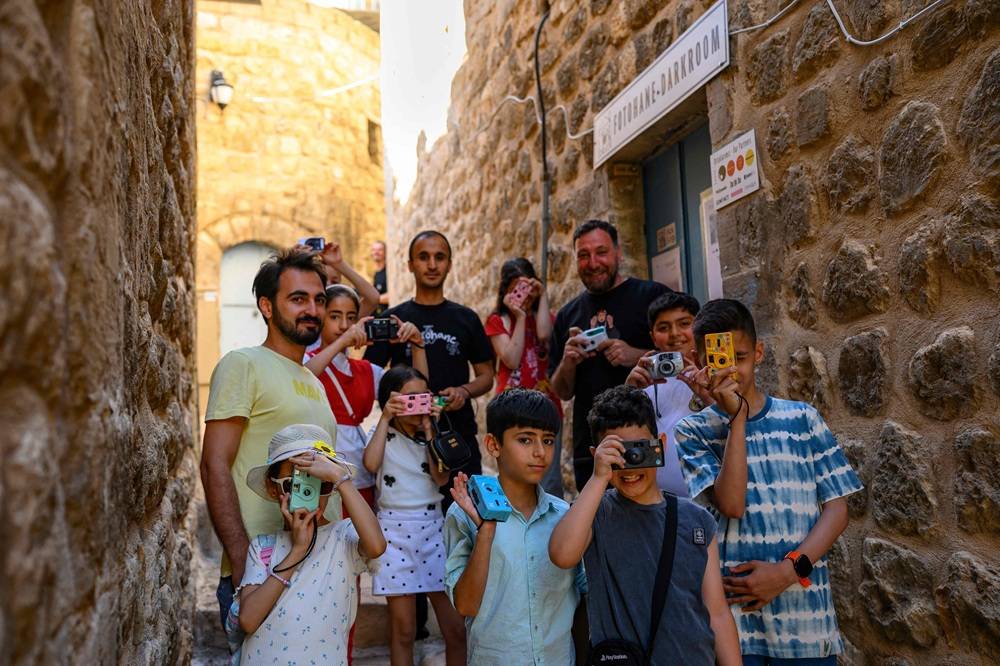
Originally from the southeastern province of Mardin, Zeynep is among eight children taking part in a two-month analogue photography workshop for local and migrant youth near Türkiye's borders with Iraq and Syria.
The project, called Fotohane Darkroom, started in Mardin in 2024, by Kilic and Syrian photographer and educator Serbest Salih. In Turkish, Arabic, Kurdish and Persian, Fotohane means "house of photo", a name chosen by the children.
In fact, insists Kilic, the children are in charge throughout the process.
"From loading film, to developing it and printing their own photographs, they do everything by themselves. They get to set and write their own rules also."
A group of children pose with their educators as they take pictures in the streets with film cameras during a workshop held as part of Fotohane Darkroom project in Mardin, southeastern Türkiye, on June 14, 2026. (AFP)
- Fleeing ISIS -
Once part of Mesopotamia, the walls of Mardin's old city, traversed by narrow streets, holds thousands of years of history and attract tourists from all over the world.
But the city is also home to low-income families and refugees who fled Syria's civil war.
Among them are the families of 13-year-old Yahya, 12-year-old Yusuf, 11-year-old Nihal and 13-year-old Sam. They came from Damascus in 2014 and 2015 when ISIS extremists started a war inside Syria.
"I'm very excited when I take pictures, it's all very interesting for us", says Nihal, swinging a small, black camera from her wrist as she searches for a frame to capture.
Their teacher, 32-year-old Serbest Salih, a smiling photographer with curiosity-filled eyes, fled the Kurdish town of Kobane, in northern Syria, when it came under assault from the ISIS group in 2014.
Thousands of Syrian refugees have settled across the Turkish border in Mardin region during the war that ended with the fall of Syrian president Bashar al-Assad.
His own struggle is a topic Salih wants to avoid and instead insists all the attention should go on the children he's patiently educating, switching effortlessly between Turkish, Kurdish, Arabic and English.
Since his arrival in Türkiye, he has been trying to establish himself as a bridge of tolerance and integration.
He started his first analogue photography workshop in 2015 in a secondhand caravan, driving to villages along the border and focusing on vulnerable local and refugee children.
"Analogue photography is about self-confidence. When taking a digital photograph you might think about deleting it on the spot. But with film, they spend the whole workshop thinking and feeling every one of those 36 frames, and only see them at the end. And their photos are beautiful," Salih says.
Zeynep, 8-year-old, looks at a camera film during a workshop held as part of Fotohane Darkroom project in Mardin, southeastern Türkiye, on June 13, 2026. (AFP)
- 'The magic room' -
Ask any of the children what part of the process is their favorite and the answer will be: the darkroom where the images they first see through the viewfinder and captured by pressing the shutter come to life.
"They call it the magic room", says Murat Kilic, who teaches development and printing, always with a smile on his face while giving feedback.
"Seeing an image on a completely white sheet of paper, bringing to life with their own hands an image they themselves took, creates a very special feeling for the children. They say: 'I was able to produce this'," says Kilic.
Most of the project's financial resources come from support events organized abroad, as well as donations.
This summer, children's photos are on display in Italy, Belgium, Britain and Indonesia.
Salih and Kilic are hosting the workshop in the center of Mardin, but they think about returning to Salih's initial approach with the darkroom in a caravan.
"The most logical way is to become mobile. To go to different regions, offer training and have them carry it forward," says Kilic.
What to Know about the Legacy of Brexit, Which Still Divides Britain 10 Years onhttps://english.aawsat.com/features/5286777-what-know-about-legacy-brexit-which-still-divides-britain-10-years
A placard is held as people walk past the Elizabeth Tower, commonly known as Big Ben, during the National Rejoin March IV organized by National Rejoin March (NRM), marking ten years since Britain voted to leave the European Union in 2016 and calling for closer cooperation between Britain and Europe, in London, Britain, June 20, 2026. (Reuters)
TT
TT
What to Know about the Legacy of Brexit, Which Still Divides Britain 10 Years on
A placard is held as people walk past the Elizabeth Tower, commonly known as Big Ben, during the National Rejoin March IV organized by National Rejoin March (NRM), marking ten years since Britain voted to leave the European Union in 2016 and calling for closer cooperation between Britain and Europe, in London, Britain, June 20, 2026. (Reuters)
Ten years ago, the United Kingdom voted to leave the European Union in a referendum that forges political identities to this day and that shattered a half-century project to get closer to the continent.
Brexit, short for British exit, became a reality on June 23, 2016, when 52% — or more than 17 million people — voted to leave the EU. Though the margin was narrow, the vote led to the most dramatic shake-up of the UK economy and society since World War II.
But like any divorce, the paperwork and process of completing the breakup was not swift: It took nearly five years.
Brexit was born out of a growing sense of frustration not only with the EU but over the global financial crisis of 2008. Supporters were able to tap into that frustration, and argued that the UK on its own, would be revitalized and able to focus just on domestic priorities.
Opponents warned that Brexit would lead to an economic disruption and that it risked the country’s standing in the world.
A decade on, here is where Brexit stands.
Brexit ushered in a harsh economic reality
Backers of Brexit — commonly known as Brexiters — held out a vision that the British economy could thrive outside the EU by harnessing the buccaneering spirit that had once made it the world’s biggest.
Though the COVID-19 pandemic and the wars in Ukraine and more recently, the US-Israeli war on Iran have not helped, it’s clear that the British economy has not been revitalized.
Merchants have complained about the hurdles that they now have to clear when trading with their European neighbors — the 27-nation EU remains by far the UK’s biggest trading partner.
And though there are no tariffs imposed on British goods entering the EU, there is a raft of non-tariff barriers, such as cumbersome customs paperwork, border certifications, and visa restrictions. Many of the trade deals that the Brexiters touted, most notably one with the United States, have not materialized.
Experts say the British economy is between 4% and 8% smaller than it would have been had the country voted to remain in the EU. That would translate to much higher living standards and billions more pumped into public services, including the cherished National Health Service, which was promised an extra 350 million pounds ($468 million) a week by Brexit campaigners. That pledge was emblazoned on their big red campaigning bus.
“Brexit has made the UK economy smaller than it otherwise would have been,” said Jonathan Portes, professor at King’s College London.
“The effect has not been a sudden collapse, but a gradual and cumulative drag on trade, investment and productivity,” he wrote in an article for The UK in a Changing Europe think tank.
Brexiters argue, however, that leaving the EU is not something that can be judged in the short-term — there was always going to be a short-term economic disruption in return for greater control over an array of policy levers, including on migration.
The uproar over immigration is escalating
Brexit put an end to free movement between the UK and EU, but securing Britain's border has had mixed outcomes. Getting a grip on immigration was a key promise of the Brexiters — their message of taking back control resonated.
Though net migration — the difference between those entering the UK and those leaving in any one year, from Europe — has plunged, it has soared from non-EU countries. That’s partly because of changes in visa rules that the previous Conservative government introduced to help out sectors that desperately needed migrant labor, such as workers to care for the elderly.
Overall though, there are signs the government is getting a grip on who can and cannot enter the country legally. Net migration has fallen sharply, from more than 900,000 in 2023 to 171,000 last year.
Though net migration is down, many are angered by migrants entering the country illegally — specifically the sight of people, often escaping war zones such as Afghanistan and Sudan, arriving on British shores in inflatable boats after making the dangerous journey across the English Channel.
The uproar over the number of small boat crossings, which peaked at 46,000 in 2022 and reached 41,000 last year, has become one of the main top political issues despite being a fraction of overall migration. Anger has focused on asylum seekers, often housed at public cost. Unruly mobs have protested outside and even tried to set fire to some hotels housing asylum seekers.
Voters have expressed remorse
In the years since Brexit, Britain's political landscape has fractured, with declining support for the two long-dominant parties, Conservatives and Labour. The Conservatives were ejected in 2024 after 14 years in power, much of it dominated by wrangling over UK-European relations.
The Labour government hasn’t impressed either and Prime Minister Keir Starmer looks like he will be announcing his resignation very soon.
Millions of voters are being tempted by Reform UK, led by Nigel Farage, who perhaps more than any other politician campaigned for Brexit. His party has led in almost every opinion poll for more than a year.
At the same, there’s a growing feeling in the country that Brexit has failed.
According to two polls from Ipsos, 52% of people in the UK would like to rejoin the EU while 33% are against it. The pollster also found that 48% think Brexit is going worse than expected against just 9% who think it’s going better. Also, Ipsos found that 48% would back another referendum today on the UK’s membership of the EU against 27% who oppose one.
A reset would be complicated
Against this backdrop, the Labour Party has walked a tightrope since being elected in 2024. Having explicitly ruled out reversing Brexit — or even rejoining the EU’s frictionless single market — it hasn’t got a huge amount of political space to maneuver.
Starmer has sought a “reset” of ties following the distrust built over the years of the Brexit negotiations, largely centered around making trading easier. He is hoping to announce further measures at a summit with the EU next month — provided he’s still the prime minister.
His most likely successor, Andy Burnham, tempered his language on the UK rejoining the EU while out on the campaign trail over the past month, ahead of his victory in a special election on Thursday that saw him beat back a challenge from Reform in a seat that overwhelmingly backed Brexit.
“I am not proposing that the UK considers rejoining the EU,” Burnham said. “I respect the decision that was made at the referendum and it is going to undermine everything I have said about strengthening democracy if we don’t respect that vote.”
How Damascus, Beirut and Tel Aviv View Trump's Call for Syrian Intervention in Lebanonhttps://english.aawsat.com/features/5286423-how-damascus-beirut-and-tel-aviv-view-trumps-call-syrian-intervention-lebanon
How Damascus, Beirut and Tel Aviv View Trump's Call for Syrian Intervention in Lebanon
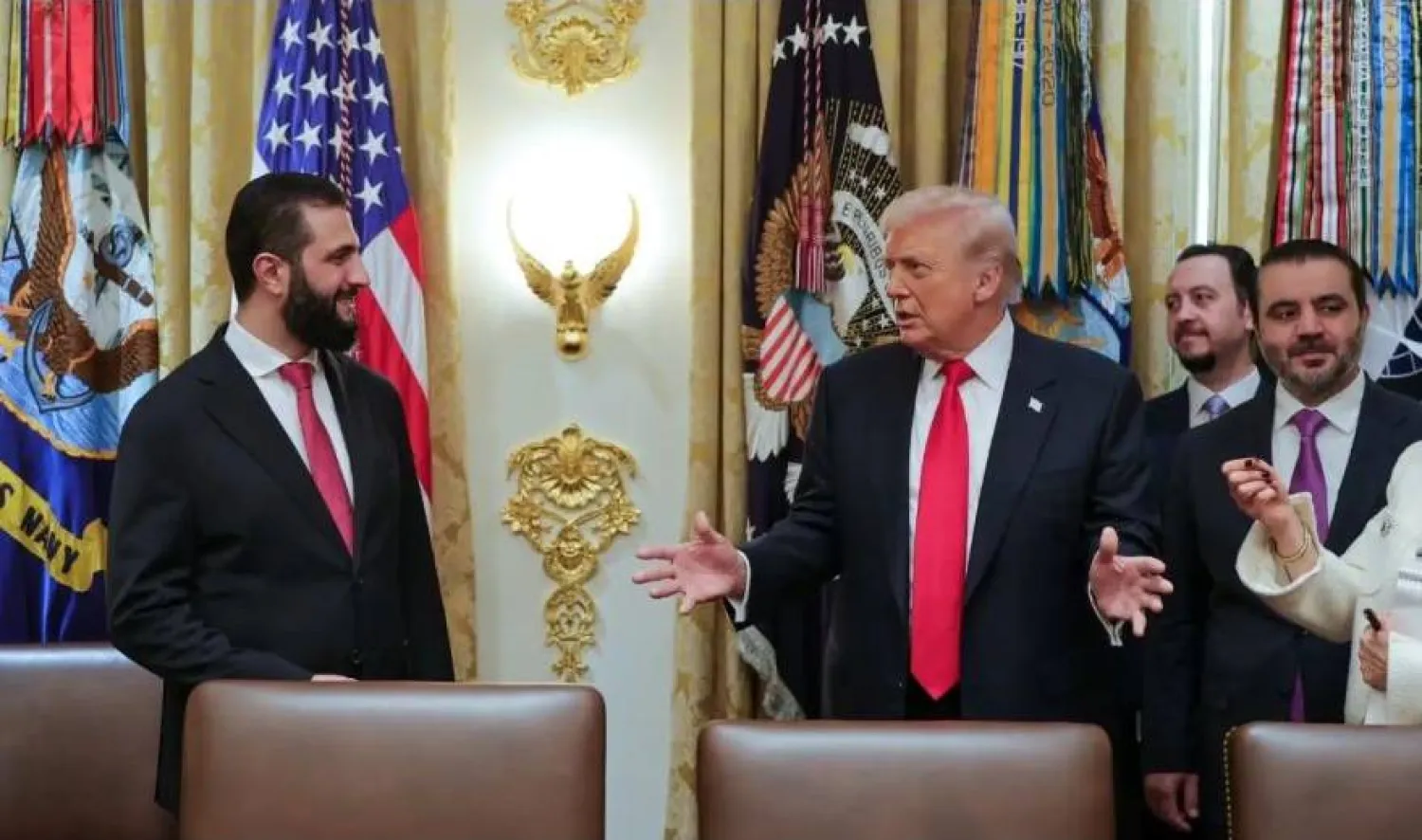
US President Donald Trump's repeated remarks in recent days that he had asked President Ahmed Al-Sharaa to have Syria intervene against Hezbollah in Lebanon have been met with rejection in Damascus, concern in Beirut, and little serious consideration in Tel Aviv.
Syria, which dominated Lebanon after sending its forces there in 1976, appears to have no intention of repeating that experience today. "We view our role through supporting the Lebanese state's exercise of its authority," Ahmed Zeidan, media adviser to the Syrian president, told Asharq Al-Awsat in an exclusive statement.
Israel, meanwhile, views Trump's proposal as unserious and as a pointed jab at Benjamin Netanyahu's government, which has been unable to conclude the war against Hezbollah without inflicting widespread destruction on Lebanon. Although Tel Aviv does not appear concerned about an imminent Syrian military intervention in Lebanon, it believes that any such move would also mean an expansion of Turkish influence. According to Israeli Diaspora Affairs Minister Amichai Chikli, Syria and Türkiye "pose a far greater concern than Iran."
By contrast, Beirut moved quickly to reject any Syrian or foreign involvement in the Hezbollah situation, stressing that dealing with the issue remains exclusively the responsibility of the Lebanese state and its institutions.
Asharq Al-Awsat examines the implications of Trump's call for Syrian military intervention in Lebanon through three reports from Damascus, Beirut and Tel Aviv.
Syrian Official: We Have No Desire to Enter Lebanon
Damascus has reiterated that it has no desire to intervene militarily in Lebanon. At the same time, it called on Lebanon's Hezbollah to cease its involvement in Syria, whether "through direct intervention or through supporting and sheltering remnants of the former regime, the killers of the Syrian people," according to Ahmed Zeidan, media adviser to the Syrian president, in an exclusive statement to Asharq Al-Awsat.
He also stressed that "the doors of Damascus and the People's Palace remain open to all Lebanese groups."
Zeidan said: "We reaffirm once again that we see our role through supporting the Lebanese state's exercise of its authority." He added that "those who remain governed by the mentality and thinking of 1976, the year Syrian forces entered Lebanon, should understand that today we are in the moment of December 8, 2024, the date of the fall of Bashar al Assad's regime, the moment of a new Syria."
The new Syrian approach toward Lebanon is based on "enabling the state to exercise its authority and sovereignty over all Lebanese territory, far removed from the mentality and practices of militias, whose interventions have imposed a heavy cost on Lebanon, Syria and the region," Zeidan said. He explained that Damascus is working "toward strengthening the Lebanese state's authority and sovereignty."
The second pillar of Syria's approach toward Lebanon, he added, is "a development-oriented approach, because development strengthens the state, reinforces social cohesion, and keeps away those who seek to exploit or prey upon Lebanon."
Responding to Trump's repeated calls for Syria to intervene militarily in Lebanon against Hezbollah, Zeidan said: "We have already stated and explained our position. Our role lies in supporting the Lebanese state and supporting development that will bring benefits to Lebanon and the region."
He added: "What Syria wants for Lebanon is what any neighbour wants for another neighbour. Lebanon, as a state, must exercise its authority and assume responsibility for restraining Hezbollah's militias from interfering in Syrian affairs. As we say, if your neighbour is well, then you are well. Thank God, Syria is doing well, and everyone can see that. Therefore, our neighbours after December 8, 2024, are doing well too. In return, we hope that our brothers in Lebanon will live in prosperity under the authority of a single state."
Since the fall of Bashar al Assad's regime, Damascus has opened a new chapter in relations with Lebanese state institutions, ending the era of tutelage over Lebanon. During that period, a complex network of political, security and economic relationships emerged, built around the intertwined interests of the ruling classes in both countries as a result of Syria's 29 year military presence in Lebanon from 1976 to 2005. During those years, Lebanese state institutions weakened while Hezbollah's influence expanded. The group later became deeply involved in the Syrian conflict alongside Bashar al Assad's regime as part of the Iranian axis.
There are widespread concerns within Syrian circles about the prospect of intervention in Lebanon after breaking free from the Assad regime and embarking on a path of balanced policymaking within a regional alignment that supports Syria's aspiration to preserve its territorial unity and establish stability. This approach, by definition, entails distancing itself from the region's conflicts.
One of the principal risks of intervention in Lebanon would be the rekindling of sectarian tensions and civil strife, particularly given the possibility that Shiite militias in Iraq could launch attacks against Syria, or that Iran and Hezbollah could activate their networks inside the country, political and military researcher Rashid Hourani told Asharq Al-Awsat. He noted that Iran and its allies "have succeeded in building extensive networks across Syria because of the length of their involvement there."
Regarding the potential impact of intervention on the new framework of Syrian-Lebanese relations, Hourani said that Syria's relationship with the Lebanese state "is separate from its relationship with Hezbollah. The Lebanese government has disavowed the party's security and military actions and movements, and has declared them illegitimate."
According to Hourani's analysis, Trump's repeated statements that he had asked the Syrian President for help against Hezbollah appear to conceal "an American desire to separate the Hezbollah issue from the relationship with Iran after reaching an agreement with Tehran, while indirectly or unofficially capitalizing on the consequences of Hezbollah's military intervention in Syria."
He argued that Syria could intervene if "there were a greater interest in doing so than in staying out," citing as an example the possibility of securing an Israeli withdrawal from southern Syria. He pointed to reports by the Israeli Public Broadcasting Corporation that "Washington is pressuring Syria and Israel to resume negotiations after several months of deadlock."
Hourani said that the possibility of negotiations resuming alongside Trump's statements "suggests the possibility of reaching some form of agreement, in addition to the likelihood that any mission would be clearly limited in time, from start to finish."
He added that Syria could also enter Lebanon if "Iran continues its attempts to restore its influence in Syria, with Hezbollah assisting in those efforts." He noted that the Syrian Interior Ministry has, over recent months, blamed Hezbollah for acts of sabotage in several Syrian cities.
In light of these considerations, Wael Alwan, a researcher at the Jusoor Center for Studies who is close to the Syrian government, did not rule out a future Syrian role in Lebanon, sooner or later. However, he stressed that it would not be in the manner suggested by the American president's remarks.
He predicted that any such role would take place in coordination with the Lebanese government and the Lebanese Army, and would be "limited to what is necessary, both geographically and in duration, for the purpose of protecting Syria's borders and the areas adjacent to them."
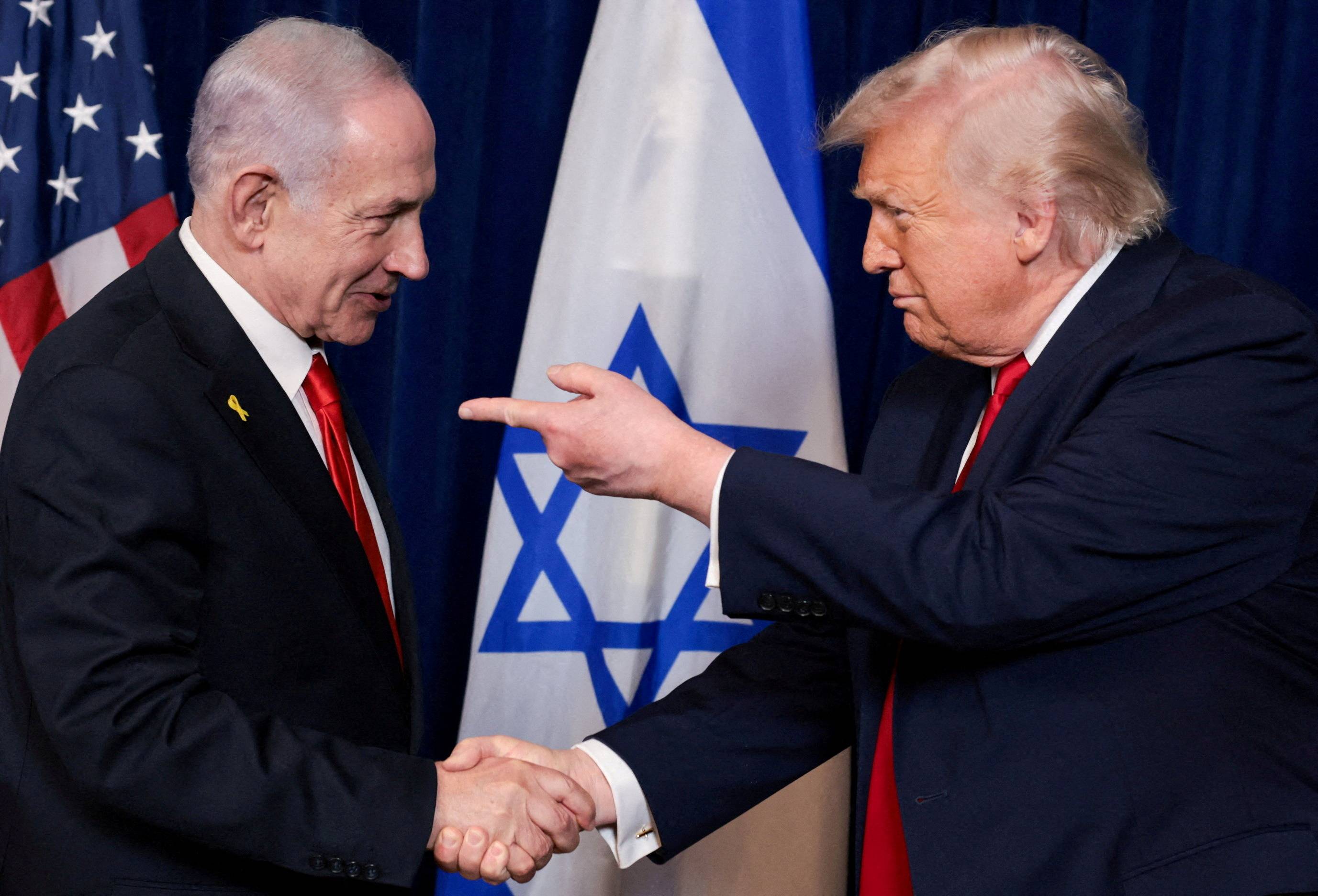
US President Donald Trump points his finger towards Israeli Prime Minister Benjamin Netanyahu as they shake hands during a press conference after meeting at Trump’s Mar-a-Lago club in Palm Beach, Florida, US, December 29, 2025. REUTERS/Jonathan Ernst/File Photo
Israel Does Not Take Seriously the Idea of Tasking Syria With Dismantling Hezbollah
At first glance, Israel was taken aback by the US president's remarks about assigning Syria the task of disarming Hezbollah. However, after brief consultations with intelligence chiefs, Israeli officials concluded that the idea was detached from reality and should not be taken seriously. Nevertheless, experts and some politicians argued that the political significance of the proposal should not be underestimated.
In their view, it amounted to a "a pointed jab" from the US administration, which has grown weary of Prime Minister Benjamin Netanyahu's policies and his efforts to drag the region from one long war into an even longer one. The United States has never been fond of protracted wars, viewing them as a burden, and believes that every war should have a clearly defined endpoint.
This position has been expressed openly and without ambiguity in recent weeks. The Wall Street Journal published a report stating that Trump has grown weary of Netanyahu's repetition and persistence. The report explained that during the many phone conversations between the two men, the same tedious scene kept recurring: Netanyahu repeating his positions while Trump listened. Hebrew language media went further, reporting that "from time to time Trump would raise his voice, refuse, rebuke, berate and curse.
Maariv added that Trump had previously tended to believe what Netanyahu told him, but in recent months he has begun taking notes and asking his aides: "Is what he said true? Is what he is saying accurate?"
For the sake of precision, Trump's comments about Syria's role in Lebanon consisted of a single statement: "If Israel can't do the job without killing everyone else, Syria should do the job." The media focused on the second part of that statement and largely ignored the first, which is the more important point.
The US president was criticizing Netanyahu for continuing to pursue war, for failing to achieve his objectives, and for what he viewed as excessive killing and destruction. He reinforced that criticism later when he asked: "Why do you have to destroy apartment buildings?" He then noted that many of the Lebanese killed in Israeli operations were neither members of Hezbollah nor connected to the group.
Writing in Haaretz, Middle East analyst Dr. Zvi Bar'el, the newspaper's Arab affairs editor, dismissed the notion of drawing Syria into Lebanon. He said Israel should understand by now that Trump does not share its view of the Lebanese arena, which is rapidly being transformed from an Israeli battlefield into a diplomatic bargaining chip for Iran, in a game that Trump has effectively already conceded. In addition to Iran's desire to preserve Hezbollah's standing and authority, Lebanon has also become an integral part of the tangible guarantees Tehran is seeking from the United States to demonstrate its ability to honor its commitments.
Bar'el argued that the proposal to transfer responsibility for dealing with Hezbollah from Israel to a Syrian contractor is reminiscent, to some extent, of the far fetched idea of activating Kurdish militias to help overthrow the regime in Iran, a proposal that collapsed only days after it was floated. He pointed out that although Syrian President Ahmed Al-Sharaa has a strong motive to crush Hezbollah, given his long history of hostility toward the group, he has already stated that he has no interest in such a project.
Bar'el added that military involvement in Lebanon is not a realistic option for the Syrian president at a time when Syria continues to suffer from violence and has yet to achieve military and administrative stability. He noted that Al-Sharaa recently made clear that the era of Syrian military intervention in Lebanon is over.
At the same time, Israelis generally view the new leadership in Damascus with suspicion, seeing it as part of a Turkish project that threatens Israel. They believe that if Damascus were to accept Trump's proposal, it would gain additional support from Washington, potentially at Israel's expense.
Israeli Diaspora Affairs Minister Amichai Chikli has even gone so far as to threaten war against Syria "sooner or later," claiming that Syria and Türkiye "pose a far greater concern than Iran." Although Chikli occupies a relatively minor position in Netanyahu's government, the remarks he made on Thursday to Radio 103FM, affiliated with the Hebrew newspaper Maariv, reflect a broader political mood within the government and help explain its obstruction of negotiations with Damascus.
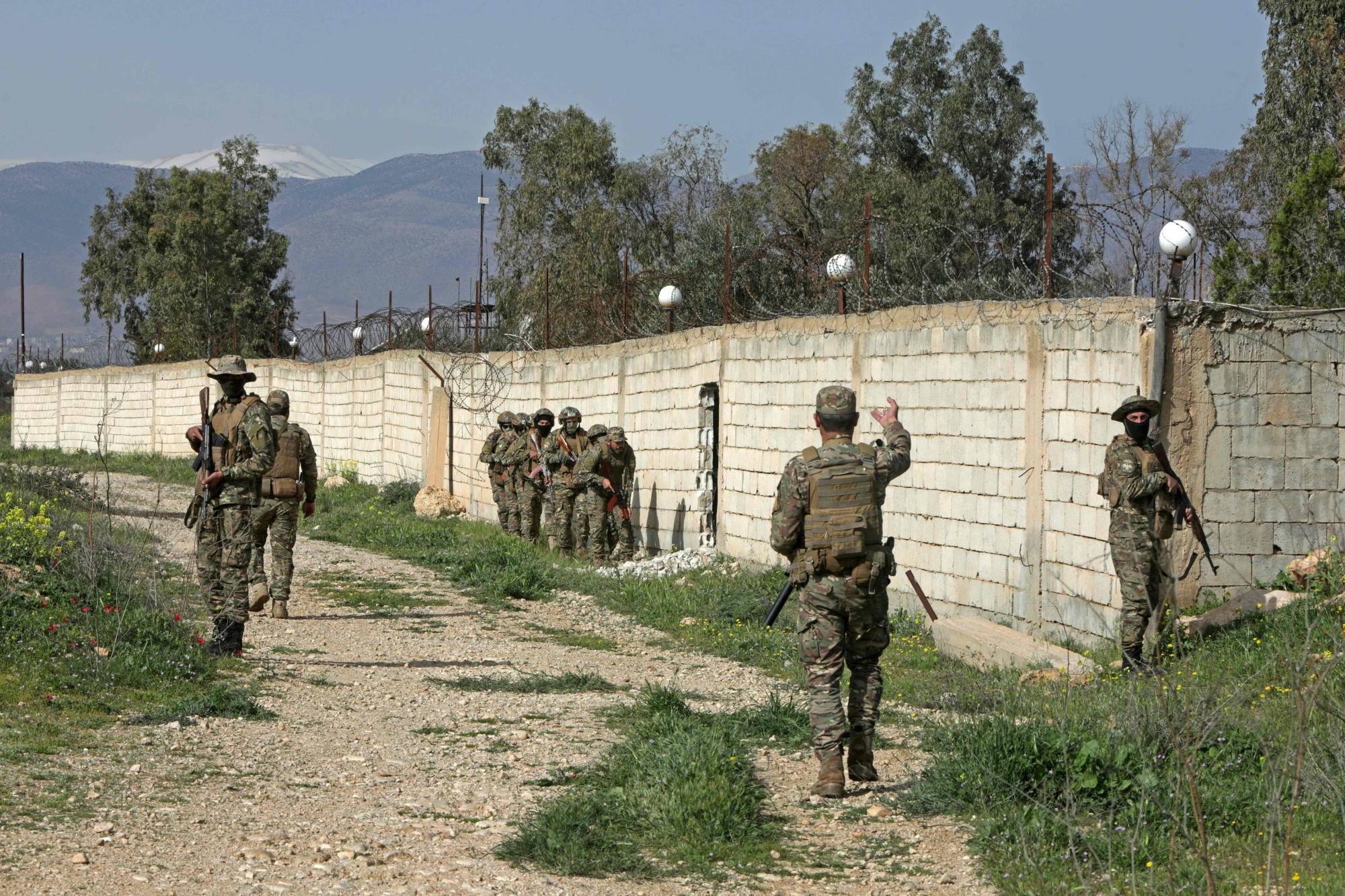
Syrian army soldiers patrol along the Syrian Lebanese border in the rural area of Al Qusayr on April 1, 2026. (Photo by Bakr ALKASEM / AFP)
Beirut: Dealing With Hezbollah's Weapons Remains Solely the Responsibility of the Lebanese State
Trump's remarks about discussing Hezbollah with Al-Sharaa have raised questions in Lebanon about the possibility of assigning Damascus a role in confronting the group. However, Lebanese official and political positions have largely aligned with Syrian opposition to the idea.
Beirut moved quickly to reject any Syrian or foreign intervention in the matter, stressing that addressing the issue remains exclusively the responsibility of the Lebanese state and its institutions.
Speaking during the G7 summit in France, Trump said he had discussed Hezbollah with Al-Sharaa. When asked whether the Syrian president was prepared to confront the group, he merely replied that he would speak about the matter later.
An Attempt to Accommodate Israeli Realities
In this context, former Lebanese Deputy Speaker Elie Ferzli argued that Trump's remarks cannot be understood as part of a coherent strategic vision. Rather, they should be viewed within the framework of short term political considerations linked to recent developments in the region.
Ferzli told Asharq Al-Awsat: "I place these remarks by President Trump in a tactical rather than a strategic context. You cannot interpret them strategically after the agreement that was signed with Iran, nor can you interpret them strategically in light of everything that has taken place across the region."
He added: "Nor can you understand them strategically when Türkiye has already expressed a specific position regarding what is taking place in southern Syria."
Ferzli said that the reading closest to reality is to view these statements as part of managing the postwar political landscape. "This is a tactical statement aimed at accommodating the Israeli reality and avoiding the appearance that Israel has paid a price or made concessions voluntarily," he said.
He added that the current regional climate does not encourage the creation of new flashpoints of tension in Lebanon.
The Lebanese Army and Internal Stability
Ferzli did not limit himself to questioning the practicality of the American proposal. He linked it directly to Lebanon's domestic situation and the role of its official institutions, warning of the consequences of any approach that bypasses the Lebanese state.
"I believe that the most important issue of all is that the Lebanese Army cannot stand by as a spectator in this matter, because it affects the very structure of the Lebanese entity and the foundations of the political system," he said. "Therefore, it cannot be treated as a passing detail, given the direct repercussions it could have on Lebanon and its stability."
Disarmament Is the Responsibility of the Lebanese State
In contrast to the proposal hinted at by Trump, Lebanese Justice Minister Adel Nassar took a firm position in support of keeping security decisions exclusively in the hands of the Lebanese state. Nassar said in an interview with CNN that the disarmament of Hezbollah is the responsibility of the Lebanese state, not foreign forces.
What We Did Not Accept Under Assad, We Will Not Accept From Any Other Regime
Nassar's position aligns with that of Richard Kouyoumjian, former minister and head of foreign relations for the Lebanese Forces party. Kouyoumjian dismissed the idea that Syria even has an interest in playing such a role and rejected in principle any Syrian intervention in Lebanese affairs.
Kouyoumjian told Asharq Al-Awsat: "The information available to us, whether through our meetings with the Syrian side, our contacts with the Syrian ambassador in Lebanon, or through the public statements of President Ahmed Al-Sharaa and Syrian officials, indicates that this is simply not under consideration."
He added: "The Syrian side neither wants, nor is enthusiastic about, nor is fundamentally convinced of becoming involved in Lebanon's internal affairs, especially on an issue as sensitive and dangerous as Hezbollah's weapons."
He stressed that "there is a firmly established conviction on the Lebanese side, particularly within the Lebanese state, that it bears responsibility for the weapons issue." He noted that "decisions on this matter were taken during the past year, and this was also clearly reflected in the ministerial statement of the current government."
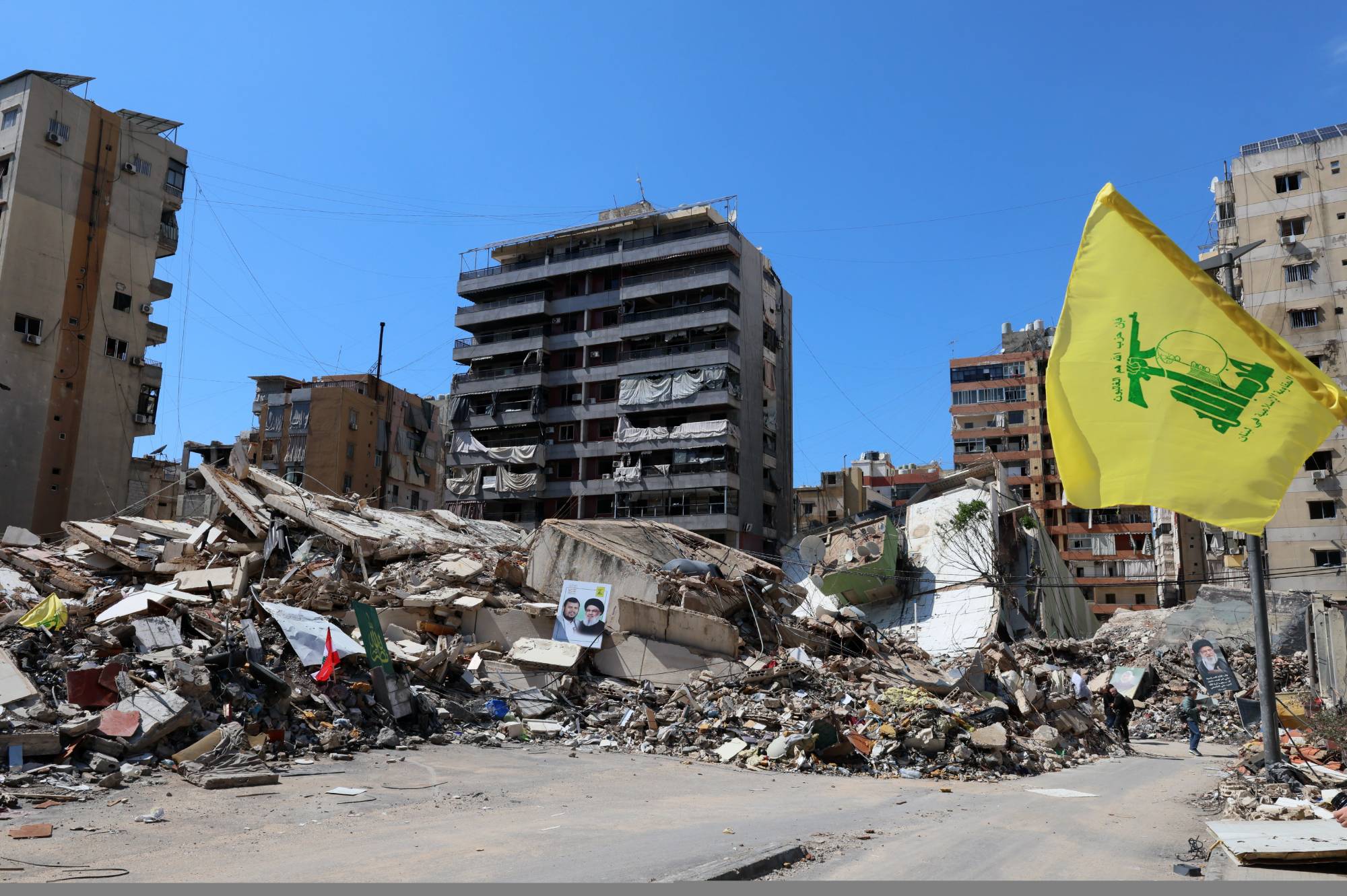
Rubble from buildings destroyed by Israeli airstrikes during a press tour organized by the Hezbollah media office in the Ruwais neighborhood, southern suburbs of Beirut, Lebanon, 06 May 2026. EPA/WAEL HAMZEH
He said the Lebanese sovereignty is not something that can be infringed upon or compromised. As for Syria, despite the long history between the two countries, and regardless of the fact that the current government is not hostile toward Lebanon, quite the contrary, we are doing our best to put relations with it in order following the end of the former regime. Nevertheless, there appears to be neither a desire, nor a will, nor a decision on the Syrian side to intervene in Lebanon. In fact, the opposite is true.
He also stressed that "the Lebanese state, the Lebanese people, and Lebanese political parties all reject any Syrian intervention in Lebanon, regardless of the nature of the government in Damascus."
Kouyoumjian argued that the issue of Hezbollah's weapons must be handled through Lebanese institutions, saying: "We call on the Lebanese state to settle this matter and assume responsibility for addressing the issue of disarmament. If it requires Arab or international support, then it is the Lebanese state that should request such support, whether through the United Nations or through the appropriate international mechanisms."
He concluded: "We believe that the Lebanese state, through its own capabilities, institutions, and agencies, is capable of carrying out this responsibility. Therefore, there is no need for any external intervention. What is required is for the Lebanese state to be decisive, willing, and determined to exercise its full authority and ensure Lebanese sovereignty over all its territory."
The Kataeb Party has also joined those rejecting any Syrian role in addressing Hezbollah's weapons issue, stressing that "placing all weapons exclusively under the authority of the Lebanese state and extending its full authority over all Lebanese territory remain the fundamental gateway to resolving this issue."
In a statement, the party said that any proposal based on "direct Syrian intervention to achieve this objective is unacceptable." It argued that the process should take place "within a clear framework that respects Lebanese sovereignty, strengthens the role of legitimate institutions, and is accompanied by support from Lebanon's regional and international partners in a manner that serves only the interests of the Lebanese state."
The party also welcomed the position previously expressed by Syrian President Ahmed Al-Sharaa rejecting military intervention in Lebanon, considering that stance to "reflect respect for Lebanon's sovereignty and independence and to lay the groundwork for healthy relations between the two countries."
For its part, the Free Patriotic Movement rejected any proposal that would assign a security or military role within Lebanese territory to a foreign state, including suggestions that Syrian authorities could be tasked with confronting Hezbollah inside Lebanon. The movement also praised the Syrian President's rejection of any military or political intervention in Lebanon, stressing that "Lebanon's sovereignty, stability, and security are the sole responsibility of the Lebanese state," and that "any foreign interference in its internal affairs is unacceptable, regardless of its source or justification."
لم تشترك بعد
انشئ حساباً خاصاً بك لتحصل على أخبار مخصصة لك ولتتمتع بخاصية حفظ المقالات وتتلقى نشراتنا البريدية المتنوعة