
Bundesliga Puts its Reputation on the Line with Return in Mid-May

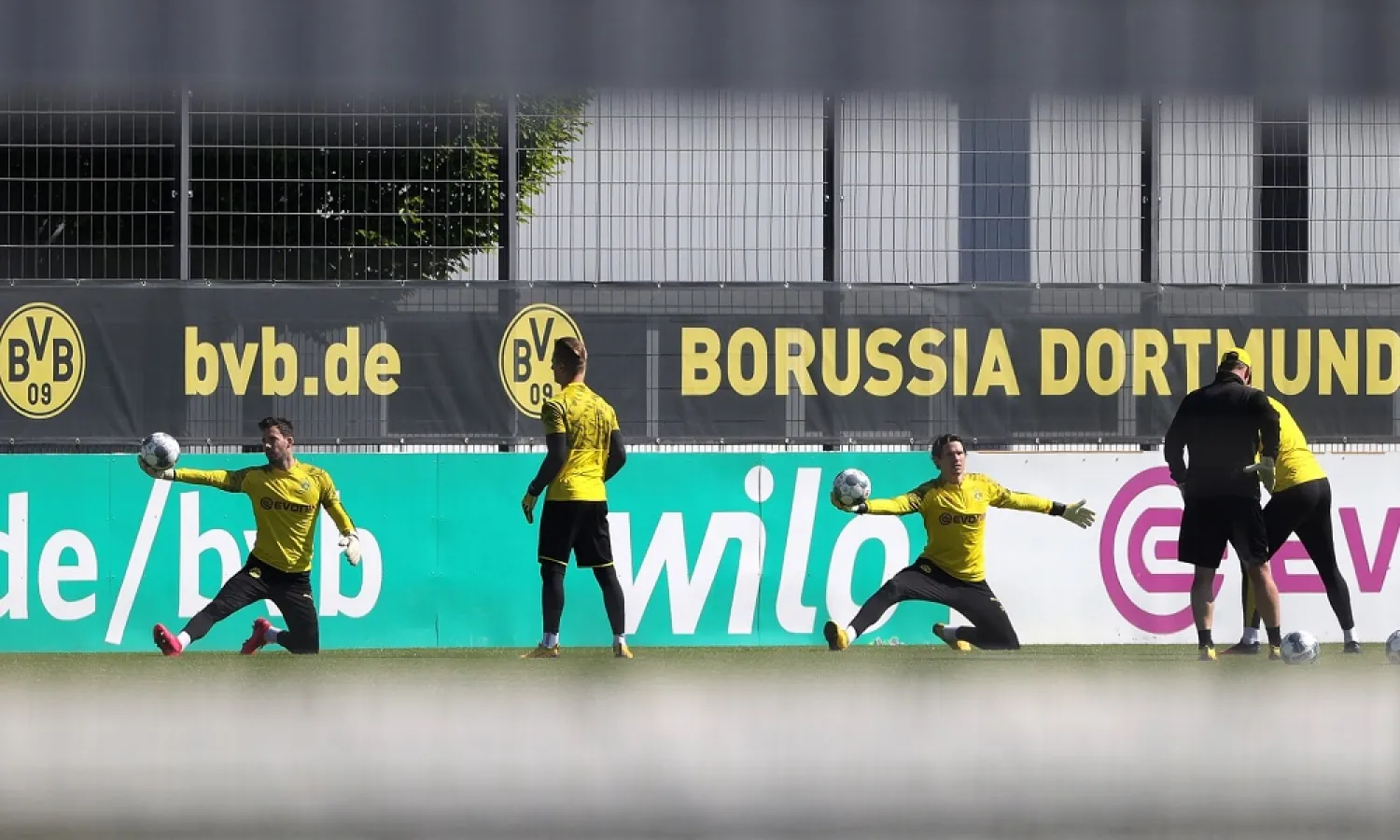
Dortmund goalkeepers Roman Bürki and Marwin Hitz are pictured in training before the first game back, against local rivals Schalke. (EPA)
TT

Bundesliga Puts its Reputation on the Line with Return in Mid-May

Dortmund goalkeepers Roman Bürki and Marwin Hitz are pictured in training before the first game back, against local rivals Schalke. (EPA)

It was expected, and now it’s here. The Bundesliga will be the first of Europe’s major leagues to restart on May 16, with the federal government sign-off on Wednesday giving the league freedom to decide on the timetable itself, which it now has. It had been signposted by the health minister, Jens Spahn, giving verbal approval to the DFL’s detailed safety and hygiene plan this week.

The devil, however, is in the detail. Spahn ended by saying that designing a plan and living it out were two different things, and that is exactly what the Bundesliga and its clubs are finding out. Last Monday the DFL reported there had been 10 positive tests among 1,724 carried out, which gave credence to its claim that the screening purpose was working, “providing additional security and thus protecting the players”.

Dr. Tim Meyer, the head of the DFL’s task force behind the details of the resumption plan, backed this while sounding a note of caution. “If the [necessary] discipline is not adhered to,” he said, “then even the best concept can falter.”

The Facebook Live video published on Monday by the Hertha forward Salomon Kalou was a case in point, flying in like a huge splodge of mud and landing flush on the front of the Bundesliga’s freshly laundered suit. It began innocuously enough, with the Ivorian striker filming his stroll into the club’s Schenkendorffplatz training facility, before he entered the dressing room. There, he shook hands with the striker Vedad Ibisevic and fitness trainer Henrik Kuchno, before wandering into what appeared to be a COVID-19 test being conducted on the defender Jordan Torunarigha.

It’s hardly a first for Hertha, a club “which has already gained plenty of experience in PR disasters this season”, as 11 Freunde’s Max Dinkelaker put it. Yet as a club they have largely got away unscathed from this, throwing Kalou under the bus by suspending him indefinitely and letting him take the rap alone. He is ageing, highly paid and on his way out of the club, with weeks left on his contract. Having played only 146 Bundesliga minutes this season, he is highly unlikely to be retained.

Despite fading from the first-team picture Kalou has always been considered – by club and media – a model pro, so this is a shock on more than one level. Clearly Hertha as an institution have every right to expect better of one of their senior players, who has seen and done enough at 34 to have little excuse, as the general manager, Michael Preetz, pointed out in his statement admonishing him. Preetz was keen to emphasize that everyone at the club has been reminded of the protocols but painting Kalou as the only protagonist here is flawed.

The only person to challenge Kalou in the video is the physio David de Mel, testing Torunarigha, who tells him to “please erase that”. Not “stop doing that”, but “stop potentially showing others that it’s being done”. Kalou’s fellow elder statesman, the 35-year-old Ibisevic, hardly came out of the video in a blaze of glory either.

“Are they f***ing with us?” the captain asks in English – and that much of the dressing-room chat is in English has given the video exactly the sort of wider audience which Hertha and the Bundesliga could have done without – as he and Kalou compare pay slips. Hertha have clarified that the players’ complaints were over an “accounting error” rather than any objection to hiatus-related pay cuts, but it’s not a good look.

Kalou has apologized to his teammates, though a projected role as a Hertha ambassador in Africa looks to be on shaky ground. That he should not carry the can alone seems to be the view of the authorities in Berlin, with the senator Martin Pallgen telling Kicker that Hertha can expect unannounced inspections to make sure the club and its employees are complying with regulations.

With the general public – and certainly fans – divided on whether football in Germany should be pressing ahead, the implications of the scene at Hertha will linger for a greater time than the actions. If this is how one dressing room behaves, what about the other 17, or 35 if we’re counting the top two tiers? The first positive tests that came to light at the weekend, at Köln, had already created doubt in some minds, though the local health authority – which has jurisdiction in these cases, as in Berlin – had decided it was all right to carry on after the three identified with the virus were placed in quarantine.

The midfielder Birger Verstraete had told VTM back home in Belgium that he thought it was “bizarre” that the whole squad hadn’t been quarantined, although he backed down after the club challenged his view and insisted protocol had been followed. Verstraete’s worry was stoked by concern for his girlfriend, who has a heart condition and has now returned to Belgium for the time being. That players have lives, concerns and responsibilities beyond their careers is not easy to allow for in even the most comprehensive plan.

It’s not just on the pitch and in largely empty stadiums that hygiene needs to be considered. There has been a growing push for the Konferenz – the German practice of broadcasting simultaneous Saturday-afternoon fixtures in one program that flits between the grounds – to be made free-to-air for the rest of the campaign. Some in the game clearly feel that the public broadcasters ZDF and ARD shouldn’t be potentially “freeloading”, as the former Bayern president Uli Hoeness charmingly put it in a recent interview with Kicker, even if the basic principle is widely agreed as sound.

The idea is that multiple viewers won’t crowd into front rooms of friends who are Sky customers, and though the main rights holder said in mid-March that its plan was just to present potential clients with “competitive” new offers, the Bavarian authorities (Sky is based in the Unterföhring area of Munich) are hopeful of greater accommodations to the public.

It would be a very small step towards placating those still angry with what they think of as football rushing ahead, putting financial imperatives ahead of the greater good. The Bundestag vice-president, Thomas Oppermann, wrote a guest column for Kicker in which he called for this tricky balance to continue to be worked on. “Football is the most beautiful thing in the world,” Opperman wrote. “We have to do a lot to keep it that way.” The reputation of the Bundesliga, with significant international reach and by going first, depends on it.

The Guardian Sport


Tottenham Hotspur Sack Head Coach Thomas Frank

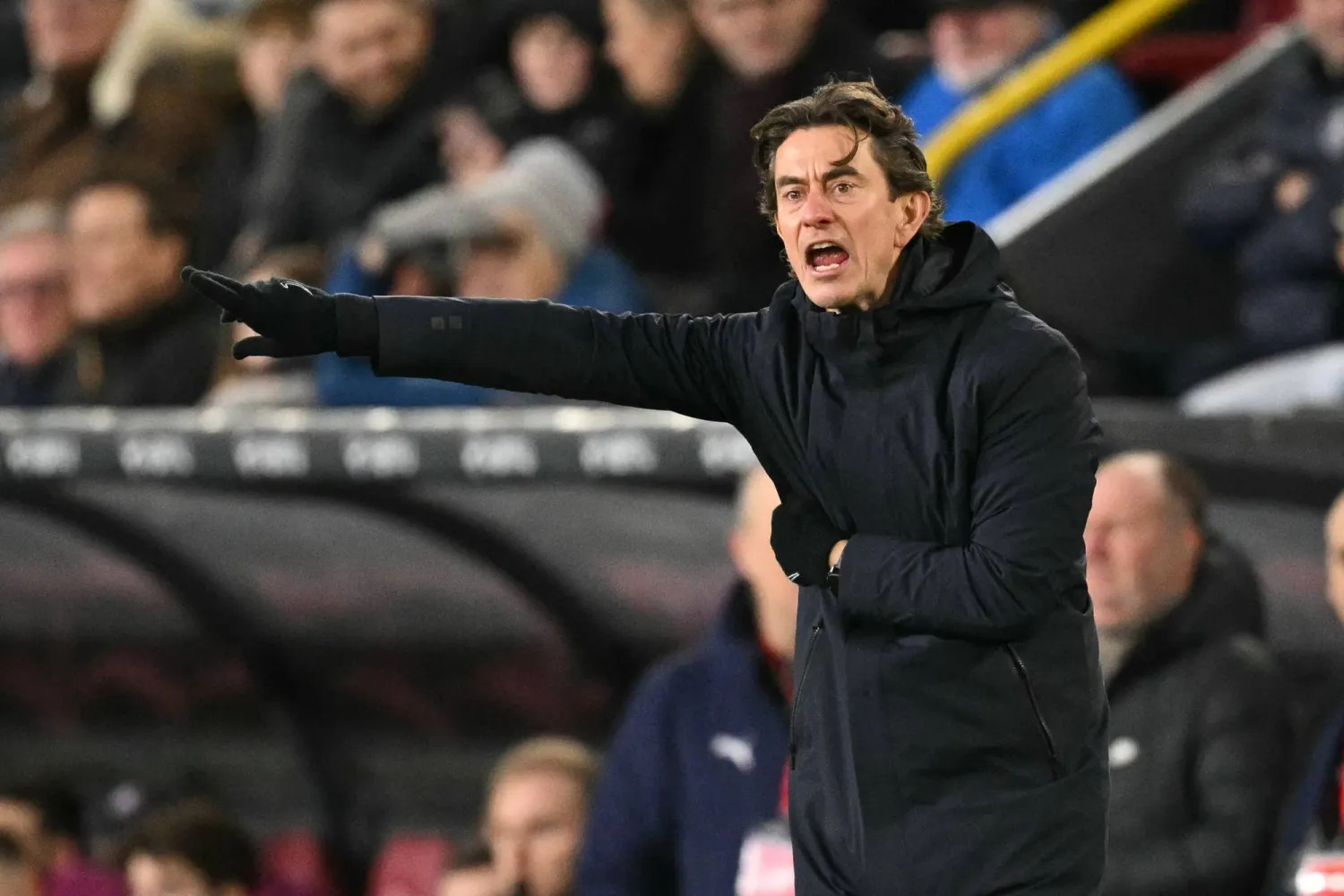
(FILES) Tottenham Hotspur's Danish head coach Thomas Frank gestures on the touchline during the English Premier League football match between Burnley and Tottenham Hotspur at Turf Moor in Burnley, north-west England on January 24, 2026. (Photo by Oli SCARFF / AFP)/
TT

Tottenham Hotspur Sack Head Coach Thomas Frank

(FILES) Tottenham Hotspur's Danish head coach Thomas Frank gestures on the touchline during the English Premier League football match between Burnley and Tottenham Hotspur at Turf Moor in Burnley, north-west England on January 24, 2026. (Photo by Oli SCARFF / AFP)/

Thomas Frank was fired by Tottenham on Wednesday after only eight months in charge and with his team just five points above the relegation zone in the Premier League.

Despite leading Spurs to the round of 16 in the Champions League, Frank has overseen a desperate domestic campaign. A 2-1 loss to Newcastle on Tuesday means Spurs are still to win in the league in 2026.

“The Club has taken the decision to make a change in the Men’s Head Coach position and Thomas Frank will leave today,” Tottenham said in a statement. “Thomas was appointed in June 2025, and we have been determined to give him the time and support needed to build for the future together.

“However, results and performances have led the Board to conclude that a change at this point in the season is necessary.”

Frank’s exit means Spurs are on the lookout for a sixth head coach in less than seven years since Mauricio Pochettino departed in 2019.


Marseille Coach De Zerbi Leaves After Humiliating 5-0 Loss to PSG 

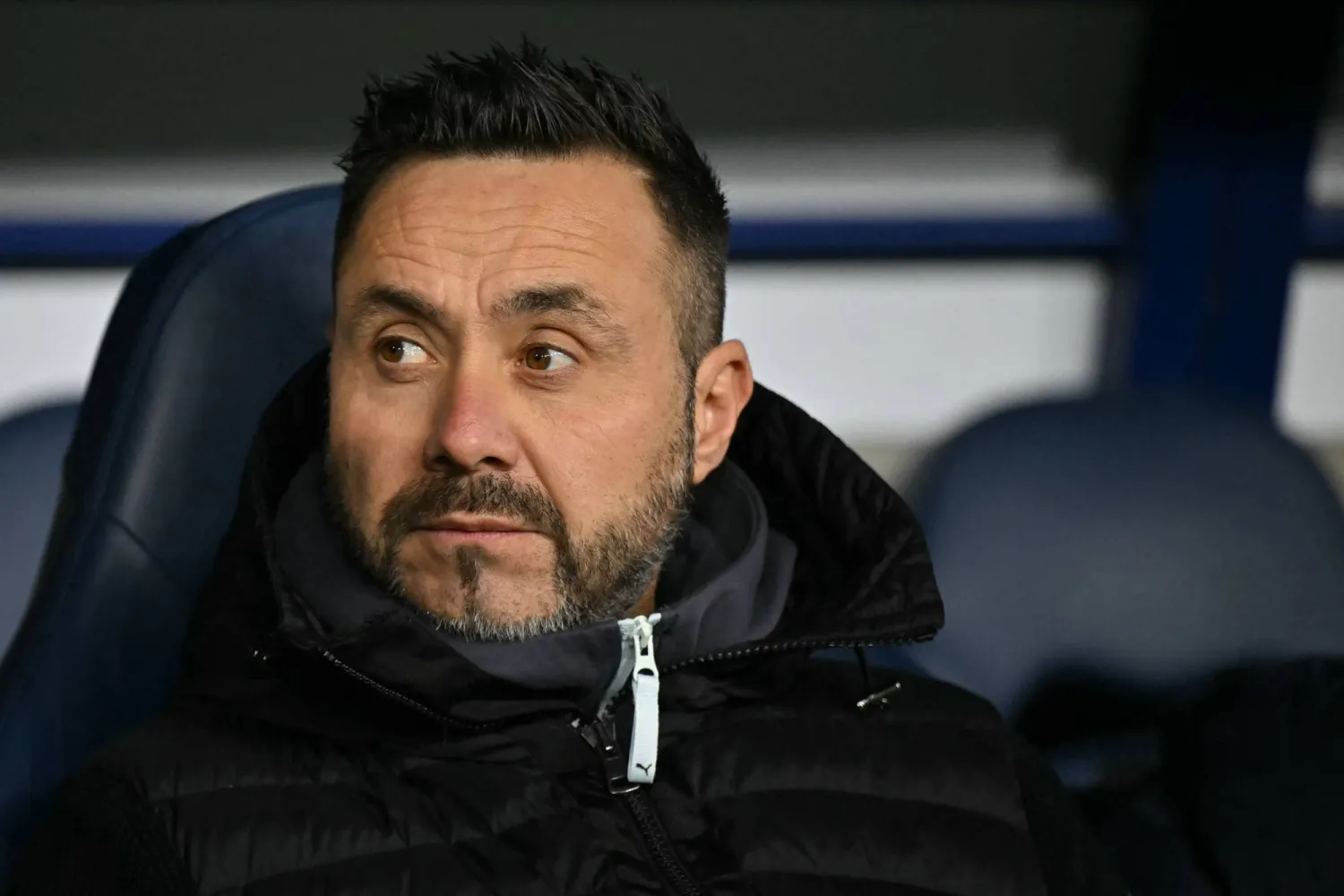
Marseille's Italian coach Roberto De Zerbi looks on from the technical area during the French Cup round of 32 football match between FC Bayeux and Olympique de Marseille (OM) at the Michel-d'Ornano Stadium in Caen on January 13, 2026. (AFP) 
TT

Marseille Coach De Zerbi Leaves After Humiliating 5-0 Loss to PSG 

Marseille's Italian coach Roberto De Zerbi looks on from the technical area during the French Cup round of 32 football match between FC Bayeux and Olympique de Marseille (OM) at the Michel-d'Ornano Stadium in Caen on January 13, 2026. (AFP) 

Marseille coach Roberto De Zerbi is leaving the French league club in the wake of a 5-0 thrashing at the hands of PSG in French soccer biggest game.

The nine-time French champions said on Wednesday that they have ended “their collaboration by mutual agreement.”

The heavy loss Sunday at the Parc des Princes restored defending champion PSG’s two-point lead over Lens after 21 rounds, with Marseille in fourth place after the humiliating defeat.

De Zerbi's exit followed another embarrassing 3-0 loss at Club Brugge two weeks ago that resulted in Marseille exiting the Champions League.

De Zerbi, who had apologized to Marseille fans after the loss against bitter rival PSG, joined Marseille in 2024 after two seasons in charge at Brighton. After tightening things up tactically in Marseille during his first season, his recent choices had left many observers puzzled.

“Following consultations involving all stakeholders in the club’s leadership — the owner, president, director of football and head coach — it was decided to opt for a change at the head of the first team,” Marseille said. “This was a collective and difficult decision, taken after thorough consideration, in the best interests of the club and in order to address the sporting challenges of the end of the season.”

De Zerbi led Marseille to a second-place finish last season. Marseille did not immediately announce a replacement for De Zerbi ahead of Saturday's league match against Strasbourg.

Since American owner Frank McCourt bought Marseille in 2016, the former powerhouse of French soccer has failed to find any form of stability, with a succession of coaches and crises that sometimes turned violent.

Marseille dominated domestic soccer in the late 1980s and early 1990s. It was the only French team to win the Champions League before PSG claimed the trophy last year. It hasn’t won its own league title since 2010.


Olympic Fans Hunt for Plushies of Mascots Milo and Tina as They Fly off Shelves 

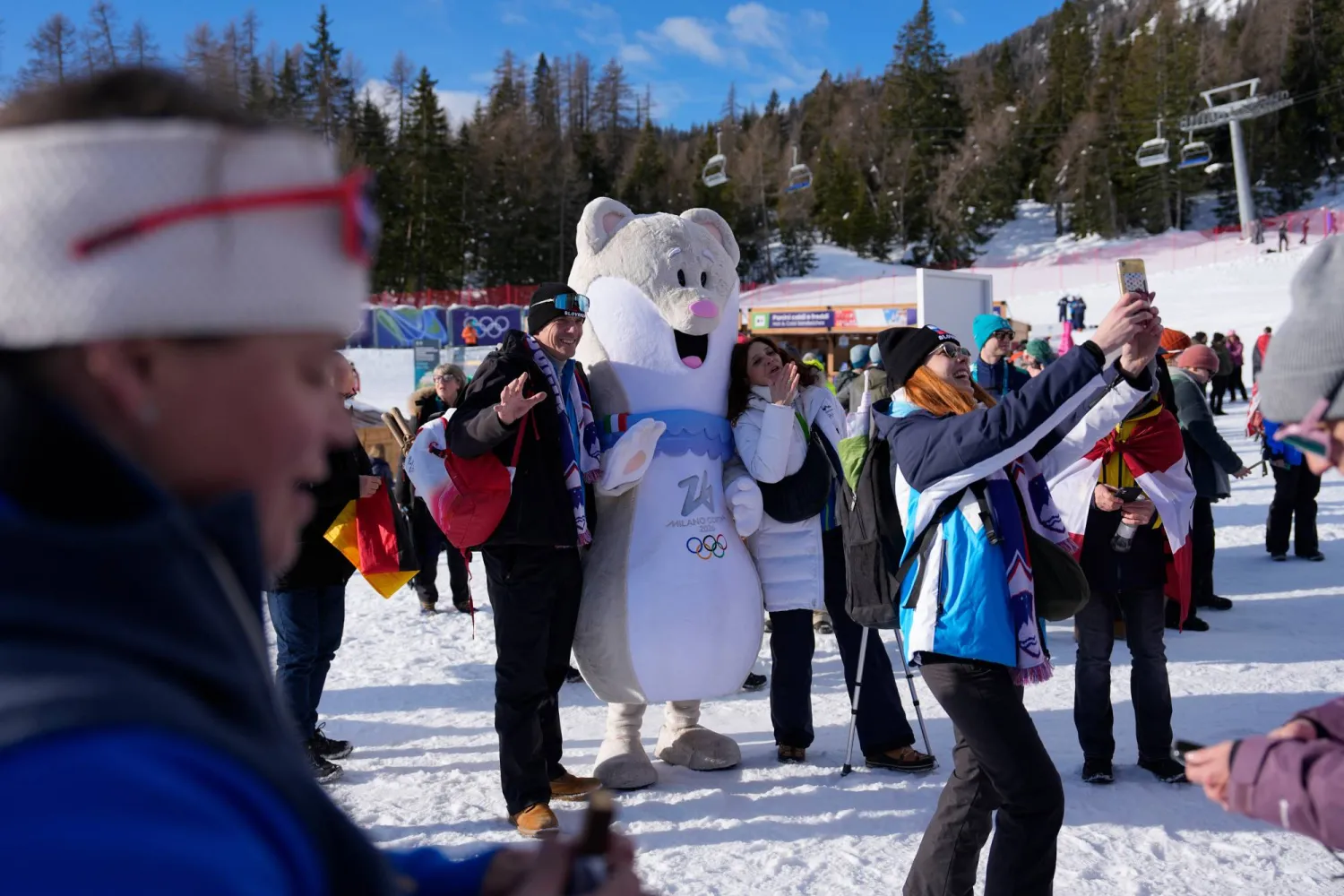
Fans take selfies with the Olympic mascot Tina at the finish area of an alpine ski, slalom portion of a women's team combined race, at the 2026 Winter Olympics, in Cortina d'Ampezzo, Italy, Tuesday, Feb. 10, 2026. (AP)
TT

Olympic Fans Hunt for Plushies of Mascots Milo and Tina as They Fly off Shelves 

Fans take selfies with the Olympic mascot Tina at the finish area of an alpine ski, slalom portion of a women's team combined race, at the 2026 Winter Olympics, in Cortina d'Ampezzo, Italy, Tuesday, Feb. 10, 2026. (AP)

For fans of the Milan Cortina Olympic mascots, the eponymous Milo and Tina, it's been nearly impossible to find a plush toy of the stoat siblings in Milan and Cortina d’Ampezzo.

Many of the official Olympics stores in the host cities are already sold out, less than a week into the Winter Games.

“I think the only way to get them is to actually win a medal,” Julia Peeler joked Tuesday in central Milan, where Tina and Milo characters posed for photos with fans.

The 38-year-old from South Carolina is on the hunt for the plushies for her niece. She's already bought some mascot pins, but she won't wear them on her lanyard. Peeler wants to avoid anyone trying to swap for them in a pin trade, a popular Olympic pastime.

Tina, short for Cortina, is the lighter-colored stoat and represents the Olympic Winter Games. Her younger brother Milo, short for Milano, is the face of the Paralympic Winter Games.

Milo was born without one paw but learned to use his tail and turn his difference into a strength, according to the Olympics website. A stoat is a small mustelid, like a weasel or an otter.

The animals adorn merchandise ranging from coffee mugs to T-shirts, but the plush toys are the most popular.

They're priced from 18 to 58 euros (about $21 to $69) and many of the major official stores in Milan, including the largest one at the iconic Duomo Cathedral, and Cortina have been cleaned out. They appeared to be sold out online Tuesday night.

Winning athletes are gifted the plush toys when they receive their gold, silver and bronze medals atop the podium.

Broadcast system engineer Jennifer Suarez got lucky Tuesday at the media center in Milan. She's been collecting mascot toys since the 2010 Vancouver Games and has been asking shops when they would restock.

“We were lucky we were just in time,” she said, clutching a tiny Tina. “They are gone right now.”

Friends Michelle Chen and Brenda Zhang were among the dozens of fans Tuesday who took photos with the characters at the fan zone in central Milan.

“They’re just so lovable and they’re always super excited at the Games, they are cheering on the crowd,” Chen, 29, said after they snapped their shots. “We just are so excited to meet them.”

The San Franciscan women are in Milan for the Olympics and their friend who is “obsessed” with the stoats asked for a plush Tina as a gift.

“They’re just so cute, and stoats are such a unique animal to be the Olympic mascot,” Zhang, 28, said.

Annie-Laurie Atkins, Peeler's friend, loves that Milo is the mascot for Paralympians.

“The Paralympics are really special to me,” she said Tuesday. “I have a lot of friends that are disabled and so having a character that also represents that is just incredible.”