Lebanon's Central Bank Seeks to Provide Dollars for Imports at Rate of 3,200 Poundshttps://english.aawsat.com/home/article/2285691/lebanons-central-bank-seeks-provide-dollars-imports-rate-3200-pounds
Lebanon's Central Bank Seeks to Provide Dollars for Imports at Rate of 3,200 Pounds
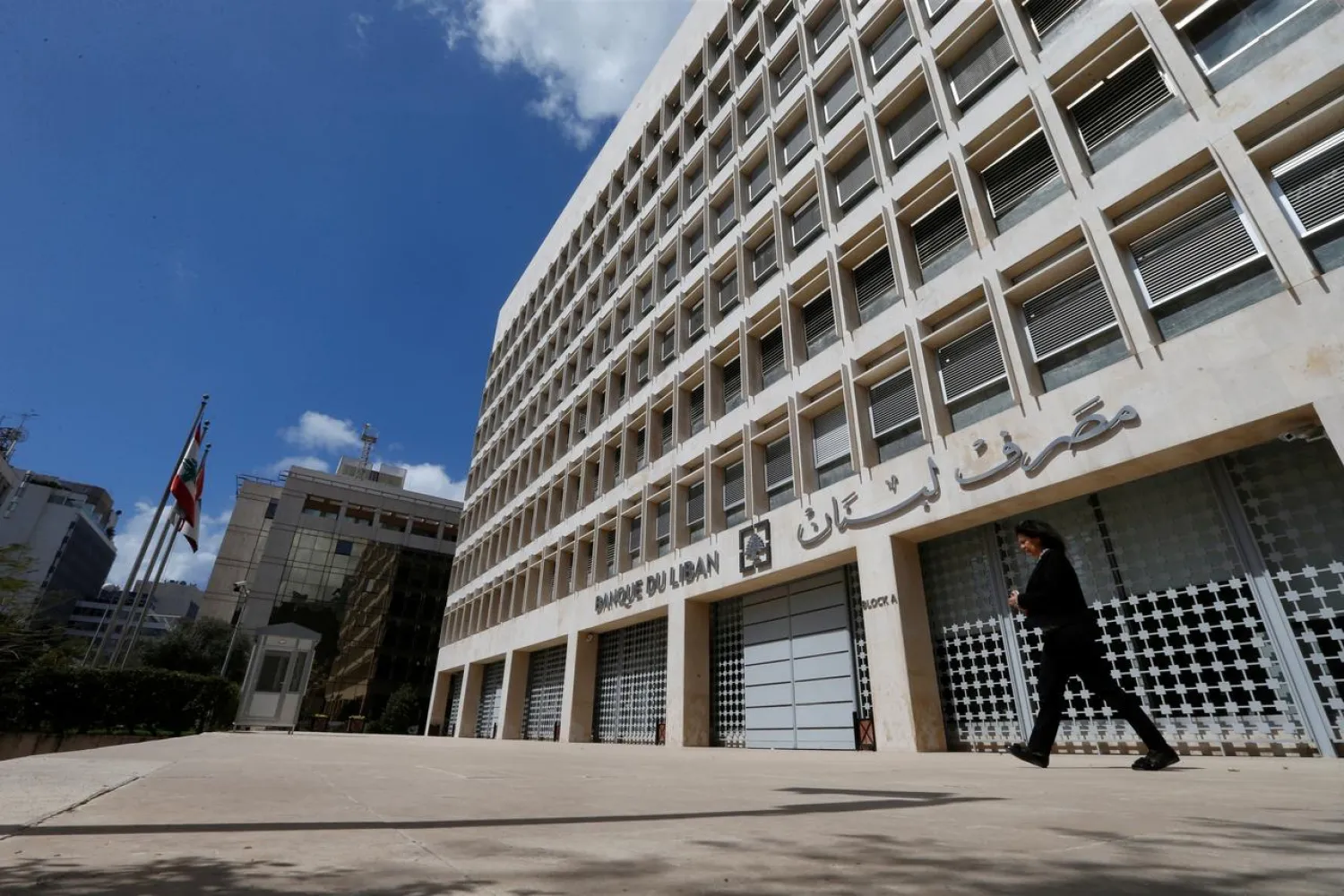
FILE PHOTO: A woman walks outside of Lebanon's Central Bank building in Beirut, Lebanon March 16, 2018. REUTERS/Mohamed Azakir/File Photo
The Lebanese central bank revealed on Friday that it's working to provide dollars for imports at an exchange rate of 3,200 Lebanese pounds to reduce food prices.
This comes as part of efforts to rein in spiralling inflation as the local currency collapses.
The central bank is already providing dollars for imports of wheat, fuel and medicine at a rate of 1,507.5 pounds - an official peg that has remained in place even as the pound has slumped on the parallel market.
"Banque du Liban will continue to inject dollar banknotes that it acquires via the banks with the aim of financing imports at the price of 3,200 Lebanese pounds per US dollar with the aim of reducing the price of food products," the central bank said in a statement, Reuters reported.
Dollars are currently changing hands on a parallel market at ore than 4,000 pounds.
The Lebanese pound has lost more than 60% of its value since October, when the country's long-brewingeconomic troubles grew into a major financial and banking crisis.
A government plan for getting Lebanon out of the crisis is based on a shift to a flexible exchange rate, although only in the "coming period" - and the currency peg will be maintained for now, Finance Minister Ghazi Wazni said last week.
Iraq Central Bank Devalues Dinar after Mideast War Hurts Oil Exportshttps://english.aawsat.com/business/5326937-iraq-central-bank-devalues-dinar-after-mideast-war-hurts-oil-exports
Iraq Central Bank Devalues Dinar after Mideast War Hurts Oil Exports
An employee arranges stacks of Iraqi dinars at a currency exchange shop in Baghdad on Feb. 14, 2023. (AFP)
Iraq's central bank devalued the dinar currency against the dollar on Wednesday, with the country facing a deepening crisis brought on by the Middle East war.
Crude oil sales account for nearly 90 percent of Iraq's revenue but its exports have been hurt by the outbreak in February of the conflict between Iran and the United States, which choked off the Strait of Hormuz shipping route.
Consumer prices have also risen, while Iraq's foreign currency reserves have fallen by around $20 billion.
The central bank said in a statement late Tuesday that based on a government decision, "it had decided to adopt... a selling price of the US dollar to the public of 1,520 dinars.”
The rate had been fixed at 1,320 dinars since February 2023.
The bank instructed financial institutions to "stop using the previous rate and adopt the new rate as of the start of the business day on October 7,” AFP reported.
Iraq relies heavily on foreign currency generated by oil sales to finance imports, stabilize the dinar, and pay the salaries of public sector employees and retirees.
Gold Down 1% as Dollar Gains; Fed Minutes in Focushttps://english.aawsat.com/business/5326933-gold-down-1-dollar-gains-fed-minutes-focus
Gold Down 1% as Dollar Gains; Fed Minutes in Focus
A worker polishes gold bars at a refinery in Sydney (AFP)
Gold prices fell on a stronger US dollar on Wednesday, while investors awaited the minutes of the Federal Reserve's September meeting to gauge the degree of support among policymakers for further rate hikes.
Spot gold fell 0.98% to $4,122.73 per ounce by 0905 GMT. US gold futures for December delivery slid 0.91% to $4,149.00, Reuters reported.
The US dollar index rose 0.4%, making greenback-denominated gold more expensive for holders of other currencies.
"There is also an element of caution ahead of the release of the latest Federal Open Market Committee minutes later today," said ActivTrades director and CEO Ricardo Evangelista.
"Until there is greater clarity on that (support for rate hikes) front, there is probably some reluctance to take larger positions in gold."
After a softer US jobs data, markets now largely expect the Fed to stay pat in October, but are still pricing in an 86% chance of a hike in December, according to the CME's FedWatch tool.
Kansas City Fed President Jeff Schmid said rates still need to rise to bring inflation down, while San Francisco Fed President Mary Daly said the decision would rest on whether the factors pushing up inflation fade or persist.
Higher interest rates diminish the attractiveness of non-yielding gold.
"The downside remains supported by geopolitical uncertainty, concerns over government debt and inflation, and central bank demand," Evangelista said.
International Monetary Fund Managing Director Kristalina Georgieva warned on Wednesday that the global economy faces risks from persistently high energy prices, record public debt and risks from the AI investment boom.
Separately, delegates attending the London Bullion Market Association's annual conference in Italy forecast that gold could reach $5,013 an ounce over the next 12 months.
China's central bank stepped up its gold purchases in September, extending its buying streak to a 23rd consecutive month, official data showed.
Spot silver fell 2.2% to $60.3638 per ounce, platinum eased 3.0% to $1,650.45, and palladium lost 2.7% to $1,140.89.
World Energy Council to Asharq Al-Awsat: Diversifying Routes is Essential to Withstand Shockshttps://english.aawsat.com/business/5326921-world-energy-council-asharq-al-awsat-diversifying-routes-essential-withstand
Women use paddleboards, as a vessel in the Strait of Hormuz appears in the distance, near the beach of Bandar Abbas, Iran, October 6, 2026. Amirhosein Khorgooi/ISNA/via WANA (West Asia News Agency) via REUTERS
World Energy Council to Asharq Al-Awsat: Diversifying Routes is Essential to Withstand Shocks
Women use paddleboards, as a vessel in the Strait of Hormuz appears in the distance, near the beach of Bandar Abbas, Iran, October 6, 2026. Amirhosein Khorgooi/ISNA/via WANA (West Asia News Agency) via REUTERS
Recent disruptions to oil trade flows have highlighted the importance of having multiple routes to market and infrastructure capable of absorbing shocks, at a time when geopolitical risks and bottlenecks facing the global energy system are increasing.
This was emphasized by Angela Wilkinson, Secretary General and CEO of the World Energy Council, in an exclusive interview with Asharq Al-Awsat ahead of her participation in Riyadh Energy Week.
She explained that the energy system's ability to cope with disruptions depends not only on production volumes, but also on infrastructure, transportation networks, and the relationships between producers and consumers.
Starting Sunday, Riyadh Energy Week will host the 25th World Energy Congress for the first time in Saudi Arabia, bringing together more than 70 ministers, over 300 chief executives from leading global energy companies, and leaders of more than 25 international organizations.
Held under the theme “Pathways to an Energy Future for All,” the congress will feature more than 30 ministerial, strategic, and leadership sessions addressing energy security, global oil and gas markets, investment and finance, artificial intelligence and digital transformation, critical minerals, carbon management, natural gas, and the future of the energy mix.
Angela Wilkinson, Secretary General and CEO of the World Energy Council
Hormuz Tests the Resilience of the Energy System
Wilkinson says energy underpins every aspect of life in the modern world. Therefore, the global priority is to de-escalate regional conflicts that could trigger a crisis in both energy markets and the world economy.
She noted that energy leaders are now operating within a new geopolitical landscape, while communities across different regions face multiple shocks and bottlenecks affecting transportation routes, refining capacity, liquefied natural gas (LNG), electricity grids, and critical minerals.
She explained that the trade-offs between energy security, equitable access and affordability, and environmental sustainability have not disappeared. Rather, they have become more pronounced, making it essential to rebalance these priorities in real time to achieve sustainable progress. She cited findings from the 2026 World Energy Trilemma Report, prepared by the Council following consultations with more than 275 energy leaders across 65 countries.
Wilkinson added that the longer-term impact of the crisis, regardless of its duration, may lie in how industry leaders collaborate to strengthen resilience, integration, and operational alignment, and to build systems capable of absorbing today's disruptions while becoming better prepared for future shocks and transformation opportunities.
Saudi Arabia and the Importance of Multiple Routes to Market
Wilkinson said that Saudi Arabia’s production capacity and alternative export infrastructure play an important role in global energy markets, particularly when existing routes face disruptions. She noted that recent developments have demonstrated that “there is no single route that eliminates all risks,” and that energy security depends on robust infrastructure, multiple pathways to markets, and greater cooperation between producers and consumers.
She added that the resilience of the Gulf region’s energy system cannot be measured solely by the amount of energy the region can produce. It also depends on its ability to transport that energy reliably through ports, pipelines, electricity grids, and international markets.
Wilkinson pointed to investments in new infrastructure, stronger networks, and increasingly diverse partnerships as factors that expand the options available to the energy system. She summarized the concept of resilience as “building optionality into the system” through diversified energy sources, multiple routes to market, strong infrastructure, and solid international relationships.
From Supply to “Capabilities”
Wilkinson does not believe that the crisis changes the need to balance energy security, equitable access and affordability, and environmental sustainability. However, she explained that what does change, sometimes very rapidly, is where pressures intensify and where new bottlenecks emerge.
She said that the trade-offs managed by energy leaders have shifted, driven by geopolitics, technological innovation, climate change impacts, growing demand, and industrial competitiveness, moving to new geographies and different parts of the global energy system.
In her view, the most significant transformation may be the shift from a world in which the energy system was organized around supply to one increasingly structured around “capabilities.” In response, the World Energy Council is evolving the Energy Trilemma framework from a measurement tool into a leadership dialogue focused on system integration and resilience, energy security, and industrial competitiveness.
She emphasized that integration is not merely a technical challenge related to standardization. It also concerns the institutional, financial, and human capabilities required to ensure that the various components of the energy system work together efficiently.
Geopolitics and New Dependencies
Wilkinson expects geopolitics to play an increasingly important role in shaping decisions about interdependence in the energy sector over the next five to ten years. Electricity, artificial intelligence, emerging technologies, and growing demand will remain important factors, but they are developing within a world that is becoming more fragmented and competitive.
She explained that countries are discovering that reducing one dependency may create another, whether on critical minerals, technologies, manufacturing capabilities, or infrastructure.
According to Wilkinson, the way leaders manage these interconnected dependencies and address widening capability gaps will help shape the energy system over the coming decade.
An Electrification “Supercycle”
As demand for electricity accelerates, Wilkinson believes that the greatest constraint on the electrification “supercycle” is not any single technology, policy, or piece of infrastructure, but rather the ability to make the entire energy system work efficiently.
She explained that this requires electricity generation, power grids, energy storage, and investment. Expanding each of these components, however, creates new dependencies on supply chains, critical minerals, aging infrastructure, and a skilled workforce.
She stressed that deploying energy technologies remains essential, but ensuring that these technologies work together is becoming an increasingly complex challenge that requires new capabilities.
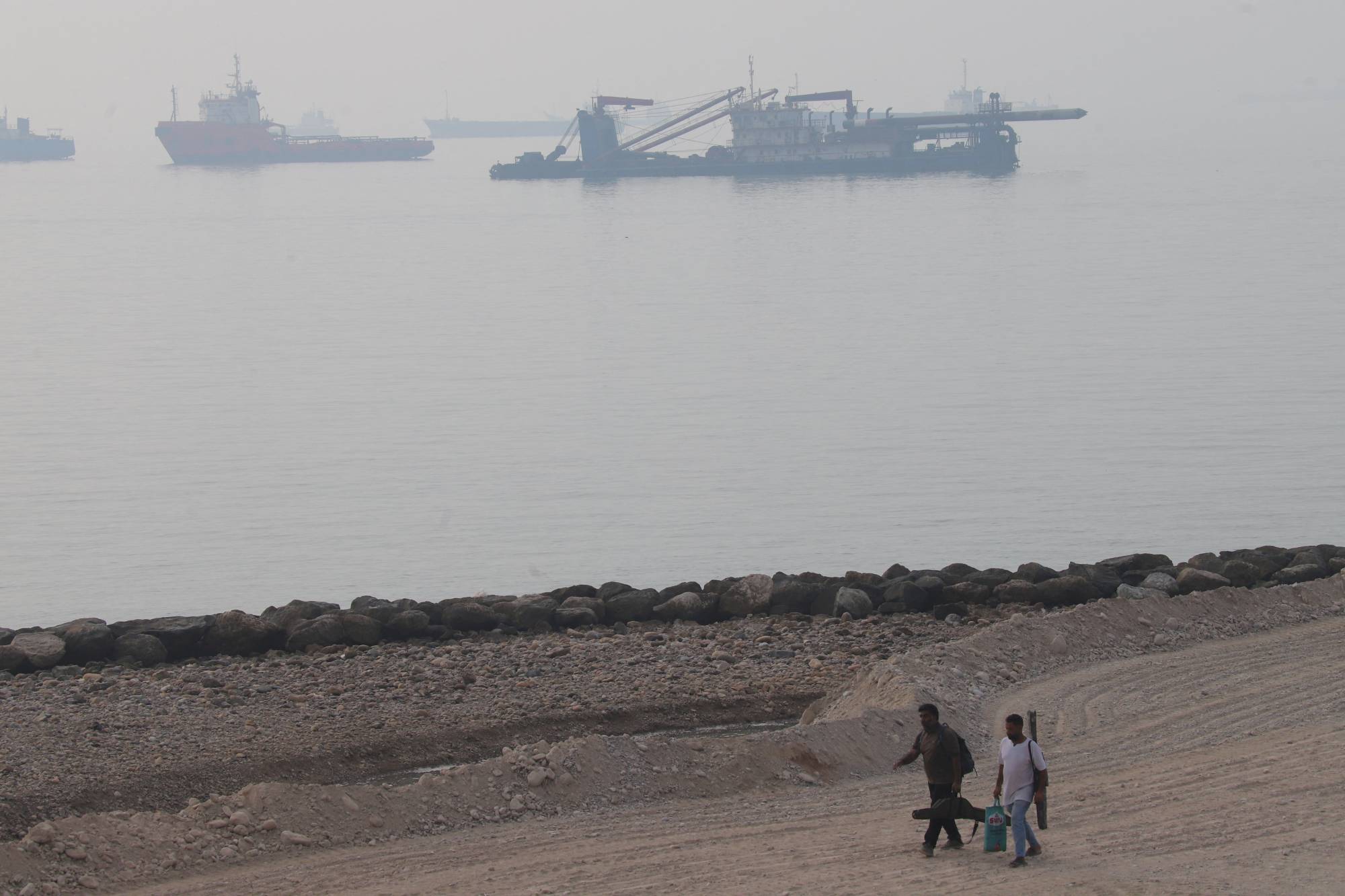
Vessels in the Strait of Hormuz near the beach of Bandar Abbas, Iran, October 6, 2026. Amirhosein Khorgooi/ISNA/via WANA (West Asia News Agency) via REUTERS
No Single Global Pathway for the Energy Transition
Wilkinson rejects the notion of a single global pathway for the energy transition, arguing instead that multiple pathways and transitions are emerging, shaped by differing resources, infrastructure, and economic and social needs.
The findings of the World Energy Trilemma demonstrate that energy leaders are being forced to rebalance energy security, equitable access and affordability, and environmental sustainability more frequently and dynamically than ever before.
She said the challenge lies in advancing all of these priorities simultaneously, because neglecting any one of them could create vulnerabilities elsewhere in the system. The question, she argued, is not whether the transition should proceed faster or slower, but how its stages can be sequenced in a way that delivers reliable, affordable, and sustainable energy services while meeting growing demand for clean electricity and future fuels.
Between Sovereignty and Independence
Wilkinson believes that one of the most underestimated risks through 2030 is the tendency to confuse “energy sovereignty” with “energy independence,” or to assume that demand will remain predictable and passive, when in reality it has become increasingly active and influential in shaping the energy system.
She noted that modern energy systems are inherently based on interdependence. A country may reduce its reliance on fuel imports, but in doing so it may increase its dependence on critical minerals, technologies, or the capabilities required to build clean-energy systems.
For that reason, energy security does not simply mean relocating every element of the energy system within national borders. Rather, it requires understanding and managing interdependencies. As the global energy system continues to expand, this also means looking beyond generation capacity alone to include the resilience of power grids, plants, supply chains, and the connections between them.
لم تشترك بعد
انشئ حساباً خاصاً بك لتحصل على أخبار مخصصة لك ولتتمتع بخاصية حفظ المقالات وتتلقى نشراتنا البريدية المتنوعة