Saudi Ports Authority Expands Shipping Lines to East Asia

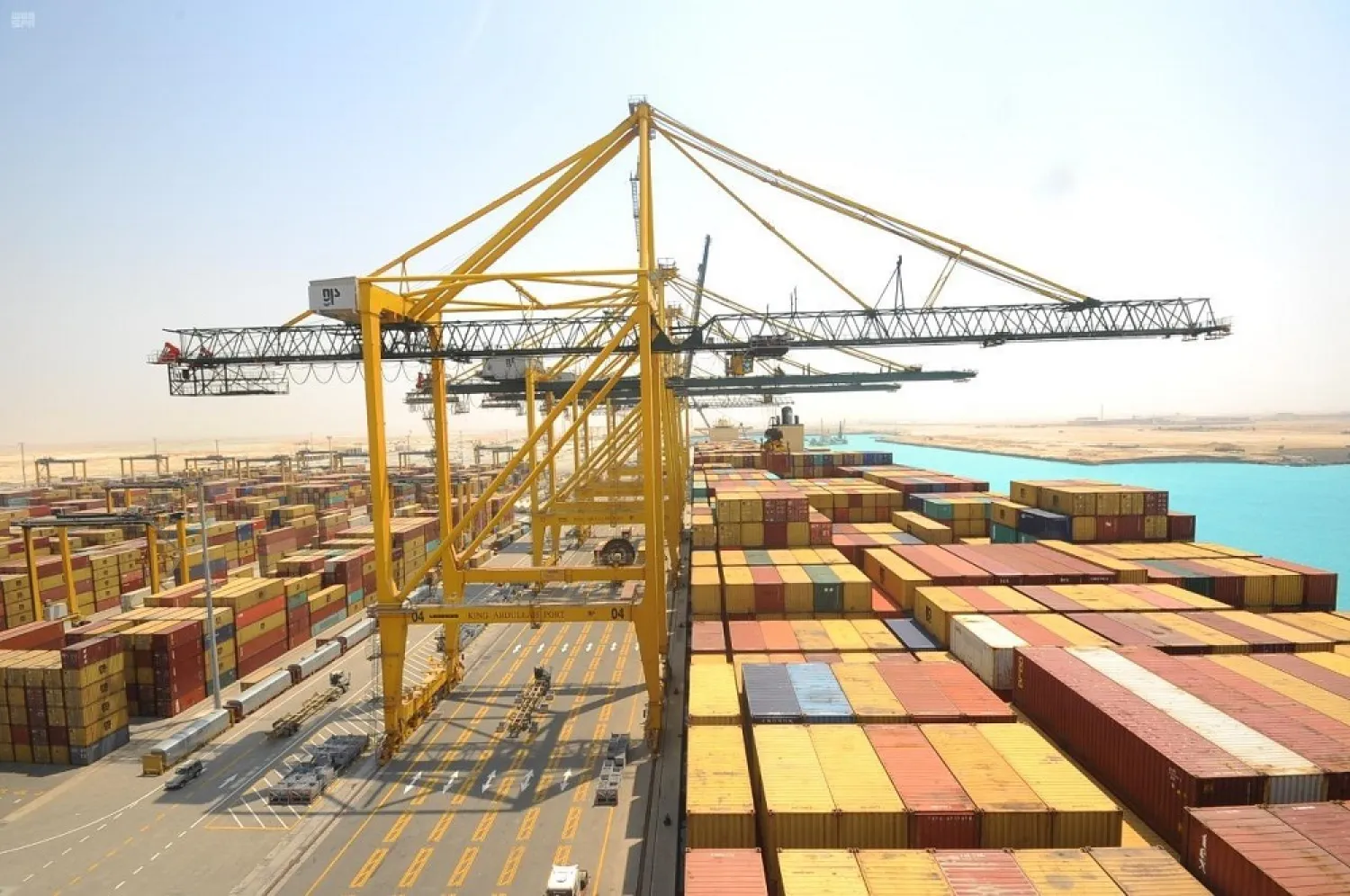
King Abdullah Port, Saudi Arabia. (SPA)
TT

Saudi Ports Authority Expands Shipping Lines to East Asia

King Abdullah Port, Saudi Arabia. (SPA)

Saudi Arabia is continuing its efforts to reduce the economic impact of the coronavirus pandemic in the Kingdom by increasing financing and commercial activities.

The Saudi Ports Authority (MAWANI) announced it has started operating a new shipping line for container transportation between the Kingdom and East Asian countries, supported by the Logistics Committee and under the supervision of the Minister of Transport.

The new route will be operated through global shipping line Hyundai Merchant Marine and partly in agreement with the Alliance consisting of Hapag-Lloyd of Germany, OEN of Japan, and Yang Ming of Taiwan.

It seeks to facilitate regular trips to the port on a weekly basis serving industrial companies in Jubail and Ras al-Khair. The new route facilitates and accelerates direct import and export operations from East Asian countries and increases trade.

The project is part of MAWANI's initiatives to boost the connectivity of the Kingdom with international ports and attract major global shipping lines by providing them with the best services.

It is also line with MAWANI’s plans and strategic goals to raise Saudi Arabia's competitiveness in terms of investment and logistical services.

It consolidates the Kingdom's position toward achieving the goals of Vision 2030 in making Saudi Arabia an attractive global logistical platform and a link between continents of the world.

The direct link between Saudi and East Asian ports during this critical time for the global economy empowers the Saudi economy and the supply chains in the Kingdom.

The Ports Authority recently announced it started operating another shipping line for container transportation with East African countries, which is the first to reach King Fahd Industrial Port in Yanbu. This contributes to enhancing the movement of exports and imports to and from the Yanbu Industrial and Jeddah Islamic ports.


US Ban on $1 Billion Worth of Canadian Imports Goes into Effect

Shipping containers in the Port of Montreal, Canada (Reuters)
TT

US Ban on $1 Billion Worth of Canadian Imports Goes into Effect

Shipping containers in the Port of Montreal, Canada (Reuters)

US-Canada relations, already tense, are likely to deteriorate further after the United States went ahead early Tuesday with a decision to ban nearly $1 billion worth of Canadian imports, including dairy products and motorcycles.

The ban amounts to barely a ripple in $880 billion worth of a two-way annual trade between the two northern neighbors. But it marks another ratcheting up of President Donald Trump’s second-term trade war with America’s longtime ally and trading partner.

The import ban “certainly won't do anything to help the trade tensions between the United States and Canada,'' said trade attorney Patrick Childress, a partner at Holland & Knight and a former US trade official.

The latest sparring began over the summer when Trump reached back to a Great Depression law to impose 50% tariffs on about $20 billion worth of Canadian imports, charging that Canada discriminates against US dairy and auto producers. Canada promptly counterpunched with tariffs of 15% and 25%, matching US imports dollar for dollar.

To punish Canada for retaliating against his tariffs, Trump decided to ban a list of Canadian products, effective 12:01 a.m. Eastern time Tuesday.

The economic impact is likely to be minimal. Childress noted that the products on the banned list were already facing Trump’s tariffs. “For a lot of these goods, the 50% was already acting as a de facto ban by making importation from Canada into the United States uneconomical,″ he said.

Jacob Jensen, director of trade policy at the center-right American Action Forum think tank, calculates that the ban would cover $967 million worth of Canadian imports, based on 2025 numbers.

“This marks yet another escalation in the trade war that may result in further retaliation on the Canadian side,” Jensen said. He expects Canadian exporters and US importers “impacted by these bans will be highly motivated’’ to demand that trade officials on both sides find some way to reach a “resolution of this whole ordeal.’’


Birol: IEA Member States Will Discuss Strategic Oil Reserve Releases if Needed

This photograph shows the entrance to the International Energy Agency (IEA) headquarters in Paris on March 11, 2026. (Photo by Ludovic MARIN / AFP)
TT

Birol: IEA Member States Will Discuss Strategic Oil Reserve Releases if Needed

This photograph shows the entrance to the International Energy Agency (IEA) headquarters in Paris on March 11, 2026. (Photo by Ludovic MARIN / AFP)

The International Energy Agency's member states may discuss whether more strategic oil reserves could be released on the market in the future, IEA head Fatih Birol said on Tuesday.

"We are ⁠following the markets ⁠very closely, especially the product markets, diesel and others. If there is a need, ⁠of course, we will discuss with our member governments to take the necessary steps," he told reporters in Dublin ahead of a meeting of EU energy ministers.

Birol declined to ⁠comment ⁠on proposals hinted at by French President Emmanuel Macron and others to release more strategic reserves in a bid to lower oil prices.


Saudi-Egypt Electricity Interconnection Nears Operation

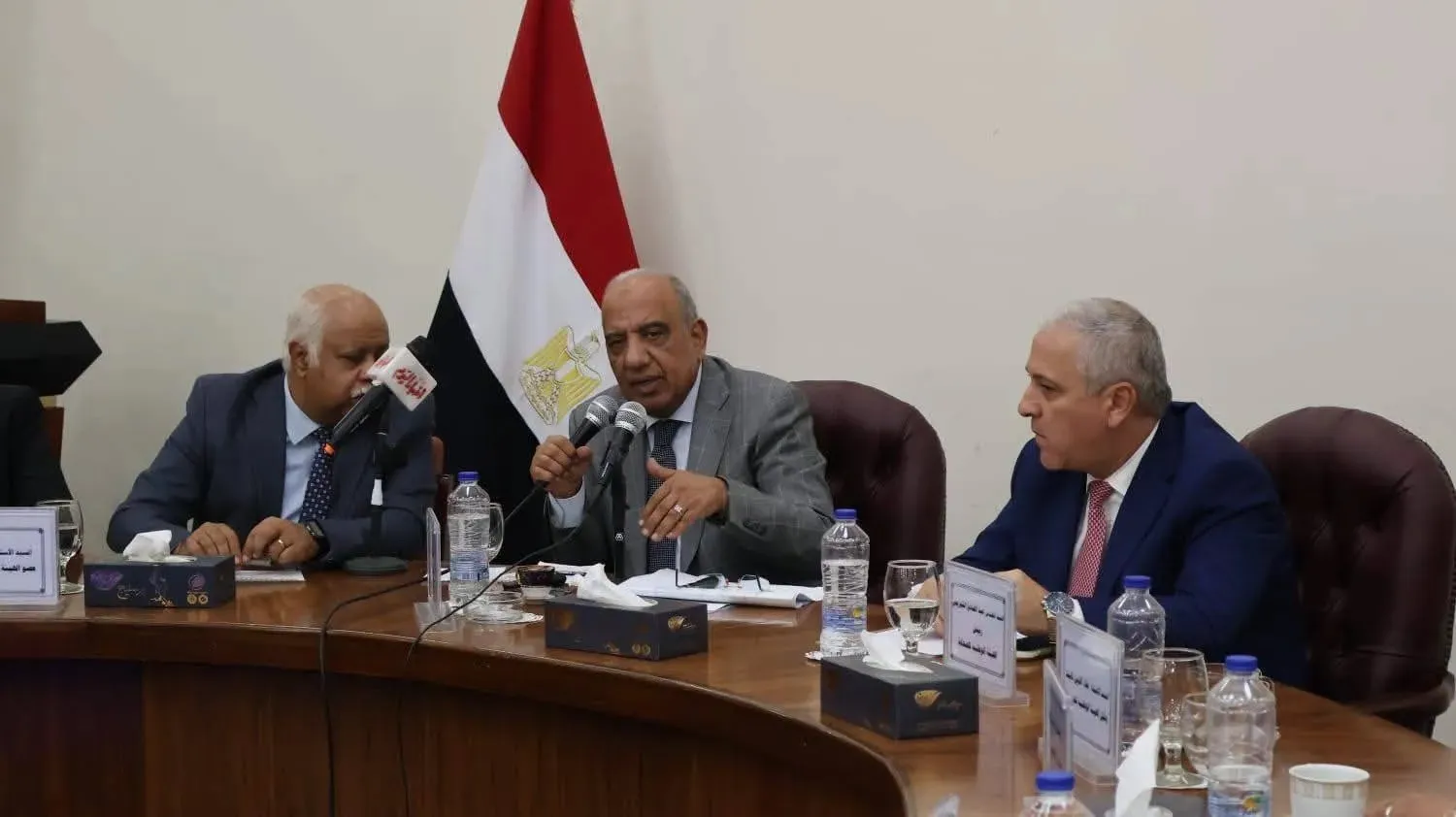
Egyptian Electricity Minister Mahmoud Esmat during a seminar at the National Press Authority on Sunday evening (Electricity Ministry’s Facebook page)
TT

Saudi-Egypt Electricity Interconnection Nears Operation

Egyptian Electricity Minister Mahmoud Esmat during a seminar at the National Press Authority on Sunday evening (Electricity Ministry’s Facebook page)

The Saudi-Egypt electricity interconnection, one of the region’s largest and most ambitious energy projects, is nearing actual operation after an official Egyptian announcement that work on the Egyptian side has been completed and the project has entered trial operations.

The strategic project, with investments of about $1.8 billion and an exchange capacity of up to 3,000 megawatts, is not only a step toward improving the efficiency of the two countries’ national grids, but also represents a pivotal shift in the regional and international energy landscape.

By connecting the two largest electricity grids in the Arab world, the project lays the initial foundation for a common Arab electricity market and reinforces the two countries’ positions as key hubs for energy trading and transmission between Asia, Africa and Europe.

Egyptian Side Ready

Egyptian Electricity and Renewable Energy Minister Mahmoud Esmat said on Sunday that the project aims to exchange 3,000 MW of electricity along a 1,320-kilometer route.

He noted that the pace of implementation and progress accelerated between July 2024 and June 2025, bringing the project to the trial-operation stage.

Esmat confirmed that all engineering and construction work on the Egyptian side of the interconnection with Saudi Arabia had been completed, with only a small portion of work, technical testing and final preparations remaining on the Saudi side.

Work in Egypt included construction of the 500-kilovolt Badr converter station and the 320-kilometer Badr-Taba overhead line, as well as giant Suez Canal crossing towers rising more than 220 meters to ensure the smooth and safe transmission of electricity ahead of the start of actual exchanges between the two countries.

Esmat said during a Feb. 15 meeting with President Abdel Fattah al-Sisi that the interconnection would play an important role in stabilizing Egypt’s national electricity grid during the summer, when consumption peaks.

Technical Specifications

According to official Egyptian information, the project is one of the region’s largest electricity interconnection projects, with investments estimated at about $1.8 billion and an exchange capacity of up to 3,000 MW.

It consists of three major high-voltage converter stations: one east of Madinah and another in Tabuk, Saudi Arabia, and a third in Badr, east of Cairo.

The stations are connected by overhead lines extending about 1,350 kilometers, in addition to submarine cables crossing the Gulf of Aqaba.

Strategic Shift in Regional Energy Security

Khaled El-Shafei, an economist and head of the Capital Center for Economic Studies, said the interconnection represents a strategic shift in the region’s energy landscape and security.

He noted that the project strengthens energy security in both countries with a capacity of up to 3,000 MW through high-voltage direct-current lines extending 1,320 kilometers, equivalent to about 8 to 10 percent of Egypt’s total operating reserve capacity.

El-Shafei underlined that this would support the stability of the national grid without the need to operate additional generating plants with high operating costs. It would also reduce carbon emissions by millions of tons annually through optimal use of the two countries’ renewable-energy mix.

He continued that once the interconnection becomes fully operational, it would generate substantial economic savings in fossil-fuel consumption and power-plant maintenance costs.

Gateway to Europe

Esmat also discussed existing electricity interconnection projects with neighboring countries, including Sudan, Libya and Jordan, saying studies for interconnection projects with Greece and Italy are currently being finalized, which would make Egypt a bridge to Europe, according to a ministry statement.

On the regional level, El-Shafei said the Saudi-Egypt project’s entry into the operational phase is the essence for establishing a common Arab electricity market, as it connects the two largest electricity grids in the Arab region, which together account for more than 60 percent of total electricity generated in the Arab world.

The development also opens broad prospects for Egypt to capitalize on its unique geographical position as a key regional energy-trading hub. It would allow the Egyptian grid to manage a multilateral interconnection system extending to the Arab east through Saudi Arabia and Jordan, the Maghreb through Libya, and Africa through the existing interconnection with Sudan.

Egypt would also serve as a future gateway to Europe through interconnection projects being studied and implemented with Greece, Cyprus and Italy to transmit up to 2,000 MW, boosting direct economic returns and making the region a key pillar for regional and international energy stability and sustainability.