


UN Chief: Virus Could Push Millions of Africans into Poverty

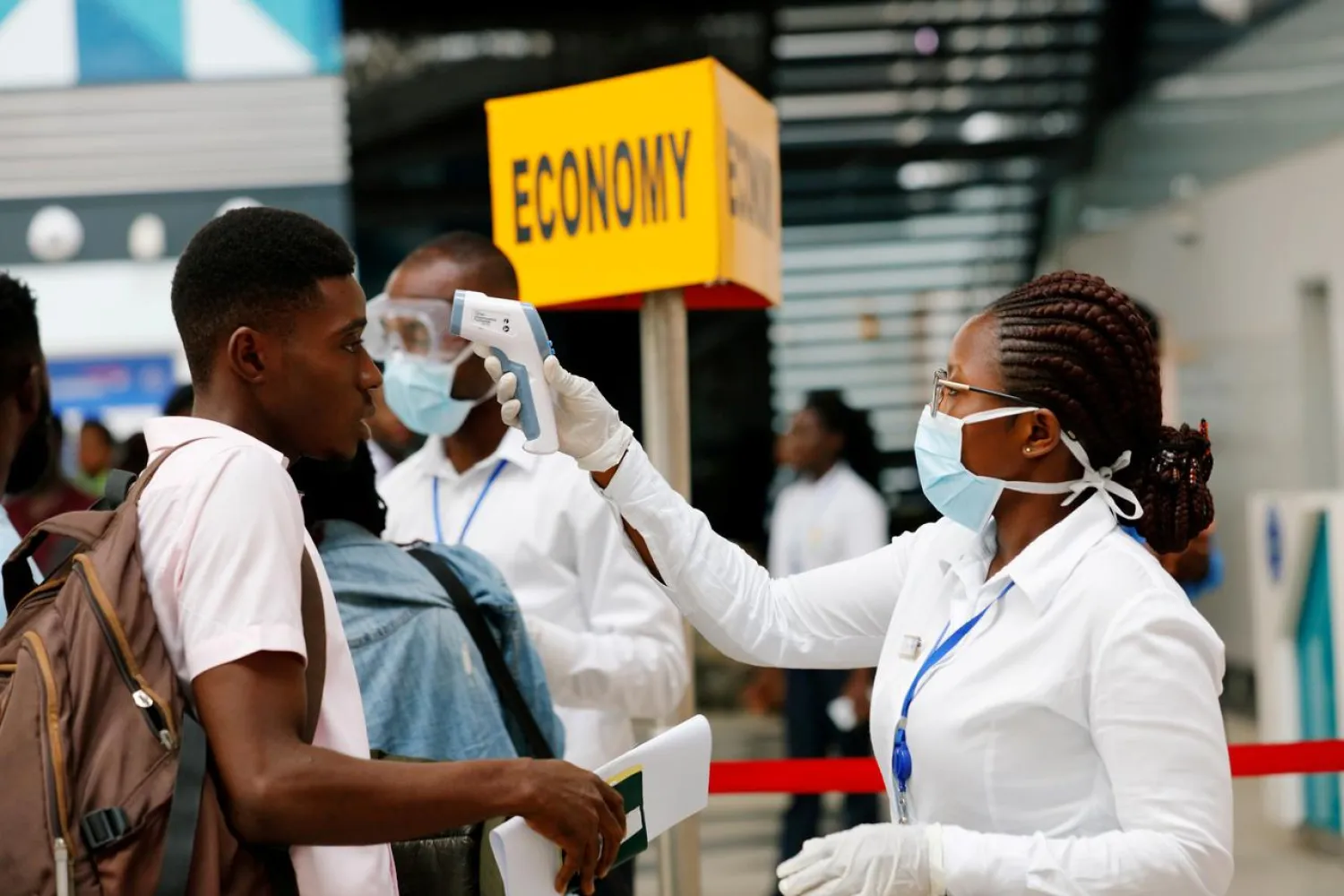
A health worker checks the temperature of a traveller as part of the coronavirus screening procedure at the Kotoka International Airport in Accra, Ghana January 30, 2020. (Reuters)
TT

UN Chief: Virus Could Push Millions of Africans into Poverty

A health worker checks the temperature of a traveller as part of the coronavirus screening procedure at the Kotoka International Airport in Accra, Ghana January 30, 2020. (Reuters)

UN Secretary-General Antonio Guterres warned Wednesday that the coronavirus pandemic threatens Africa’s progress and could push millions into extreme poverty.

The UN chief said in a video message launching a policy report on “The Impact of COVID-19 in Africa” that countries on the continent have responded swiftly to the crisis, and as of now reported cases are lower than feared with more than 2,500 deaths.

The virus is present in all African countries with most recording fewer than 1,000 cases, the 28-page UN report said.

The relatively low numbers of COVID-19 cases confirmed thus far “have raised hopes that African countries may be spared the worst of the pandemic,” the report said. “Caution is warranted, however, as these are early days in the life cycle of a disease that is still not fully understood and where we have seen repeated patterns of first slow, then exponential growth in the number of cases.”

The UN said the low numbers could be linked to minimal testing and reporting, pointing to a World Health Organization warning that the pandemic “could kill between 83,000 and 190,000 people in 47 African countries in the first year, mostly depending on governments’ responses.”

And WHO also warned that “the socioeconomic impacts could ‘smolder’ for several years,” the report said.

Guterres said “much hangs in the balance.”

He called for international action to strengthen Africa’s health systems, maintain food supplies, avoid a financial crisis, support education, protect jobs, keep households and businesses afloat, and cushion the continent against lost income and export earnings.

To help address the devastating economic and social consequences of the pandemic, Guterres said Africa needs more than $200 billion and “an across-the-board debt standstill for African countries” unable to service their debt, “followed by targeted debt relief and a comprehensive approach to structural issues in the international debt architecture to prevent defaults.”

In recent years, Guterres said economic growth in Africa has been strong, the digital revolution has taken hold and agreement has been reached on a free trade area.

But he said “already, demand for Africa’s commodities, tourism and remittances are declining” and the opening of the trade zone has been pushed back.

The secretary-general said the pandemic “will aggravate long-standing inequalities and heighten hunger, malnutrition and vulnerability to disease.”

The UN urged that agriculture be declared a critical sector that should not be interrupted by COVID-19 related measures.

Guterres commended what countries and the African Union have done to tackle the pandemic, saying most have deepened regional coordination, deployed health workers, and enforced quarantines, lockdowns and border closures.

“They are also drawing on the experience of HIV/AIDS and Ebola to debunk rumors and overcome mistrust of government, security forces and health workers,” Guterres said.

He said the United Nations has delivered millions of test kits, respirators and other supplies, reaching almost the entire continent.

While dealing with the pandemic, the UN report said “maintaining peace and security in Africa remains paramount.”

Guterres has appealed for global cease-fires to tackle COVID-19 and he said it is “essential for African countries to sustain their efforts to silence the guns and address violent extremism.”



Top Trump Iran Negotiator Says Visits US Aircraft Carrier in Middle East

US Special Envoy Steve Witkoff delivers a press conference upon the signing of the declaration on deploying post-ceasefire force in Ukraine, during the so-called "Coalition of the Willing" summit, at the Elysee Palace in Paris, France, January 6, 2026. (Reuters)
TT

Top Trump Iran Negotiator Says Visits US Aircraft Carrier in Middle East

US Special Envoy Steve Witkoff delivers a press conference upon the signing of the declaration on deploying post-ceasefire force in Ukraine, during the so-called "Coalition of the Willing" summit, at the Elysee Palace in Paris, France, January 6, 2026. (Reuters)

US President Donald Trump's lead Iran negotiator Steve Witkoff on Saturday said he visited the USS Abraham Lincoln aircraft carrier currently in the Arabian Sea, with Washington and Tehran due to hold further talks soon.

"Today, Adm. Brad Cooper, Commander of US Naval Forces Central Command, Jared Kushner, and I met with the brave sailors and Marines aboard the USS Abraham Lincoln, her strike group, and Carrier Air Wing 9 who are keeping us safe and upholding President Trump's message of peace through strength," said Witkoff in a social media post.

Iranian Foreign Minister Abbas Araghchi said on Saturday he hoped talks with the United States would resume soon, while reiterating Tehran's red lines and warning against any American attack.


Israel’s Netanyahu Expected to Meet Trump in US on Wednesday and Discuss Iran

Israeli Prime Minister Benjamin Netanyahu delivers a speech during a special session to mark the 77th anniversary of the Knesset's establishment and the 60th anniversary of the dedication of the current building at the Knesset, the Israeli parliament, in Jerusalem, 02 February 2026. (EPA)
TT

Israel’s Netanyahu Expected to Meet Trump in US on Wednesday and Discuss Iran

Israeli Prime Minister Benjamin Netanyahu delivers a speech during a special session to mark the 77th anniversary of the Knesset's establishment and the 60th anniversary of the dedication of the current building at the Knesset, the Israeli parliament, in Jerusalem, 02 February 2026. (EPA)

Israeli Prime Minister Benjamin Netanyahu is expected to meet US President Donald Trump on Wednesday in Washington, where they will discuss negotiations with Iran, Netanyahu's office said on Saturday.

Iranian and US officials held indirect nuclear ‌talks in the ‌Omani capital ‌Muscat ⁠on Friday. ‌Both sides said more talks were expected to be held again soon.

A regional diplomat briefed by Tehran on the talks told Reuters Iran insisted ⁠on its "right to enrich uranium" ‌during the negotiations with ‍the US, ‍and that Tehran's missile capabilities ‍were not raised in the discussions.

Iranian officials have ruled out putting Iran's missiles - one of the largest such arsenals in the region - up ⁠for discussion, and have said Tehran wants recognition of its right to enrich uranium.

"The Prime Minister believes that any negotiations must include limiting ballistic missiles and halting support for the Iranian axis," Netanyahu's office said in a ‌statement.


Italy FM Rules Out Joining Trump’s ‘Board of Peace’

Italy's Minister for Foreign Affairs Antonio Tajani speaks to the press during the EPP Leaders’ meeting, in Zagreb, Croatia, 30 January 2026. (EPA)
TT

Italy FM Rules Out Joining Trump’s ‘Board of Peace’

Italy's Minister for Foreign Affairs Antonio Tajani speaks to the press during the EPP Leaders’ meeting, in Zagreb, Croatia, 30 January 2026. (EPA)

Italy will not take part in US President Donald Trump's "Board of Peace", Italian Foreign Minister Antonio Tajani said Saturday, citing "insurmountable" constitutional issues.

Trump launched his "Board of Peace" at the World Economic Forum in Davos in January and some 19 countries have signed its founding charter.

But Italy's constitution bars the country from joining an organization led by a single foreign leader.

Prime Minister Giorgia Meloni, a Trump ally, last month noted "constitutional problems" with joining, but suggested Trump could perhaps reopen the framework "to meet the needs not only of Italy, but also of other European countries".

Tajani appeared Saturday to rule that out.

"We cannot participate in the Board of Peace because there is a constitutional limit," he told the ANSA news agency.

"This is insurmountable from a legal standpoint," he said, the day after meeting US Secretary of State Marco Rubio and US Vice President JD Vance at the Olympics in Milan.

Although originally meant to oversee Gaza's rebuilding, the board's charter does not limit its role to the Palestinian territory and appears to want to rival the United Nations.