


Pandemic May Reverse Human Development for First Time in 30 Years, UN Says

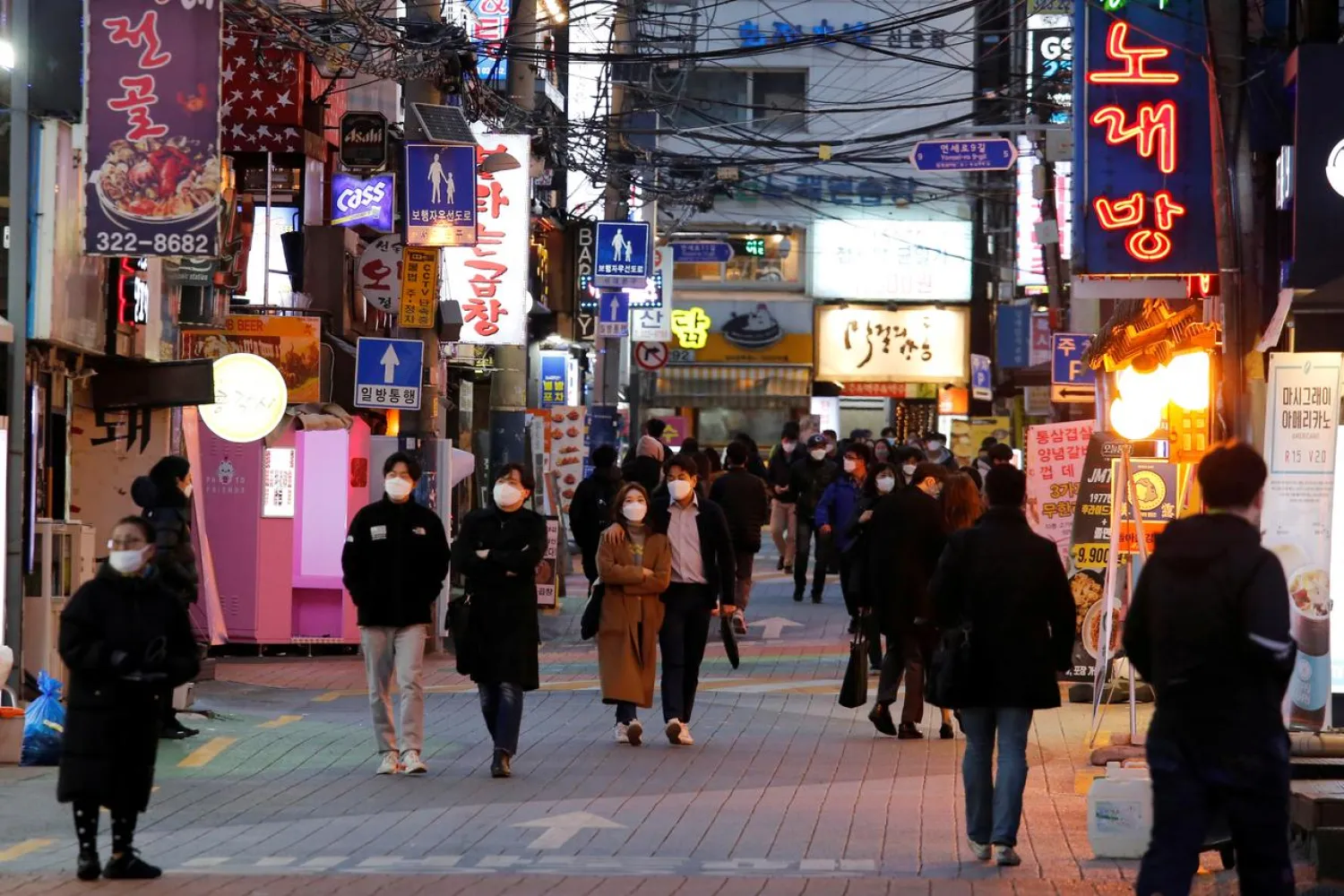
People wearing face masks to protect themselves against contracting the new coronavirus walk on a street in central Seoul, South Korea April 22, 2020. (Reuters)
TT

Pandemic May Reverse Human Development for First Time in 30 Years, UN Says

People wearing face masks to protect themselves against contracting the new coronavirus walk on a street in central Seoul, South Korea April 22, 2020. (Reuters)

The novel coronavirus outbreak has starkly exposed inequalities worldwide and could set back human development for the first time since 1990, the United Nations said on Wednesday.

It said the crisis had, though, revealed the strength of collective action in the face of a common threat and urged the world to show the same force on climate change.

“The COVID-19 pandemic is unleashing a human development crisis,” the UN Development Program (UNDP) said in a report.

Other shocks - such as the financial crisis of 2007-2009 or the Ebola outbreak in West Africa in 2014-2016 - have dealt a blow but did not prevent year-on-year development gains overall, said UNDP head Achim Steiner.

“COVID-19 – with its triple hit to health, education, and income – may change this trend,” he added.

Besides deaths from COVID-19, which have now topped 320,000, the crisis could indirectly mean an extra 6,000 children die each day from preventable causes in the next six months, UNDP said.

Six out of 10 children globally are not getting an education due to school closures, and with deep recessions hitting most economies, the decline in UNDP’s human development index would be equivalent to erasing all the progress of the past six years.

The decline is affecting rich and poor nations, but is expected to be far steeper in developing countries that are less able to cope with the pandemic’s social and economic fallout.

“If we fail to bring equity into the policy toolkit, many will fall further behind,” said Pedro Conceição, director of the UNDP office that produces its annual Human Development Report.

“This is particularly important for the ‘new necessities’ of the 21st century, such as access to the internet, which is helping us to benefit from tele-education, tele-medicine, and to work from home,” he added in a statement.

UNDP estimated that 86% of children in primary education are effectively out of school in countries with low development, because they lack the tools for web-based learning, compared with just 20% in the wealthiest nations.

Expanding access to the internet in low- and middle-income countries would cost $100 billion - about 15% of the income they will lose this year and 1% of the fiscal stimulus the world has committed in response to COVID-19, the report said.

“Today, this is a timely investment that would facilitate the recovery and welcome half the world’s population to some of the opportunities of the 21st century,” it added.

The same problem affects poorer households in rich countries too, with more than 300,000 students in New York City lacking access to any computer to do schoolwork, it noted.

The city sought to address by problem by distributing 175,000 laptops, iPads and Chromebooks before remote learning kicked in, and one internet provider offered some households free wifi and broadband for a time.

UNDP said the coronavirus pandemic demonstrated it was possible for people to rally together in confronting threats - a lesson that could be applied to climate change.

"If we needed proof of concept that humanity can respond collectively to a shared global challenge, we are now living through it," the report said.



Russia: Man Suspected of Shooting Top General Detained in Dubai

An investigator works outside a residential building where the assassination attempt on Russian Lieutenant General Vladimir Alexeyev took place in Moscow, Russia February 6, 2026. REUTERS/Anastasia Barashkova
TT

Russia: Man Suspected of Shooting Top General Detained in Dubai

An investigator works outside a residential building where the assassination attempt on Russian Lieutenant General Vladimir Alexeyev took place in Moscow, Russia February 6, 2026. REUTERS/Anastasia Barashkova

Russia's Federal Security Service (FSB) said on Sunday that the man suspected of shooting top Russian military intelligence officer Vladimir Alexeyev in Moscow has been detained in Dubai and handed over to Russia.

Lieutenant General Vladimir Alexeyev, deputy head of the GRU, ⁠Russia's military intelligence arm, was shot several times in an apartment block in Moscow on Friday, investigators said. He underwent surgery after the shooting, Russian media ⁠said.

The FSB said a Russian citizen named Lyubomir Korba was detained in Dubai on suspicion of carrying out the shooting.

Russian Foreign Minister Sergei Lavrov accused Ukraine of being behind the assassination attempt, which he said was designed to sabotage peace talks. ⁠Ukraine said it had nothing to do with the shooting.

Alexeyev's boss, Admiral Igor Kostyukov, the head of the GRU, has been leading Russia's delegation in negotiations with Ukraine in Abu Dhabi on security-related aspects of a potential peace deal.


Factory Explosion Kills 8 in Northern China

Employees work on an electric vehicle (EV) production line at the Volkswagen Anhui factory in Hefei, Anhui province, China, February 4, 2026. REUTERS/Florence Lo
TT

Factory Explosion Kills 8 in Northern China

Employees work on an electric vehicle (EV) production line at the Volkswagen Anhui factory in Hefei, Anhui province, China, February 4, 2026. REUTERS/Florence Lo

An explosion at a biotech factory in northern China has killed eight people, Chinese state media reported Sunday, increasing the total number of fatalities by one.

State news agency Xinhua had previously reported that seven people died and one person was missing after the Saturday morning explosion at the Jiapeng biotech company in Shanxi province, citing local authorities.

Later, Xinhua said eight were dead, adding that the firm's legal representative had been taken into custody.

The company is located in Shanyin County, about 400 kilometers west of Beijing, AFP reported.

Xinhua said clean-up operations were ongoing, noting that reporters observed dark yellow smoke emanating from the site of the explosion.

Authorities have established a team to investigate the cause of the blast, the report added.

Industrial accidents are common in China due to lax safety standards.
In late January, an explosion at a steel factory in the neighboring province of Inner Mongolia left at least nine people dead.


Iran Warns Will Not Give Up Enrichment Despite US War Threat

Traffic moves through a street in Tehran on February 7, 2026. (Photo by ATTA KENARE / AFP)
TT

Iran Warns Will Not Give Up Enrichment Despite US War Threat

Traffic moves through a street in Tehran on February 7, 2026. (Photo by ATTA KENARE / AFP)

Iran will never surrender the right to enrich uranium, even if war "is imposed on us,” its foreign minister said Sunday, defying pressure from Washington.

"Iran has paid a very heavy price for its peaceful nuclear program and for uranium enrichment," Abbas Araghchi told a forum in Tehran.

"Why do we insist so much on enrichment and refuse to give it up even if a war is imposed on us? Because no one has the right to dictate our behavior," he said, two days after he met US envoy Steve Witkoff in Oman.

The foreign minister also declared that his country was not intimidated by the US naval deployment in the Gulf.

"Their military deployment in the region does not scare us," Araghchi said.